
The best lapidary grinding wheels for most hobbyists are 6-inch or 8-inch sintered diamond wheels in the 220–600 grit range, paired with a dedicated cabbing machine or arbor that keeps the wheel wet during use; the right combination of grit, bond hardness, and diameter depends on the stone’s Mohs hardness and how much material you need to remove before polishing.
As an Amazon Associate we earn from qualifying purchases at no extra cost to you.



Our Top Picks

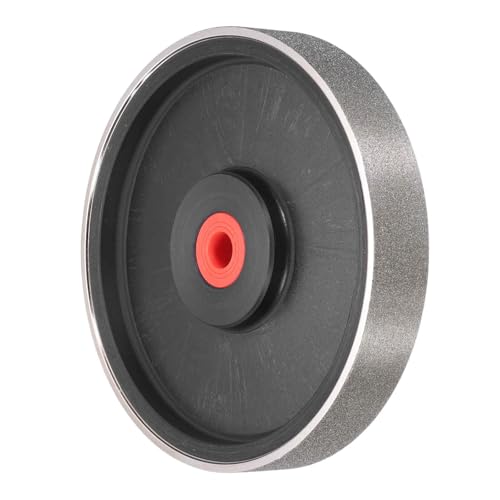
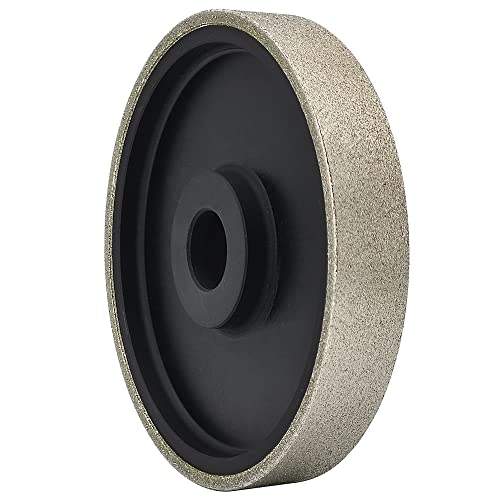

Top 3 picks at a glance
How Lapidary Grinding Wheels Work
Lapidary wheels use industrial diamonds bonded to a steel or resin core to abrade stone surfaces. Three bond types dominate the market:
- Galvanic (electroplated): A single layer of diamonds nickel-plated onto the wheel face. Fast cutting and cheap, but the grit wears smooth once the diamonds fracture — fine for soft stones, frustrating on agate.
- Sintered: Diamonds mixed through a metal matrix several millimeters deep. Slowest to glaze, longest lifespan (often years of hobby use), best on hard materials like jasper, agate, and corundum.
- Resin-bonded: Diamonds in a polymer matrix, typically used for the fine and pre-polish stages (1,200–3,000+ grit). Softer bond conforms slightly to the stone, reducing subsurface fractures.
A standard progression uses sintered wheels for shaping (80–360 grit) and resin wheels for smoothing (600–3,000 grit) before polishing with oxides or diamond paste.
Wheel Types Compared
| Type | Typical grit range | Lifespan (hobby use) | Best for | Typical price |
|---|---|---|---|---|
| Galvanic | 80–400 | 6–18 months | Soft stone, light shaping, budget setups | $30–$60 |
| Sintered | 80–600 | 3–10+ years | Agate, jasper, petrified wood, heavy material removal | $80–$150 |
| Resin-bonded | 600–3,000 | 1–4 years | Pre-polish smoothing, delicate stones | $70–$130 |
| Nova (soft resin) | 280–3,000 | 1–3 years | Cabochon contouring, opal | $50–$90 |
Grit Ranges and What They Actually Remove
Grit choice controls both material-removal rate and how much scratch depth you have to erase later. Skipping too far between grits is the most common beginner mistake — a 280-grit scratch needs real work on a 600 wheel to fully remove.
| Grit | Role | Removal speed (agate) | Scratch depth (approx.) |
|---|---|---|---|
| 80–100 | Slabbing trim, fast preform shaping | ~1–2 mm/min edge wear | Deep, needs 220 to erase |
| 220–280 | Standard shaping, dome forming | ~0.5 mm/min | Moderate |
| 360–600 | Refining shape, removing flats | ~0.1–0.3 mm/min | Shallow |
| 1,200–3,000 | Pre-polish smoothing | Minimal — texture only | Microscopic |
Never skip more than roughly a 3× grit step (220 → 600 is fine; 80 → 600 is not), because each stage must remove all scratches from the previous one — a rule of thumb is that removal rate drops by a factor of about 4 per doubling of grit number.
Diameter, Hardness, and Arbor Compatibility
Diameter matters for two reasons: surface speed and clearance. An 8-inch wheel at 1,725 RPM runs about 3,600 surface feet per minute — roughly a third faster cutting than a 6-inch wheel at the same speed — which shortens shaping time on hard stones. But larger wheels cost more per grit stage, so a 6-inch, 4-wheel sequence is the sweet spot for hobby budgets.
Bond hardness should oppose the stone: hard-bonded wheels for soft stones (turquoise, malachite) so the wheel doesn’t shed grit too fast, and softer bonds for hard stones so worn diamonds release and fresh ones cut. Most sintered wheels sold for agate use a medium-soft bond for exactly this reason.
Check arbor fit before buying — common arbors are 5/8″, 1″, and 25 mm, and most wheels ship with bushing kits. Flange size matters too: flanges should cover at least a third of the wheel’s radius for safe clamping.
Cooling: Why You Always Grind Wet
Dry grinding diamond wheels generates enough heat to fracture both stone and bond, and throws respirable silica dust. Every wheel above needs a continuous water drip or spray — a drip rate of roughly 1–2 drops per second per wheel face is enough. Dedicated cabbing machines route coolant to each wheel; on a converted arbor grinder you’ll need a drip tank or gravity-fed tubing. If a stone fogs or smokes during grinding, cooling is insufficient, not a grit problem.
Decision Matrix: Matching Your Setup to a Wheel Set
| Your situation | Recommended wheel setup |
|---|---|
| Beginner, occasional soft stone (turquoise, malachite, shell) | 6″ galvanic 220 + resin 600/1,200/3,000 — lowest cost of entry |
| Regular agate/jasper cabbing, hobby volume | 6″ sintered 80/220 + resin 600/1,200/3,000 — standard sequence |
| Heavy production or frequent hard stone | 8″ sintered 80/220/360 + resin 1,200/3,000 — faster removal, more stages |
| Opal or fracture-prone material | Skip sintered below 220; use Nova-style soft wheels 280–3,000 at reduced pressure |
| Flat-lap conversion on existing grinder | Check arbor/thread fit first; budget for a drip system before wheels |
Material-Removal Math You Can Use
Worked example: shaping a 25 g agate preform to dome shape on a 220-grit sintered wheel. Agate removal at 220 grit averages about 0.1–0.2 g per minute at moderate pressure, so expect 10–20 minutes of wheel time. On an 80-grit wheel the same preform takes 3–5 minutes but leaves scratches that add 5+ minutes on the 220 — total time is similar, and starting at 80 only wins when removing more than a gram or two. For a single small cabochon, starting at 220 is usually faster overall.
Common Buying Mistakes
- Buying all galvanic to save money — on agate the 80/220 wheels dull within months and you rebuy them anyway.
- Skipping the 600 stage — jumping 280 straight to 1,200 leaves scratches that show as haze under polish.
- Ignoring arbor size — a wheel with no compatible bushing is a paperweight.
- Assuming dry-rated wheels exist for stone — sintered diamond wheels always require coolant.
FAQ
Can I use a bench grinder for lapidary wheels?
Only with modifications: correct arbor/bushing fit, proper flanges, splash guards, and a drip feed. Most grinders run at 3,450 RPM, which is too fast for comfort on small cabs — variable-speed or 1,725 RPM motors are better suited.
How do I know when a sintered wheel is worn out?
When cutting slows noticeably even after dressing with an abrasive stick, or the matrix has worn below the diamond layer depth. A quick dress with a silicon-carbide stick often restores performance first.
What wheels do I need to go from rough stone to polish?
Minimum viable sequence: 220 shaping, 600 refine, 1,200 and 3,000 pre-polish, then cerium oxide or diamond paste on felt or leather.


