
The best mechanical broadheads for reliable hunting are the Rage Hypodermic NC, SEVR 2.0, Grim Reaper Razorcut SS, G5 Deadmeat V2, and NAP Spitfire, with the right choice depending on your draw weight, arrow energy, and the size of game you hunt.
Mechanical broadheads trade a smaller in-flight profile for a larger cutting diameter on impact, which makes them more forgiving to tune than fixed-blade heads but more dependent on kinetic energy and proper blade retention. Understanding how cutting diameter, deployment system, and durability interact is the key to avoiding failures like premature opening, poor penetration, or blades breaking on bone.
As an Amazon Associate we earn from qualifying purchases at no extra cost to you.
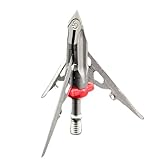


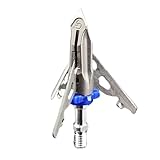
Our Top Picks
 G5 Outdoors Deadmeat 100% Steel Expandable Standard Broadhead100 GR18 x 8 x 3 Inches0.15 poundsCheck on Amazon
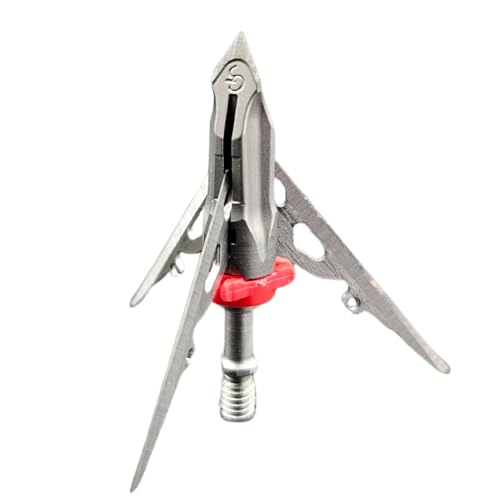


Top 3 picks at a glance
How to Choose a Mechanical Broadhead for Your Setup
Don’t pick by cutting diameter alone. A 2.3-inch cut looks impressive on paper but demands significantly more energy to push through an animal than a 1.5-inch cut, and it creates more drag and a higher chance of deflection if you hit shoulder bone. Match the broadhead to your bow’s output and your target animal.
1. Cutting Diameter vs. Penetration
Cutting diameter determines wound channel size and blood trail, but it directly reduces penetration. Every additional inch of cut increases the tissue resistance your arrow must overcome.
- 1.5″ – 1.75″ (2-blade): Best penetration, smallest wound. Ideal for lower poundage setups (under 60 lbs), lighter arrows under 400 grains, or tougher game like elk and hogs where you need to break through heavy hide and bone.
- 2.0″ – 2.1″ (2-blade or 3-blade): The versatile middle ground for most whitetail hunters shooting 60-70 lbs. Good balance of blood trail and penetration on deer-sized game with a well-placed double-lung shot.
- 2.3″+ (2-blade): Maximum tissue damage and blood trails, but requires high kinetic energy and momentum. Best reserved for 65+ lb bows with heavier arrows (450+ grains) and for broadside shots on deer where bone contact is unlikely.
2. Blade Deployment System
How the blades stay closed in flight and open on impact determines reliability:
- Rear-deploying (e.g., Rage Hypodermic NC): Blades slide back from the tip on impact using a collar or NC (No Collar) retention system. Creates a large entry hole and typically allows for blade retention without rubber bands or O-rings. Very reliable opening but can lose slightly more energy on deployment.
- Front-deploying / Over-the-top (e.g., NAP Spitfire, Grim Reaper Razorcut): Blades pivot forward from the ferrule. Often offers better structural support and penetration because the blades are hinged closer to the ferrule body. The Grim Reaper uses a spring-clip system with no O-rings to maintain blade retention.
- Pivoting / Locking Blades (e.g., SEVR 2.0): Blades pivot around a screw and are designed to lock open, but also to pivot if they hit bone, which can keep the arrow driving forward instead of deflecting. SEVR also features a Practice Lock that lets you practice with the actual broadhead without dulling blades.
3. Durability and Ferrule Construction
One-and-done broadheads are an expensive reality if you hit bone. Look at ferrule material and blade thickness:
- Ferrule: Aircraft-grade aluminum is light and accurate but can bend on hard bone impacts. Stainless steel or titanium ferrules (like the Grim Reaper Razorcut SS or G5 Deadmeat Steel) are heavier but far more likely to survive a shoulder hit and be reusable.
- Blade Thickness: .032″ blades are standard and sharp but can curl or break. .035″ to .039″ blades offer a noticeable durability increase for elk or hog hunters without a huge sharpness penalty.
- Blade Retention: Systems using collars, clips, or internal locks are generally more consistent in cold weather than rubber O-rings or dental bands, which can become brittle or stretch.
Does Your Setup Have Enough Energy for a Mechanical?
You need enough kinetic energy (KE) and momentum to reliably deploy the blades and still drive through the animal. Most manufacturers recommend a minimum of 40-45 ft-lbs of KE for mechanicals, but for larger cuts that minimum should be higher.
Use this calculation to check your setup before buying:
Kinetic Energy Formula: KE = (Arrow Weight in grains x Velocity^2) / 450,240
Worked example for a common whitetail setup:
- Arrow weight: 430 grains
- Chronographed speed: 285 fps
- Calculation: (430 x 285 x 285) / 450,240 = (430 x 81,225) / 450,240 = 34,926,750 / 450,240 = 77.5 ft-lbs of KE
This setup has more than enough energy for any 2-inch mechanical broadhead and is marginal but acceptable for a 2.3-inch head on deer if shot placement is ideal. If your result is under 55 ft-lbs, stick to a 1.5″ – 1.75″ cut or consider a fixed-blade or smaller mechanical.
Momentum (Arrow Weight x Velocity / 225,218) is a better predictor of penetration on heavy bone. For elk or large hogs, aim for momentum above 0.50 slug-ft/s even if your KE looks good. That usually means moving to a heavier arrow, not just a faster bow.
Best Mechanical Broadheads Compared
| Broadhead | Cutting Diameter | Blade Count / Thickness | Deployment & Retention | Ferrule Material | Best For |
|---|---|---|---|---|---|
| Rage Hypodermic NC | 2.0″ | 2-blade / .035″ | Rear-deploy, NC No-Collar | Aluminum | Whitetail hunters wanting huge entry holes and tool-free blade lock |
| SEVR 2.0 | 2.0″ | 2-blade / .035″ | Rear-deploy, Pivoting Lock + Practice Mode | Titanium / Steel Tip | Hunters who want to practice with the real head and need bone-pivot forgiveness |
| Grim Reaper Razorcut SS 1 3/8″ | 1.375″ | 3-blade / .035″ | Over-the-top, Spring Clip | Stainless Steel | Lower poundage bows, elk/hogs, or hunters prioritizing penetration |
| G5 Deadmeat V2 | 1.5″ (3-blade) / 2.0″ (2.5-blade) | 3-blade / .030″ | Rear-deploy, SnapTope Retainer | Steel | Durability on a budget with easy blade replacement |
| NAP Spitfire XXX | 1.75″ (3-blade) / 2.0″ (2-blade) | 3-blade / .030″ | Front-deploy, Diamize Blades | Aluminum | Tunability and proven reliability for mid-weight setups |
| Schwacker #207 2-Blade | 2.25″ | 2-blade / .032″ | Rear-deploy, Shrink Band | Aluminum / Hardened Steel Tip | Maximum cut for high-energy setups (65+ lbs, 450+ grain arrows) |
Decision Matrix: Match the Broadhead to Your Situation
Use your draw weight, arrow weight, and intended game to narrow the field quickly:
| Your Situation | Recommended Cutting Diameter | Top Pick | Why |
|---|---|---|---|
| <55 lbs draw or <400 grain arrow, any game | 1.375″ – 1.75″ | Grim Reaper Razorcut SS or G5 Deadmeat 1.5″ | Preserves penetration when KE is limited; stainless steel ferrule handles bone better |
| 60-70 lbs, 400-470 grain arrow, whitetail deer | 2.0″ | Rage Hypodermic NC or SEVR 2.0 | Ideal balance of blood trail and pass-through potential; low tuning needs |
| 65+ lbs, 450+ grain arrow, whitetail (open country) | 2.0″ – 2.25″ | Schwacker 2.25″ or SEVR 2.1″ | You have the energy to drive a large cut; creates best blood trails for tracking in tall crops/grass |
| 60+ lbs, 450+ grain arrow, elk / hog / bear | 1.5″ – 2.0″ with steel ferrule | SEVR 2.0 or Grim Reaper Razorcut SS | Need pivoting or 3-blade design and tougher construction to handle heavy bone and thick hide |
| Difficult-to-tune bow or beginner tuner | Any 2.0″ rear-deploy | Rage Hypodermic NC or NAP Spitfire | Smaller in-flight profile than fixed heads; most forgiving if bow is slightly out of tune |
Tuning and Setup Tips for Mechanical Broadheads
Mechanicals fly like field points, but they still require correct setup. Failures are almost always tuning or energy related, not broadhead defects.
- Paper tune first, then broadhead tune: Shoot a bare shaft or field point through paper at 6 feet. You want a bullet hole. If you get a tail-left or tail-right tear, adjust your rest in 1/32-inch increments toward the tear before you ever screw on a broadhead. This ensures the arrow is leaving the bow straight, which prevents erratic blade deployment.
- Check retention before every hunt: Spin test each assembled arrow on a flat surface or arrow spinner. If it wobbles, the broadhead is not seated squarely. Replace the washer or try a different broadhead. Then test blade retention – blades should not rattle or deploy when you shake the arrow vigorously.
- Use the right insert and alignment: Broadheads exaggerate any wobble from a bent insert or out-of-square arrow end. Use a squaring tool (like a G5 ASD) on carbon shafts and hot-melt align inserts. This alone often fixes “mechanicals don’t fly right” complaints.
- Practice at hunting distance with the real head: SEVR’s Practice Lock or a dedicated practice head lets you verify point-of-impact shift out to 40-60 yards. Even 1-2 inches of shift at 50 yards can mean a shoulder hit instead of a lung shot.
- Blade sharpness matters more than advertised cut: Replace or strop blades after any practice shot into foam. A sharp 1.5-inch head will kill and leave a better blood trail than a dull 2.3-inch head. Most replacement blade packs usually run $25-$45 for three heads.
For pricing, expect most quality mechanicals to fall in the $35-$55 range for a 3-pack, with titanium or premium steel models usually $60-$85 for a 3-pack. Replacement blades are typically sold separately.
Frequently Asked Questions
Will a mechanical broadhead deploy in flight and ruin accuracy?
Modern retention systems (collars, clips, locks) have largely solved premature deployment if they are installed correctly. The most common cause is reusing a dull collar or O-ring, or not snapping the blades fully into the retention notch. Always use a fresh collar/retainer for each hunt and do a shake test before nocking the arrow.
Are mechanical broadheads legal for elk or turkey in my state?
Regulations change and some states restrict cutting diameter, barbed heads, or mechanicals for certain species. For example, some western states require a minimum 7/8-inch cutting diameter and prohibit barbed broadheads that do not allow the arrow to be withdrawn easily. Check your state’s 2026 hunting regulations booklet before buying, especially for elk.
Should I use a 100-grain or 125-grain mechanical?
Match your field point weight. If you shoot 100-grain field points, use 100-grain broadheads unless you plan to retune and resight your bow. Heavier 125-grain heads increase front-of-center (FOC) and momentum, which can help penetration with lighter arrows, but they will impact lower than your current sight tape. Only switch if you have time to re-sight and re-tune.


