Our Top Picks
 ASUS Prime GeForce RTX 5060 8GB GDDR7 OCRTX5060|8GB|OC10.6 x 4.7 x 2 Inches1.7 PoundsCheck on Amazon
 ASUS TUF Gaming GeForce RTX 5060 8GB GDDR7RTX5060|8GB|OC11.9 x 5.3 x 2.4 inches2.5 PoundsCheck on Amazon

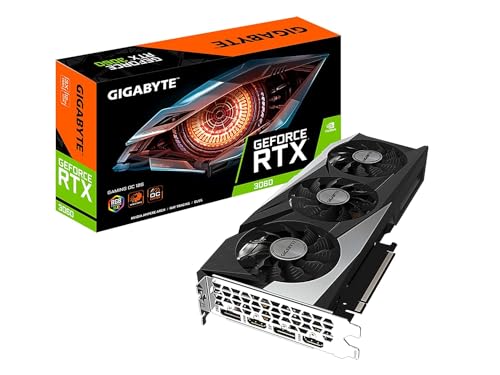
Top 3 picks at a glance
Best NVIDIA GPUs for Ryzen 5 7600X PCs
The best NVIDIA graphics card for a Ryzen 5 7600X is the GeForce RTX 5070 for high-refresh 1440p, while the RTX 4060 or RTX 5060 Ti suits 1080p and the RTX 5070 Ti is the strongest balanced choice for demanding 1440p and entry-level 4K.
The Ryzen 5 7600X has six Zen 4 cores and twelve threads, strong gaming performance, and enough CPU capability for most modern GPUs. It is not a sensible limitation for 1440p gaming, where the graphics card does most of the work. At very high refresh rates—especially 200Hz and above at 1080p—the processor can become the limiting component before an upper-tier NVIDIA GPU is fully utilized.
As an Amazon Associate we earn from qualifying purchases at no extra cost to you.


Quick GPU recommendations by resolution
| GPU | Best use | VRAM | Typical board power | Recommended PSU | Practical clearance target |
|---|---|---|---|---|---|
| GeForce RTX 4060 | 1080p high settings | 8GB | 115W | 550W | 250–300mm, 2 slots |
| GeForce RTX 4060 Ti 16GB | 1080p ultra, lighter 1440p | 16GB | 165W | 550–600W | 250–310mm, 2–2.5 slots |
| GeForce RTX 5070 | 1440p high refresh | 12GB | 250W | 650W | 280–330mm, 2–3 slots |
| GeForce RTX 5070 Ti | 1440p ultra and entry 4K | 16GB | 300W | 750W | 300–340mm, 3 slots |
| GeForce RTX 5080 | 4K high refresh | 16GB | 360W | 850W | 310–360mm, 3 slots |
| GeForce RTX 5090 | 4K maximum performance | 32GB | 575W | 1000–1200W | 330–360mm+, 3.5–4 slots |
Board power, dimensions, and power-supply recommendations vary between NVIDIA Founders Edition cards and partner models. Treat the clearance figures as planning targets, then confirm the exact card’s length, thickness, radiator clearance, and power connector requirements before buying.
Best 1080p choices: RTX 4060 and RTX 4060 Ti
GeForce RTX 4060: the efficient value match
The RTX 4060 pairs cleanly with the Ryzen 5 7600X for 1080p gaming. It can typically deliver high frame rates at high settings in competitive games and strong performance in many single-player games. DLSS Super Resolution and Frame Generation can provide additional smoothness in supported titles, although native rendering remains preferable when the GPU already has enough performance.
Its 8GB of VRAM is adequate for 1080p today, but it leaves less room for maximum texture settings in newer games. Choose this card when the target is a 1080p 60–144Hz monitor, low power consumption, or a compact case. It is also a sensible option if the price is substantially below newer alternatives.
GeForce RTX 4060 Ti 16GB: more texture headroom
The 16GB RTX 4060 Ti is a better fit for games that use large texture packs or for a system intended to last several years. The extra VRAM does not transform its raw performance, so it is not automatically the best value. However, it can avoid texture-quality compromises and reduce the risk of stutter when a game exceeds an 8GB card’s comfortable memory capacity.
At 1080p, the 7600X can become the bottleneck in esports titles at very high frame rates. If your monitor is 240Hz or faster and you mainly play competitive games, spending more on the GPU may produce little benefit compared with improving CPU-side settings, memory tuning, or eventually moving to a faster Ryzen processor.
Best 1440p choices: RTX 5070 and RTX 5070 Ti
GeForce RTX 5070: the balanced recommendation
The RTX 5070 is the most balanced pairing for the Ryzen 5 7600X. At 1440p, it has enough performance for high settings and high refresh rates without the cost, heat, and power demands of the flagship cards. It also supports NVIDIA’s current ray-tracing and AI upscaling features, making it useful in visually demanding games where raster performance alone is not enough.
The main limitation is its 12GB memory capacity. That is generally suitable for 1440p, but maximum texture settings, extensive ray tracing, high-resolution texture packs, and poorly optimized new releases can consume more. Use DLSS Quality at 1440p when a game is demanding: it renders internally at a lower resolution while retaining a presentation close to native 1440p.
GeForce RTX 5070 Ti: the long-term 1440p pick
Choose the RTX 5070 Ti when you want 1440p ultra settings, heavy ray tracing, or a 1440p monitor above 144Hz. Its 16GB of VRAM gives more room for demanding textures and future releases, while its extra shader and ray-tracing capability provides a more substantial performance step than simply buying a card with more memory.
The Ryzen 5 7600X remains a good match at 1440p. In a game running at 170 frames per second, however, CPU limits can appear in crowded open worlds or simulation-heavy scenes. Enable a frame cap close to your monitor’s refresh rate—for example, 141 FPS on a 144Hz display—to reduce unnecessary CPU and GPU workload.
Best 4K choices: RTX 5070 Ti, RTX 5080, and RTX 5090
RTX 5070 Ti: entry-level 4K with sensible settings
The RTX 5070 Ti can handle 4K gaming when you use sensible settings rather than insisting on native ultra rendering in every title. DLSS Quality, selective ray tracing, and a 60–100 FPS target make it a reasonable 4K option. Its 16GB VRAM is preferable to 12GB for this resolution.
RTX 5080: the best high-end pairing
The RTX 5080 is a strong choice for 4K high-refresh gaming. It is better suited to 4K ultra settings and ray tracing than the 5070 Ti, while the Ryzen 5 7600X generally stays out of the way at this resolution. At extremely high frame rates in older or competitive games, the CPU may still limit performance, but that is less important when the target is visually demanding 4K gaming.
RTX 5090: maximum performance, not maximum balance
The RTX 5090 is appropriate only when the goal is the highest possible 4K performance, heavy ray tracing, or particularly demanding creative workloads. It is not the most balanced card for a 7600X system: in CPU-limited games, some of its performance will remain unused. A high-end Ryzen X3D processor can make more sense if the PC is primarily for competitive gaming at very high frame rates.
Power-supply calculation for a 7600X build
Do not size the PSU from GPU board power alone. For example, a Ryzen 5 7600X can draw roughly 90W under a heavy all-core workload, while a typical RTX 5070 uses about 250W. Add approximately 100W for the motherboard, memory, storage, fans, USB devices, and transient allowance:
90W CPU + 250W GPU + 100W platform allowance = 440W estimated peak.
A quality 650W PSU therefore provides useful headroom for an RTX 5070, while 750W is more comfortable for the RTX 5070 Ti. For an RTX 5080, use a quality 850W unit; for an RTX 5090, follow the card manufacturer’s 1000W or higher recommendation. Prefer a modern ATX 3.0 or ATX 3.1 PSU with the appropriate native high-power GPU cable rather than relying on multiple adapters.
Case clearance and installation checks
- Measure GPU length: leave at least 20–30mm beyond the advertised card length for front fans, cables, and easier installation.
- Check thickness: a three-slot card can block adjacent expansion slots and may interfere with a capture card or sound card.
- Check radiator position: a front-mounted radiator can reduce GPU space by 25–40mm, turning a nominally compatible case into an incompatible one.
- Check cable bend room: high-power connectors should not be sharply bent immediately beside the plug. Allow roughly 35–40mm where possible.
- Check airflow: use at least two front intake fans and one rear exhaust fan for midrange or high-end cards; the RTX 5080 and RTX 5090 especially benefit from a well-ventilated case.
Decision matrix
| Your situation | Recommended GPU | Why |
|---|---|---|
| 1080p, 60–144Hz, compact or efficient PC | RTX 4060 | Low power draw and enough performance for the resolution |
| 1080p ultra, large textures, longer ownership | RTX 4060 Ti 16GB | Extra VRAM without a large PSU requirement |
| 1440p, high refresh, balanced budget | RTX 5070 | Strong performance without excessive CPU or PSU demands |
| 1440p ultra, ray tracing, or 1440p ultrawide | RTX 5070 Ti | More performance and 16GB VRAM |
| 4K, high settings and high refresh | RTX 5080 | Appropriate performance for demanding 4K workloads |
| 4K maximum settings with minimal compromise | RTX 5090 | Highest performance, provided the case and PSU support it |
Frequently asked questions
Will the Ryzen 5 7600X bottleneck an RTX 5070 or RTX 5070 Ti?
The Ryzen 5 7600X is generally a good match for the RTX 5070 and RTX 5070 Ti at 1440p. The graphics card usually does most of the work at that resolution, although CPU limits can appear in crowded open worlds, simulation-heavy scenes, or games running at very high frame rates. A frame cap close to the monitor’s refresh rate can reduce unnecessary workload.
Is 12GB of VRAM enough for 1440p gaming?
The RTX 5070’s 12GB of VRAM is generally suitable for 1440p gaming, but it provides less headroom than 16GB. Maximum texture settings, extensive ray tracing, high-resolution texture packs, and poorly optimized new releases can consume more memory. If you want more room for demanding textures and future releases, the RTX 5070 Ti’s 16GB is the stronger long-term choice.
Should I use DLSS at 1440p with the RTX 5070?
Use DLSS Quality at 1440p when a game is demanding. It renders internally at a lower resolution while retaining a presentation close to native 1440p, which can help the RTX 5070 maintain smoother performance. Native rendering remains preferable when the GPU already has enough performance, while DLSS Super Resolution and Frame Generation can provide additional smoothness in supported titles.
What PSU should I choose for a Ryzen 5 7600X and RTX 5070 build?
Choose a quality 650W PSU for a Ryzen 5 7600X and RTX 5070 build, while 750W is more comfortable for an RTX 5070 Ti. The estimate includes roughly 90W for the CPU, 250W for a typical RTX 5070, and 100W for the platform and transient allowance. Prefer a modern ATX 3.0 or ATX 3.1 unit with the appropriate native cable.
Would a Ryzen X3D processor be better for an RTX 5090 system?
A high-end Ryzen X3D processor can make more sense than the Ryzen 5 7600X when the PC is primarily for competitive gaming at very high frame rates. The RTX 5090 is intended for maximum 4K performance, heavy ray tracing, or demanding creative workloads, but CPU-limited games may prevent it from being fully utilized. For ordinary 1080p or 1440p gaming, it is not a balanced choice.
Final buying advice
For most Ryzen 5 7600X gaming PCs, buy the RTX 5070 if the monitor is 1440p, the RTX 4060 if it is 1080p, and the RTX 5070 Ti if you want a durable 1440p or entry-level 4K system. Move to the RTX 5080 for serious 4K high-refresh gaming. Avoid paying for an RTX 5090 solely to play at 1080p or ordinary 1440p, because the 7600X and display are likely to limit the practical benefit before the GPU does.