
The best premium fly fishing rod and reel outfit combos are matched by target species and conditions: a 9-foot 5-weight fast-to-medium-fast outfit is the most versatile trout choice, while heavier 7- to 9-weight outfits are better for wind, bass, steelhead, salmon, and inshore species.
As an Amazon Associate we earn from qualifying purchases at no extra cost to you.


Our Top Picks

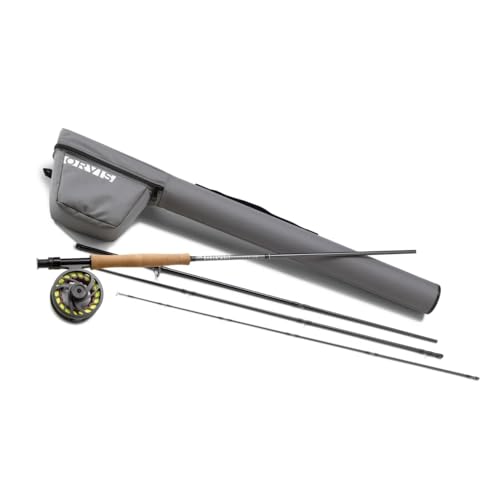

Top 3 picks at a glance
Best Premium Fly Fishing Rod and Reel Outfit Combos at a Glance
| Fishing situation | Rod specification | Reel requirement | Line and useful accessories | Best outfit type |
|---|---|---|---|---|
| General trout, rivers, and mixed flies | 9 ft, 5 wt, medium-fast or fast | Large-arbor, sealed or smooth disc drag, 3.5–4.0 oz | Weight-forward floating line, 20–100 yd backing, case | Premium 5-weight package |
| Small streams and delicate dry flies | 7 ft 6 in–8 ft 6 in, 3–4 wt, medium action | Light click-and-pawl or minimal disc drag | Delicate floating line, narrow leader range, rod tube | Lightweight presentation outfit |
| Windy rivers, streamers, and large trout | 9 ft, 6 wt, fast action | Large-arbor disc drag with 100–150 yd backing capacity | Floating, sink-tip, or streamer line; spare spool useful | Power-oriented 6-weight package |
| Bass, carp, and larger freshwater fish | 9 ft, 7–8 wt, fast action | Strong sealed drag, substantial arbor, 150–200 yd backing | Warmwater floating line, sink-tip option, durable leader | Heavy freshwater outfit |
| Steelhead, salmon, and light saltwater | 9–10 ft, 8–9 wt, fast action | Sealed drag, corrosion-resistant construction, 200+ yd backing | Coldwater or saltwater floating line, running line, spare spool | Large-fish premium outfit |
What Makes a Premium Combo Worth Buying?
A premium outfit is not automatically the one with the lightest rod or the most expensive reel. Its value comes from how well four parts work together: the rod’s casting behavior, the reel’s drag and balance, the fly line’s taper and coating, and the accessories supplied with the package.
Named high-end rod families such as the Sage R8 Core, Winston Air 2, and Scott Centric illustrate different approaches to premium performance. A Sage R8 Core-style fast action favors tight loops and quick line speed. A Winston Air 2-style rod is attractive when smooth loading and presentation matter more than maximum power. A Scott Centric-style fast action suits anglers who frequently cast into wind or carry larger flies.
The reel should not be treated as an afterthought. On a 3- or 4-weight trout setup, a lightweight click-and-pawl reel can provide excellent balance and a pleasant fishing experience. On a 7-weight or heavier setup, a sealed large-arbor disc drag is more appropriate because it retrieves line quickly and manages long, forceful runs.
Rod Weight and Action: Choose for the Fly, Not Just the Fish
3- and 4-weight rods
These rods protect light tippets and make short-range dry-fly fishing enjoyable. A medium or medium-fast action helps the rod load with less line outside the tip, which is valuable on small streams. They are less suitable for heavy streamers, strong wind, or repeatedly casting bulky indicator rigs.
5-weight rods
A 9-foot 5-weight remains the best all-around premium trout choice. It can cast dry flies, nymph rigs, and moderate streamers while still offering enough delicacy for ordinary trout leaders. Choose medium-fast action if you value feel and roll casting; choose fast action if you regularly fish open water, long leaders, or windy banks.
6-weight rods
A 6-weight is the better choice when the fishing involves weighted streamers, strong wind, larger trout, or indicator rigs with multiple flies. It sacrifices some finesse but adds line speed and lifting power. A 9-foot fast-action 6-weight is often the most useful single rod for anglers who find a 5-weight underpowered.
7- to 9-weight rods
Move to a 7- or 8-weight for largemouth bass, carp, pike, heavy streamers, and demanding freshwater conditions. An 8- or 9-weight is more appropriate for light saltwater, salmon, and larger steelhead. These rods need reels with reliable drag systems and sufficient backing capacity rather than ultralight balance.
Reel Drag, Arbor, and Balance
For trout, a drag that starts smoothly at low tension is more useful than a very high maximum-drag figure. Light tippets can break when a drag surges at the beginning of a run. A sealed drag also reduces maintenance after exposure to grit or water, although it does not eliminate the need to rinse the reel.
A large arbor retrieves more line per revolution. The practical advantage is greatest when a fish runs toward you or when you strip line quickly between casts. It also reduces tight coils in the fly line. However, an oversized reel can make a light 3-weight feel tip-heavy, so match reel mass to the rod’s balance point rather than choosing the largest arbor available.
For saltwater, look for anodized aluminum, corrosion-resistant hardware, a sealed drag, and a design that can be rinsed easily. A freshwater trout reel with an exposed mechanism may be excellent on a mountain stream but a poor choice for repeated saltwater use.
Line Quality Can Change the Outfit More Than the Reel
The included line deserves close inspection. A premium rod paired with a cheap or poorly matched line will not cast like a premium outfit. Look for a weight-forward line whose head length and taper suit the intended fishing.
- General trout: weight-forward floating line with a moderate front taper.
- Delicate dry flies: longer, finer front taper and a supple coldwater coating.
- Streamers and wind: shorter, more powerful head that turns over weighted flies.
- Warmwater species: coating designed to remain stable in warmer temperatures.
- Saltwater: saltwater-rated core, coating, and welded loops, with a taper built for larger flies.
Line weight should usually match the rod’s rating, but some experienced anglers deliberately overline a slower rod by one size to make it load sooner at short distance. Do not do this automatically with a fast premium rod: overlining can make the action feel sluggish and reduce its high-line-speed advantage.
A Practical Matching Calculation
Backing capacity becomes important when the target species can run. Suppose a 9-weight reel holds 250 yards of 30-pound backing, and the fly line occupies approximately 30 yards of the reel’s usable capacity. If the fish takes 180 yards of line, the remaining backing is:
250 yards − 30 yards of fly line − 180 yards of running distance = 40 yards remaining.
That is an uncomfortable margin once knots, imperfect winding, and a long first run are considered. For fish capable of sustained runs, choose a reel with at least 300 yards of suitable backing capacity or move to a larger reel. The same calculation is less critical for ordinary stream trout, where 75–100 yards of backing is typically ample.
Decision Matrix: Which Premium Combo Fits You?
| Your priority | Choose | Avoid | Why |
|---|---|---|---|
| One outfit for most trout fishing | 9 ft 5 wt, medium-fast or fast, floating line | Very specialized 3 wt or 8 wt | Best balance of reach, line control, and fly versatility |
| Small streams and short casts | 7 ft 6 in–8 ft 6 in 3–4 wt, medium action | Long fast-action 6 wt | Loads easily at short range and protects fine tippet |
| Large rivers with wind | 9 ft 6 wt, fast action, powerful line taper | Soft 3 wt | Generates line speed and turns over larger rigs |
| Streamer-focused trout fishing | 6 wt with spare spool for sink-tip line | Delicate dry-fly taper only | Handles weighted flies and expands depth options |
| Saltwater or tropical species | 8–9 wt, sealed drag, corrosion-resistant reel | Unsealed freshwater reel | Salt and powerful fish demand easier maintenance and stronger drag |
Included Accessories That Actually Matter
A rod tube and protective sock are essential for a premium rod because transport damage can erase the value of a high-end blank. A reel case is useful when the reel is packed separately. Welded line loops, backing, and a properly installed leader are convenient, but verify that the line is the correct weight and taper before accepting the package as ready to fish.
A spare spool is more valuable than decorative extras if you fish changing conditions. A second spool carrying a sink-tip or specialized floating line can turn one 6-weight outfit into two practical setups. For saltwater, prioritize a spare spool and corrosion-resistant construction over a lightweight click reel.
Price and Buying Guidance for 2026
Premium rod-and-reel outfit packages commonly fall around $400–$700 for a strong mid-premium setup, $700–$1,200 for a high-end combination, and above $1,200 when premium rod, reel, line, backing, and multiple spools are included. The exact price depends heavily on whether the line and spare spool are part of the package.
Before buying, confirm the rod length and weight, action, reel size, drag type, backing capacity, line model or taper, warranty coverage, and whether a hard tube is included. If two packages use comparable rods, choose the one with the better fly line and a reel that balances the rod; those details affect everyday fishing more than small differences in blank weight.
Frequently asked questions
Can one outfit handle both dry flies and nymph rigs?
Yes—a 9-foot 5-weight can cast dry flies, nymph rigs, and moderate streamers. Choose medium-fast action for feel and roll casting, or fast action if you often fish open water, long leaders, or windy banks. It is a versatile trout setup, though specialized conditions may call for a lighter or heavier rod.
Is a sealed drag still useful if I rinse my reel after fishing?
Yes. A sealed drag reduces maintenance after exposure to grit or water, while rinsing remains necessary. For saltwater, the article also recommends corrosion-resistant construction and hardware, anodized aluminum, and a design that is easy to rinse. Sealing does not remove the need for care.
Should I replace the line that comes with a combo?
Check its weight and taper before deciding. A cheap or poorly matched line can keep a premium rod from casting well, so confirm that the line suits the rod and fishing conditions. The article recommends different tapers and coatings for delicate dry flies, streamers and wind, warmwater species, and saltwater.
When is a spare spool worth having?
A spare spool is useful when conditions change and you want to carry a different line. For example, a second spool with a sink-tip line can give one 6-weight outfit another practical setup. The article considers that more useful than decorative extras.
How much backing should a reel hold for fish that make long runs?
Choose capacity based on the expected run, fly line, and a safety margin. In the article’s example, 250 yards of backing leaves only 40 yards after accounting for the fly line and a 180-yard run—a tight margin. For fish capable of sustained runs, it recommends at least 300 yards of suitable backing capacity.
Bottom Line
For most anglers, the best premium fly fishing rod and reel outfit combo is a balanced 9-foot 5-weight with a medium-fast or fast rod, a smooth large-arbor reel, and a quality weight-forward floating line. Choose a 4-weight for finesse, a 6-weight for wind and streamers, and an 8- or 9-weight sealed-drag outfit for powerful freshwater or saltwater fish. Match the complete system to the conditions, because the right line and reel balance can make a premium rod substantially more useful than its specification sheet suggests.


