
Our Top Picks

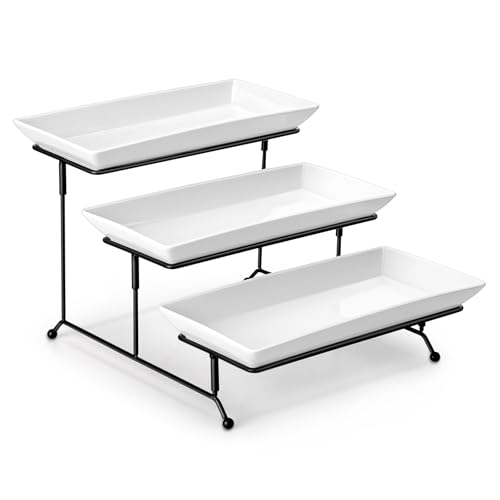
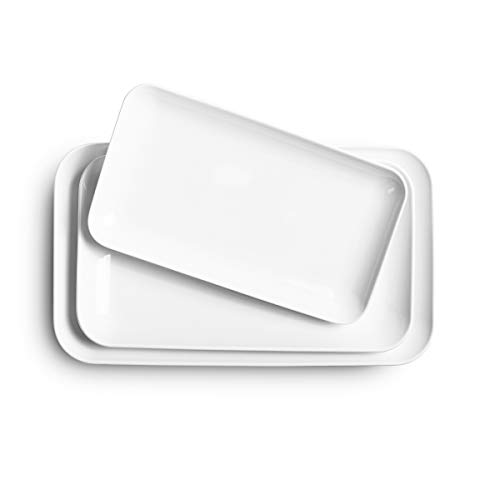

Top 3 picks at a glance
Best Serving Platters for Hosting in Style
The best serving platters are usually a durable 16–18-inch porcelain or stoneware platter for entrées, a lighter 12–14-inch divided platter for appetizers, and a stainless-steel or melamine option when you need buffet-safe handling and easy cleanup.
The right choice depends less on decoration than on food type, serving distance, storage space, and whether the platter will go into a dishwasher, oven, refrigerator, or outdoor setting. Use the guide below to match size, material, shape, and handling features to the way you host.
As an Amazon Associate we earn from qualifying purchases at no extra cost to you.


Choose the Right Platter Size First
Platter dimensions affect both capacity and practicality. A platter that looks generously sized in an empty cabinet can become difficult to carry once it is loaded with roast vegetables, sliced meat, or sauced food.
| Platter size | Approximate usable surface | Best for | Typical loaded weight |
|---|---|---|---|
| 10–12 inches | 60–90 square inches | Small appetizers, desserts, snacks for 2–4 people | 2–4 lb |
| 13–15 inches | 100–150 square inches | Cheese, sandwiches, salads, appetizers for 4–8 people | 4–7 lb |
| 16–18 inches | 170–240 square inches | Roasts, pasta, vegetables, main courses for 6–10 people | 7–12 lb |
| 19–24 inches | 250–400 square inches | Large buffets, catering, family-style service for 10 or more | 10–20 lb or more |
These are planning estimates rather than strict capacities. A deep rim, raised edge, irregular shape, or decorative border reduces usable space. As a practical rule, leave at least 1–2 inches of clearance around the food so guests can serve themselves without touching the rim.
A useful capacity calculation
For a rectangular platter, multiply length by width to estimate its total surface area. For example, a 17-by-11-inch platter has 187 square inches of total area. If a 1.5-inch border surrounds the food, the practical food area is closer to 14 by 8 inches, or 112 square inches. That is enough for roughly 24–32 bite-size appetizers, a compact sliced roast, or a side dish for about eight people.
This calculation explains why two platters with similar outside dimensions can hold noticeably different amounts: broad, flat interiors are more useful than thick decorative rims.
Match the Material to the Food and Setting
Porcelain and vitrified ceramic
Porcelain is an excellent all-purpose choice for formal dinners and everyday hosting. It is usually nonporous, resistant to staining, and suitable for serving hot food. White porcelain also makes colorful food easy to see.
- Best for: entrées, roasted vegetables, pasta, sliced meats, and desserts.
- Advantages: polished appearance, good heat tolerance, easy cleaning, and stackability when the shape is simple.
- Limitations: it can chip or break if knocked against a sink or countertop, and large pieces may be heavy.
Look for wording such as dishwasher-safe, microwave-safe, and oven-safe on the manufacturer’s care instructions. “Ceramic” alone does not guarantee that a platter can tolerate rapid temperature changes.
Stoneware
Stoneware has a heavier, more rustic feel and retains heat well. It suits family-style meals, baked dishes, and casual holiday tables.
- Best for: casseroles, roasted foods, bread, and hearty side dishes.
- Advantages: substantial handling, attractive glaze finishes, and strong heat retention.
- Limitations: greater weight, slower cooling, and a higher risk of thermal shock if moved directly from a hot oven to a cold surface.
Even if a stoneware platter is oven-safe, place it on a dry trivet rather than a wet or chilled countertop. Avoid heating an empty decorative platter unless its instructions specifically allow it.
Glass
Glass platters are useful when presentation matters. Transparent or lightly tinted glass works particularly well for cakes, sushi-style appetizers, fruit, and layered desserts.
- Best for: chilled foods, desserts, fruit, and visually arranged appetizers.
- Advantages: stain-resistant surface, neutral appearance, and easy visibility of the food.
- Limitations: slippery handling, breakage risk, and limited tolerance for sudden temperature changes.
Choose textured or footed glass when possible. A completely smooth glass platter can be awkward to carry with oily or wet hands.
Stainless steel
Stainless steel is a practical choice for buffet service, outdoor entertaining, and foods that need a sturdy, lightweight serving surface. It does not shatter and is generally resistant to odors and stains.
- Best for: buffet lines, grilled food, sandwiches, seafood, and outdoor events.
- Advantages: durable, relatively light, and easy to sanitize.
- Limitations: it can show fingerprints, may scratch, and does not provide insulation for hot food.
Do not use stainless steel as a cutting board. Repeated knife contact can damage the surface and dull the knife.
Melamine and high-quality plastic
Melamine and food-safe plastic are often the safest options around children, pools, patios, and crowded buffet tables. They are lightweight and resistant to shattering, but they should not be treated like ovenware.
- Best for: outdoor meals, children’s parties, picnics, and large buffets.
- Advantages: low weight, easy handling, and excellent impact resistance.
- Limitations: usually not microwave-safe or oven-safe; some finishes can scratch or fade.
Use melamine for serving rather than cooking. Follow the specific product label for dishwasher use, because heat tolerance varies.
Pick a Shape That Controls the Food
Rectangular platters
Rectangular designs maximize table space and are efficient for buffet lines. They work especially well for rows of sandwiches, sliced meats, asparagus, cookies, and sushi-style appetizers. A narrow rectangle is also easier to fit between serving bowls.
Oval platters
Oval platters are versatile for roasts, whole fish, poultry, and family-style vegetables. The curved ends make them easier to carry than a sharp-cornered rectangle, while the long center provides enough room for a main course.
Round platters
Round platters encourage guests to serve from any direction and look balanced at a dining table. They suit cakes, circular appetizers, cheese arrangements, and shared salads. Their drawback is wasted space when placed in a straight buffet line.
Divided and compartment platters
Divided platters keep crackers away from moist foods and separate dips, fruit, vegetables, or different appetizers. They are helpful when guests are standing and serving themselves, but fixed compartments reduce flexibility for large foods.
Raised-edge and handled platters
A low rim helps contain sauces and prevents sliced food from sliding. For gravies, dressings, or juicy roasted foods, choose a rim at least 0.5–1 inch high. Handles improve carrying, but they also increase the platter’s footprint and can make storage awkward.
Decision Matrix: Which Platter Fits Your Hosting Style?
| Your situation | Recommended size and shape | Best material | Feature to prioritize |
|---|---|---|---|
| Formal dinner for 6–8 | 16–18-inch oval | Porcelain or stoneware | Raised rim and comfortable underside grip |
| Appetizer table for 6–10 | 13–15-inch rectangular or divided | Porcelain, glass, or melamine | Separate sections and a non-slip base |
| Large buffet for 10 or more | Two 18–20-inch rectangles | Stainless steel or porcelain | Stackability and wide carrying edges |
| Outdoor gathering | 13–18-inch round or oval | Melamine or durable plastic | Low weight and shatter resistance |
| Dessert and fruit service | 10–14-inch round or footed | Glass or porcelain | Flat surface and easy visual presentation |
Handling and Dishwasher Safety Matter More Than They Seem
Before buying a large platter, check its empty weight and underside design. A 20-inch stoneware platter can become uncomfortable when carrying 10 pounds of food. Wide, unglazed edges or molded handholds provide better control than a narrow polished rim.
Dishwasher safety also depends on geometry. Oversized platters can block the spray arms or prevent the door from closing, even when the material itself is dishwasher-safe. Measure the dishwasher opening and rack depth before choosing a large buffet platter.
- Place fragile porcelain and glass where they cannot touch other dishes.
- Do not stack heavy cookware on top of decorative platters.
- Use mild detergent for reactive metallic trim or
Frequently asked questions
Can I use a serving platter to cut food?
No, a serving platter should not be used as a cutting board. Stainless steel can be scratched by repeated knife contact, and those scratches may dull the knife. For other materials, cutting directly on the platter can also risk damaging the surface. Transfer sliced meats, roasted foods, or other prepared items to the platter after cutting.
How much space should I leave around food on a platter?
Leave at least 1–2 inches of clearance around the food. This gives guests room to serve themselves without touching the rim and helps preserve the platter’s presentation. The usable area may be smaller than the outside dimensions suggest, especially when the platter has a deep rim, raised edge, irregular shape, or wide decorative border.
Can a platter go directly from the oven to the refrigerator?
No, avoid moving a hot platter directly to a cold surface or refrigerator because rapid temperature changes can cause thermal shock. This is especially important with stoneware and glass. Even when stoneware is oven-safe, place it on a dry trivet rather than a wet or chilled countertop, and follow the manufacturer’s care instructions.
Are divided platters better than regular platters?
Divided platters are better when you want to separate foods such as crackers, dips, fruit, vegetables, or different appetizers. They help prevent moist foods from affecting dry foods and work well when guests serve themselves while standing. However, fixed compartments reduce flexibility, so a regular platter is more suitable for large foods or adaptable arrangements.
How can I tell whether a large platter will fit in my dishwasher?
Measure the dishwasher opening and rack depth before buying a large platter. A platter can be labeled dishwasher-safe yet still block the spray arms or prevent the door from closing because of its size or shape. Oversized porcelain and glass pieces should be positioned so they cannot touch other dishes, and heavy cookware should not be stacked on them.
Related guides


