
The short answer: buy RAM, SSDs, and CPUs in the first two weeks of November when early sales push them toward their price floors, hold off on cases, power supplies, and coolers until Black Friday week when their discounts deepen by another 10–15 percentage points, and treat GPUs as opportunistic buys — grab any card that drops below its normal street price, because Black Friday itself rarely produces the lowest GPU price of the season.
Black Friday deals on computer parts follow predictable patterns once you know which categories genuinely get cut and which just get repackaged. The 2026 wrinkle: DRAM and NAND contract prices climbed through 2025 on data-center demand, pushing retail memory and SSD pricing upward. That changes the math on what counts as a real deal, so this guide breaks down typical discount ranges, the best timing per component, and how to verify a discount before you buy.
As an Amazon Associate we earn from qualifying purchases at no extra cost to you.



Our Top Picks



Top 3 picks at a glance
Typical Black Friday Discount Ranges by Component
The ranges below are measured against each part’s 90-day average selling price — not the inflated “was” price printed next to the sale tag. That distinction matters more than any single discount, and we’ll show the calculation later.
| Component | Typical cut vs. 90-day average | Deepest prices usually appear | Buy early or wait? |
|---|---|---|---|
| CPUs | 10–20% (25–35% on outgoing generations) | Black Friday week | Early — cuts are modest and stock is stable |
| GPUs | 5–15% (up to ~25% on clearance models) | Scattered across November | Buy whenever it undercuts street price |
| RAM | 15–25% off elevated 2026 pricing | Early November | Early — prices are trending up, not down |
| SSDs / storage | 20–35% | Black Friday + Cyber Monday | Early for 2TB and larger capacities |
| Power supplies | 20–35% | Black Friday week | Wait |
| Cases | 25–45% | Black Friday–Cyber Monday | Wait — deepest category-wide cuts |
| Coolers & case fans | 25–40% | Cyber Monday | Wait |
Parts Worth Buying Before Black Friday Week
RAM: the urgency pick for 2026
Memory is the one category where waiting carries genuine risk this year. DRAM contract pricing has been rising since mid-2025, so a November “deal” may be the cheapest a kit gets for months. If a 32GB DDR5-6000 CL30 kit — the sweet spot for Ryzen 7000/9000 builds — drops 15–20% below the going rate in early November, take it rather than gambling on a few extra percent. The same logic applies to DDR4-3200 kits for AM4 or LGA1700 upgrades, which are becoming legacy stock with less predictable pricing.
SSDs: prioritize high capacities
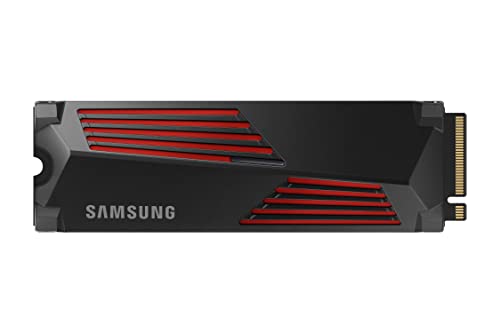
PCIe 4.0 flagships like the Samsung 990 Pro and WD Black SN850X are perennial Black Friday stars — 2TB models have historically fallen into the $100–$140 range during the event, and 4TB drives into the $220–$280 range. With NAND pricing firming, secure a 2TB or 4TB drive early in the month rather than holding out. Budget DRAM-less Gen4 drives and Gen5 models like the Crucial T705 or Samsung 9100 Pro often get a second, slightly deeper cut on Cyber Monday, so those are safer to wait on if you’re chasing the top or bottom of the market.
CPUs and GPUs: modest cuts, limited downside
Current-generation chips — the Ryzen 7 9800X3D, Ryzen 9 9950X, or Intel’s Core Ultra 7 265K — typically see $30–$80 off, with the steepest percentage drops reserved for outgoing parts like the Ryzen 7 7800X3D. CPU-plus-motherboard bundles during Black Friday week can add an effective $40–$60 in savings, which is worth factoring in if you need both. For GPUs, RTX 50-series and RX 9000-series cards rarely dip more than 10% on the day itself; the best values are partner cards and last-generation clearance. If an RTX 5070-class card falls below its usual $550–$650 band at any point in November, buy it then.
Parts to Hold Until Black Friday Week
Power supplies: pick your wattage now, buy on the week
Quality ATX 3.1 units reliably drop 20–35%, so there’s little reason to buy early — but you should calculate your target wattage now so you can move fast when the right unit gets cut. A quick worked example: an RTX 5070 Ti (~300W) paired with a Ryzen 7 9800X3D (~120W under gaming loads) plus roughly 80W for the motherboard, drives, and fans draws about 500W sustained. Multiplying by 1.5 for transient headroom gives 750W as a floor and 850W as the comfortable choice.
| GPU class | Recommended PSU (ATX 3.1) | Typical Black Friday range |
|---|---|---|
| RTX 5060 / RX 9060 XT | 650 W | $65–$90 |
| RTX 5070 / RX 9070 | 750 W | $80–$110 |
| RTX 5070 Ti / RX 9070 XT / RTX 5080 | 850 W | $95–$135 |
| RTX 5090 | 1,000–1,200 W | $150–$230 |
For any high-power Nvidia card, make sure the unit includes a native 12V-2×6 cable rather than relying on adapters — it’s a meaningful quality and safety point that distinguishes current ATX 3.1 designs from older stock.
Cases and cooling: patience pays most here
Cases take the deepest cuts of any component — 30–45% is common, and even premium mid-towers regularly drop $40–$70. The only risk is a specific popular model selling out, so compromise: if you want one particular case, buy it whenever it hits 25% off; if you’re flexible, wait for the Friday-to-Monday window. Air coolers, AIOs, and case fans peak on Cyber Monday, when retailers push accessory discounts hardest.
How to Tell a Real Deal From a Recycled Sticker
Retailers anchor Black Friday prices against a “was” figure the item may not have sold at in months. The fix is comparing the sale price to the item’s 90-day average, which any price-history tracker shows in seconds.
Worked example: a 2TB Gen4 SSD is advertised as “40% off — $149, was $249.” But the price history shows it sat between $155 and $165 through September and October, putting the real average near $160. The actual discount is ($160 − $149) ÷ $160 ≈ 7% — respectable for a CPU, weak for storage. A rival listing showing “only 20% off” at $129 against the same $160 average is the genuinely better deal: ($160 − $129) ÷ $160 ≈ 19%.
Set these target thresholds before the sales start and buy the moment a listing meets them, regardless of the date:
- CPUs and GPUs: 10%+ below the 90-day average is a buy — deeper cuts are rare.
- RAM and SSDs: in 2026’s rising market, 15%+ below the current average justifies locking in.
- PSUs, cases, coolers: hold out for 25–35% below average — it arrives every year.
The November Timeline at a Glance
- Nov 1–15: First-wave sales. Buy RAM, 2TB+ SSDs, CPUs, and any GPU that undercuts its street price.
- Thanksgiving week: Sitewide promo codes stack on top of listed discounts; PSU and case cuts begin; CPU/motherboard bundles appear.
- Black Friday–Cyber Monday: Deepest cuts on cases, coolers, fans, and peripherals; a second wave on storage typically lands Monday.
- Early December: Leftover clearance on cases and cooling, but don’t count on RAM or SSD pricing holding.
FAQ
Is Cyber Monday better than Black Friday for computer parts?
For storage, coolers, and peripherals, Cyber Monday frequently matches or slightly beats Friday’s pricing. For cases and PSUs the difference is small. The real risk in waiting is stock, not price — if a part hits your target threshold before Monday, buy it.
Do graphics cards actually get real Black Friday deals?
Yes, but modest ones: expect 5–15% on current-generation cards and up to ~25% on outgoing models being cleared. The best GPU deals of the season often appear randomly across November rather than on the day itself, which is why tracking matters more than timing.
Should I wait for Black Friday if I only need one part?
If that part reaches your target price before the event, buy it. The extra few percent you might save by waiting is easily erased by a sellout, a shipping delay, or — in 2026’s memory market — a price that never comes back down.

