
Cocktails for beginners are easiest when you learn three core ratios, use one versatile spirit and one shaker setup, and measure every pour to keep serving sizes consistent.
Our Top Picks
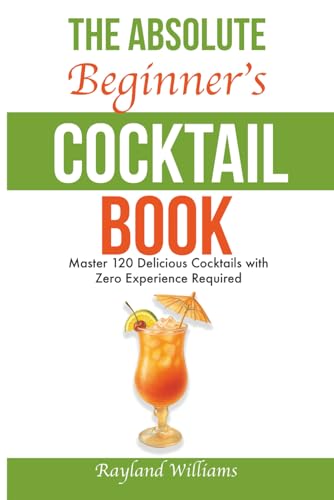 The Absolute Beginner’s Cocktail Book: Master 120 Delicious6 x 0.5 x 9 Inches0.7 poundsCheck on Amazon

The 3 Ratios That Build 90% of Beginner Drinks
You don’t need to memorize dozens of recipes. Most classic cocktails are variations on balance between strong, sweet, sour, and dilution. Master these ratios and you can swap spirits and mixers without breaking the drink.
As an Amazon Associate we earn from qualifying purchases at no extra cost to you.


1. The Sour: 2 – 0.75 – 0.75
This is the foundation for Whiskey Sour, Daiquiri, Gimlet, and Margarita. The formula is 2 parts spirit, 0.75 parts sour (fresh lemon or lime juice), 0.75 parts sweet (simple syrup, triple sec, or agave). Shake with ice and strain. If it tastes too tart, go to 1 part sweet next time; if too sweet, add 0.25 part more citrus. Always use fresh juice, not bottled sour mix.
2. The Spirit-Forward: 2 – 1 – 2 dashes
This covers Old Fashioned, Manhattan, and Negroni-style drinks. The formula is 2 parts base spirit, 1 part modifier (vermouth, liqueur, or syrup), 2 dashes bitters. Stir with ice, never shake, to keep it silky and clear. Taste before you add more sweetener, the modifier already brings sugar.
3. The Highball: 1 part spirit to 3-4 parts mixer
This is your low-effort, low-alcohol option: Gin and Tonic, Whiskey and Ginger, Vodka Soda, Rum and Coke. Build it directly in a glass full of ice with 2 oz spirit and 4-6 oz chilled mixer. Stir once gently to combine without killing carbonation.
| Ratio Type | Example Cocktail | Exact Spec (per single serving) | Method | Resulting Strength |
|---|---|---|---|---|
| Sour 2:0.75:0.75 | Whiskey Sour | 2 oz bourbon, 0.75 oz lemon juice, 0.75 oz simple syrup | Shake 12 sec, strain over fresh ice | ~14% ABV after dilution |
| Sour 2:0.75:0.75 | Daiquiri | 2 oz white rum, 0.75 oz lime juice, 0.75 oz simple syrup | Shake, strain up (no ice) | ~16% ABV after dilution |
| Spirit-Forward 2:1 | Old Fashioned | 2 oz bourbon, 0.25 oz simple syrup, 2 dashes Angostura | Stir 20 sec with ice, strain over large cube | ~27% ABV after dilution |
| Spirit-Forward 2:1 | Negroni | 1 oz gin, 1 oz Campari, 1 oz sweet vermouth | Stir with ice, strain over ice | ~20% ABV after dilution |
| Highball 1:3 | Gin and Tonic | 2 oz gin, 4-5 oz tonic water | Build in glass over ice | ~9% ABV |
Essential Tools You Actually Need (and What to Skip)
A beginner bar needs four tools for reliable results. Everything else is optional until you know what you like to drink.
- Jigger (1 oz / 2 oz): Non-negotiable. Free-pouring is the fastest way to make an unbalanced, overly strong drink. A Japanese-style or bell jigger with internal markings for 0.25, 0.5, 0.75 oz is most versatile.
- Shaker: A Boston shaker (16 oz tin + 28 oz tin) seals better and chills faster than a cobbler shaker. If you only want one closed shaker, a cobbler with built-in strainer works but can stick when cold.
- Strainer: A Hawthorne strainer for shaken drinks and a simple mesh fine strainer if you want to remove citrus pulp or ice chips.
- Bar spoon and mixing glass: For stirred drinks. A pint glass works as a mixing glass. Stir until the outside frosts, about 20-30 seconds.
- Citrus juicer and small knife: Hand press or elbow press. You need about 1 oz juice per lemon/lime.
Skip initially: muddlers, channel knives, smoking guns, and electric frothers. A wooden spoon handle can muddle mint or fruit in a pinch.
Low-Cost Substitutions That Still Work
You can make excellent cocktails for beginners without a full bar kit. Use these swaps and keep your budget usually $25–$40 for the tool set instead of $80+.
- Instead of a mixing glass: any large pint glass or mason jar.
- Instead of a Hawthorne strainer: a small fine-mesh kitchen sieve held over the shaker.
- Instead of a jigger: a tablespoon measure. 1 tablespoon = 0.5 oz, so 4 tablespoons = 2 oz. Less elegant but accurate.
- Instead of a bar spoon: a long teaspoon or chopstick for stirring.
- Instead of large format ice molds: freeze water in a small lidded plastic container and crack into large chunks with a knife. Larger ice melts slower and prevents over-dilution.
5 Beginner-Friendly Spirits to Buy First
Start with one or two versatile bottles, not five. Each of these mixes across multiple ratios and is available in reliable, widely distributed expressions usually $15–$35 per 750ml bottle.
- Vodka (40% ABV): Neutral, mixes with anything. Best for Highballs and Sours when you want citrus and sweet to shine. Examples of spec class: unflavored, charcoal-filtered vodka at 80 proof.
- London Dry Gin (40-47% ABV): Adds botanical flavor without extra steps. Essential for Gin and Tonic, Gimlet, and Negroni.
- White Rum (40% ABV): Light sweetness, perfect for Daiquiri and Mojito variations. More forgiving than aged rum for beginners.
- Bourbon or Rye Whiskey (40-45% ABV): Covers Old Fashioned and Whiskey Sour. Bourbon is softer and sweeter, rye is spicier. Choose one.
- Blanco Tequila (40% ABV, 100% agave): For Margarita and Paloma. Avoid mixto tequilas labeled just as “tequila” without “100% agave.”
Add one bottle of sweet vermouth and one bottle of orange liqueur or triple sec after you have your base spirit. Vermouth must be refrigerated after opening and used within 3-4 weeks or it will taste flat.
| If You Like… | Buy This First | Why It’s Beginner-Friendly | First 3 Cocktails to Try |
|---|---|---|---|
| Light, refreshing, not too sweet | Vodka or Gin | Forgiving ratios, cheap mixers work well | Gin and Tonic, Vodka Soda with lime, Gimlet |
| Sweet and citrusy | White Rum or Blanco Tequila | Natural affinity with lime and syrup | Daiquiri, Margarita, Mojito |
| Rich, spirit-forward | Bourbon | Only needs sugar and bitters to shine | Old Fashioned, Whiskey Sour, Whiskey Highball |
| Bitter and complex | Gin + Sweet Vermouth + Campari | Equal-parts Negroni is easy to remember | Negroni, Americano, Gin and Vermouth |
Serving Sizes, Dilution, and How Strong Your Drink Really Is
A standard cocktail serving in the US is not the same as a straight pour. Shaking or stirring adds 25-35% water from ice melt, which lowers ABV, chills, and softens harshness. You need to account for dilution to understand serving size and to batch drinks consistently.
A typical single cocktail uses 2 oz (60 ml) of 40% ABV spirit. Before dilution, that is 0.8 oz of pure alcohol. After shaking with ice, you add about 0.75-1 oz water. Total volume becomes ~3.5-4 oz. This is still one standard serving, but it tastes balanced instead of burning.
Worked Calculation: ABV of a Whiskey Sour
Use this formula to estimate strength: (Total Alcohol Content) / (Total Volume After Dilution) = Cocktail ABV.
Take a Whiskey Sour spec: 2 oz bourbon at 40% ABV + 0.75 oz lemon juice (0% ABV) + 0.75 oz simple syrup (0% ABV).
- Step 1 – Alcohol in: 2 oz x 0.40 = 0.8 oz pure alcohol
- Step 2 – Volume before dilution: 2 + 0.75 + 0.75 = 3.5 oz
- Step 3 – Add dilution from shaking: ~1 oz water. New total = 4.5 oz
- Step 4 – Final ABV: 0.8 / 4.5 = 0.177, or about 17.7% ABV before ice melt continues in the glass. If strained over fresh ice, it will settle around 14-15% ABV as the ice melts slowly.
Compare that to a Gin and Tonic built in the glass: 2 oz gin (0.8 oz alcohol) + 5 oz tonic = 7 oz total. 0.8 / 7 = ~11.4% ABV, but with no shake dilution, it stays closer to that number. This is why two sours feel stronger than two highballs even with the same 2 oz pour.
For planning, assume one cocktail = one standard drink and a half. The US standard drink is 0.6 oz pure alcohol. Your 2 oz pour at 40% is 0.8 oz, so one cocktail is ~1.3 standard drinks. Limit to one per hour if you are serving guests and always offer water.
Batching for a Small Party Without Overpouring
To batch 8 Sours: multiply the spec by 8, then add dilution water in advance so you don’t need to shake each one.
- 16 oz bourbon + 6 oz lemon juice + 6 oz simple syrup = 28 oz pre-mix
- Add 20% water for dilution: 28 x 0.20 = 5.6 oz cold water. Mix and chill.
- To serve, pour 4.2 oz of the batch over ice per person. It will taste as if shaken fresh.
5 Foolproof Cocktails for Beginners (Step-by-Step)
Use the ratios above and measure precisely. Use fresh ice every time, cold ingredients, and chill your glass with ice water while you build the drink.
1. Whiskey Sour
Add 2 oz bourbon, 0.75 oz fresh lemon juice, 0.75 oz simple syrup (1:1 sugar to water) to shaker with ice. Shake hard 12 seconds until shaker is frosty. Strain over fresh ice. Optional: 0.5 oz egg white or aquafaba for foam, shake dry first without ice, then shake again with ice.
2. Classic Daiquiri
2 oz white rum, 0.75 oz fresh lime juice, 0.75 oz simple syrup. Shake with ice, strain into a coupe glass without ice. Garnish with lime wheel. If too tart, your limes may be stronger, reduce to 0.5 oz lime next time.
3. Old Fashioned
In a mixing glass, stir 2 oz bourbon, 0.25 oz simple syrup (or 1 sugar cube muddled with 2 dashes Angostura bitters and a splash of water), 2 dashes Angostura bitters with large ice cubes for 25 seconds. Strain over one large ice cube. Express orange peel over drink to release oils, then drop in.
4. Gin and Tonic
Fill highball glass to top with ice. Add 2 oz London dry gin, top with 4-5 oz chilled tonic water. Stir once gently from bottom to top. Garnish with lime wedge. For less bitterness, use 3 oz tonic and add a splash of soda water.
5. Margarita (Sour Variation)
2 oz blanco tequila, 1 oz fresh lime juice, 0.75 oz triple sec or orange liqueur, 0.25 oz agave syrup. Shake with ice, strain over fresh ice in a salt-rimmed glass. To rim: run lime wedge around half the rim only, dip in kosher salt, so guests can choose salt or no salt.
Common Beginner Mistakes and How to Fix Them
- Drink tastes harsh or hot: You under-diluted. Shake longer or stir longer. For shaken drinks, 12-15 seconds is needed; for stirred, 20-30 seconds.
- Drink tastes watery: Ice was wet or partially melted before you started. Use fresh, hard ice from the freezer and shake/stir immediately.
- Too sweet or too sour: Your juice or syrup ratio is off. Citrus varies in acidity. Start with 0.75 oz each, then adjust in 0.25 oz increments and note what you prefer.
- Vermouth tastes dull: It’s oxidized. Keep opened vermouth refrigerated and buy 375 ml bottles if you mix rarely.
- Can’t get foam on a sour: You need a dry shake. Shake ingredients without ice first for 10 seconds, then add ice and shake again.
Simple Syrup and Low-Cost Ingredient Swaps
Simple syrup is 1 part granulated sugar dissolved in 1 part hot water, cooled. It keeps refrigerated for 2-3 weeks in a sealed bottle. Make it yourself for pennies instead of buying pre-made.
- Instead of simple syrup: honey syrup (2 parts honey to 1 part warm water) or agave syrup (1 part agave to 1 part water) – both mix better than straight honey.
- Instead of fresh lemon for whiskey drinks: fresh lime works, but reduce to 0.5 oz as lime is more acidic.
- Instead of triple sec: 0.75 oz simple syrup + a few drops of orange extract, or use 1 oz orange juice and reduce lime to 0.5 oz.
- Instead of Angostura bitters: orange bitters or a tiny pinch of cinnamon + one dash of vanilla extract. Not identical but adds complexity without buying another bottle.
- Instead of sweet vermouth for a Negroni: 1 oz Lillet Blanc or dry vermouth + 0.25 oz simple syrup in a pinch.
Keep tonic water and ginger beer in small cans so they stay carbonated after opening. Flat tonic ruins a highball faster than the wrong gin.
Frequently asked questions
Can I make a Whiskey Sour without egg white?
Yes, egg white or aquafaba is optional in a Whiskey Sour. Combine 2 oz bourbon, 0.75 oz fresh lemon juice, and 0.75 oz simple syrup with ice, then shake hard for 12 seconds and strain over fresh ice. Egg white or aquafaba adds foam; if using it, shake first without ice, then shake again with ice.
How should I store sweet vermouth after opening it?
Store sweet vermouth in the refrigerator after opening it. Use it within 3-4 weeks, because it will taste flat otherwise. This matters for drinks such as a Negroni, which uses equal parts gin, Campari, and sweet vermouth. Add vermouth after choosing a base spirit rather than buying it for every beginner drink immediately.
What can I use if I do not have a cocktail strainer?
A small fine-mesh kitchen sieve can replace a Hawthorne strainer. Hold the sieve over the shaker while pouring the drink into the glass. This can also remove citrus pulp or ice chips. If you do not have a mixing glass, use a large pint glass or mason jar for stirred drinks.
Why do shaken cocktails taste less harsh than undiluted drinks?
Shaking or stirring adds 25-35% water from ice melt, which chills the drink, lowers its ABV, and softens harshness. A typical cocktail using 2 oz of 40% ABV spirit gains about 0.75-1 oz of water during dilution. This is why dilution should be included when estimating the final volume and strength.
How can I adjust a sour cocktail if the balance is wrong?
If a sour tastes too tart, increase the sweetener to 1 part next time. If it tastes too sweet, add 0.25 part more citrus. Fresh lemon or lime juice is recommended instead of bottled sour mix. The same adjustment approach can be used with drinks built from the sour ratio of 2 parts spirit, 0.75 parts sour, and 0.75 parts sweet.


