
The buyer looking for a row machine for home usually starts from one of two places: a gym membership that isn’t getting used, or a joint-pounding running habit that needs a lower-impact substitute. Either way, the core problem is the same — a full-body cardio workout that fits in a spare room, doesn’t wake the household, and doesn’t collapse under anyone weighing more than 180 pounds. The best options solve all three quietly and cheaply; the worst ones wobble at the rail joints, ratchet loudly on every stroke, and ship with a console that dies in six months.
What separates a good home rower from a mediocre one is less about brand prestige and more about three physical realities: rail length and stability, the quality of the magnetic resistance system (which determines noise and smoothness), and whether the frame can honestly support the weight printed on the box. Below, we compared published specs, street prices, and owner-reported durability across eight models that dominate the budget-to-midrange row machine for home market heading into 2026.
As an Amazon Associate we earn from qualifying purchases at no extra cost to you. Product prices and availability are accurate as of the date shown and are subject to change.
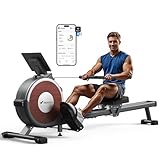
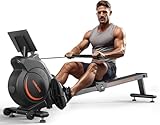

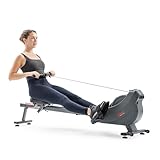

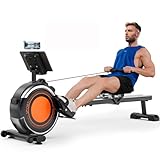


Top 3 picks at a glance
Quick Picks
| Product | Best for | Price |
|---|---|---|
| Merach Q1S | Overall value | $189.99 |
| YOSUDA 16-Level | Beginners who want app integration | $189.99 |
| Merach RS3 Scull | Realistic rowing feel | $305.99 |
| Sunny Health & Fitness Smart | Smart features on a dual-rail frame | $199.99 |
| YPOO Foldable | Smallest storage footprint | $169.99 |
| Dripex Upgraded | Lowest price with app compatibility | $152.98 |
| Wenoker Magnetic | Quiet apartments | $179.99 |
| Rockvale Ab Machine | Core-focused low-intensity work | $69.98 |
How We Picked
We narrowed this list on four criteria that matter most for home use: weight capacity (the published number must be at least 350 lb for a row machine for home to serve the broadest audience honestly), resistance mechanism (magnetic over friction or air to keep noise down and maintenance near zero), frame construction (dual-rail designs outperform single-rail on lateral stability and longevity), and real owner feedback about long-term durability. Price was a tiebreaker, not a filter — we included every tier from under $70 to just over $300 so the roundup reflects actual buyer priorities.
The 8 Best Row Machine For Home in 2026
Merach Q1S
The Q1S earns its position as a balanced default. Its 16 levels of magnetic resistance cover the full range from recovery paddling to hard interval work, and the dual slide rail gives it a planted feel that single-rail competitors lack at this price. The 350 lb capacity means most buyers never have to wonder if the frame will hold. Owners report the LCD monitor is basic but reliable, and the app compatibility adds structure without forcing a subscription. The tradeoff is the seat: it’s functional but not generously padded, so longer sessions benefit from a gel cover. Skip this if you need the absolute smallest footprint or want a sculling-style handle.
YOSUDA 16-Level Magnetic Rower
YOSUDA’s 16-level magnetic rower targets the same buyer as the Q1S but differentiates through its app ecosystem and slightly more responsive resistance transitions. Beginners appreciate the guided workouts that make sense of the 16 levels without guessing. The frame is stable and quiet enough for early-morning sessions in shared spaces. Owners note the seat can feel narrow for wider hips, and some report the LCD display is dim in low light. It’s a capable, affordable row machine for home that rewards people who prefer a structured app over a free-stroke philosophy. Skip if you want a more traditional feel or plan to row exclusively without a phone.
Merach RS3 Scull Rowing Machine
The RS3 is the model for buyers who rowed competitively in college or who have trained with a scull on a rowing tank. Its handle geometry and seat travel simulate the lateral pull of actual sculling, giving a more athletic stroke than standard seated rowers. The ergonomic seat is a clear upgrade over the Q1S for multi-mile sessions. The tradeoff is price — at $305.99 it costs significantly more than the magnetic basics — and it’s bulkier to store. If you only need general cardio, the RS3 is overkill. Buy it when rowing technique specifically is part of your training, not just rowing for fitness.
Sunny Health & Fitness Smart Magnetic Rower
Sunny’s Smart Magnetic Rower brings dual-rail stability and an app-driven feedback loop into the sub-$200 bracket, which is genuinely competitive. Its build quality is a step above the YPOO and Dripex at similar prices, and the smart features provide stroke-rate tracking and workout logs that appeal to data-driven exercisers. The magnetic resistance is smooth and quiet, with 16 levels that cover realistic intensity ranges. Owners occasionally mention the assembly is fiddly and takes longer than the box suggests. It’s a solid middle-tier row machine for home that rewards patients willing to spend an extra twenty minutes on setup. Skip if assembly frustration is a dealbreaker.
YPOO Foldable 350LB Rower
The YPOO is the smallest-storage option on this list. Its foldable frame reduces its floor footprint when stowed, which is the entire reason a buyer picks it over the Q1S or Sunny at similar price points. It still offers 16 levels of magnetic resistance and a 350 lb capacity, so the fold mechanism doesn’t come at the cost of structural integrity. The tradeoff is ride smoothness — owners note the stroke feels less fluid than non-folding dual-rail machines, and the seat travel is slightly shorter. It’s a genuine row machine for home for apartment dwellers who prioritize floor space over stroke quality. Skip if storage isn’t your primary constraint.
Dripex Upgraded Rowing Machine
At $152.98, the Dripex is the cheapest full-featured magnetic rower here, with 16 resistance levels, dual slide rail, 360 lb capacity, app compatibility, and an LCD monitor. That spec sheet at that price is the entire pitch, and it delivers a genuinely usable workout. Owners praise the value and quiet operation but flag build-quality variance — some units have wobbly foot stabilizers or loose rail joints out of the box. The app works but isn’t as refined as Sunny’s. This is the row machine for home for buyers who want maximum spec coverage per dollar and tolerate occasional QC luck. Skip if you expect out-of-the-box polish at this tier.
Wenoker Magnetic Rower
The Wenoker markets itself on quiet and smooth operation, and owners generally confirm both: the magnetic flywheel and rail design produce a near-silent stroke that won’t disturb a sleeping household or thin-walled neighbor. Full-body engagement is solid for general conditioning. The tradeoff is the console and connectivity — it’s less feature-rich than the Q1S or Dripex, with a simpler display and no app pairing. For buyers whose top priority is silence and who don’t care about tracking or guided programs, this is a strong, affordable choice. Skip if you want structured workouts or performance metrics on your phone. The Wenoker is a row machine for home designed around one thing — quiet — and it does that well.
Rockvale Ab Machine 2-in-1
The Rockvale is included here because buyers searching for a row machine for home sometimes discover they actually want a core-focused ab trainer with a rowing motion added — not a true full-body rower. At $69.98 it’s the cheapest option by far, and its adjustable range and foldable design suit small spaces. But be honest about what it is: the resistance mechanism is not a flywheel system, the rowing motion is shallow, and it won’t deliver meaningful cardio for most users. It works for gentle mobility and ab activation. Skip it entirely if your goal is cardiovascular training or a stroke comparable to the others on this list.
Buying Guide
Resistance Type and Noise
For home use, magnetic resistance is the only sensible default. It eliminates the loud wind rush of air rowers and the gradual belt wear of friction pads. All eight models here use magnetic systems, but the number of levels (16 on most of this list) and the quality of the magnet-to-flywheel gap determine how smooth the stroke feels and how wide your real intensity range is. A 16-level rower at $150 will never feel as buttery as a Concept2, but the gap between a good and bad magnetic unit is noticeable from the first pull.
Rail Design and Weight Capacity
Dual slide rails spread your weight laterally during the stroke, reducing wobble and extending frame life compared to single-rail designs. If two people in a household will use the row machine for home, or if either weighs more than 200 pounds, prioritize models with at least a 350 lb rated capacity and dual rails. That eliminates the YPOO’s shorter travel and the Wenoker’s single-rail design from consideration if stability is a priority.
Connectivity and App Ecosystem
App compatibility matters if you need structure, progression, or competitive distance tracking to stay motivated. The Q1S, YOSUDA, Sunny, and Dripex all offer phone-based apps with workout programs. The Wenoker and Rockvale do not. If you’re a self-directed exerciser who sets a timer and pulls, the app is irrelevant and you can save money. If you need someone to tell you what to do, factor the app quality into your decision — some apps are bare-bones trackers, others are full coaching systems.
Our Verdict
The Merach Q1S is the top pick. It balances dual-rail stability, 16 magnetic resistance levels, a 350 lb capacity, and app compatibility at $189.99 without any single weak point that should stop a buyer. For the lowest usable price, the Dripex Upgraded at $152.98 delivers nearly identical specs with some build-quality variance you’ll need to tolerate. And if the deciding factor is genuine rowing technique — not general fitness — the Merach RS3 Scull at $305.99 is the only model here that serves that specific purpose well.
FAQ
How much space does a row machine for home need?
Most full-size models in this roundup require roughly 7 feet of length and 2 feet of width in the use position. Foldable options like the YPOO reduce the stowed footprint significantly, but you still need clear swing room during the stroke. A bedroom corner or a garage bay works if ceiling clearance exceeds 6 feet.
Is magnetic resistance actually quiet enough for an apartment?
Yes. A well-built magnetic rower produces a soft whoosh and mechanical ticking from the rail, typically below 60 decibels — comparable to a conversation. The Wenoker and Q1S are both reported by owners as non-disturbing through a shared wall during early-morning sessions.
Can a row machine for home replace running for cardio?
For sustained aerobic work, a properly set-up rowing session at 24–30 strokes per minute for 30 minutes matches the calorie burn of a moderate jog and is gentler on joints. The catch is that maintaining technique through longer sessions is harder than running, which is why a smooth magnetic mechanism and ergonomic seat matter more than headline wattage.
What weight capacity do I actually need on a rower?
Manufacturers typically rate the frame well beyond the point where lateral stability becomes a problem. If a row machine for home advertises 350 lb capacity and you weigh 220, you’re within a safe margin. If you’re at 290 or higher, prioritize dual-rail models and read owner reviews specifically about frame flex at the upper end of the range.


