
When designing a modern home gaming setup, the conversation usually revolves around standing desks, ambient backlighting, and ergonomic seating. Yet, much of the friction in your daily living space comes from what sits hidden inside your computer tower. Upgrading your storage isn’t just about raw file transfer speeds; it directly impacts desk cable management, system heat output in small rooms, and how long you sit waiting on loading screens. Choosing between a traditional 2.5-inch SATA SSD and an ultra-compact NVMe M.2 drive forces home interior planners and gamers alike to balance budget, visual clutter, and performance. When evaluating sata ssd vs nvme ssd load times gaming, understanding how physical form factors intersect with real-world speeds will help you curate a quiet, beautiful, and hyper-responsive home workspace.
Top 3 picks at a glance

Quick Verdict
For modern home gaming setups where clean cable management and ultra-fast system responsiveness matter most, NVMe SSDs are the clear winner. By mounting directly onto the motherboard, an M.2 NVMe drive eliminates bulky power and data cables entirely, improving internal airflow and keeping minimalist desk builds clutter-free. While SATA drives max out around 550 MB/s read speeds, NVMe drives easily exceed 6,000 to 7,300 MB/s. In real-world gaming, this speed difference translates to cutting load screens down from 15–20 seconds on SATA to under 5–8 seconds on NVMe. SATA SSDs remain a viable choice primarily for low-cost secondary storage in older home PCs or budget media centers.
As an Amazon Associate we earn from qualifying purchases at no extra cost to you. Product prices and availability are accurate as of the date shown and are subject to change.

Side by Side
| Feature / Criterion | SATA SSD (2.5-Inch) | NVMe SSD (M.2 2280) |
|---|---|---|
| Installation Ease | Requires mounting bay, SATA data cable, and PSU power cable | Direct motherboard slot insertion with a single small screw |
| Physical Dimensions | 100mm x 70mm x 7mm (~50g to 70g weight) | 22mm x 80mm x 2.3mm (~6g to 10g weight) |
| Price Range | $40 – $120 for standard consumer capacities | $80 – $450 depending on PCIe generation and heatsink |
| Cable & Dust Management | Adds wire clutter inside chassis, catching dust behind desk panels | Zero cables required, maximizing airflow and reducing dust traps |
| Space Needed inside PC | Requires dedicated 2.5-inch drive sled or bay tray | Zero floor space inside chassis; lies flat on motherboard |
| Visual Aesthetics | Visible box and hanging cables inside glass-panel cases | Sleek, near-invisible profile; optional decorative thermal heatsinks |
| Average Gaming Load Times | 12 – 20 seconds for modern AAA titles | 4 – 9 seconds (leveraging DirectStorage technology) |
| Peak Read Speeds | 500 MB/s – 560 MB/s | 3,500 MB/s – 7,300+ MB/s |
| Thermal Management | Low heat output (25°C – 40°C idle); passive casing | Higher localized heat under load (40°C – 70°C); benefits from heatsinks |
| Best For | Budget upgrades, legacy desktop builds, home media servers | High-performance gaming, small-form-factor home office PCs |
Where Sata Ssd Wins
SATA solid-state drives still hold a practical place in home tech design, particularly when balancing strict renovation budgets or retrofitting older family computers. The primary advantage of a SATA drive lies in universal compatibility and cost-per-gigabyte accessibility. Because 2.5-inch SATA bays are standardized across nearly two decades of computer chassis design, you can easily slide a SATA drive into almost any existing desktop tower or custom home entertainment unit without checking for specialized M.2 motherboard slots.
For budget-conscious households or secondary workstations, introductory drives offer solid value. Models like the entry-level PNY CS900 250GB 2.5″ SATA III Internal SSD ($48.73) or the mid-capacity PNY CS900 500GB 2.5″ SATA III Internal SSD ($89.99) provide a cost-effective path to replace aging mechanical hard drives. They run cool without requiring dedicated aluminum heatsinks, making them ideal for completely enclosed furniture cabinets or low-airflow home office setups where ambient temperatures can slowly build up over the day.
Furthermore, if your primary goal is organizing a home server for photos, movie streams, or casual indie gaming, SATA speeds are more than sufficient. While sata ssd vs nvme ssd load times gaming show clear gaps in modern games, older titles (released prior to advanced asset streaming) show negligible difference between the two formats, saving you money on drive upgrades.
Where Nvme Ssd Load Times Gaming Wins
Where NVMe technology truly reshapes the home gaming experience is through sheer throughput and spatial efficiency. Measuring just 22mm wide by 80mm long, an M.2 NVMe drive sits flush against the motherboard. For home editors and tech enthusiasts who build inside compact mini-ITX cases on minimalist floating desks, removing bulky power ribbons and SATA cables transforms the internal build quality. Less wire clutter means unobstructed air pathways, leading to a quieter computer fan profile in quiet bedrooms or study nooks.
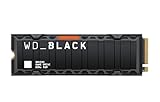
When analyzing sata ssd vs nvme ssd load times gaming performance, NVMe drives unlock unprecedented speed. Standard SATA III drives bottleneck at roughly 550 MB/s due to legacy bus architectures. In contrast, modern PCIe 4.0 options such as the Kingston NV3 1TB M.2 2280 NVMe SSD | PCIe 4.0 Gen 4×4 | Up to 6000 MB/s | SNV3S/1000G ($161) reach read speeds up to 6,000 MB/s. For top-tier gaming builds, flagship drives like the WD_BLACK SN850X 2TB NVMe SSD with Heatsink – M.2 2280, Up to 7,300 MB/s Read speeds, Up to 6,300 MB/s write speeds, Gaming Expansion, High Performance Internal Solid State Drive – WDS200T2XHE ($449.99) push read speeds up to 7,300 MB/s.
In practice, modern games utilize APIs like Microsoft DirectStorage to stream uncompressed textures directly from the storage drive to the graphics card. On a SATA drive, loading a massive open-world game can take 15 to 22 seconds, accompanied by noticeable micro-stutters when traveling across large maps. An NVMe drive collapses those load times to 3 to 7 seconds, offering a seamless, console-like instant experience that respects your limited free leisure time at home.
Cost Over 5 Years
Evaluating long-term value requires looking beyond the initial checkout price to consider energy draw, software longevity, and component heat output. Over a five-year lifespan, an NVMe drive offers superior return on investment for home desktop builders, even with a higher upfront entry point.
SATA drives draw lower peak power—typically between 1.5W and 3W under heavy load—compared to high-speed NVMe drives which can draw between 5W and 9W during full write cycles. However, because an NVMe drive finishes game loading tasks in a fraction of the time, its active power state is brief, quickly returning to an ultra-low idle state under 0.5W. Over several years of daily gaming and office use, electrical consumption differences are practically even.
The true long-term value lies in software relevance. As we move into 2026, next-generation game engines are built ground-up around fast NVMe architectures. Buying a SATA drive today for primary gaming risks software obsolescence within a few years, forcing an early replacement. An NVMe drive bought today will easily remain fully capable across the next five years of game releases and system updates.
Which One for Your Home
Small Apartment Desk Setup
In tight living spaces where your computer sits on a small 42-inch desk in the corner of a living room or bedroom, noise control and physical size are critical. An NVMe SSD is essential here. Eliminating extra power cables allows you to use micro-cases that fit seamlessly onto narrow shelving without creating an eyesore of visible wires.
Family Home with Kids and Pets
Family environments demand durable setups that withstand dust, pet hair, and accidental vibrations. SATA drives mounted in internal drive bays require multiple cable connections that can loosen if a computer case is bumped. NVMe drives lock directly into the motherboard beneath secure metal shields, protected from dust accumulation and physical shock while keeping internal case airflow optimal.
Rental Property or Temporary Living
If you move frequently between apartments, simple tech maintenance is a major advantage. An NVMe drive eliminates the need to carry spare SATA cables, power splitters, or mounting brackets during moves. Swapping or upgrading storage in a rental setup takes under two minutes with a single screwdriver.
Long-Term Custom Home Office
If you are designing an integrated, high-end home office intended to serve dual roles as a professional workstation and late-night gaming hub, invest in top-tier NVMe storage. Combining high-capacity PCIe 4.0 NVMe drives ensures rapid 4K video rendering during the workday and instant game launches in the evening, maintaining a clean, silent, high-performance environment.
FAQ
Does NVMe dramatically reduce game load times compared to SATA?
In older games, the difference between SATA and NVMe might only be 2 to 5 seconds. However, in modern games designed for high-speed asset streaming and DirectStorage, NVMe drives cut load times significantly—reducing load screens from 18 seconds down to under 5 seconds.
Do NVMe drives get too hot for compact home PC cases?
While NVMe drives generate concentrated heat during heavy file transfers, modern motherboards come equipped with passive thermal pads and metal heatsinks. Premium NVMe options also feature integrated heatsinks that keep temperatures well within safe operating limits without requiring noisy extra fans.
Can I use both a SATA SSD and an NVMe SSD in the same home setup?
Yes. A common layout for home gamers is using a fast 1TB NVMe drive for the operating system and primary games, while utilizing a cheaper 2TB or 4TB 2.5-inch SATA SSD for secondary media storage, photos, and older game archives.
How much space do I save inside my PC by switching to NVMe?
Switching entirely to NVMe eliminates the need for 2.5-inch drive cages and removes two thick cable runs per drive (SATA data and SATA power). This saves significant internal physical volume, dramatically improving interior cabinet aesthetics and cable organization.


