
Our Top Picks
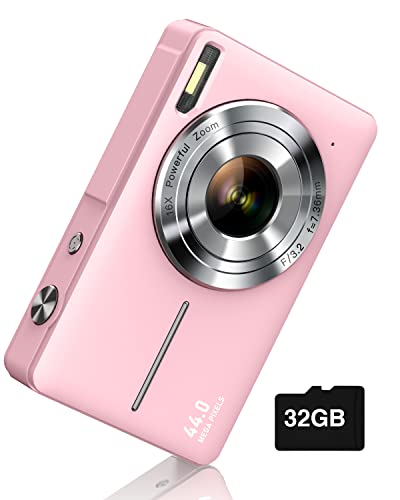
 KODAK PIXPRO FZ45 16MP Compact Digital Camera3.66 x 2.37 x 1.12 inches3.66 x 2.37 x 1.13 inches0.3 poundsCheck on Amazon


Top 3 picks at a glance
Best Digital Cameras for Every Type of Photographer
The best digital cameras for most people are compact mirrorless models with reliable autofocus and interchangeable lenses—but the right choice depends on what you shoot. A lightweight APS-C camera suits travel, a full-frame body and portrait lens help with flattering background blur, and wildlife photography rewards fast tracking and extra reach. Use the guide below to match the camera to your priorities rather than paying for features you may not use.
Choose by what you photograph
| Use | Good starting point | Why it fits | Trade-off |
|---|---|---|---|
| Travel | APS-C mirrorless, roughly 20–33 MP | Smaller body and lenses; enough resolution for cropping and prints | Less background blur and low-light flexibility than full frame at comparable settings |
| Portraits | Full-frame mirrorless, roughly 24–33 MP | Wide lens selection and easier shallow depth of field | Body and lenses can be heavier and more expensive |
| Wildlife | APS-C or full-frame mirrorless with subject tracking | Fast autofocus and telephoto-lens options matter more than headline megapixels | Long lenses add bulk; high-speed bursts fill cards quickly |
| Video | Mirrorless with 4K recording, a mic input and dependable autofocus | Supports high-resolution capture and practical sound recording | Recording limits, heat and crop factors vary by model and mode |
| Beginner use | Entry-level mirrorless with a kit zoom | Automatic modes make it easy to start, while interchangeable lenses leave room to grow | Menu complexity and lens costs can rise as your interests develop |
Match the camera to your style
For travel: prioritize the camera you’ll carry
A smaller camera that comes along on a day trip is more useful than a high-end body left at the hotel. APS-C mirrorless systems often make a strong travel balance: the sensor is larger than a typical phone sensor, but bodies and lenses can remain compact. The Fujifilm X-S20 and Sony a6700 are examples of APS-C mirrorless cameras with interchangeable lenses and subject-aware autofocus.
As an Amazon Associate we earn from qualifying purchases at no extra cost to you.



Start with a modest standard zoom, such as a kit lens covering wide-angle through short telephoto. If you mostly photograph streets, food and landscapes, that range is often more useful than carrying several specialist lenses. Check the combined weight of body, lens, spare battery and bag—not just the camera-body weight.
For portraits: budget for the lens, not just the body
Full frame can make it easier to get a softly blurred background, but lens choice and shooting distance matter too. A 50mm or 85mm prime is a common portrait starting point; a wide-aperture lens lets in more light and can separate a person from a busy background. The Canon EOS R6 Mark II, Nikon Z6 III and Sony a7 IV are examples of full-frame mirrorless bodies suited to stills and hybrid shooting.
For a tighter budget, APS-C can produce excellent portraits. A roughly 50mm lens on APS-C gives a field of view similar to a short telephoto on full frame, though the exact framing depends on the camera’s crop factor. For natural-looking faces, step back a little and avoid using an extremely wide lens close to your subject.
For wildlife: reach and tracking beat megapixel chasing
Animals move unpredictably, so prioritize autofocus that can recognize and track animals, a responsive burst mode and a telephoto lens. APS-C can be appealing because its narrower field of view makes a distant subject fill more of the frame with a given lens. It does not magnify the lens or create extra detail, though: sharpness still depends on the lens, light, focus and technique.
Consider whether the camera can sustain the burst rate you need, and whether your memory card can keep up. A long telephoto lens can outweigh the camera, so include its weight in your decision. For birds in flight, a comfortable grip and a viewfinder that stays responsive during bursts may matter more than a small increase in resolution.
For video: check the recording mode you’ll actually use
“4K video” alone does not tell you how useful a camera will be. Check whether it records your preferred frame rate without a heavy crop, whether autofocus stays dependable during recording, and whether you can connect an external microphone. In-body image stabilization can help with handheld footage, but it will not replace a tripod or gimbal for every shot.
Hybrid cameras such as the Sony a6700 and Fujifilm X-S20 offer video as well as still photography. Before buying, verify the maximum recording time, heat behavior and file formats for the specific mode you plan to use. For a simple talking-head setup, a stable tripod, good microphone and soft light often improve results more than upgrading the camera body.
For beginners: buy a system, not a pile of features
An entry-level mirrorless camera with a kit zoom gives you automatic exposure while letting you learn how aperture, shutter speed and ISO affect a photo. Models such as the Canon EOS R50 and Nikon Z50 II are examples of approachable interchangeable-lens cameras. A fixed-lens compact can be easier to carry, but you cannot swap lenses if your interests change.
Look at the system’s affordable lenses before choosing a brand. A low-cost telephoto option, a small prime and a basic standard zoom can matter more over several years than a feature you may rarely use. Used or previous-generation bodies can also be sensible if they meet your autofocus, battery and video needs.
Sensor size, autofocus and portability: what changes in practice?
- Sensor size: Full frame generally offers more flexibility for shallow depth of field and low-light work, but larger sensors do not automatically make better photos. APS-C can be lighter and less costly as a complete kit.
- Autofocus: Eye and subject detection are especially useful for people, pets and wildlife. Check that the camera recognizes the subjects you photograph and tracks them in the modes you use.
- Lenses: The lens determines much of your framing, light-gathering ability and total carry weight. Compare the cost and size of the lenses you expect to own.
- Portability: Consider the camera with its everyday lens attached. A small body paired with a large, heavy zoom may not be a lightweight setup.
- Stabilization: In-body stabilization can reduce blur from hand movement in still photos and steady some video. It cannot freeze a moving subject; that requires a sufficiently fast shutter speed.
A practical way to estimate camera-kit weight
Compare complete kits before deciding. For example, suppose a camera body weighs 500 g, a standard zoom 300 g, and a spare battery and small strap add 100 g. The everyday kit is about 500 + 300 + 100 = 900 g. Add a 600 g telephoto lens for wildlife and the load becomes about 1.5 kg. These are illustrative weights, not specifications for a particular model; check the manufacturer’s figures for the exact body and lens.
This simple calculation helps expose a common mismatch: choosing a lightweight body while overlooking the lenses needed for the job. If that extra weight would keep the camera in your bag, a smaller sensor system or a compact fixed-lens camera may be the better everyday choice.
Final decision checklist
- Choose your main subject first; it determines the lens and autofocus needs.
- Set a budget for the camera body and at least one lens, plus a memory card and spare battery.
- Compare complete-kit weight and grip comfort, not just body dimensions.
- For video, confirm the exact resolution, frame rate, crop and audio connections you need.
- Choose the system with lenses you can afford and expect to carry.
For an all-around starting point, look for a mirrorless camera with reliable subject detection, a useful standard zoom and a comfortable grip. Move to full frame when low-light or portrait work justifies its cost and size; favor APS-C when portability and telephoto reach are higher priorities.
Frequently asked questions
Does a higher megapixel count guarantee better wildlife photos?
No; autofocus tracking, a telephoto lens, light, focus and technique can matter more than headline megapixels. The article notes that APS-C’s narrower field of view can make a distant subject fill more of the frame with a given lens, but it does not magnify the lens or create extra detail. Consider burst performance and whether your memory card can keep up, too.
Can an APS-C camera take portraits with a blurred background?
Yes; APS-C cameras can produce excellent portraits, though full frame can make shallow depth of field easier to achieve. Lens choice and shooting distance also matter. A roughly 50mm lens on APS-C gives a field of view similar to a short telephoto on full frame, with exact framing depending on the camera’s crop factor.
Is in-body image stabilization enough to avoid blurry photos?
No; stabilization can reduce blur from hand movement, but it cannot freeze a moving subject. The article says that freezing movement requires a sufficiently fast shutter speed. For video, stabilization can help with handheld footage, but a tripod or gimbal may still be needed for some shots.
What should I check beyond a camera’s advertised 4K video?
Check the frame rate you want, whether recording uses a heavy crop, autofocus during recording, microphone input, recording time, heat behavior and file formats. These vary by model and mode, so verify the details for the specific recording mode you plan to use rather than relying on the 4K label alone.
Should I buy a compact camera or an interchangeable-lens camera?
Choose based on whether you expect your photography interests to change. A fixed-lens compact can be easier to carry, while an interchangeable-lens camera lets you change lenses as your needs develop. The article recommends considering the system’s affordable lenses and comparing the complete kit’s weight, not just the camera body.


