
The best oversized zero gravity chairs for comfort combine a 25 to 30-inch seat width, 350 to 500 lb weight capacity, steel or reinforced aluminum frame, and a true 120 to 170-degree recline range, with the top choices for most buyers being XL steel-frame padded models for backyard use and lightweight aluminum-frame oversized models for portability.
As an Amazon Associate we earn from qualifying purchases at no extra cost to you.


Our Top Picks
 Best Choice Products Oversized Padded Zero Gravity ChairOversized Extra Wide46 x 29 x 40 inches20 PoundsCheck on Amazon
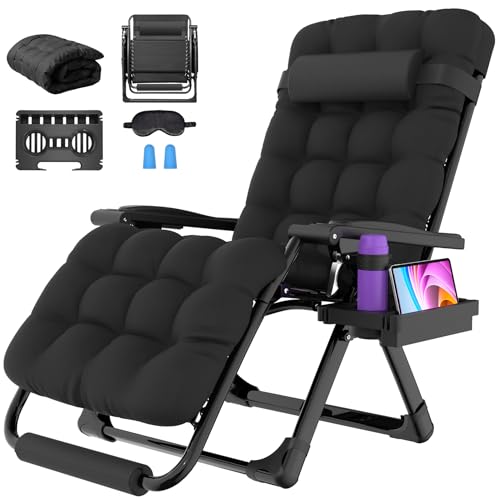

Top 3 picks at a glance
What Makes a Zero Gravity Chair “Oversized”
Standard zero gravity chairs typically measure 21 to 22 inches wide at the seat and support 250 to 300 lbs. Oversized models increase both dimensions to improve comfort for taller, broader, or joint-pain-sensitive users. The label is not regulated, so use these thresholds to verify a true oversized chair:
- Seat width: 25 inches or wider between the armrests. Some XXL models reach 29-30 inches.
- Weight capacity: 350 lbs minimum, with heavy-duty models rated to 400-500 lbs.
- Seat height and length: Oversized frames are usually 2-4 inches longer and sit 2-3 inches higher, which reduces knee strain when getting up.
- Overall frame width: 32 to 38 inches total, which affects doorway and patio clearance.
If a chair is marketed as oversized but lists a 22-inch seat and 300 lb limit, it is a standard chair with thicker padding, not a structurally larger chair.
Head-to-Head Comparison: Key Specs That Affect Comfort and Fit
Use this comparison to see how different oversized classes trade off roominess, strength, and storage size. Folded dimensions and chair weight matter as much as seat size if you need to move or store it.
| Chair Class | Seat Width | Weight Capacity | Recline Range | Frame Material | Folded Dimensions (L x W x H) | Chair Weight |
|---|---|---|---|---|---|---|
| Standard Zero Gravity Chair | 21 – 22 in | 250 – 300 lbs | 90 – 160 degrees | Powder-coated steel | 38 x 25 x 6 in | 15 – 18 lbs |
| Oversized Steel Padded (Most Comfortable) | 26 – 29 in | 400 – 500 lbs | 90 – 170 degrees | Heavy-gauge steel, double bungee | 42 x 30 x 7 in | 24 – 31 lbs |
| Oversized Aluminum Lightweight | 25 – 27 in | 350 – 400 lbs | 90 – 160 degrees | Aluminum + steel reinforcements | 40 x 28 x 6 in | 18 – 22 lbs |
| XXL Wide Bungee (Maximum Room) | 29 – 32 in | 400 – 450 lbs | 90 – 165 degrees | Reinforced steel, oversized Textilene | 44 x 33 x 8 in | 26 – 33 lbs |
| Oversized with Canopy and Side Tray | 26 – 28 in | 350 – 400 lbs | 90 – 155 degrees | Steel | 43 x 30 x 9 in | 27 – 34 lbs |
For pure comfort, the Oversized Steel Padded class wins because it pairs the widest usable recline with thick removable padding and double-bungee suspension that distributes weight across the Textilene sling instead of pressure points on the frame. For frequent carrying to a park, beach, or campsite, the Oversized Aluminum Lightweight class is easier to handle despite a slightly lower capacity.
How to Choose Based on Your Body and Space
1. Seat Width and User Height
Measure across your hips and shoulders while seated. Add 2-3 inches for comfortable arm placement. Users under 5’10” often fit well in 25-26 inch seats. Users over 6’0″ or over 250 lbs generally need 27 inches or more to avoid armrest pressure on the thighs and shoulders. Seat depth also matters: look for 20-22 inches deep if you are taller than 6’2″ so the edge does not cut into the back of the knees in zero gravity position.
2. Weight Capacity and Safety Margin
Do not match your body weight exactly to the rated capacity. A good rule is to keep sustained load at 75-80% of the rating to account for dynamic force when you rock, shift, or recline quickly.
Worked calculation: If you weigh 340 lbs and want a true safety margin, divide your weight by 0.8 to find the ideal rating: 340 / 0.8 = 425 lbs. That means you should filter for chairs rated at 425 lbs or higher, which puts you in the 400-500 lb heavy-gauge steel category. For two-person occasional use or if you place extra weight like a child on your lap, use 0.75: 340 / 0.75 = 453 lbs, so choose a 450-500 lb rated frame.
3. Recline Range and Locking System
True zero gravity position elevates the legs slightly above heart level, which typically requires 120-130 degrees between seat and leg rest. Chairs that only recline to 135-140 degrees will feel like a lounger, not weightless. Look for dual locking systems: thumb-lever locks under each armrest or twist-knob locks on both sides. Single-bar locks on one side tend to slip on oversized frames. The smoothest adjustment comes from chairs with bungee suspension rather than fixed fabric, because bungee allows micro-adjustments without re-locking.
4. Frame Materials and Durability
Powder-coated steel: Highest weight capacity and lowest cost, usually $80-$150. Heavier to carry, and weld points can rust if the coating chips. Best for patio, deck, or poolside where the chair stays put.
Aluminum or aluminum-steel hybrid: Usually $120-$200, 20-30% lighter and naturally rust-resistant. Ideal for frequent transport and coastal or humid environments. Check that the weight capacity is still 350 lbs or higher, as some ultra-light aluminum chairs drop to 300 lbs.
Textilene and bungee: The sling should be UV-resistant Textilene (PVC-coated polyester) with double bungee cords per side. Replaceable bungees extend chair life by years. Padding adds comfort but adds 3-5 lbs and longer dry time after rain. Removable headrest pillows with adjustable bungee are more durable than fixed foam headrests.
5. Folded Dimensions and Storage Reality Check
Oversized chairs do not fold flat enough for small closets. Before buying, measure your storage and transport space and compare it to the folded footprint.
Worked space calculation: An Oversized Steel Padded chair folded at 42 x 30 x 7 inches needs a floor area of 42 x 7 = 294 square inches if stored vertically, plus 30 inches of depth against a wall. When fully reclined, the same chair needs about 72 inches long x 33 inches wide (about 16.5 square feet). For transport, a typical car trunk opening is 45-48 inches wide. A 30-33 inch wide folded chair will fit across most SUV cargo areas but may not fit through a 24-inch shed door without tilting. If you have a compact sedan, choose an aluminum model that folds to 40 x 28 x 6 inches or less.
Decision Matrix: Which Oversized Chair Fits Your Situation
| Your Situation | Best Match | Why It Fits |
|---|---|---|
| Need maximum comfort for backyard, tall or broad build over 6’1″ / 280+ lbs | Oversized Steel Padded, 27-29 in width, 400-500 lb capacity | Widest seat, full 170-degree recline, double bungee disperses pressure |
| Carry chair often, want lighter weight but still oversized | Oversized Aluminum Lightweight, 25-27 in width, 350-400 lb capacity | Saves 6-10 lbs, rust-proof, folds smaller for cars |
| Limited patio or balcony, storage is tight | Oversized Aluminum Lightweight without canopy | Narrowest folded width, stands upright in corner, needs only ~2.5 sq ft |
| Joint pain, need true zero gravity with legs above heart | Any model with 120-170 degree lock and adjustable headrest + lumbar bungee | Locks at 120-130 degrees for weightless position, pillow supports neck |
| Want shade and side table for drinks/phone | Oversized with Canopy and Side Tray | Integrated shade reduces heat on Textilene, but adds bulk and weight |
Features Worth Paying For vs. Features to Skip
Worth paying for: Dual-side locking levers, removable and washable padding, replaceable bungee cords, adjustable padded headrest, and non-slip feet. Cup holder trays that slide under the armrest are more stable than clip-on types.
Often not worth the extra cost or weight: Built-in canopies on windy balconies, which act as sails; built-in massagers that add electronics that cannot get wet; and extra-wide 32-inch XXL models if your doorway is under 32 inches. If you primarily game, read, or use a laptop outdoors between sessions, prioritize a flat armrest height that supports elbows at 90 degrees rather than a canopy.
Setup and Care for Longer Life
- Always lock both sides before sitting. On uneven ground, set the front legs first, then let the rear stabilizers settle to prevent frame twist.
- Do not exceed the recline lock when entering or exiting. Sit centered, then recline. Getting in while fully reclined stresses the bungees.
- Rinse Textilene with water after exposure to sunscreen, salt, or chlorine. Store folded and dry to prevent mildew on padding.
- Tighten bungee knots annually. If one side feels lower, replace bungees in pairs to keep tension even.
Frequently Asked Questions
What seat width is actually comfortable for an oversized zero gravity chair?
For most adults, 25 inches is the minimum to feel oversized. If your hips measure 19-20 inches across, choose 26-27 inches. If your shoulders are broader than 21 inches, choose 28-30 inches so your arms rest inside the armrests without squeezing.
Are oversized zero gravity chairs good for back pain?
The zero gravity position with knees slightly above the heart can reduce lower-back pressure for short periods. Look for a chair that locks securely at 120-135 degrees and has an adjustable headrest so your neck stays neutral. It is not a medical device, so keep recline sessions to 30-60 minutes and change positions regularly.
Can a 500 lb capacity chair fit on a small apartment balcony?
Physically it may fit when reclined, but the overall frame is 35-38 inches wide and 72 inches long when flat. Measure your balcony depth first. If depth is under 60 inches, you will not reach full recline. A 25-26 inch aluminum oversized model with a 350-400 lb capacity often fits better in compact spaces.
How long do the bungee cords last?
With regular outdoor use, bungees typically last 2-4 seasons before losing elasticity. UV exposure and leaving the chair in the sun accelerates wear. Replaceable bungee kits restore tension and are easier to maintain than sewn-in elastic.


