
The best concrete mixers for most buyers are a 3–3.5 cubic-foot electric mixer for small DIY work, a 5–6 cubic-foot mixer for repeated slab or footing pours, and a towable professional mixer when the job demands continuous production and transport between sites.
As an Amazon Associate we earn from qualifying purchases at no extra cost to you.


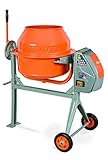
Our Top Picks
 BILT HARD Electric Cement Mixer4 Cubic Ft. Mixer47.2 x 27.5 x 52.4 inches90.39 poundsCheck on Amazon
 YARDMAX YM0115 4.0 Cu. Ft. Concrete Mixer4.0 Cu. Ft.31 x 31 x 18.5 inches102.9 poundsCheck on Amazon


Top 3 picks at a glance
Best concrete mixers at a glance
| Model or class | Drum capacity | Motor | Best for | Practical batch size |
|---|---|---|---|---|
| Belle Minimix 150 | About 1.6 cu. ft. | Electric, model-dependent | Small repairs, posts, paths, and limited storage | About 0.8–1.0 cu. ft. |
| 3–3.5 cu. ft. electric class, including Kushlan 350DD and Multiquip MC3PEA | About 3–3.5 cu. ft. | Typically 1/3–3/4 hp, depending on model | General DIY work and light contractor use | About 1.8–2.4 cu. ft. |
| YARDMAX YM0046 | About 4 cu. ft. | Electric, approximately 1/2 hp | Home slabs, walkways, and larger recurring projects | About 2.4–2.8 cu. ft. |
| 6 cu. ft. electric class, including Kushlan 600DD and Multiquip MC64S | About 6 cu. ft. | Usually roughly 3/4–1 hp | Frequent concrete work and small professional pours | About 3.5–4.2 cu. ft. |
Capacities and motor specifications can vary by regional version and revision, so confirm the nameplate before buying. The practical batch figures above deliberately stay below the drum’s advertised maximum: concrete needs room to tumble, and overfilling produces poor mixing while loading the motor and drive system.
Our picks by project type
Best compact mixer: Belle Minimix 150
The Belle Minimix 150 is a sensible choice when storage, stair access, or moving the mixer through a gate matters more than output. Its compact drum suits fence-post footings, mailbox bases, small pads, repair work, and short paths. It will not be efficient for a large slab because the small batch size creates many loading, mixing, and discharge cycles.
Choose this size when you can comfortably mix less than about 1 cubic foot at a time and have several people handling transport, placement, and finishing. Its advantage is not speed; it is access and manageable weight.
Best all-purpose DIY size: a 3–3.5 cubic-foot electric mixer
The Kushlan 350DD and Multiquip MC3PEA represent the useful middle ground. A 3–3.5 cubic-foot drum is large enough for several bags per batch without becoming exceptionally difficult to move. This class is usually the best concrete mixer choice for homeowners building steps, walkways, shed bases, small patios, and multiple fence footings.
Motor power matters, but the drive design matters just as much. A lower-powered mixer with a robust gearbox and suitable paddle shape can outperform a nominally stronger unit that struggles when heavily loaded. Look for a steel or well-supported drum, a guarded drive, a stable frame, replaceable components where available, and a genuine overload or thermal protection system.
Best for larger home pours: YARDMAX YM0046
The YARDMAX YM0046 offers a larger working capacity while remaining aimed at residential use. It is a better fit than a compact mixer when concrete must be produced steadily for a patio, walkway, equipment pad, or several footings. Its larger drum reduces the number of batches, but it also increases the effort required to load bags and move the machine across uneven ground.
A 4-cubic-foot mixer does not make a one-person pour effortless. Plan the workflow around aggregate, water, bags, wheelbarrows, and finishing tools. If the mixer is placed too far from the pour, the extra output can be lost while transporting each batch.
Best for frequent or professional use: a 6-cubic-foot mixer
The Kushlan 600DD and Multiquip MC64S illustrate the 6-cubic-foot class. These mixers make sense for contractors, property managers, and experienced DIY users who regularly mix several cubic yards over multiple projects. They offer useful output, but only when the site has adequate electrical service or the appropriate power arrangement, a firm level base, and enough labor to keep loading and discharge continuous.
A 6-cubic-foot unit is not automatically better for a one-time repair. Its size can complicate transport, storage, cleaning, and maneuvering. For occasional work, renting a larger mixer or ordering ready-mix may cost less than owning and maintaining one.
How to match drum capacity to the amount of concrete
First calculate the required volume. Multiply length by width by depth, using the same units, then divide by 27 for cubic yards. Add roughly 10% for spillage, uneven excavation, and form irregularities.
For example, a 10-by-10-foot pad that is 4 inches thick requires:
10 × 10 × (4 ÷ 12) = 33.3 cubic feet
Adding 10% gives approximately 36.6 cubic feet, or 1.36 cubic yards. If a typical 80-pound bag produces about 0.6 cubic feet, the project requires approximately 61 bags. That is a substantial hand-mixing job: even a 6-cubic-foot mixer producing a practical 4-cubic-foot batch would require about ten batches, plus loading and handling time. Ready-mix delivery may be the more rational option if access and minimum-order costs permit.
For bagged concrete, use the yield printed on the bag rather than assuming every mix is identical. A 60-pound bag commonly yields less than an 80-pound bag, and specialty mixes can differ. Do not confuse drum capacity with concrete output: a 3.5-cubic-foot drum may produce only around 2 cubic feet of well-mixed concrete in a comfortable batch.
Motor power, mixing speed, and electrical requirements
Motor horsepower is useful for comparing similar mixers, but it is not a complete performance rating. Concrete becomes much harder to rotate as the drum fills, especially with low-slump mixes containing coarse aggregate. A mixer designed for a particular drum volume and batch load is preferable to choosing the highest horsepower number.
- Small electric mixers: convenient for household circuits and occasional batches, but avoid long extension cords that cause voltage drop.
- Medium electric mixers: generally offer the best balance of output, noise, maintenance, and operating cost for homeowners.
- Large electric mixers: check the required amperage, circuit capacity, plug type, and generator suitability before delivery.
- Gas-powered mixers: useful where electricity is unavailable, but they add fuel, exhaust, noise, and engine maintenance.
Mixing speed is normally chosen by the manufacturer rather than continuously adjusted by the user. A drum turning at roughly 20–30 revolutions per minute is common for portable mixers. Faster is not automatically better: the objective is to lift and fold the material, not fling it against the drum wall. Keep the mixer turning while adding ingredients, and follow the bag manufacturer’s water instructions instead of adding extra water to make discharge easier.
Portability and jobsite practicality
Check more than the listed weight. Measure doorways, gates, ramps, and vehicle storage space. Large wheels help on compacted ground but do not eliminate the need for a level base. A mixer on a slope can shift, discharge unevenly, or place excessive load on its frame.
For repeated moves, prioritize wheel diameter, handles, frame rigidity, and whether the drum can be secured during transport. A towable mixer is a different category from a wheelbarrow-style electric unit and should be evaluated for towing equipment, road legality, and site access.
Cleanup: the feature that protects the mixer
Concrete residue hardens quickly and can damage the drum, paddle clearance, and discharge mechanism. Before the first batch, keep a hose, stiff brush, plastic scraper, and suitable collection area ready. Immediately after the final discharge, rinse the inside while the drum rotates, brush the stuck material, and empty the wash water responsibly. Do not allow cement washout to enter storm drains or natural waterways.
Do not fill the drum completely with water and leave it running unattended. Water can loosen material without removing deposits around the paddles and drive components. Keep direct spray away from the motor, switches, bearings, and electrical connections. Disconnect power before scraping or reaching near the drum.
Decision guide: which mixer should you buy?
| Your situation | Recommended class | Why |
|---|---|---|
| Fewer than 10 small footings or occasional repairs | 1.6–2 cu. ft. | Lower storage and transport burden |
| Walkways, steps, small pads, and regular home projects | 3–3.5 cu. ft. | Good compromise between batch size and portability |
| Several hundred square feet of paving or frequent bagged-concrete work | 4–6 cu. ft. | Fewer batches, provided labor and power are available |
| More than about 1 cubic yard or a time-sensitive structural pour | Professional mixer or ready-mix delivery | Hand batching may exceed practical labor and placement limits |
Frequently asked questions
How many bags of concrete can a mixer handle in one batch?
A mixer’s practical batch depends on its drum capacity, but it should not be filled to the advertised maximum. A 3.5-cubic-foot drum may produce only around 2 cubic feet of well-mixed concrete, while a 6-cubic-foot mixer may produce a practical batch of about 4 cubic feet. Use the bag’s printed yield to estimate how many bags that represents.
Should I buy a mixer or order ready-mix for a large pad?
Ready-mix may be the more rational option for a large pad when access and minimum-order requirements permit. A 10-by-10-foot pad that is 4 inches thick requires approximately 1.36 cubic yards after adding roughly 10% for waste and irregularities. Even a 6-cubic-foot mixer producing a practical 4-cubic-foot batch would require about ten batches.
Can I run an electric concrete mixer from a household outlet?
Small electric mixers are convenient for household circuits, but larger electric mixers require checking the amperage, circuit capacity, plug type, and generator suitability. Avoid long extension cords because they can cause voltage drop. Confirm the mixer’s electrical requirements before delivery, particularly when choosing a 6-cubic-foot unit or using a generator.
What should I do immediately after finishing a batch?
Rinse the inside of the rotating drum immediately after the final discharge, brush stuck material, and empty the wash water responsibly. Keep direct spray away from the motor, switches, bearings, and electrical connections. Disconnect power before scraping or reaching near the drum, and do not allow cement washout to enter storm drains or natural waterways.
Is a higher-horsepower mixer always the better choice?
No. Motor horsepower is useful for comparing similar mixers, but it is not a complete performance rating. Concrete becomes harder to rotate as the drum fills, especially with low-slump mixes containing coarse aggregate. A mixer designed for its drum volume and batch load may perform better than one selected only for its highest horsepower number.
Final buying advice
For most homeowners, a 3–3.5 cubic-foot electric mixer is the best concrete mixer category because it handles common projects without the storage and handling penalties of a large machine. Choose a compact Belle Minimix 150 when access is the main constraint, move to a YARDMAX YM0046 for larger recurring jobs, and consider the Kushlan 600DD or Multiquip MC64S class when output and durability justify the extra size. Before paying for capacity, calculate the total concrete volume, verify electrical requirements, plan wheelbarrow access, and decide how the mixer will be cleaned immediately after the pour.


