
The best refrigerated beverage dispensers depend on what you serve: choose a compact countertop unit for occasional home use, a higher-capacity refrigerated dispenser for a shared office, or a commercial beverage system for events that need fast, repeated pours. Before buying, compare usable capacity, recovery time between servings, temperature adjustment, counter space, and how easily the drink-contact parts come apart for cleaning.
As an Amazon Associate we earn from qualifying purchases at no extra cost to you.

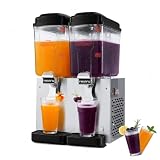


Our Top Picks
 VEVOR Commercial Beverage Dispenser 3 Tanks 18 L27.95 x 18.11 x 24.41 in27.95 x 18.11 x 24.41 inches72.75 PoundsCheck on Amazon
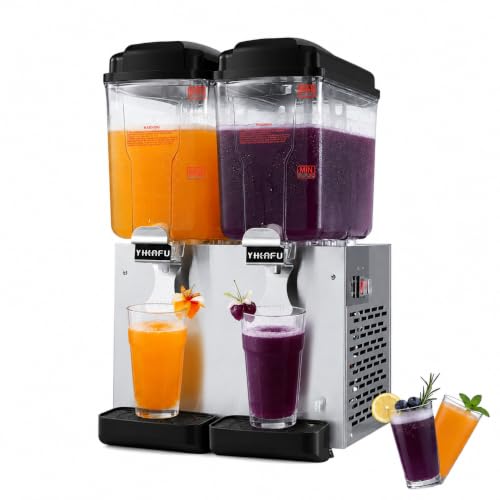 Iced Beverage Dispensers Commercial 9.6 Gal/32 L9.6Gal17.32 x 17.52 x 27.95 inches52 PoundsCheck on Amazon
 Takywep 4.8 gal Commercial Refrigerated Beverage Dispenser18L*127.95 x 17.72 x 9.84 Inches36.82 poundsCheck on Amazon
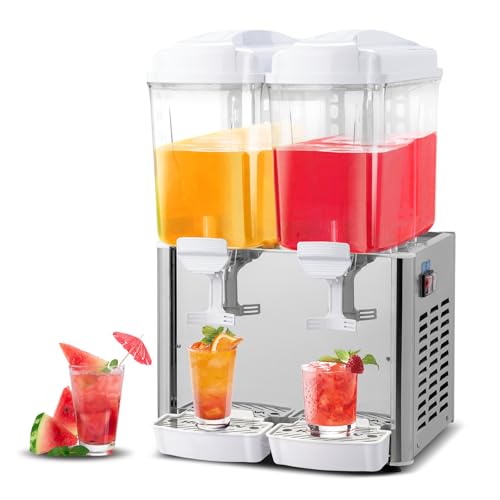 ROVSUN 9.6 Gallon/36L Commercial Beverage Dispenser Drink Dispenser4.8 Gallon x 217.7 x 16.9 x 28 InchesCheck on Amazon
Top 3 picks at a glance
Choose by serving pattern, not capacity alone
A dispenser’s advertised tank size tells you how much it can hold, but not how quickly it can chill a fresh refill or keep up with a line of guests. For a small household, a unit that holds a few liters may be adequate if it is filled and chilled ahead of time. An office needs more reserve capacity and a convenient refill routine. At an event, dispensing speed and the ability to replenish without interrupting service matter as much as total volume.
Also check what the machine is designed to dispense. Many refrigerated dispensers suit still drinks such as water, juice, iced tea, or lemonade. Carbonated beverages require equipment specifically designed for carbonation and pressure; do not assume a standard beverage dispenser will preserve fizz. Thick drinks with pulp or small seeds can clog narrow taps, so confirm the manufacturer permits them and whether the tap can be dismantled.
Quick comparison by setup
| Use case | Practical capacity class | Cooling and service priority | Typical footprint to plan for | Best fit |
|---|---|---|---|---|
| Home or small kitchen | 2–5 L | Pre-chill; occasional pours | About 20–30 cm wide, plus clearance | Compact countertop dispenser |
| Small office or break room | 5–10 L | Repeated pours; easy refill and cleaning | About 25–40 cm wide | Larger countertop or freestanding unit |
| Parties and events | 10 L or more, or multiple vessels | Fast service; chilled supply and quick replenishment | Counter or serving-table space, with room for cups | Commercial-style dispenser or several smaller units |
These are planning ranges, not a guarantee of cooling performance. Actual dimensions, temperature range, and output vary by model. A refrigerated tank generally cools a batch over time; it is not equivalent to a high-output system that instantly chills each pour.
What to compare before buying
Cooling capacity and recovery
Look for the manufacturer’s stated temperature range, cooling method, and any guidance on chilling time or ambient operating conditions. A thermostat setting does not tell you how quickly a warm refill will reach that temperature. For reliable service, start with refrigerated liquid rather than expecting a countertop dispenser to chill a large, room-temperature batch quickly.
Estimate demand before choosing a tank. For example, if 12 people each take a 250 ml drink during a break, that is 3 L served in one round. A 5 L reservoir leaves 2 L before accounting for spills or seconds. If the dispenser needs time to recover after a refill, having extra chilled supply—or a second container in the refrigerator—can prevent warm drinks during the next round.
Dispensing speed and tap design
Compare the tap opening, handle action, and whether the unit is intended for self-service. A narrow or awkward tap slows a queue; a broad, easy-to-operate lever is more convenient for children and busy shared spaces. Check whether the tap sits high enough for the cups you use. For events, consider two dispensers with different drinks rather than one oversized unit: guests can serve themselves in parallel, and each container is easier to refill and clean.
Temperature controls
Adjustable controls are useful when you want a specific serving temperature, but the set point and the liquid temperature can differ. Ask whether the control is a dial, digital setting, or fixed cooling mode, and whether the unit displays the actual temperature. Keep the dispenser out of direct sun and away from ovens or other heat sources; placement affects how hard the cooling system must work.
Countertop footprint and ventilation
Measure the available surface, then include room to open lids, remove tanks, place cups, and reach the tap. Refrigerated appliances may also need ventilation clearance around their sides or back; follow the manual rather than pushing the unit tightly against a wall. On a crowded counter, a slightly smaller reservoir that is easy to refill can be more practical than a large machine that blocks food-preparation space.
Cleaning and drink compatibility
Prioritize a removable reservoir, a tap that comes apart, and accessible seals. Wash drink-contact parts as often as the manufacturer directs, especially after using juice, dairy-based drinks, or anything with pulp. Residue can collect inside valves and gaskets even when the tank looks clean. Check whether parts are dishwasher-safe before putting them in a dishwasher; hot cycles can damage some plastics or seals.
Match the dispenser to your situation
- For a household that serves drinks occasionally: Choose a compact 2–5 L countertop class with a removable tank and straightforward controls. Chill the drink in the refrigerator first, then use the dispenser to keep it accessible and cool.
- For a shared office: Favor a 5–10 L class or a freestanding model if counter space is limited. Easy-to-clean taps, stable temperature control, and a refill process that one person can manage are more useful than a large list of settings.
- For a party or catered event: Choose a commercial-style unit or multiple dispensers, sized around the expected serving wave. Arrange chilled backup containers nearby, and use a drink type compatible with the tap. If service is continuous, verify the cooling system is rated for that duty rather than relying on tank volume alone.
Known product examples and what to verify
Products marketed as refrigerated beverage dispensers include the VEVOR refrigerated beverage dispenser range, while BUNN offers commercial beverage equipment for food-service settings. Product families can include different capacities and configurations, so confirm the exact model’s tank volume, dimensions, temperature control, electrical requirements, and cleaning instructions before ordering. For domestic use, a small countertop refrigerated dispenser may be easier to place and maintain than a commercial machine; for sustained event service, commercial equipment is more likely to suit the workload.
Prices vary substantially by capacity and commercial rating. As a broad market guide, compact countertop units are often in the low hundreds of dollars, while larger commercial systems can run from several hundred dollars to well over $1,000. Treat those as general ranges, not quotes, and compare the complete specifications of the exact model.
Frequently asked questions
Can I use a standard refrigerated beverage dispenser for soda?
No, a standard beverage dispenser should not be assumed to preserve carbonation. Carbonated beverages require equipment specifically designed for carbonation and pressure. Many refrigerated dispensers are intended for still drinks such as water, juice, iced tea, or lemonade. Verify the manufacturer’s compatibility before using any carbonated beverage.
Should I put room-temperature drinks into the dispenser?
You should start with refrigerated liquid whenever possible. A refrigerated tank generally cools a batch over time and is not equivalent to a high-output system that instantly chills each pour. Pre-chilling the drink helps the dispenser keep it accessible and cool, especially when serving a large batch or preparing for repeated pours.
How can I avoid running out of chilled drink during a serving period?
Plan around the busiest serving period and keep extra chilled supply available. For example, twelve people drinking 250 ml each use 3 L in one round, while a 5 L reservoir leaves 2 L before spills or seconds. A second container in the refrigerator can help prevent warm drinks after a refill or during the next round.
Where should I place a refrigerated beverage dispenser?
Place it on a surface with enough room for lids, removable tanks, cups, and access to the tap, while following the manual’s ventilation-clearance requirements. Keep it out of direct sun and away from ovens or other heat sources. Do not push it tightly against a wall if the appliance needs airflow around its sides or back.
What should I do if I want to serve drinks with pulp?
Check that the manufacturer permits pulp or small seeds and confirm that the tap can be dismantled. Thick drinks with pulp or seeds can clog narrow taps, while residue can collect inside valves and gaskets. After serving juice or similar drinks, wash the drink-contact parts as directed and verify whether any components are dishwasher-safe before using a dishwasher.
Bottom line
For home use, prioritize a compact footprint, removable parts, and pre-chilled drinks. For an office, balance capacity against refill frequency and cleaning effort. For events, plan for serving speed, backup chilled supply, and a system rated for repeated use. The best refrigerated beverage dispensers are the ones whose cooling and dispensing capacity match your busiest serving period—not simply the ones with the largest advertised tank.


