
The best transport wheelchairs for easy mobility are lightweight models weighing 19 to 28 pounds with a 19-inch seat, dual-locking rear brakes, and a folded width under 11 inches, with the Drive Medical Fly Lite, Medline Lightweight Transport, and Nova 319 Transport Chair representing the three most practical classes for vehicle storage and caregiver handling.
As an Amazon Associate we earn from qualifying purchases at no extra cost to you.


Our Top Picks
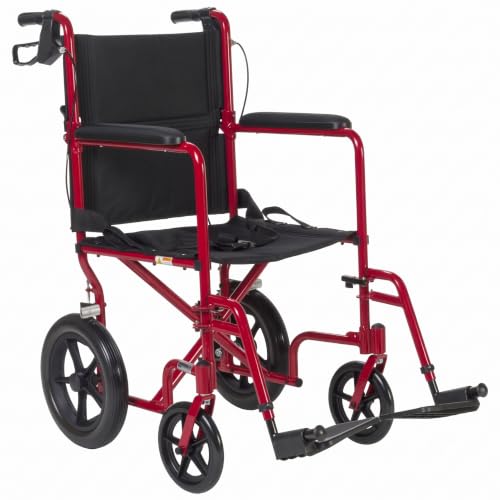 Lightweight Expedition Transport Wheelchair with Hand Brakes1 Count (Pack of 1)38 x 22 x 38 inches19 poundsCheck on Amazon
 Medline Lightweight Foldable Transport Wheelchair with Handbrakes and1 Count (Pack of 1)22 poundsCheck on Amazon
 Drive Medical Silver Sport 1 Folding Transport Wheelchair1 Count (Pack of 1)43.5 x 24 x 36 Inches37.6 PoundsCheck on Amazon
Top 3 picks at a glance
How to Choose a Transport Wheelchair: 7 Decision Criteria
Transport wheelchairs are not self-propelled. They use smaller 8-inch front and 12-inch rear wheels and are designed to be pushed by a caregiver. That makes weight, folded size, and brake access more important than top speed or large-wheel performance. Use these seven criteria in order:
- Chair weight: Determines whether one caregiver can lift it into a trunk without assistance. Under 22 lbs is one-hand liftable for most adults; 26-30 lbs requires two hands and good leverage.
- Folded dimensions: Determines if it fits a sedan trunk, SUV cargo area, or back seat without removing footrests.
- Seat width: 17-inch is for petite users under 130 lbs, 19-inch fits most adults, 22-inch is bariatric. Too wide makes pushing through doorways difficult; too narrow creates pressure points.
- Brakes: Look for dual locking brakes on the rear handles or push-to-lock wheel locks. Handle-mounted loop brakes give the caregiver more control on ramps.
- Caregiver handles and pushing ergonomics: Padded, full-grip handles with a locking cross-brace reduce wrist strain. Some models include hand brakes similar to a bicycle.
- Comfort for the occupant: Nylon upholstery, padded armrests (flip-back or desk-length), and swing-away footrests matter for transfers and for rides longer than 20 minutes.
- Vehicle-storage requirements: Fixed vs. removable footrests, folding backrest, and overall folded height dictate whether you need a large trunk or if a compact car will work.
Best Transport Wheelchairs Compared: Weight, Size and Features
This comparison focuses on the most widely available transport wheelchair classes in 2026. All are manual, attendant-propelled chairs in the standard $150-$450 market range, with ultra-light aluminum models usually $300-$500 and steel-frame budget models usually $150-$250.
| Model / Class | Chair Weight | Folded Dimensions (H x L x W) | Seat Width | Brake Type | Weight Capacity | Best For |
|---|---|---|---|---|---|---|
| Drive Medical Fly Lite Ultra Lightweight | 19.5 lbs without footrests | 29 x 28 x 10.5 in | 19 in | Rear wheel push-to-lock + companion hand brakes | 300 lbs | Frequent car transfers, air travel |
| Drive Medical Lightweight Transport (19-inch) | 26 lbs without footrests | 33 x 28 x 11 in | 19 in | Rear wheel push-to-lock | 300 lbs | Everyday use on a budget |
| Medline Lightweight Transport | 26.5 lbs without footrests | 34 x 29 x 10.5 in | 19 in (also 17 in) | Rear wheel push-to-lock + optional hand brakes | 300 lbs | Clinic and home use with flip-back arms |
| Nova Medical 319 Transport Chair | 24.5 lbs without footrests | 31 x 28 x 11.5 in | 19 in (also 22 in) | Rear wheel push-to-lock + hand loop brakes | 300 lbs (22-inch: 400 lbs) | Caregiver control on slopes |
| Karman TC-405 Lightweight Transport | 27 lbs without footrests | 30 x 29 x 11 in | 19 in | Companion-activated hand brakes | 300 lbs | Users needing attendant braking |
What the Specs Mean in Practice
Chair weight is not the whole lift weight. Manufacturers list weight without footrests. Add 3-4 lbs for a pair of swing-away footrests. A chair listed at 26 lbs will be about 29-30 lbs ready to roll. If your caregiver has a 25 lb comfortable lift limit, target a chair listed at 19-22 lbs.
Folded width is the doorway test. A folded width of 10.5 to 11.5 inches will pass through a standard 24-inch closet door for storage. Unfolded width is more critical: a 19-inch seat typically makes the chair 22-23 inches wide overall, which clears a 28-inch interior doorway with 2-3 inches to spare. A 22-inch seat creates a 25-26 inch overall width and will scrape many older bathroom doorways.
Brakes fall into two systems. Push-to-lock wheel locks are operated by the occupant or caregiver bending to the rear wheels; they are for parking, not slowing. Companion hand brakes on the push handles are for slowing on downhill ramps and curbs. If you regularly navigate driveways, hospital ramps, or van ramps, prioritize the hand-brake class like the Nova 319 or Drive Fly Lite.
Caregiver handles matter for tall pushers. Fixed-height handles at 36-37 inches from the ground force taller caregivers to stoop. Models with slightly taller handles or an extended handlebar reduce back strain during long pushes. Foam-padded handles with a cross-brace lock also prevent the chair from folding accidentally while in use.
Vehicle Storage Requirements: Will It Fit Your Car?
Most transport wheelchairs fold flat by pulling up on the seat center. Footrests should swing away or detach quickly for the smallest package. Check these thresholds before buying:
- Compact sedan trunk (12-14 cubic feet): Requires folded dimensions under 32 x 29 x 11 inches. The Drive Fly Lite at 29 x 28 x 10.5 inches fits with room for groceries. Heavier steel models at 34 inches tall may need to be angled.
- Mid-size SUV cargo area: Any model on the table fits without removing footrests, but height matters if you have a cargo cover.
- Back seat storage: Folded length of 28-29 inches fits across most rear seats. Secure with a seatbelt to prevent sliding.
Worked Calculation: Lifting Effort and Trunk Clearance
Two quick checks prevent a return after purchase:
1. Effective lift weight: Listed weight 26 lbs + footrests 3.5 lbs + cushion and pouch 2 lbs = 31.5 lbs total. If you lift from ground to trunk lip at 30 inches high, that is a low, close lift most adults can manage. If your trunk lip is 32+ inches (common on SUVs), the same weight feels 15-20% harder due to the higher reach. For frequent solo loading over a high lip, stay under 24 lbs listed weight.
2. Trunk fit volume check: Measure your trunk opening, not just volume. Example: Trunk opening is 38 inches wide x 16 inches tall. A folded chair at 29 inches high will not slide in upright. Lay it flat: folded footprint is 28 (long) x 10.5 (wide) x 29 (high). Laid on its side, it becomes 10.5 inches tall, which clears the 16-inch opening easily, and 29 inches deep, leaving 9 inches of width in a 38-inch trunk. Always measure height of the opening first; that is the limiting factor.
Decision Matrix: Which Class Fits Your Situation
Match your primary use case to the right weight and brake class:
| Your Situation | Priority Feature | Recommended Class | Why |
|---|---|---|---|
| You load the chair alone into a compact car 3+ times per week | Weight under 22 lbs, folded height under 30 in | Ultra-light aluminum like Drive Fly Lite | Lowest lift strain and smallest folded package |
| Caregiver and occupant are both over 5’10” and you use ramps | Companion hand brakes + taller handles | Nova 319 or Karman TC-405 | Hand brakes control speed without bending to wheels |
| Use is occasional for appointments, stored in a closet | Budget and durability over ultra-low weight | Drive Lightweight Transport or Medline Lightweight | Steel/aluminum hybrid is durable and usually $150-$250 |
| Occupant is under 5’2″ or under 130 lbs | 17-inch seat, shorter depth | Medline 17-inch or Nova 17-inch variant | Narrower seat prevents sliding and improves posture |
| Occupant is over 300 lbs or needs wider support | 22-inch seat, reinforced frame | Nova 22-inch bariatric transport | 400 lb capacity and wider wheelbase |
| Long waits in the chair (airports, clinics >30 min) | Comfort: padded arms, nylon upholstery, swing-away footrests | Any 19-inch with desk-length flip-back arms | Allows side transfers to car seats and dining chairs |
Comfort vs. Portability Trade-offs
Thinner, lighter chairs sacrifice some padding. For rides under 20 minutes, standard nylon and 1-inch seat padding is sufficient and dries quickly if spilled on. For longer use, add a 2-inch foam or gel cushion (adds 2-3 lbs and 1.5 inches of seat height). Check that the added height does not make footrests too short; most swing-away footrests adjust 2-3 inches.
Desk-length armrests let the chair pull up to a table, but full-length padded arms provide more forearm support. Flip-back arms are essential if the user cannot stand to transfer and must slide sideways from bed or car seat.
8-inch front casters roll well indoors but catch on cracked sidewalks. If you push outdoors frequently, look for solid 8-inch casters with sealed bearings and at least 12-inch rear wheels; larger rear wheels roll over thresholds with less vibration.
Setup Checklist Before First Use
- With footrests attached, check that the occupant’s thighs are level and feet are flat on the plates with knees at roughly 90 degrees. Adjust footrest height before tightening.
- Lock both rear wheel locks and push the chair: it should not move. If it creeps, the brake extension needs adjustment per the manual.
- Fold and unfold five times to break in the cross-brace. Verify the folding lock engages and the handles do not flex when you push down firmly.
- Practice a curb technique: tip the chair back slightly using the tipping lever, lift front casters over the curb, then roll rear wheels up. Never pull backward up a curb while occupied.
- Measure your narrowest doorway at home (usually the bathroom) and test the unfolded overall width. Keep 1-2 inches of clearance on each side.
Frequently Asked Questions
What is the difference between a transport wheelchair and a standard wheelchair?
A transport wheelchair has small rear wheels and must be pushed by a caregiver; a standard wheelchair has large 24-inch rear wheels with hand rims so the occupant can self-propel. Transports are lighter (19-28 lbs vs. 30-38 lbs) and fold narrower, but cannot be used independently over long distances.
Can a transport wheelchair fit in an airplane overhead bin?
No. Even the lightest models fold to about 29 inches long and must be gate-checked or stored in the cargo hold. Ultra-light models under 20 lbs are preferred for air travel because baggage handlers lift them and caregivers carry them through the jet bridge.
Do I need removable footrests?
Yes for vehicle storage and transfers. Swing-away, detachable footrests reduce folded length by 3-5 inches and let the occupant stand directly in front of the seat. Fixed footrests snag on car door sills and increase tip risk during standing transfers.
What seat width should I choose?
Measure the occupant’s hip width while seated and add 1 inch. A 17-inch seat fits hips up to about 16 inches, 19-inch fits hips up to 18 inches, and 22-inch fits larger frames. When between sizes, choose the wider seat and add a small side cushion rather than compressing the hips.


