
The best Prime Day smart speaker deals usually come down to matching the speaker’s microphone range, room coverage, sound quality, privacy controls, and smart-home ecosystem to the room—not simply choosing the lowest price.
As an Amazon Associate we earn from qualifying purchases at no extra cost to you.

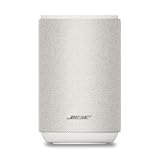

Our Top Picks


Top 3 picks at a glance
Best Prime Day smart speaker deals at a glance
| Speaker | Best for | Practical room size | Typical market range | Main ecosystem |
|---|---|---|---|---|
| Amazon Echo Dot (5th Gen) | Bedrooms, offices, and small rooms | Up to about 120 sq. ft. | Usually $25–$55 | Alexa |
| Amazon Echo (4th Gen) | General-purpose rooms | About 120–250 sq. ft. | Usually $55–$100 | Alexa |
| Google Nest Audio | Voice control and balanced room audio | About 150–300 sq. ft. | Usually $50–$100 | Google Assistant |
| Apple HomePod mini | Apple households and multiroom pairing | Up to about 150 sq. ft. | Usually $70–$100 | Apple Home |
| Sonos Era 100 | Music-first living rooms | About 150–300 sq. ft. | Usually $170–$220 | Sonos, Alexa, AirPlay 2 |
| Sonos Era 300 | Large rooms and immersive music | About 250–500 sq. ft. | Usually $350–$450 | Sonos, Alexa, AirPlay 2 |
| Apple HomePod (2nd generation) | Large Apple-centric rooms | About 250–500 sq. ft. | Usually $250–$350 | Apple Home, Siri |
Room-size figures are planning estimates rather than manufacturer limits. Ceiling height, furniture, background noise, speaker placement, and the listening volume you prefer can change the result substantially.
Best choices by room and priority
Best small-room value: Amazon Echo Dot (5th Gen)
The Echo Dot is a sensible Prime Day target for a bedside table, kitchen counter, dorm room, or home office. Its microphone array is accurate at normal conversational distances, and Alexa supports a broad selection of smart-home devices, timers, routines, calls, and music services.
Its compact driver is suitable for podcasts, alarms, spoken news, and background music, but it cannot produce the bass or headroom of a full-size speaker. In a room larger than roughly 120 square feet, a second Dot or a larger Echo generally gives more consistent volume and voice pickup than forcing one small speaker to play loudly.
Best all-round Alexa speaker: Amazon Echo (4th Gen)
The fourth-generation Echo is a stronger choice for a living room or open-plan kitchen. Its larger enclosure delivers fuller bass and more usable volume than the Dot, while its microphone array remains effective when music is playing at moderate levels.
It also works well as the center of an Alexa-based setup. Compatible lights, plugs, thermostats, cameras, and routines can be controlled from one account. Look for a discount that places it near the lower end of its usual $55–$100 range; at that point, it is often a better value than buying two small speakers solely for louder playback.
Best Google ecosystem option: Google Nest Audio
Nest Audio is a strong fit for households already using Google services, Android phones, YouTube Music, Google Calendar, or Chromecast. Its voice recognition is particularly useful when several people use different Google accounts, and it can form stereo pairs or synchronized speaker groups with compatible devices.
It offers a more substantial sound than a mini speaker and suits medium bedrooms, kitchens, and living rooms. The main limitation is ecosystem dependence: Google Assistant and Google Home are convenient if they already organize your devices, but less compelling if your home is built around Alexa or Apple Home.
Best compact Apple speaker: Apple HomePod mini
HomePod mini is the clearest choice for an Apple household that wants Siri, HomeKit control, AirPlay 2, and automatic integration with Apple devices. Two units can create a stereo pair, and multiple speakers can distribute audio around the home.
It is especially convenient for personal requests, intercom messages, and controlling Matter or HomeKit accessories. Its small size limits low-end impact, so it is better for desks, bedrooms, and smaller living areas than for filling a large open-plan room with music.
Best music-first upgrade: Sonos Era 100
The Era 100 is worth considering when sound quality matters more than getting the cheapest voice assistant. It produces a wider, more authoritative presentation than compact smart speakers and supports Sonos multiroom audio, AirPlay 2, Bluetooth, and Alexa voice control.
Its microphones are generally suitable for ordinary room use, but voice control should not be the only reason to buy it. The value comes from the combination of better audio, flexible placement, and a mature multiroom platform. Sonos speakers can also be grouped with other supported Sonos models, which is useful when upgrading one room at a time.
Best large-room sound: Sonos Era 300 or Apple HomePod
For a larger living room, the Sonos Era 300 provides more headroom and directional audio, while the second-generation HomePod offers strong bass and room-aware sound in an Apple-centered setup. Choose the Era 300 for Sonos flexibility and broad streaming support; choose the HomePod when Apple Home, Siri, AirPlay, and Apple Music are central to the household.
Neither is an efficient purchase for a small bedroom. A large speaker played quietly does not automatically sound better than a correctly sized model, and the extra cost may be better spent on a stereo pair or a second room.
Head-to-head buying criteria
Room-size coverage
Use a small speaker when the listener is typically within 6–10 feet. For a medium room, look for a larger enclosure or plan for two speakers. In an open-plan area, speaker placement matters more than the published wattage: place the speaker near the main listening zone, away from a corner and at least several inches from large reflective surfaces.
A practical rule is to buy for the room where you listen most, not the biggest room in the house. If a 250-square-foot living room has a kitchen opening and high ceilings, one compact speaker may be audible but will sound strained at party volume. Two medium speakers can provide more even coverage at lower individual volume.
Microphone accuracy
Microphone performance depends on distance, noise, and playback volume. Alexa, Google Assistant, and Siri speakers all work best when they have a clear line of sight and are not placed directly beside a television, extractor fan, or noisy desktop PC.
For a television room, choose a model with a stronger microphone array or place it closer to the seating position. If you routinely need to repeat commands while music is playing, the issue may be placement rather than the assistant itself.
Sound quality
Compact models prioritize convenience and speech clarity. Full-size Echo, Nest Audio, HomePod, and Sonos models provide more bass and volume headroom. Sonos and HomePod are generally the better choices for dedicated music listening, while Echo and Nest models often offer better value when timers, routines, and smart-home control are the primary uses.
Privacy controls
Every option here has a microphone mute control, but privacy features differ in detail. Amazon Echo devices commonly provide a physical microphone-off button and account-level voice-history controls. Nest speakers offer a physical microphone switch and Google activity controls. HomePod processes many personal requests with Apple’s privacy-focused architecture, while its physical mute control is implemented through the device or Home app. Sonos Era models include a hardware microphone switch.
For a bedroom or home office, prefer a speaker with a clearly visible physical mute control. If you want stronger separation between casual listening and smart-home commands, keep the microphone muted by default and enable it only when needed.
Ecosystem compatibility
- Choose Alexa if you have a wide mix of smart plugs, lights, appliances, and third-party skills.
- Choose Google Nest if your household relies on Android, Google Calendar, Chromecast, or YouTube services.
- Choose HomePod if most household members use iPhone, iPad, Apple Watch, or Mac and you want Apple Home integration.
- Choose Sonos if multiroom music and streaming flexibility matter more than using one assistant for every smart-home device.
Matter improves cross-platform device compatibility, but it does not make every feature identical across ecosystems. Before buying, check whether your specific lights, cameras, locks, or thermostat support the assistant and functions you need.
Decision matrix for Prime Day shopping
| Your situation | Best starting choice | Why |
|---|---|---|
| Bedroom, desk, or dorm | Echo Dot or HomePod mini | Small footprint, clear speech, modest price |
| Medium living room with Alexa devices | Echo (4th Gen) | More volume and bass without premium pricing |
| Android and Google services | Nest Audio | Natural fit for Google Home and Chromecast |
| Apple Home and AirPlay household | HomePod mini or HomePod | Seamless Apple integration and multiroom pairing |
| Music is more important than smart-home breadth | Sonos Era 100 | Better audio platform and multiroom expansion |
| Large room or high listening volume | Sonos Era 300 or HomePod | Greater headroom and fuller room coverage |
How to calculate whether one speaker is enough
Suppose your main room is 240 square feet and you normally listen from two seating areas. A compact speaker rated here for roughly 120 square feet is undersized for even coverage. Buying two compact speakers gives approximately two listening points, but not necessarily the same bass or maximum volume as one full-size speaker.
For music, compare the cost of two small units with one Echo, Nest Audio, HomePod, or Era 100. If the two-speaker setup is within roughly 20% of the price of the larger model, choose based on placement: two speakers are better for coverage and stereo separation, while one larger speaker is simpler and often produces stronger bass from a single location.
How to get the best deal
- Compare the discounted price with the speaker’s normal market range, not only the percentage-off label.
- Prioritize a current-generation model when microphone performance, Matter support, or software longevity matters.
- Consider bundles only when you need the included accessories or a second speaker.
- Do not buy a premium speaker for a room where a compact model already provides adequate volume and voice pickup.
- Check compatibility with your existing smart-home platform before choosing based on audio specifications.
For most shoppers, the Echo Dot and HomePod mini are the best small-room deals, the Echo and Nest Audio are the strongest mid-room values, and the Sonos Era 100 is the most convincing music-focused upgrade. The right Prime Day purchase is the model that covers your room without forcing you to replace the rest of your smart-home ecosystem.


