
Our Top Picks
 ASUS ROG XG27AQDMGR 27 Inch 1440p 240Hz Glossy14.5" x 23.8" x 2.5"7.4 x 23.8 x 19.7 Inches14.6 poundsCheck on Amazon
 Alienware AW2725DF OLED Gaming Monitor27.0 OLED9.59 x 23.98 x 15.99 Inches13.89 PoundsCheck on Amazon


Top 3 picks at a glance
Best Prime Day OLED Monitor Deals
The best Prime Day OLED monitor deals in 2026 are usually the Alienware AW3423DWF for an affordable ultrawide, the MSI MPG 271QRX for high-refresh 1440p gaming, and the ASUS ROG Swift PG32UCDM, Alienware AW3225QF, or Samsung Odyssey OLED G8 G80SD for 4K 240Hz gaming.
Sale prices change quickly, so compare the discount against the monitor’s normal market range rather than choosing the largest percentage reduction. A low-priced OLED with a weaker warranty, limited connectivity, or insufficient brightness can be worse value than a smaller discount on a newer model.
As an Amazon Associate we earn from qualifying purchases at no extra cost to you.


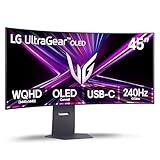
Quick comparison of the strongest OLED monitor deals
| Monitor | Panel and size | Resolution and refresh rate | HDR brightness class | Typical market range | Best for |
|---|---|---|---|---|---|
| Alienware AW3423DWF | 34-inch QD-OLED, curved | 3440×1440, 165Hz | DisplayHDR True Black 400; strong color volume | Usually $600–$800 | Affordable ultrawide gaming |
| MSI MPG 271QRX QD-OLED | 27-inch QD-OLED | 2560×1440, 360Hz | DisplayHDR True Black 400; high color volume | Usually $700–$900 | Competitive 1440p gaming |
| LG UltraGear 32GS95UE | 32-inch WOLED | 3840×2160, 240Hz or 1920×1080, 480Hz | DisplayHDR True Black 400 class | Usually $1,000–$1,300 | One monitor for 4K and esports modes |
| Alienware AW3225QF | 32-inch QD-OLED, curved | 3840×2160, 240Hz | DisplayHDR True Black 400; higher small-window highlights | Usually $900–$1,200 | Immersive 4K PC gaming |
| ASUS ROG Swift PG32UCDM | 32-inch QD-OLED | 3840×2160, 240Hz | DisplayHDR True Black 400 class | Usually $1,000–$1,300 | Premium 4K gaming and creator use |
| Samsung Odyssey OLED G8 G80SD | 32-inch QD-OLED, flat | 3840×2160, 240Hz | DisplayHDR True Black 400 class | Usually $900–$1,200 | Bright-room gaming and a flat 4K screen |
These are general market ranges, not guaranteed Prime Day prices. A deal is particularly attractive when it is at least $100–$200 below the model’s usual range and still includes the manufacturer’s full burn-in policy.
Head-to-head: which Prime Day OLED deal fits your setup?
For 1440p competitive gaming: MSI MPG 271QRX
The MPG 271QRX combines 2560×1440 resolution with a 360Hz QD-OLED panel. It is a better choice than a 4K 240Hz display if your priority is low latency and consistently high frame rates in competitive shooters. Its DisplayPort 2.1 connection, HDMI 2.1 inputs, USB hub, and USB-C connectivity also make it more flexible than many older 1440p OLED monitors.
Choose this class of display if your graphics card can frequently exceed 240 frames per second at 1440p in the games you play. The advantage is not merely the number on the specification sheet: 360Hz reduces the interval between refreshes to about 2.78 milliseconds, compared with 4.17 milliseconds at 240Hz.
For cinematic ultrawide gaming: Alienware AW3423DWF
The AW3423DWF remains compelling when a discounted OLED ultrawide costs substantially less than newer 4K models. Its 3440×1440 resolution is noticeably easier to drive than 4K, while the 21:9 format adds horizontal space in supported games. The QD-OLED panel delivers excellent contrast and saturated HDR color, though its 165Hz refresh rate is less suitable for esports-focused buyers.
Check the included cable and your GPU outputs before buying. DisplayPort is the preferred connection for the full refresh rate, while older HDMI hardware may impose lower refresh-rate or feature limits.
For premium 4K gaming: PG32UCDM, AW3225QF, and G80SD
These 32-inch 4K 240Hz QD-OLED monitors are close competitors, so warranty terms, shape, ports, and sale price matter more than small differences in image quality. The Alienware AW3225QF is curved, the Samsung G80SD is flat and uses a more glare-resistant approach, and the ASUS PG32UCDM is aimed at buyers who want a broad gaming and creator feature set.
4K 240Hz is demanding. A useful bandwidth calculation is:
3840 × 2160 × 240 × 24 bits per pixel = approximately 47.8 gigabits per second before blanking and transmission overhead.
That is beyond uncompressed DisplayPort 1.4 and HDMI 2.0. These monitors therefore rely on Display Stream Compression, HDMI 2.1, or DisplayPort 2.1 depending on the model and connection. Confirm that your graphics card has the required output and that the cable is suitable. A monitor cannot create 4K 240Hz from a GPU limited to HDMI 2.0.
For dual-purpose 4K and esports gaming: LG UltraGear 32GS95UE
The 32GS95UE is unusual because it can switch between 4K 240Hz and 1080p 480Hz modes. The 1080p mode is less sharp, but it is useful for esports games where motion clarity and high frame rates matter more than resolution. This makes it a practical choice for someone who does not want separate competitive and cinematic monitors.
Buy it when the mode switch is valuable to you, not simply because 480Hz is the highest number. At 1080p, image quality depends heavily on the monitor’s scaling and your preferred viewing distance.
OLED panel type: QD-OLED versus WOLED
- QD-OLED: typically offers especially wide color volume and vivid HDR colors. In a bright room, some models can show raised blacks or a slight purple tint when ambient light reaches the panel surface.
- WOLED: often handles ambient light and black levels more consistently, depending on its coating. White highlights can be strong, but color brightness may not match the most saturated QD-OLED presentation.
- Glossy versus matte: glossy coatings can look clearer in controlled lighting, while matte or glare-reducing coatings are easier to use beside windows and lamps.
HDR brightness figures need careful interpretation. “DisplayHDR True Black 400” is not equivalent to a conventional LCD’s peak brightness rating. OLED monitors can produce deep blacks and bright small highlights, but large white screens may dim through automatic brightness limiting. For dark-room HDR, contrast matters most; for a sunlit room, coating and sustained brightness matter more.
Burn-in coverage and ownership checks
OLED pixel wear is affected by static elements such as taskbars, game interfaces, browser windows, and desktop applications. Modern monitors reduce the risk with pixel shifting, panel refresh cycles, logo dimming, and screen savers, but these features do not make burn-in impossible.
Before buying, open the exact product warranty page and verify three points:
- Whether burn-in is explicitly covered rather than excluded as normal panel wear.
- How long the coverage lasts, commonly two or three years depending on the manufacturer and region.
- Whether the replacement process requires registration, proof of purchase, or a diagnostic image.
For desktop-heavy use, set the operating system to hide the taskbar, use a dark or rotating wallpaper, enable the monitor’s protection features, and allow its panel-care cycle to run when prompted. Do not interrupt a refresh cycle by unplugging the monitor.
Decision matrix for Prime Day buyers
| Your situation | Best spec target | Best matching model or class | Why |
|---|---|---|---|
| RTX 4070-class system, story games | 3440×1440, 165Hz or 240Hz | AW3423DWF or similar ultrawide QD-OLED | More manageable GPU load than 4K and a wide field of view |
| High-end GPU, single-player games | 4K, 240Hz, HDMI 2.1 | AW3225QF, PG32UCDM, or G80SD | Sharp image, strong contrast, and console compatibility |
| Competitive shooter player | 1440p, 360Hz | MSI MPG 271QRX or similar 27-inch QD-OLED | Higher refresh rate without the 4K rendering burden |
| Competitive and cinematic gaming | 4K 240Hz plus 1080p 480Hz mode | LG 32GS95UE | One display covers two different priorities |
| Bright room or window behind you | Glare-reducing coating and high sustained brightness | Flat OLED with a stronger ambient-light design | Reduces reflections and perceived black-level lift |
Settings to use after buying
Start with the monitor’s HDR mode and Windows HDR calibration rather than increasing brightness blindly. Set SDR brightness around 100–160 nits for a typical indoor room, then adjust to your lighting. Enable variable refresh rate, select the monitor’s maximum refresh rate in the operating system, and use HDMI 2.1 or DisplayPort with DSC where required.
For a 4K OLED, use an in-game render scale or upscaler when native 4K is too demanding. Quality-oriented upscaling can preserve much of the sharpness while increasing frame rate. For competitive games, reduce unnecessary effects first—ray tracing, volumetric lighting, and extreme shadows—because these usually cost more performance than lowering interface elements or texture quality.
Final buying advice
The best Prime Day OLED monitor deal is the one that matches your graphics card and daily use. Pick the AW3423DWF when the discount makes ultrawide OLED affordable, the MPG 271QRX for 1440p 360Hz competition, the LG 32GS95UE for two refresh-rate modes, and a 32-inch 4K 240Hz QD-OLED when image sharpness and HDR contrast are the priority. Before checkout, compare the real sale price, ports, required cable, panel coating, and explicit burn-in warranty—not just the refresh-rate headline.


