
The best Prime Day USB flash drive deals in 2026 are the discounts that preserve real sustained transfer speed, useful capacity, and warranty coverage—not simply the drives with the largest percentage-off label.
For most gaming-PC owners, a 1TB Kingston DataTraveler Max is the strongest performance choice when its price falls into the usual $60–$100 range, while the Samsung BAR Plus remains a sensible compact option for everyday files at roughly $15–$35 for 128GB–256GB. If confidential work or recovery files matter more than maximum speed, look instead at a hardware-encrypted Kingston IronKey Locker+ 50 or Apricorn Aegis Secure Key.
As an Amazon Associate we earn from qualifying purchases at no extra cost to you.




Our Top Picks


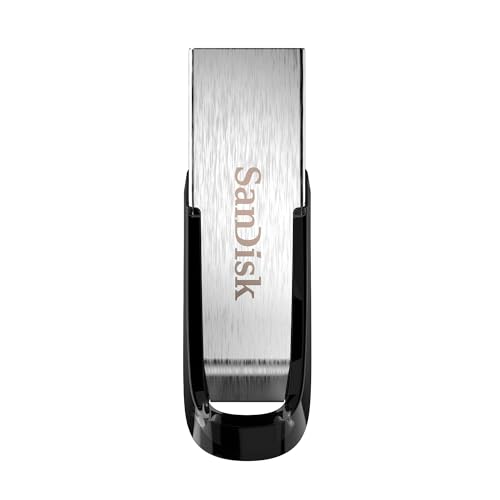

Top 3 picks at a glance
Best Prime Day USB flash drive deals by use case
| Use case | Drive class or model | Capacity to target | Useful advertised interface | Reasonable sale range |
|---|---|---|---|---|
| Game installers and large PC files | Kingston DataTraveler Max USB-C or USB-A | 512GB–1TB | USB 3.2 Gen 2, up to 1,000MB/s read on some versions | $35–$100 |
| Small everyday carry drive | Samsung BAR Plus | 128GB–256GB | USB 3.2 Gen 1, up to 400MB/s read | $15–$35 |
| Rugged travel storage | SanDisk Extreme PRO USB 3.2 Solid State Flash Drive | 512GB–1TB | USB 3.2 Gen 2, up to 420MB/s read and 380MB/s write | $70–$150 |
| Strong physical protection | Corsair Flash Survivor Stealth | 64GB–256GB | USB 3.0, slower than current Gen 2 designs | $20–$60 |
| Hardware-encrypted files | Kingston IronKey Locker+ 50 | 8GB–128GB | USB 3.2 Gen 1 | $45–$150 |
| Maximum security and managed access | Apricorn Aegis Secure Key 3.0 | 4GB–256GB | USB 3.0 | $80–$250 |
These are broad market ranges rather than guaranteed Prime Day prices. A discount is worth considering only after checking the exact connector, capacity, and product revision; manufacturers often sell USB-A and USB-C variants under similar names.
What transfer speed will you actually get?
Interface bandwidth is a ceiling, not a promise. USB 3.2 Gen 1 provides 5Gbps of signaling bandwidth, which is about 625MB/s before protocol overhead. USB 3.2 Gen 2 provides 10Gbps, or about 1,250MB/s in theory. A flash drive may advertise a high sequential read speed while delivering much less sequential write speed, especially after its temporary cache fills.
For a practical comparison, copying a 100GB game archive at:
- 100MB/s takes about 17 minutes.
- 250MB/s takes about 7 minutes.
- 500MB/s takes about 3 minutes 25 seconds.
- 800MB/s takes about 2 minutes 5 seconds.
The calculation is 100,000MB divided by the sustained rate, with a small allowance for file-system overhead. A drive rated at 1,000MB/s may therefore not finish a 100GB copy in 100 seconds if its write speed falls to 150–300MB/s after the cache is exhausted. For a game library, sustained write speed and thermal behavior matter more than the largest read number on the package.
Flash drive versus portable SSD
High-end flash drives are convenient, but a portable SSD usually has better sustained performance, stronger controllers, and more predictable behavior for repeated 100GB-plus transfers. Choose a flash drive for portability, occasional backups, BIOS utilities, documents, or moving installers. Choose a portable SSD if you regularly edit video, move virtual machines, or use the device as an active game library.
Connector compatibility can decide whether a deal is useful
USB-A remains common on desktop PCs, monitors, routers, and older laptops. USB-C is the better fit for newer laptops, phones, and tablets, but a USB-C connector does not automatically mean USB 3.2 Gen 2 speed. The host port, cable, adapter, and drive must all support the same performance level.
| Your equipment | Best choice | What to check |
|---|---|---|
| Gaming desktop with rear USB-A ports | USB-A Gen 2 drive | Use a motherboard USB 3.x port, not a slow keyboard hub |
| Modern laptop with USB-C only | Native USB-C drive | Confirm the port supports USB 3.2, not charging-only USB-C |
| Phone or tablet | Dual USB-C/USB-A drive | OTG support, file-system compatibility, and physical clearance |
| Console or smart TV | USB 3.x drive with broad compatibility | Required format, capacity limit, and device-specific restrictions |
A dual-connector design is convenient, but the sliding mechanism can be less robust than a fixed connector. Also check whether a thick protective case prevents a USB-C drive from seating fully.
Capacity: buy for usable space, not the label
Manufacturers market capacity in decimal gigabytes, while operating systems report a smaller binary value. A nominal 1TB drive provides roughly 931GiB before formatting; a 512GB drive provides roughly 477GiB. Formatting and reserved space reduce the available figure slightly further.
For a single large game or media collection, 256GB is the practical minimum. A 512GB drive offers much better flexibility, while 1TB is worthwhile when the sale price per gigabyte is close to the 512GB version. Avoid paying a large premium for 2TB flash drives unless the manufacturer provides clear specifications, support documentation, and a credible warranty. Extremely cheap high-capacity drives can be counterfeit or misreport their storage.
Durability: protection from drops is not the same as data safety
The Samsung BAR Plus has a compact metal body and a reputation for surviving ordinary pocket and desk use. The Corsair Flash Survivor Stealth adds a more substantial metal enclosure and sealing intended for tougher travel conditions. The SanDisk Extreme PRO Solid State Flash Drive uses a larger SSD-like design and is more suitable for sustained transfers than a tiny low-cost thumb drive, but its retractable connector still deserves care.
- For keys and pockets: choose a capped or recessed connector and attach a lanyard if the body supports one.
- For travel: prioritize a metal or sealed enclosure, but do not assume water resistance unless the exact model specifies it.
- For constant plugging and unplugging: a short extension cable can reduce strain on the drive and PC port.
- For backups: durability does not replace a second copy. Keep important files on another drive or in a separate backup location.
Flash memory also has limited write endurance. It is suitable for periodic copies, but a drive used as a daily scratch disk or constantly updated recording destination is better replaced by an external SSD designed for that workload.
Encryption and warranty: when the premium is justified
Software encryption protects files only when it is configured correctly and the password is not lost. Hardware-encrypted drives such as the Kingston IronKey Locker+ 50 provide a keypad-based or device-level security workflow, depending on the model, and are better suited to sensitive files that must remain protected across different computers. Apricorn Aegis Secure Key products offer hardware-based authentication and are designed for organizations that need stronger access controls.
Encryption can add cost, reduce capacity choices, and sometimes reduce transfer speed. It is worthwhile for tax records, client data, credentials, recovery keys, and business documents. It is unnecessary for easily replaceable game installers unless the drive also contains private information.
Warranty length is useful, but it does not recover lost files. Check whether the warranty is three, five, or seven years, whether accidental damage is excluded, and whether the manufacturer offers technical support for the exact regional model. Keep purchase documentation and test a new drive before trusting it with important data.
How to judge a Prime Day discount in five checks
- Match the model number: confirm whether it is USB-A, USB-C, or a dual-connector version.
- Compare sustained write speed: look for independent long-transfer measurements or manufacturer specifications that separate read and write rates.
- Calculate cost per usable gigabyte: divide the sale price by the approximate operating-system capacity, not the box label.
- Check the warranty and security features: especially for encrypted or rugged models with a significant premium.
- Verify the drive after purchase: copy a large test file, safely eject it, and compare its checksum or reopen the file. Use a full-capacity verification utility if the drive will hold important data.
For example, suppose a 512GB drive costs $45 and a 1TB model costs $75. Using approximate usable capacities of 477GB and 931GB, the costs are about 9.4 cents and 8.1 cents per usable gigabyte. The 1TB model is the better capacity deal if its sustained write behavior, connector, and warranty are comparable.
Final recommendations
Choose the Kingston DataTraveler Max when large transfers and USB 3.2 Gen 2 performance are the priority. Choose the Samsung BAR Plus for a compact, affordable everyday drive. Choose the SanDisk Extreme PRO USB 3.2 Solid State Flash Drive when you want a faster, larger flash-drive format for travel. Choose the Corsair Flash Survivor Stealth when physical protection matters more than peak speed. Choose the Kingston IronKey Locker+ 50 or Apricorn Aegis Secure Key when hardware encryption is the deciding feature.
The best Prime Day USB flash drive deals are ultimately the ones that fit your host ports and workload. A modestly discounted 512GB drive with dependable sustained writes and a long warranty is usually a better purchase than a dramatic discount on an unverified high-capacity model.


