GPU prices in 2026 are high because of a memory shortage, not a shortage of graphics chips. AI data centres are absorbing most of the world’s DRAM supply, which has pushed up the cost of the GDDR6 and GDDR7 memory every graphics card needs. As of autumn 2026, Tom’s Hardware estimates GeForce RTX 50 cards are selling around 60% above their launch prices on average, with the RTX 5090 far higher, and TrendForce expects memory prices to keep rising through the end of the year. Radeon cards have generally stayed closer to their launch prices than GeForce cards, which makes them the better value for most buyers right now.
This guide explains what is driving prices, how much each tier has moved according to independent price trackers, what is likely to happen next, and how to buy a graphics card sensibly in the middle of it. We use percentages and tiers rather than exact prices, because street pricing changes week to week.
Our Top Picks


Top 3 picks at a glance
Verdict at a glance
- Why prices are up: AI demand for HBM and server memory has made GDDR memory scarce and expensive. TrendForce reported PC DRAM contract prices rising 38% to 43% in Q4 2025 and expected another 105% to 110% in Q1 2026.
- Hardest hit: The RTX 5090, which 3DCenter recorded at 96% above its September 2025 level in Germany, and which Tom’s Hardware found costing more than double its year-earlier price in the US.
- Best value right now: Radeon RX 9070 XT and RX 9070. Tom’s Hardware’s recent listing put the RX 9070 XT roughly a quarter above its launch price, well below the GeForce average.
- Best budget option: RX 9060 XT 16GB or Intel Arc B580.
- Will prices fall soon? Unlikely before 2027. TrendForce forecasts DRAM contract prices rising another 10% to 15% in Q4 2026.
- Should you wait for new cards? No. The RTX 50 Super refresh has been delayed and the RTX 60 series is reportedly slipping to 2028.
What is causing the 2026 GPU price surge
AI is taking the memory
Three companies, Samsung, SK hynix and Micron, make almost all of the world’s DRAM. All three have shifted production toward high-bandwidth memory (HBM) and server DRAM for AI systems, which earn far higher margins than consumer memory. In June 2026, Nvidia’s Jensen Huang confirmed all three were qualified and in production of HBM4 for Nvidia’s Rubin data-centre GPUs. Every wafer that goes to HBM is a wafer that does not become GDDR7 for a graphics card.
Memory prices have spiked
| Period | Memory price change | Source |
|---|---|---|
| Q4 2025 | PC DRAM (DDR4 and DDR5) contract prices up 38% to 43% | TrendForce |
| Q1 2026 | Further 105% to 110% rise expected for PC DRAM | TrendForce |
| Q3 2026 | Conventional DRAM contract prices forecast up 13% to 18%; NAND up 10% to 15% | TrendForce, July 2026 |
| Q4 2026 | Conventional DRAM contract prices forecast up 10% to 15%; NAND up 15% to 20% | TrendForce, September 30, 2026 |
TrendForce says increases are slowing because PC and smartphone makers are reaching their affordability limit, but prices are still rising. It also expects the share of manufacturing capacity available for PC memory to shrink further during 2027.
Graphics memory specifically
Reports suggest graphics memory has been hit at least as hard as system RAM. According to reports covered by several outlets, AMD raised the price of the GDDR memory kits it sells to board partners by about 10% in July 2026, its second increase in roughly six months. Nvidia reportedly told partners in May 2026 of a further price increase on the RTX 5090, citing GDDR7 costs. We could not confirm the exact figures from AMD or Nvidia directly.
Board partners pass costs on
Graphics card makers buy GPUs and memory together, then add their own boards and coolers. When memory costs rise, partners raise prices. PC Games Hardware reported that Asus and Galax raised prices on the RTX 5070, RTX 5070 Ti and RTX 5080 from September 1, 2026, and that MSI, Gigabyte and Inno3D followed.
Fewer cards on shelves
Because memory supply is limited, fewer finished cards are being produced. Some reports claim Nvidia cut RTX 50 production significantly in the first half of 2026, though these come from secondary sources and should be treated with caution. What is clear from price trackers is that supply has not kept up with demand at launch prices.
How much have GPU prices risen? Tier by tier
Different trackers measure different things: the cheapest listing, the median, or the average across stores. Here is what the most reliable trackers reported in September and early October 2026.
| Graphics card | Price movement reported | Source |
|---|---|---|
| RTX 5090 | Cheapest US listing more than double its price a year earlier (September 1) | Tom’s Hardware |
| RTX 5090 | 96% above September 2025 level in Germany | 3DCenter |
| RTX 50 series average | About 60% above launch prices | Tom’s Hardware, September 1 |
| RTX 5070 Ti | 48% above September 2025 in Germany (September 1); about 60% above November 2025 (early October) | 3DCenter |
| RTX 5070, 5070 Ti, 5080 | Further partner price rises from September 1, 2026 | PC Games Hardware |
| RX 9070 XT | Roughly a quarter above launch price | Tom’s Hardware Best GPUs page |
| RX 9070 GRE | Launched globally in June 2026 at the same price point as the original RX 9070; recent deals close to launch price | AMD launch coverage; TweakTown |
3DCenter also noted that German graphics card prices rose only moderately in the two weeks after mid-August, by an average of 4.3%, which suggests the steepest part of the climb may be behind us, at least for now.
Why the RTX 5090 is so extreme
The RTX 5090 has 32GB of GDDR7, the most of any consumer card, so it is the most exposed to memory costs. It is also in demand for local AI work, where its VRAM and bandwidth are valuable. That combination of gamers, creators and AI users competing for limited supply explains why it has risen much more than the rest of the lineup.
Why Radeon has held up better
AMD’s RX 9000 cards use GDDR6 rather than GDDR7, and they are less in demand for AI workloads than GeForce cards with CUDA. Price trackers in 2026 consistently show the RX 9070 XT selling well below the RTX 5070 Ti, even though Tom’s Hardware has the two essentially tied in rasterization at 1440p (69.7% against 69.8% of an RTX 5090).
What happens next: will GPU prices drop?
Short term: the rest of 2026
Do not expect meaningful drops. TrendForce forecasts DRAM contract prices rising another 10% to 15% in Q4 2026, and board partners raised prices again in September. Holiday sales may bring occasional deals, but the overall trend is flat to upward.
Medium term: 2027
Forecasts vary. TrendForce expects PC memory’s share of capacity to decline further in 2027, and server memory prices to keep rising quarterly through the second half of 2027, though more slowly. Retailer and industry forecasts covered by outlets including Evetech suggest the shortage could last until at least late 2027. New memory factories take years to build, so relief depends on AI demand cooling or new capacity coming online.
New products will not fix it
New graphics cards will not necessarily bring prices down. The RTX 50 Super refresh, which was rumoured to use 3GB GDDR7 modules (the most supply-constrained memory part), has been repeatedly delayed, with reports pointing to CES 2027 at the earliest. The RTX 60 series is reportedly slipping to 2028, according to leakers kopite7kimi and Kepler_L2. Intel shelved its Arc B770 gaming card, reportedly partly because of memory costs, and launched the chip only as the Arc Pro B70 workstation card.
How to buy a graphics card during the memory shortage
1. Buy for your monitor, not for bragging rights
Paying a big premium for performance you will not see is the most expensive mistake in a high-price market. Match the card to your resolution and refresh rate:
| Your monitor | Sensible tier | Value picks |
|---|---|---|
| 1080p, 60 to 144Hz | Budget to lower mid-range | RX 9060 XT 16GB, RTX 5060 Ti 16GB, Arc B580 |
| 1440p, 144Hz | Mid-range | RX 9070, RX 9070 GRE, RTX 5070 |
| 1440p high refresh or entry 4K | Upper mid-range | RX 9070 XT, RTX 5070 Ti |
| 4K, 60Hz or more | High-end | RTX 5080 |
| 4K high refresh, heavy AI work | Flagship | RTX 5090 |
2. Compare against launch prices
Before buying, look up the card’s original launch price and work out the premium you are paying. A card selling 10% to 20% over launch is a reasonable buy in this market. At 50% or more over launch, consider dropping a tier or switching brand.
3. Consider Radeon first for raster gaming
If you mainly play without heavy ray tracing, Radeon cards currently give much more performance per unit of money. Tom’s Hardware calls the RX 9070 the 1440p raster value champion, and the RX 9070 XT matches the RTX 5070 Ti in rasterization. Pick GeForce if you rely on DLSS, play path-traced games or need CUDA for AI.
4. Do not fall back on 8GB cards
Cheaper 8GB variants look tempting, but they age badly. Several 2026 games use more than 8GB at 1440p. Spend a little more on a 16GB RX 9060 XT or RTX 5060 Ti; the extra VRAM will extend the card’s useful life, which matters when replacement cards are expensive.
5. Look carefully at the used market
Used cards have risen too, but previous-generation cards such as the RX 7800 XT, RX 7900 XT, RTX 4070 Super and RTX 4080 Super can still be good value. Buy from sellers with return options, check that the card has been used for gaming rather than heavy round-the-clock workloads where possible, and confirm any remaining warranty.
6. Watch for genuine deals
Seasonal sales do still happen. The RX 9070 GRE, for example, appeared close to its launch price during an October 2026 sale, according to TweakTown. Set price alerts for the specific card you want, and be ready to buy when it hits a price you are happy with.
7. Remember the rest of the build costs more too
RAM and SSDs are affected by the same shortage. TrendForce expects NAND flash contract prices to rise 15% to 20% in Q4 2026. If you are building a new PC, budget for higher memory and storage prices, and consider reusing your existing RAM and drives if they are compatible.
Best value picks by budget tier during the shortage
Budget tier: RX 9060 XT 16GB or Arc B580
For 1080p gaming, the RX 9060 XT 16GB is the safest choice: 16GB of VRAM, FSR 4 support and 40.2% of an RTX 5090’s 1440p performance in Tom’s Hardware’s hierarchy. The Arc B580 is cheaper still and has 12GB of VRAM, scoring 30.3% of an RTX 5090 at 1440p.
The catch: At native 1440p Ultra in the newest games, both cards need upscaling to stay above 60 fps.
Mid-range tier: RX 9070 or RX 9070 GRE
The RX 9070 averages 104 fps at 1440p Ultra in Tom’s Hardware’s suite, about 8% faster than the RTX 5070, with 16GB of VRAM. The RX 9070 GRE, which went on sale worldwide in June 2026, is a little slower with 12GB, but has been seen close to its launch price in recent sales.
The catch: Ray tracing performance trails GeForce, especially on the 12GB GRE above 1080p.
Upper mid-range tier: RX 9070 XT, or RTX 5070 Ti for ray tracing
The RX 9070 XT is the standout value card of 2026, matching the RTX 5070 Ti in rasterization at 1440p while usually costing noticeably less. Choose the RTX 5070 Ti only if ray tracing, DLSS 4 or CUDA matter to you.
The catch: The RTX 5070 Ti’s price premium has widened during the shortage, per 3DCenter’s tracking.
High-end tier: RTX 5080
For 4K gaming, the RTX 5080 delivers 77.4 fps at native 4K Ultra in Tom’s Hardware’s hierarchy and has the best ray tracing below the RTX 5090. Its premium over launch price is far smaller than the 5090’s.
The catch: Board partners raised RTX 5080 prices again in September 2026, according to PC Games Hardware.
Common mistakes during a GPU price spike
- Waiting indefinitely for a price crash. Industry forecasts do not show one before 2027. If your current card is holding you back, waiting costs you a year or more of gaming.
- Panic-buying the most expensive card. Fear of further rises leads some buyers to overspend. Buy what your monitor needs.
- Ignoring AMD. Radeon cards have held their prices better in 2026 and offer excellent raster performance.
- Buying from unknown third-party sellers. High prices attract scams. Stick to reputable retailers and protected payment methods.
- Forgetting total system balance. A flagship GPU paired with an old CPU and 16GB of RAM wastes money. Balance the build.
Products Mentioned in This Guide
These are the specific graphics cards from the best-value picks by budget tier above.
ASRock Radeon RX 9060 XT Challenger 16GB OC
As an Amazon Associate we earn from qualifying purchases at no extra cost to you.
The safest budget-tier choice for 1080p, with 16GB of VRAM and FSR 4 support.
Sparkle Intel Arc B580 Titan OC 12GB
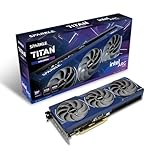
The cheaper budget alternative with 12GB of VRAM, though it needs upscaling at native 1440p Ultra in the newest games.
ASUS Prime Radeon RX 9070 16GB OC Edition

The mid-range pick, averaging 104 fps at 1440p Ultra and about 8% faster than the RTX 5070, with 16GB of VRAM.
GIGABYTE Radeon RX 9070 XT Gaming OC 16G

The standout value card of 2026 and our best value pick during the shortage, matching the RTX 5070 Ti in rasterization at 1440p.
GIGABYTE GeForce RTX 5070 Ti Gaming OC 16G

The upper mid-range choice only if ray tracing, DLSS 4 or CUDA matter to you, since its premium has widened during the shortage.
GIGABYTE GeForce RTX 5080 Gaming OC 16G

The high-end pick for 4K, with 77.4 fps at native 4K Ultra and the best ray tracing below the RTX 5090.
How we compared
We compared prices and trends using manufacturer launch information, independent price tracking and memory market data from the sources named above, plus owner reports. We did not bench-test these units ourselves, and we do not quote exact prices because they change constantly during the shortage. Where a figure comes from secondary reporting that we could not confirm with the original company, we say so. Performance comparisons come from the Tom’s Hardware GPU Benchmarks Hierarchy.
Sources
- TrendForce: DRAM and NAND contract price reports and forecasts (Q4 2025 through 4Q26)
- Tom’s Hardware: GPU price checks (September 2026), Best Graphics Cards for Gaming, GPU Benchmarks Hierarchy 2026
- 3DCenter: memory-crisis GPU price index (September and October 2026)
- PC Games Hardware: September 2026 board-partner price increases
- TweakTown: RX 9070 GRE sale pricing; RTX 50 Super delay coverage
- VideoCardz: RTX 50 Super delay reports
- kopite7kimi and Kepler_L2: RTX 60 timing leaks (September 2026)
- TechSpot and Club386: Intel Arc Pro B70 coverage
- Evetech: GPU price forecast for 2026 and 2027
Frequently Asked Questions
Why are GPU prices so high in 2026?
AI data centres are consuming most of the world’s memory supply, which has made the GDDR6 and GDDR7 memory on graphics cards scarce and expensive. Card makers have passed those costs on, and supply of finished cards has been limited.
When will GPU prices go down?
Probably not before 2027. TrendForce forecasts memory prices rising another 10% to 15% in Q4 2026 and expects PC memory capacity to stay tight through 2027.
How much more expensive is the RTX 5090?
Tom’s Hardware found the cheapest US RTX 5090 cost more than double its price from a year earlier in September 2026, and 3DCenter recorded German prices 96% above September 2025 levels.
Are AMD graphics cards cheaper right now?
Generally, yes, relative to their launch prices. Tom’s Hardware’s listing put the RX 9070 XT roughly a quarter above launch, compared with an average of about 60% for GeForce RTX 50 cards.
Should I buy a GPU now or wait?
If your current card is not meeting your needs, buy now and choose value-focused models. Waiting for new releases is risky: the RTX 50 Super has been delayed, and the RTX 60 series is reportedly slipping to 2028.
Is the memory shortage affecting RAM and SSDs too?
Yes. TrendForce reported huge DRAM contract price increases in late 2025 and early 2026, and expects NAND flash prices, which affect SSDs, to rise 15% to 20% in Q4 2026.
Is buying a used GPU a good idea in 2026?
It can be, especially for previous-generation cards with 16GB of VRAM. Used prices have risen too, so compare carefully and buy from sellers with return options.
Will the RTX 50 Super lower prices?
Unlikely. It is rumoured to use 3GB GDDR7 modules, the most constrained memory part, which is one reason reports give for its delays.
Related guides
More from Amazon
Programs that pair well with the guide above. Offers and eligibility are set by Amazon and may change.
Free shipping on eligible items, Prime Video and more. Eligible new members can start with a free trial.
Start a Prime free trialAd-free music streaming. Eligible new subscribers can start with a free trial.
Try Music Unlimited freeA Prime membership for ages 18-24 with a trial period. Eligibility is set by Amazon.
See Prime for Young AdultsAudiobooks and podcasts to listen to on the go. Eligible new members can start with a free trial.
Try Audible freeAs an Amazon Associate we earn from qualifying purchases.