
For most small properties — roughly one to five acres — the best subcompact tractors are the 23–26 hp class with a Cat 1 three-point hitch, a 540 rpm rear PTO, and a loader rated in the 1,200–1,400 lb range at the pin. That size mows an acre in well under an hour, slips through a 6 ft gate, lifts a loaded pallet with proper rear ballast, and still runs a 4 ft rotary cutter, a 48 in tiller, or a 12 in post hole digger without straining. Below one acre, a 17–22 hp machine with a 48 in deck is plenty; past six acres of pasture, step up to a 30–35 hp compact in the same hitch category.
The tractor, though, is only half the purchase. What actually decides whether a subcompact earns its keep is the implement stack hanging off it — and the twelve products below cover the attachments that do the most work per dollar on a small property. The best overall pick in this roundup is the Garvee 53 in Heavy Duty Bucket Tooth Bar, because a 50–54 in bucket is the most common subcompact loader width and a bolt-on tooth bar is the cheapest way to convert a smooth bucket into a digging tool. If you run three or more PTO-driven implements, the premium PTO Link Duo Bundle is the upgrade that saves the most time and the most knuckles.
Our Top Picks



Top 3 picks at a glance
Quick Comparison
| Product | Best for | Key specs | Price tier |
|---|---|---|---|
| PTO Link Compact Quick-Connect System – Duo Bundle | Fast, tool-free PTO implement changes | 1-3/8 in 6-spline 540 rpm PTO; tractor-side female coupler + implement-side male coupler; hardened steel | Premium |
| Tool Tuff Model 400 Post Hole Digger (12 in auger) | Fence lines and planting on Cat 0/Cat 1 tractors | 3-point mounted, PTO-driven, 12 in auger, shear-bolt gearbox, compact/sub-compact rating | Premium |
| Garvee 46 in Bucket Tooth Bar | 48 in buckets on tight subcompacts | 46 in bolt-on bar, no drilling, fits 1/2 in bucket edge | Budget |
| Heavy Hitch Lawn Mower Deck Cart | Storing and rolling mid-mount mower decks | Steel dolly with casters, sized for sub-compact mid-mount decks, made in the USA | Premium |
| Garvee 53 in Bucket Tooth Bar | 50–54 in buckets — the most common subcompact width | 53 in bolt-on bar, no drilling, fits 1/2 in bucket edge | Mid-range |
| Garvee 61 in Bucket Tooth Bar | 60–62 in buckets on larger subcompacts | 61 in bolt-on bar, no drilling, fits 1/2 in bucket edge | Mid-range |
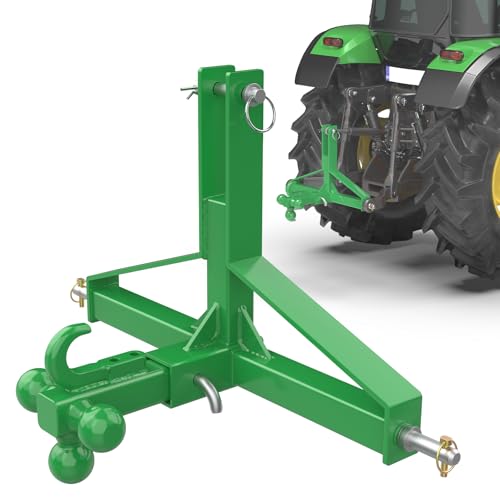
| SUNSHINE FARMRE 3-Point Trailer Hitch with Receiver & Ball | Spotting trailers, wagons and splitters | Cat 1 three-point mount, 2 in receiver plus ball hitch, powder-coated green | Budget |
| COZONY Bolt-On Bucket Grab Hooks with 2 in Receiver | Lifting and towing from the loader bucket | Bolt-on plate, two grab hooks, 2 in receiver, no welding required | Budget |
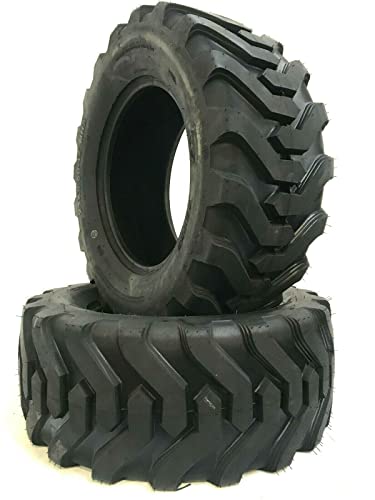
| JUSTUBES.COM Two 23×8.50-12 R4 Tires | Replacing worn or punctured front tires | 23×8.50-12 R4 industrial tread, sold as a pair, sub-compact front size | Mid-range |
| Tool Tuff Pole-Star 400 Post Hole Digger (9 in + 12 in augers) | A two-auger fencing kit in one purchase | 3-point mounted, PTO-driven, 9 in and 12 in augers, shear-bolt protection | Premium |
| gtpartes Differential Lock Pedal | John Deere 1-series owners wanting easier diff lock | Bolt-on pedal, compatible with 1023E, 1025R, 1026R and Gen2 2025R subcompacts | Budget |
| PrecisionAuto 61 in Bucket Tooth Bar, 7 Teeth | Maximum bite on 60–62 in buckets | 61 in bar, 7 teeth, 4,560 lb rated capacity, no drilling required | Mid-range |
How We Chosen
This roundup is built from published manufacturer specifications, listing details, and the accumulated owner consensus that surrounds each product category — not from any kind of testing. Every item here was evaluated on five things: whether the stated specification matches the hitch category and hydraulic class of a real subcompact tractor; whether the product solves a job that actually shows up on a 1–5 acre property; how well it fits the most common sizes in that category (1/2 in bucket edges, 1-3/8 in 6-spline PTO shafts, Cat 1 three-point spacing); what it costs relative to the tier it sits in; and whether it creates a sensible upgrade path — a tooth bar that leads to a grab hook plate, a digger that leads to a second auger, a coupler system that keeps growing as you add implements.
We deliberately excluded anything that requires welding, fabrication, or a machine outside the subcompact class to be useful. We also weighted failure modes: a bucket attachment that clamps rather than bolts, a hitch accessory with no down-pressure, a tire in a size that only fits one rim width — all of those are noted in the sections below rather than smoothed over. Where a listing does not state an exact figure, the product is described by specification class instead of a guessed number. Prices appear only as tiers, because implement pricing moves constantly.
1. PTO Link Compact Quick-Connect System – Best for Tool-Free PTO Changes
As an Amazon Associate we earn from qualifying purchases at no extra cost to you.

The PTO Link Duo Bundle is a two-piece quick-connect coupler for the rear PTO. The female half stays bolted to the tractor’s PTO shaft; the male half stays on the implement’s input shaft. Instead of sliding a splined yoke onto the shaft, wrestling a locking collar with one hand, and checking twice that it is fully seated, you line the two halves up and lock them. It suits anyone who runs more than one PTO-driven implement — a rotary cutter in summer, a tiller in spring, a snow blower in winter — and it particularly suits owners with limited grip strength or a bad back, because the whole operation happens standing up rather than kneeling behind the machine.
Key specs
- Fits 1-3/8 in, 6-spline, 540 rpm PTO shafts — the standard rear PTO on subcompact and compact Cat 1 tractors
- Duo bundle includes one tractor-side female coupler and one implement-side male coupler
- Tool-free locking collar — no drift pin, no screwdriver, no hammer
- Hardened steel body with a corrosion-resistant finish
- Rated for the PTO horsepower class of the subcompact and compact tractors it is sold into
The strongest argument for this product is safety rather than convenience. A PTO shaft that is not fully seated is one of the more common causes of driveline damage and a genuine injury risk, and the failure is invisible from the operator’s seat — the yoke looks engaged until load is applied and it walks off the splines. A coupler removes that ambiguity: it either locks or it does not, and you can feel the difference with a gloved hand. The secondary benefit is that the implement-side yoke never touches the ground, so the splines stay clean and the locking collar does not fill with grit.
Pros
- Dramatically faster implement changes — the difference between a two-minute swap and a fifteen-minute one
- Removes the most common cause of partially seated PTO shafts
- Keeps splines and locking collars clean and out of the dirt
- Workable for one person with no helper and no crawling
- Scales: add a male half to each new PTO implement as the fleet grows
Cons
- Premium tier — the most expensive single item in this roundup for what is, functionally, a connector
- Each PTO implement needs its own male half, or you move the male half between implements
- Adds a small amount of length to the driveline, which can matter on implements with a short telescoping shaft
- Does not replace a slip clutch or shear bolt — overload protection is still the implement’s job
Compared with the Tool Tuff Model 400 post hole digger — the nearest alternative in the sense that both are PTO-interface products — the choice comes down to frequency. The digger is a single-purpose PTO implement that most owners mount and dismount a handful of times a year. The PTO Link is the thing that makes those handfuls of swaps tolerable. If you own exactly one PTO implement, buy the digger first. If you own three or more, buy the coupler first and thank yourself every season change.
2. Tool Tuff Model 400 3-Point Post Hole Digger – Best for Fencing on Cat 0/1 Tractors

The Tool Tuff Model 400 is a three-point-mounted, PTO-driven post hole digger with a 12 in auger, sized for compact, sub-compact and Cat 0 tractors. It suits the property owner who is putting in a fence line, planting a windbreak, setting mailbox or gate posts, or sinking footings for a small outbuilding — jobs where a shovel and a digging bar turn a weekend into a month. Because it hangs off the three-point hitch and runs off the rear PTO, it works on any subcompact with a standard Cat 1 hitch and a 540 rpm PTO, regardless of loader configuration.
Key specs
- Three-point hitch mounted, Cat 0/Cat 1 compatible
- PTO-driven gearbox with shear-bolt protection
- 12 in auger — the standard size for 4×4 and 6×6 fence posts with room for tamping
- Rated for the compact and sub-compact tractor class
- Boom-and-auger geometry sized to subcompact lift height
The 12 in auger is the right default for most small-property fencing. A 4×4 post measures about 3.5 in square, so a 12 in hole leaves roughly 4 in of clearance on each side for tamping soil or pouring concrete — enough to actually get a bar in there and consolidate. An 8 in auger is faster and easier on the tractor but leaves almost no working room, and a 9 in hole is the practical minimum for a 4×4. The shear bolt is the important mechanical detail: hitting a root or a buried rock stalls the auger, and a shear bolt is designed to fail first and protect the gearbox. Buy spares before you start.
Pros
- 12 in auger handles 4×4 and 6×6 posts with real tamping clearance
- Shear-bolt gearbox protects the driveline from root and rock stalls
- Three-point mounting means no separate engine, no fuel, no winterization
- Works on Cat 0 and Cat 1 tractors, so it survives a tractor upgrade
- Dramatically faster than hand-digging on any soil short of solid rock
Cons
- Premium tier for a single-auger digger
- Needs rear ballast or counterweight — the digger hangs well behind the rear axle and lightens the front end
- Heavy and awkward to mount alone without a quick-connect system
- Auger-only digging: it will not touch fractured bedrock, and heavy clay requires low PTO rpm and patience
The nearest alternative in this list is the Tool Tuff Pole-Star 400, which ships with both a 9 in and a 12 in auger. If your fencing plan includes any 2-3/8 in pipe posts, T-posts, or planting jobs where a smaller hole is preferable, the two-auger kit is the better buy for a modest step up. If you are only ever setting 4×4 and 6×6 posts, the single 12 in Model 400 does the job and leaves money in the budget for a tooth bar.
3. Garvee Heavy Duty 46 in Bucket Tooth Bar – Best for 48 in Buckets on Tight Subcompacts
The Garvee 46 in bucket tooth bar is a bolt-on digging edge designed for sub-compact tractors, with no drilling required and a fit on 1/2 in bucket edges. At 46 in, it is sized for the 48 in buckets common on the smallest subcompacts and on older machines where a narrower loader was the only option. It suits the owner who is grading a gravel drive, back-dragging a lawn edge, popping out roots and small stumps, or scraping compacted material out of a stall — work where a smooth bucket edge just skates over the surface.
Key specs
- 46 in bar width, matched to 48 in loader buckets
- Bolt-on installation, no drilling required
- Designed for a 1/2 in bucket cutting edge
- Replaceable tooth pattern along the bar
- Powder-coated finish over a steel bar
What a tooth bar actually does is concentrate the loader’s breakout force onto a handful of points instead of spreading it across the full bucket edge. That changes the machine’s behavior in three ways. First, it lets you dig into compacted gravel or hard soil that a smooth edge will only ride over. Second, it gives you a rake when you roll the bucket forward, which is useful for clearing roots and leveling. Third, it grips when you back-drag, so you can pull material toward you and leave a smoother finish than pushing.
Pros
- Budget tier — the cheapest meaningful capability upgrade in this roundup
- No drilling, so the bucket edge stays unmodified
- Concentrates breakout force for digging in compacted material
- Improves back-dragging and root raking immediately
- Sized correctly for 48 in buckets, which many bars are not
Cons
- Bolt-on clamping can work loose over time — check the fasteners after the first few hours and periodically after
- Teeth reduce effective bucket capacity slightly and hold material when you dump
- 46 in is a narrow fit; it will look undersized on a 54 in or wider bucket
- Paint wears off the teeth quickly in abrasive gravel — cosmetic, but worth knowing
The nearest alternative is the Garvee 53 in bar. If your bucket measures 50–54 in across the cutting edge — the most common subcompact width — the 53 in version is the correct fit and this 46 in bar is simply too short. Measure your bucket edge before ordering; a bar that is too narrow leaves an unprotected section on each side, which is exactly where you tend to catch a fence post or a rock.
4. Heavy Hitch Lawn Mower Deck Cart – Best for Storing and Rolling Mid-Mount Decks

The Heavy Hitch lawn mower deck cart is a rolling steel dolly designed for sub-compact tractor mid-mount mower decks, made in the USA. It suits the owner who pulls the deck off in fall to run a snow blower, or who swaps between a mower deck and a tiller each season. A mid-mount deck in the 54–60 in range is heavy, wide, and has no good grab point — dragging it across a concrete floor on its gauge wheels chews up the wheels and scrapes the shell, and standing it on its side against a wall is how decks get bent spindles.
Key specs
- Steel cart construction with casters for rolling
- Sized for sub-compact mid-mount mower decks
- Black powder-coated finish
- Made in the USA
- Stores the deck flat and off the floor
The value here is storage geometry more than convenience. A deck that sits flat on a cart takes up a defined footprint you can plan around and rolls out of the way when you need the floor space back. A deck leaned against a wall occupies the same floor space in a worse configuration and puts load on the gauge wheels and anti-scalp rollers. If you have a single-bay garage or a shared shed, the cart is the difference between the deck living in a corner and the deck living wherever it landed.
Pros
- Keeps a heavy mid-mount deck off the floor and off its gauge wheels
- Rolls out of the way in tight storage — no dragging, no lifting
- Protects spindles and the deck shell from the common “leaned against the wall” failure
- Made in the USA with a durable powder-coated finish
- Useful every single season change if you run a blower or tiller
Cons
- Premium tier for what is fundamentally a steel dolly
- Occupies a permanent footprint in the shed even when empty
- Only pays for itself if you actually remove the deck — a year-round mower owner gains nothing
- Casters work on concrete and packed gravel; they do not roll well on soft turf or mud
The nearest alternative in this list is the PTO Link coupler, and the comparison is instructive because both solve a “season change” problem. The PTO Link speeds up the driveline side of the swap; the deck cart handles the hardware side. Owners who run a mower in summer and a blower in winter typically want both, and the deck cart is the one that prevents an expensive mistake — a bent spindle from a deck that tipped over in storage costs more than the cart.
5. Garvee Heavy Duty 53 in Bucket Tooth Bar – Best Overall for the Most Common Subcompact Bucket Width
The Garvee 53 in bucket tooth bar is the best overall pick in this roundup, and the reason is simple arithmetic: 50–54 in is the most common loader bucket width across the current subcompact class, and 53 in is the bar that fits it. Like its smaller sibling it bolts on with no drilling and grips a 1/2 in bucket edge. It suits the widest slice of subcompact owners — anyone with a mid-size loader bucket who wants to dig, rake, and back-drag with one attachment instead of three.
Key specs
- 53 in bar width, matched to 50–54 in loader buckets
- Bolt-on installation, no drilling required
- Fits a 1/2 in bucket cutting edge
- Replaceable teeth along the full bar length
- Powder-coated steel construction
Why this specific width matters: a tooth bar that is too short leaves the outer corners of your bucket unprotected, and the corners are exactly where you catch fence posts, gate frames, and buried rocks. A bar that is too long will not seat against the bucket edge at all. The 53 in bar covers the full cutting edge on the standard mid-size subcompact bucket, which means the entire edge is protected and every inch of breakout force is concentrated. That is the whole point of the product.
Pros
- Fits the single most common subcompact bucket width, so it works out of the box for most buyers
- Mid-range tier — more capacity and tooth count than the budget 46 in bar for a modest step up
- No drilling; fully reversible if you sell the tractor
- Full-edge coverage means no unprotected corners
- Transforms digging, raking, and back-dragging with one bolt-on part
Cons
- Bolt-on fasteners need periodic re-torquing, especially in the first twenty hours of use
- Mid-range price means it is not the cheapest way into a tooth bar
- Teeth add a small amount of drag when scooping loose material like mulch or sawdust
- Requires an accurate measurement of your bucket edge — 53 in is not universal
The nearest alternative is the PrecisionAuto 61 in bar with seven teeth and a 4,560 lb rated capacity. That bar is the right choice if your bucket measures 60–62 in across the edge, which typically means a larger subcompact or a compact-class machine. If your bucket is in the 50–54 in range, the PrecisionAuto bar is simply too wide — and this 53 in Garvee is the fit that does the job without overhang.
6. Garvee Heavy Duty 61 in Bucket Tooth Bar – Best for 60–62 in Buckets on Larger Subcompacts
The Garvee 61 in bucket tooth bar is the wide version of the same bolt-on design, intended for sub-compact tractors running larger loader buckets. It fits a 1/2 in bucket edge with no drilling, and at 61 in it covers the full cutting edge on a 60–62 in bucket. It suits owners of the larger end of the subcompact class — machines that sit at the top of the sub-compact range or that have been fitted with a wider material bucket for moving mulch, gravel, and topsoil.
Key specs
- 61 in bar width, matched to 60–62 in loader buckets
- Bolt-on installation, no drilling required
- Fits a 1/2 in bucket cutting edge
- Full-length replaceable tooth pattern
- Powder-coated steel bar
A wider bucket changes the physics in a way worth understanding before you buy. The same loader that lifts 1,200 lb with a 53 in bucket lifts meaningfully less with a 61 in bucket, because the load center moves further forward of the pivot pins. That means a wide tooth bar makes the bucket more capable at grading and raking but does not increase — and slightly reduces — how much you can safely carry. If your priority is lifting, keep the narrower bucket; if your priority is grading driveways and leveling, the wider bar is the better tool.
Pros
- Full 61 in coverage for wide buckets, with no unprotected edges
- Mid-range tier, consistent with the 53 in version
- Excellent for grading and leveling long driveways and pads
- Bolt-on, no drilling, fully removable
- Same tooth design as the smaller Garvee bars, so parts and expectations carry over
Cons
- Only correct for 60–62 in buckets — measure first
- Wider bite reduces effective lift capacity because the load sits further forward
- Bolted clamps need checking after heavy use
- Overkill for a small property where the bucket rarely leaves the driveway
The nearest alternative is the PrecisionAuto 61 in bar, which matches this product on width and targets the same buckets. The difference is specification emphasis: the PrecisionAuto listing leads with a seven-tooth configuration and a 4,560 lb rated capacity, while the Garvee listing emphasizes the heavy-duty bar construction. Either will fit a 61 in bucket edge. If the capacity rating is the number you care about, go PrecisionAuto; if you want the same family of bars you may already own in a smaller size, stay with Garvee.
7. SUNSHINE FARMRE 3-Point Trailer Hitch with 2 in Receiver & Ball Hitch – Best for Moving Trailers and Wagons

The SUNSHINE FARMRE three-point trailer hitch mounts on a Cat 1 three-point hitch and provides a 2 in receiver plus a ball hitch in a green powder-coated frame. It suits the property owner who needs to reposition a utility trailer, a log splitter, a hay wagon, a small dump cart, or a boat trailer in the yard — jobs where the tractor can get into places a truck cannot, and where hooking up to the three-point is far easier than backing a vehicle into a tight spot. It is also the standard tool for recovering a trailer that has sunk into soft ground.
Key specs
- Cat 1 three-point hitch mounting
- 2 in receiver tube plus ball hitch
- Powder-coated green finish
- Budget tier
- Fits the standard Cat 1 lift arm spacing and pin sizes
The critical limitation to understand before buying is that a three-point hitch has no down-pressure. It lifts, and it floats — it cannot push down. That means you can pull a trailer forward and maneuver it, but you cannot use the hitch to press a tongue down or to push a heavy trailer backward with authority. It is also not a towing solution for the road: three-point hitches are not rated for highway speeds and the geometry is wrong for it. This is a yard tool, and within the yard it is genuinely useful.
Pros
- Budget tier — one of the least expensive useful implements in this roundup
- 2 in receiver accepts standard ball mounts, so it doubles as a general hitch platform
- Makes trailer spotting in tight yards a one-person job
- Quick to mount and remove on a Cat 1 three-point
- Excellent for pulling stuck trailers and carts out of soft ground
Cons
- No down-pressure — it lifts and floats only
- Not for highway towing; yard and field use only
- Tongue weight is limited by the hitch structure and the tractor’s lift capacity
- Sharp turns can jackknife a trailer against the tractor’s rear tires — go slow
The nearest alternative is the COZONY bolt-on grab hook plate with a 2 in receiver. The comparison is about where the hitch lives. The COZONY plate mounts on the loader bucket, so you get a receiver that moves up and down with the loader arms — useful for precise positioning and for towing with the bucket raised. The three-point hitch keeps the receiver low and behind the machine, which is better for trailers with a low tongue and for pulling loads that should not be lifted. Many owners end up with both.
8. COZONY Bolt-On Tractor Bucket Grab Hooks with 2″ Receiver – Best for Lifting and Towing from the Loader

The COZONY bolt-on grab hook plate adds two heavy-duty grab hooks and a 2 in receiver to a compact or sub-compact loader bucket. It bolts on, so no welding and no fabrication are required. It suits the owner who needs to lift logs and limbs with a chain, drag brush out of a treeline, pull a fence post, or hook up a small trailer using the loader instead of the three-point. Because it mounts to the bucket rather than the hitch, the hooks travel with the loader — you can raise a log to saw height, or set a load down gently instead of dropping it.
Key specs
- Bolt-on plate, no welding required
- Two heavy-duty grab hooks
- 2 in receiver tube integrated into the plate
- Designed for compact and sub-compact loader buckets
- Budget tier
The grab hook is the underrated half of this product. A hook lets you tension a chain without the chain slipping off, which matters when you are dragging a log or a downed limb sideways out of a fence line. Without a hook, most owners wrap a chain over the bucket edge, which chews the chain and the edge, and lets the load shift. Two hooks also let you rig a bridle for lifting a load that would otherwise swing.
Pros
- Budget tier and a genuine productivity multiplier
- Two grab hooks plus a receiver in one bolt-on plate
- No welding, no fabrication, no permanent modification
- Hooks travel with the loader, so loads can be raised and set down
- Works for lifting, dragging, and towing with the same attachment
Cons
- Bolt-on mounting means you must check fastener torque regularly under shock loads
- Receiver capacity is limited by the loader, not the plate
- Mounting position must be checked for clearance with the loader arms through full curl
- Lifting with a chain and hook puts load on the bucket, which is not designed for concentrated point loads — keep lifts reasonable
The nearest alternative is the SUNSHINE FARMRE three-point trailer hitch. The difference is lift versus pull. The three-point hitch gives you a low, stable receiver behind the machine, ideal for trailers. The COZONY plate gives you a receiver that rises and falls with the loader, ideal for precision positioning and for anything you want to lift off the ground. If you only move trailers, buy the three-point hitch. If you move logs, brush, and trailers, buy the hook plate.
9. JUSTUBES.COM Two 23×8.50-12 R4 Tires – Best for Replacing Worn Front Tires
This listing is a pair of 23×8.50-12 tires in the R4 industrial tread pattern, sized for sub-compact tractors and lawn-and-garden machines. 23×8.50-12 is one of the standard front tire sizes on the subcompact class, which makes this pair the direct replacement for worn, cracked, or repeatedly punctured front rubber. It suits owners whose front tires have gone slick from years of loader work on pavement, or who have taken one too many sidewall punctures from working around blackberry, locust, and fence wire.
Key specs
- Size: 23×8.50-12 — 23 in overall diameter, 8.50 in section width, 12 in rim diameter
- R4 industrial tread pattern
- Sold as a pair (two tires)
- Mid-range tier
- Front axle fitment on sub-compact tractors using this size
Tread pattern is the decision that matters more than brand here. R4 industrial tires — the ones with the bar-and-lug pattern you see on most sub


