
Our Top Picks
 Pest A Cator Plus 2000 Electromagnetic/Ultrasonic Rodent RepellerFor Larger Areas2 x 7 x 9 Inches0.6 PoundsCheck on Amazon
 Global Instruments Larger Areas Pest A Cator 2000For Larger Areas11.5 x 8.5 x 7.5 Inches0.44 PoundsCheck on Amazon
 LeafZap Indoor Ultrasonic Pest Repeller1 count (Pack of 1)5.31 x 4.53 x 3.35 inches0.54 poundsCheck on Amazon


Top 3 picks at a glance
Best Ultrasonic Pest Repellers for Large Acreage: What Actually Covers Ground
For a property measured in acres, no single ultrasonic device covers it — and the closest thing to a genuine large-area pick in this category is the Pest A Cator Plus 2000 Electromagnetic/Ultrasonic Rodent Repeller for Larger Areas, a premium unit that pairs ultrasonic output with electromagnetic pulses carried through a building’s wiring, which is how it reaches rodents inside wall voids and stored vehicles rather than only in direct line of sight. It suits barns, workshops, machine sheds, feed rooms, garages, cabins and equipment parked on a rural property. If your acreage is mostly buildings and you want broad indoor coverage at a lower cost, a multi-pack such as the Lickoon 6-Pack or the Jqely 10-Pack is the more sensible purchase. For open ground — pasture, orchard rows, fence lines, crop margins — expect to combine exclusion, sanitation and trapping; ultrasonic energy is blocked by walls, absorbed by foliage and scattered by wind, and the honest planning figure is one unit per enclosed zone, not one unit per acre.
Quick Comparison
Every product below is a real, currently listed device. Coverage claims in the table reflect what each listing states or what the product class typically delivers; the “best for” column reflects how the device fits a large-property plan rather than a single-room apartment.
| Product | Best for | Key specs | Price tier |
|---|---|---|---|
| Pest A Cator Plus 2000 Electromagnetic/Ultrasonic Rodent Repeller for Larger Areas (PEST A CATOR) | Large rural structures, wall voids, stored vehicles | Dual output — ultrasonic plus electromagnetic through building wiring; positioned for larger areas than a room plug-in; wall outlet powered | Premium |
| Global Instruments Larger Areas Pest A Cator 2000 Electromagnetic Rodent Repeller F | Same large-area concept at a lower entry price | Electromagnetic output through existing wiring; larger-area positioning; no ultrasonic stage in the listing name | Mid-range |
| Bell+Howell Ultrasonic Pest Repeller Indoor 4 Pk | Whole-home indoor coverage on a small budget | Four plug-in emitters; indoor use; multi-room deployment out of one box | Budget |
| LeafZap Indoor Ultrasonic Pest Repeller, 3 Ultrasonic Mode, 25–65 KHz | Adjustable-frequency setups and habituation resistance | Three modes spanning roughly 25–65 kHz; indoor plug-in; premium build positioning | Premium |
| PestLab Ultrasonic Pest Repeller – Indoor Plug In | Mixed crawling-insect and rodent claims in one room | Plug-in emitter aimed at mice, rats, roaches, ants and spiders; single-room scale | Mid-range |
| FineFix Ultrasonic Pest Repeller Indoor, Mouse Repellent Ultrasonic Plug-in | Simple single-room or small-flat use | Plug-in ultrasonic emitter; straightforward operation; indoor only | Mid-range |
| Lickoon 6 Packs Ultrasonic Pest Control Repeller, Electronic Plug in Indoor | Multi-room houses, outbuildings, staged coverage | Six plug-in units; electronic drive; indoor deployment | Mid-range |
| 2026 Upgraded Ultrasonic Pest Repeller, 7 Pack Plug in Indoor Device (Fooxem) | Large houses and multi-building compounds | Seven plug-in units; updated 2026 generation; indoor use | Premium |
| 2026 Upgraded Ultrasonic Indoor Pest Repeller, 3-Mode Mouse Traps, 10 Pack (Jqely) | Whole-property indoor coverage, most rooms at once | Ten plug-in units; three operating modes; indoor deployment | Premium |
| 2026 Upgraded Ultrasonic Repeller Pest & Insect Indoor Repeller, 4 Pack (Neatmaster) | Budget multi-room start | Four plug-in units; 2026 generation; indoor use | Budget |
| Ultrasonic Pest Repeller for Indoor Use – 2 Pack – Covers Up to 1,500 sq ft per Device – 3 Modes (REPELIX ARMOUR) | Readers who want a stated coverage number to plan from | Two plug-in units; listing states up to 1,500 sq ft per device; three modes | Budget |
| Bell + Howell Ultrasonic Pest Repeller Home Kit (Pack of 3) | Entry-level three-zone indoor setup | Three plug-in units; home-kit format; indoor use | Budget |
How We Chose
This roundup is built from published listing specifications, manufacturer positioning and well-established physics of airborne ultrasound, not from field trials. Three filters decided which products made the page. First, category fit for a large property: the device had to be either explicitly positioned for larger areas (the two Pest A Cator models) or available in enough units per box to cover multiple rooms without buying the same product four times (the 4-, 6-, 7- and 10-packs). Second, honest scale: we noted where a listing’s coverage claim describes an open, unobstructed rectangle and where real rooms with drywall, furniture and doors will cut that figure substantially. Third, upgrade path and deployment flexibility — whether the unit can be moved between a farmhouse, a tack room, a garage and a cabin, and whether it offers mode or frequency adjustment so a user can rotate settings when rodents appear to stop responding. Products that are indoor-only are labelled as indoor-only throughout; none of the plug-in units here should be treated as weatherproof outdoor hardware, and we say so plainly rather than implying an acreage capability the hardware does not have.
1. Pest A Cator Plus 2000 – Best for Large Rural Structures and Vehicles
As an Amazon Associate we earn from qualifying purchases at no extra cost to you.

If your acreage problem is really a building problem — mice in a barn wall, rats under a feed-room floor, rodents chewing the harness in a stored tractor — the Pest A Cator Plus 2000 is the closest thing in this category to a large-area device. It combines two output methods in one housing: an ultrasonic emitter and an electromagnetic pulse generator that feeds a signal into the building’s existing electrical wiring. The ultrasonic half behaves like every other emitter on this page: line of sight, blocked by walls, absorbed over distance. The electromagnetic half is what makes the “larger areas” claim plausible, because the pulse travels the circuit rather than the air.
Who it suits: owners of barns, workshops, machine sheds, garages, cabins and seasonal outbuildings; anyone storing tractors, RVs, boats or project cars where rodent-chewed wiring is the real risk; and households where rodents are heard scratching inside walls rather than seen crossing a floor.
Key specs at a glance
- Dual output: ultrasonic plus electromagnetic, per the listing name
- Positioned by the manufacturer for “larger areas” rather than a single room
- Plugs into a standard wall outlet; the electromagnetic stage depends on a continuous circuit
- Premium price tier — the most expensive device style in this roundup
- Designed for enclosed structures; not rated for open ground, rain or soil contact
The strongest argument for this unit on a rural property is circuit reach. A plug-in emitter on a shelf covers the room it sits in; an electromagnetic device wired into the same distribution board as a barn’s lighting circuit can, in principle, affect the whole run of that circuit, including outlets in rooms the sound never reaches. For a machine shed with a separate feed room, a workshop with a mezzanine, or a garage where the rodents are in the wall cavity rather than on the floor, that reach matters more than raw output volume.
The second argument is vehicle protection, which is a genuinely large-acreage concern. Rodents chew wiring insulation for the texture and the residue on it, and a tractor or camper parked for months is a target. A unit that can be connected to a stored vehicle’s circuit addresses a failure mode that no ultrasonic plug-in on a shelf will touch. That is a specific use case rather than a general one, and it is why this device sits at the top of the list despite the price.
Pros
- Two output methods in one unit — covers air-path and wiring-path routes
- Explicitly marketed for larger areas, unlike the single-room plug-ins
- Best fit for outbuildings with several rooms on one circuit
- Practical for protecting stored vehicles and equipment from chewed harnesses
- One purchase can serve a whole building rather than one zone
Cons
- Premium price — several times the cost of a budget multi-pack
- Electromagnetic performance depends on wiring layout and continuity; a building with isolated circuits limits it
- The ultrasonic component is still blocked by walls, so it is not a whole-building sound field
- Not weather-rated; it cannot be deployed outdoors to cover ground
- Independent verification of electromagnetic rodent repellence is thin across the category
Compared with the nearest alternative: the Global Instruments Pest A Cator 2000 Electromagnetic Rodent Repeller F is the same conceptual device at a mid-range tier, and it is the one to buy if you want the wiring-pulse approach and the ultrasonic stage is not worth the premium to you. Choose the Plus 2000 when you want both methods and you are protecting high-value equipment; choose the Global Instruments version when the budget is tighter or you already own separate plug-in emitters for the rooms you care about.
2. Global Instruments Pest A Cator 2000 Electromagnetic Rodent Repeller F – Best for Value on the Wiring-Pulse Approach

The Global Instruments Pest A Cator 2000 Electromagnetic Rodent Repeller F is the mid-range expression of the same idea as the unit above: an electromagnetic repeller positioned for larger areas, intended to push a signal into the wiring of a building rather than fill a room with sound. Its listing name specifies electromagnetic output only, without the ultrasonic stage, which is the main functional difference between it and the premium Pest A Cator Plus 2000.
Who it suits: the reader who has already concluded that the interesting part of the Pest A Cator concept is the wiring path, not the sound; owners of a single large outbuilding with a simple circuit layout; and anyone who wants to test the electromagnetic approach on one building before committing premium money to it.
Key specs at a glance
- Electromagnetic output through existing building wiring, per the listing name
- Explicit “larger areas” positioning rather than single-room coverage
- Wall-outlet powered; effectiveness tied to circuit continuity and length
- Mid-range price tier — roughly a step below the premium Pest A Cator Plus 2000
- Indoor and enclosed-structure use; not weather-rated
What makes this device interesting on acreage is the same property that makes the premium model interesting: it does not care about line of sight. Rodents living in a wall void, under a slab edge or inside a sealed machinery cabinet are unreachable by an ultrasonic emitter sitting on a bench, but a signal riding the electrical circuit is at least nominally present in the same cavity. For a barn with a single distribution board and long runs of cable, that is a more useful geometry than any airborne device can offer.
The practical caveat is the same one that applies to every electromagnetic repeller: performance depends on the building’s wiring behaving as an antenna. Long, continuous runs with a shared ground tend to be favourable; short isolated spur circuits, heavy steel conduit and multiple sub-panels complicate the picture. On a farm with three separate services — house, barn, workshop — you should expect to need a unit per service rather than one unit for the whole property.
Pros
- Wiring-path coverage reaches voids and cabinets that sound cannot
- Mid-range price makes it a reasonable first purchase in this category
- “Larger areas” positioning matches outbuilding use better than a room plug-in
- No frequency mode to manage — one behaviour, less to configure
- Pairs well with budget multi-packs used for visible rooms
Cons
- No ultrasonic stage, so it does nothing for rodents moving in the open inside a room
- Circuit-dependent — performance varies from building to building
- No published independent test data behind the electromagnetic claim
- Not a solution for open acreage, gardens or outbuildings without power
- Multiple buildings usually mean multiple units, which erodes the price advantage
Compared with the nearest alternative: against the Pest A Cator Plus 2000, this unit trades the ultrasonic stage for a lower price. If rodents are visible on floors and shelves as well as audible in walls, the premium dual-output model is the more complete answer. If your evidence is entirely scratching inside walls and chewed wiring in stored equipment, this device covers the same route for less money, and the difference is largely a matter of how much you value the second output method.
3. Bell+Howell Ultrasonic Pest Repeller Indoor 4 Pack – Best for Whole-Home Coverage on a Budget

The Bell+Howell Ultrasonic Pest Repeller Indoor 4-Pack is the classic “as seen on TV” style home kit: four plug-in emitters in one box, each occupying a wall outlet, intended to be spread across rooms rather than concentrated in one. For a farmhouse with a kitchen, pantry, utility room and mudroom — the four rooms where rodent activity usually shows up first — a four-pack is a natural unit of purchase.
Who it suits: the rural homeowner who wants a low-cost, no-configuration first step; a farmhouse where the problem is scattered rather than concentrated; and anyone who wants spare units to move between a cabin, a garage and the house seasonally.
Key specs at a glance
- Four plug-in ultrasonic emitters per box
- Indoor use only; each unit occupies one wall outlet
- No stated frequency range or mode count in the listing name
- Budget price tier — among the cheapest ways to cover four rooms
- Well-known consumer housewares brand with broad retail presence
The value here is arithmetic rather than technology. If you accept that one emitter per enclosed room is the realistic deployment unit, a four-pack gets you four rooms for roughly what a single premium emitter costs. For a property where you are not certain yet whether ultrasonic will change anything, that is the right amount of money to spend on the experiment.
The trade-off is control. There is no mode selector to rotate and no frequency information to plan around, so if rodents appear to stop responding you have fewer levers to pull — you can move units, add units, or switch approach. On a large property, that is a meaningful limitation, because habituation and furniture-blocked line of sight are the two most common reasons a plug-in emitter seems to “stop working.”
Pros
- Four rooms covered for a budget outlay
- Simple plug-in operation — no settings, no manual to learn
- Recognisable brand with easy replacement if one unit fails
- Easy to redistribute between house, cabin and garage seasonally
- Low commitment way to test whether ultrasound changes activity at all
Cons
- No mode or frequency adjustment to counter habituation
- No coverage figure published, so planning is guesswork
- Indoor only — cannot be used in a damp barn or outdoors
- Each unit blocks a wall outlet, which matters in older farmhouse wiring
- Not intended for the wiring-path protection that stored vehicles need
Compared with the nearest alternative: the Neatmaster 2026 Upgraded 4-Pack occupies the same budget four-unit slot, and the Bell+Howell Home Kit (Pack of 3) is the smaller sibling at three units. If you want the most units per pound or dollar at the entry level, compare this four-pack against the Lickoon six-pack and the Jqely ten-pack before buying — the per-room cost drops sharply as pack size rises, and on a large property you will almost certainly want more than four rooms covered eventually.
4. LeafZap Indoor Ultrasonic Pest Repeller – Best for Adjustable Frequency

LeafZap’s indoor unit is the only device in this roundup whose listing name states a frequency range — three ultrasonic modes spanning roughly 25 kHz to 65 kHz. That number is the reason it earns a premium tier and the reason it belongs on a large-property shortlist: adjustable frequency is the main mechanical answer to the habituation problem.
Who it suits: readers who have already run fixed-frequency emitters and suspect the rodents have become accustomed to them; properties with more than one rodent species, since mice, rats and squirrels respond differently across the band; and anyone who wants a device they can deliberately vary rather than a plug-and-forget unit.
Key specs at a glance
- Three ultrasonic modes; listed range approximately 25 kHz to 65 kHz
- Indoor plug-in format, one wall outlet per unit
- Premium price tier — priced above the typical mid-range plug-in
- Frequency coverage spans the bands usually cited for rodents and many insects
- Indoor only; not weather-rated
Why the frequency range matters in practice comes down to wavelength and absorption. At 25 kHz, the wavelength in air is roughly 13.7 mm; at 40 kHz it is about 8.6 mm; at 65 kHz it is only around 5.3 mm. Shorter wavelengths are absorbed by air much faster and are more directional, so a 65 kHz mode throws a narrower, shorter beam, while a 25 kHz mode spreads further but is less “sharp” to the animal. Having both available in one housing means you can use low frequency for open, long rooms and high frequency for tight, cluttered spaces — a real placement decision, not a marketing one.
The three-mode design also gives you a rotation schedule. A practical pattern is to run one mode for two to three weeks, switch to the next, and relocate the unit at the same time. Rotation plus relocation attacks the two failure modes — adaptation and blocked line of sight — at once.
Pros
- Only unit here with a stated multi-band frequency range
- Three modes give a rotation schedule to work with
- Low-frequency mode reaches further in long, open rooms
- High-frequency modes suit cluttered kitchens and pantries
- Premium positioning suggests better build than the cheapest plug-ins
Cons
- Premium price for a single-room device
- One unit still covers one enclosed space — a large property needs several
- No coverage figure published, so room-size planning is approximate
- Mode switching is manual; there is no scheduling or automation
- Indoor only, like every plug-in in this list
Compared with the nearest alternative: the PestLab indoor plug-in covers a similar single-room role at a mid-range price but without a stated frequency range or mode count, and the REPELIX ARMOUR two-pack offers three modes at a budget tier with an explicit 1,500 sq ft per device claim. Choose LeafZap when frequency control is the feature you actually want; choose the REPELIX ARMOUR pair when you would rather have two devices and a stated coverage figure than one device with a wider band.
5. PestLab Ultrasonic Pest Repeller – Best for Mixed Insect and Rodent Claims
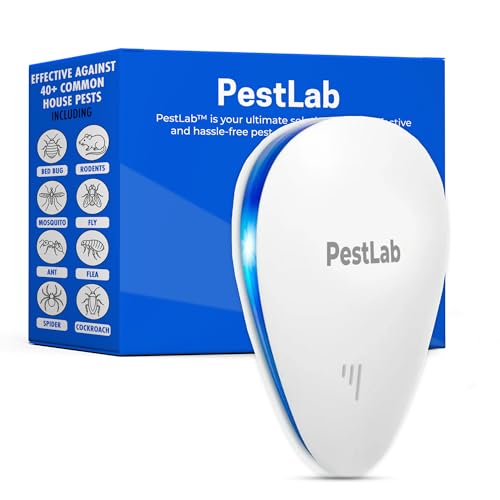
PestLab’s indoor plug-in is aimed at the broadest pest list in this roundup: the listing name names mice, rodents, rats, roaches, ants and spiders in a single device. For a farmhouse kitchen or pantry, that breadth is genuinely useful, because a rodent problem and an ant or roach problem often arrive together — feed, grain and damp utility rooms attract all of them.
Who it suits: rural households dealing with more than one pest type at once; kitchens, pantries, feed stores and utility rooms where crawling insects and rodents overlap; and readers who want one product category rather than three separate control purchases.
Key specs at a glance
- Indoor plug-in ultrasonic emitter
- Listing claims coverage of mice, rodents, rats, roaches, ants and spiders
- Mid-range price tier
- No frequency range or mode count stated in the listing name
- Indoor use; one wall outlet per unit
The physics behind broad-spectrum claims deserves an honest note. Insects and rodents hear in overlapping but not identical bands, and the effectiveness of ultrasound against any given species depends on frequency, intensity at the animal’s location and whether the animal can simply walk around the beam. A device that claims six pest types is generally sweeping a band rather than targeting each species precisely. That does not make it useless — it makes it a general deterrent rather than a species-specific tool.
Where this unit earns its place on a large property is the feed room. If you store bagged feed, bedding or grain in a small enclosed space, that room is the epicentre of activity, and a single plug-in aimed at both insects and rodents is a sensible, cheap intervention before you escalate to traps and exclusion work.
Pros
- Broadest stated pest list in this roundup
- Mid-range price, so a second unit for another room is affordable
- Good fit for feed rooms, pantries and utility spaces
- Plug-in simplicity with no configuration required
- Addresses insects and rodents without buying two product types
Cons
- Broad claims usually mean general output rather than tuned output
- No stated frequency range, so you cannot plan modes or rotation
- Single-room scale; a large property needs several units
- No coverage figure to size a barn or shop against
- Indoor only — not for damp outbuildings or outdoor use
Compared with the nearest alternative: the FineFix indoor plug-in is the closest match on price and simplicity, and the difference is mostly claim breadth — PestLab names six pest types, FineFix names mice. If your problem is rodents only, FineFix is the more focused purchase. If ants and roaches are part of the picture in the same room, PestLab’s broader positioning is the better fit, though neither device should be expected to replace baiting or sanitation for a serious insect infestation.
6. FineFix Ultrasonic Pest Repeller Indoor – Best for Simple Single-Room Setups

FineFix’s indoor plug-in is the least complicated device here: a mouse-repellent ultrasonic emitter that goes into a wall outlet and runs. Its listing name mentions mice specifically, and there is no mode selector, no frequency range and no multi-pest claim. On a large property that narrowness is not a flaw — it is a clear indication of what the device is for.
Who it suits: a single problem room — a pantry, a mudroom, a caravan or a static cabin; anyone who wants one device to test the approach before committing to a multi-pack; and readers who prefer a mid-range unit over the cheapest budget hardware without paying premium prices.
Key specs at a glance
- Indoor plug-in ultrasonic emitter aimed at mice
- No stated frequency range or operating modes
- Mid-range price tier
- Single-unit format; one wall outlet required
- Indoor use only
The case for buying one of these rather than a pack is diagnostic. If you place a single emitter in the room with the most activity and nothing changes over three to four weeks, you have learned something cheap: the room’s geometry, the rodent’s tolerance or the population pressure is defeating airborne ultrasound there. That is a more useful conclusion than buying ten units at once and not knowing which of them, if any, is doing work.
The limitation is scale. One device covers one enclosed space, and ultrasonic energy does not pass through drywall, so a unit in a hallway does nothing for the pantry behind a closed door. If you buy this, buy it for a specific room, and plan to add units rather than expecting one to propagate through a farmhouse.
Pros
- Simple, focused, no configuration to get wrong
- Mid-range price makes a multi-room rollout affordable over time
- Good diagnostic first purchase for an unknown problem
- Small footprint in a wall outlet
- Clear, narrow claim rather than an inflated pest list
Cons
- Single room only — poor value if you need whole-house coverage immediately
- No frequency or mode control to counter habituation
- No coverage figure published
- Rodent-specific, so it does nothing for ants or roaches
- Indoor only
Compared with the nearest alternative: the PestLab plug-in sits in the same mid-range, single-room slot with a broader pest claim. The deciding question is whether you want one pest targeted well or several targeted generally. For a straightforward mouse problem in one room, FineFix is the cleaner choice; for a feed room with insects and rodents together, PestLab is the more versatile one.
7. Lickoon 6-Pack Ultrasonic Pest Control Repeller – Best for Multi-Room Coverage at Mid-Range

The Lickoon six-pack is where this roundup starts to make sense for an actual large property. Six plug-in units in one purchase is enough to put one emitter in each of the rooms where rodent activity concentrates — kitchen, pantry, utility, mudroom, cellar and one outbuilding with power — without buying the same product four separate times.
Who it suits: farmhouses and rural bungalows with six or more rooms or zones; owners of a house plus a powered garage, workshop or cabin; and readers who have already decided that one-unit-per-room is the deployment model and want to buy into it at once.
Key specs at a glance
- Six plug-in ultrasonic units per box
- Electronic drive, indoor deployment
- Mid-range price tier — the per-unit cost is well below single-unit pricing
- No stated frequency range or mode count in the listing name
- Indoor use; each unit occupies a wall outlet
Six units is also the point at which the electricity question becomes worth doing. A plug-in emitter typically draws on the order of one to three watts. Six units at roughly two watts each is about twelve watts continuous, which is roughly 105 kWh across a year — a small but not invisible line on a rural electricity bill, and a reminder that a sixty-unit “cover the whole acre” plan would draw around 120 watts continuously and cost well over a hundred pounds or dollars a year in power alone, before you buy any hardware.
The other practical advantage of a pack this size is rotation. Habituation is the most commonly cited reason ultrasonic devices seem to lose effect. With six units you can move two or three of them every few weeks, changing which rooms have line-of-sight coverage, without leaving any room unserved.
Pros
- Six zones covered in one purchase at a mid-range price
- Per-unit cost far below single-unit mid-range devices
- Enough spares to rotate units and counter habituation
- Practical for a house plus one or two powered outbuildings
- Straightforward plug-in operation across all six
Cons
- Six wall outlets consumed — older rural wiring may not have them where you need them
- No frequency or mode adjustment
- No stated coverage per unit, so room sizing stays approximate
- Indoor only; the garage unit is fine, the open barn is not
- Bulk purchase means paying for six before you know the approach works for you
Compared with the nearest alternative: the Fooxem seven-pack and the Jqely ten-pack sit one and two steps up in unit count, and the Jqely pack adds a three-mode design. If your property has more than six candidate rooms — a farmhouse plus a converted barn plus a workshop — the ten-pack is the better value and the extra modes give you a rotation lever. If six rooms genuinely covers your activity zones, Lickoon is the cheaper way to get there.
8. Fooxem 2026 Upgraded 7-Pack Ultrasonic Pest Repeller – Best for Large Houses and Multi-Building Compounds

The Fooxem seven-pack sits in the premium tier despite being a bulk product, which tells you something about the units themselves: this is positioned as an upgraded 2026 generation rather than a commodity plug-in, and the pack size is designed for a house with a lot of rooms plus at least one powered outbuilding.
Who it suits: large farmhouses with seven or more candidate zones; compounds with a main house, a converted outbuilding and a garage; and buyers who want a current-generation product rather than an older design and are willing to pay a premium for the pack.
Key specs at a glance
- Seven plug-in ultrasonic units per box
- Marketed as a 2026 upgraded generation
- Premium price tier
- Indoor deployment; one wall outlet per unit
- No stated frequency range or mode count in the listing name
Seven units maps neatly onto a large property’s realistic room list: kitchen, pantry, utility, cellar, two bedrooms and a porch or boot room. That is the ordinary geography of a rural rodent problem — food storage, warmth and access points — and it is why a seven-pack is a sensible unit of purchase rather than an arbitrary number.
The premium tier is the part to weigh carefully. You are paying more per unit than the Lickoon six-pack, and the listing does not state a frequency range, a mode count or a coverage figure that would justify the premium on paper. What you are buying is a newer design generation and a pack size that matches a specific house layout. If neither of those matters to you, the mid-range six-pack does the same job for less; if you want the current generation and the extra unit, this is the pack that fits.
Pros
- Seven units — enough for a full farmhouse room list
- Current 2026 generation positioning rather than an older design
- One purchase covers the main house and a powered outbuilding
- Spare unit available for rotation or for a seasonal cabin
- Consistent hardware across every zone, which simplifies placement
Cons
- Premium price for a product with no published frequency or coverage spec
- Seven wall outlets needed in the right rooms
- No mode selector to rotate against habituation
- Indoor only — no barn, no outbuilding without power, no outdoor use
- Per-unit cost is above the mid-range six-pack without a stated technical advantage
Compared with the nearest alternative: the Lickoon six-pack is the direct rival and costs less per unit; the Jqely ten-pack adds three modes and three more devices for a premium price. If you want the strongest feature set at the premium tier, Jqely’s mode control is the more defensible upgrade. If you simply need seven rooms covered by current-generation hardware, Fooxem delivers that without the extra modes you may never switch.
9. Jqely 2026 Upgraded 10-Pack, 3-Mode – Best for Whole-Property Indoor Coverage

The Jqely ten-pack is the largest single purchase in this roundup, and it is the one that comes closest to treating a large property as a system rather than a series of rooms. Ten plug-in units with three operating modes covers a farmhouse, a converted barn and a couple of powered outbuildings in one order, and the mode selector gives you something the cheaper packs do not: a way to change the stimulus when the rodents appear to stop reacting.
Who it suits: owners of multi-building rural properties with mains power in more than one structure; anyone who has already decided to deploy one emitter per enclosed zone; and readers who would rather solve the coverage question once than buy packs incrementally.
Key specs at a glance
- Ten plug-in ultrasonic units per box
- Three operating modes per unit
- Marketed as a 2026 upgraded generation
- Premium price tier
- Indoor deployment; one wall outlet per unit
The mode control is what separates this pack from the cheaper bulk options. A workable rotation schedule is to run mode one in every unit for two to three weeks, switch everything to mode two, then mode three, relocating a few units at each change. That combines frequency variation with placement variation, which addresses the two dominant reasons ultrasonic deployments lose effect: the animals adapting to a constant stimulus, and furniture or stored goods blocking the line of sight between emitter and floor.
The cost side deserves a plain statement. Ten units at roughly two watts each is about twenty watts continuous — roughly 175 kWh a year, a modest running cost but one that scales linearly if you start thinking about covering a whole acre indoors, which would take somewhere near thirty to sixty units depending on how generously you estimate effective coverage. That is the moment most readers realise acreage coverage is a room-by-room project, not a single-product purchase.
Pros
- Ten zones covered — the largest deployment in this roundup
- Three modes give a genuine rotation strategy against habituation
- Enough units for a house plus two or three powered outbuildings
- Current-generation 2026 positioning
- One order solves multi-room coverage without repeat purchases
Cons
- Highest upfront cost here
- Ten wall outlets is a real constraint in older rural properties
- No stated frequency range or per-unit coverage figure
- Indoor only — the ten units cannot cover open ground
- Overkill if your activity is confined to two or three rooms
Compared with the nearest alternative: the Fooxem seven-pack is the closest premium-tier rival and costs less, but it offers three fewer units and no mode selection. If mode rotation is part of your plan — and for a persistent rodent problem it should be — Jqely’s three-mode design is worth the premium. If you have fewer than eight candidate rooms, Fooxem or the mid-range Lickoon six-pack is the more sensible spend.
10. Neatmaster 2026 Upgraded 4-Pack – Best for Budget Multi-Room Start
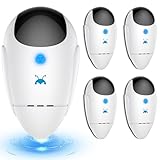
The Neatmaster four-pack is the budget counterpart to the Bell+Howell four-pack: four indoor plug-in emitters, a 2026 generation label, and a price that makes it a low-risk first purchase on a large property. Four units is enough to test the approach in the four rooms where you actually see evidence, which is the right scale for a first experiment.
Who it suits: budget-conscious rural homeowners; anyone who wants to trial ultrasonic coverage in the highest-activity rooms before committing to a ten-unit deployment; and buyers who want a current-generation label at an entry price.
Key specs at a glance
- Four plug-in ultrasonic units per box
- Marketed as a 2026 upgraded generation
- Budget price tier
- Indoor deployment; one wall outlet per unit
- No stated frequency range, mode count or coverage figure
The honest role of a four-pack on acreage is reconnaissance. Place one unit in each of the four rooms with the most droppings, gnaw marks or noise, leave them for a month, and record what changes. If activity drops in those rooms and stays low, the deployment model works for you and it is worth scaling to a larger pack. If nothing changes, you have spent a budget amount rather than a premium amount to learn that your problem needs traps, exclusion and sanitation instead.
The limitation is that four units rarely finish the job on a large property. Once you have covered the kitchen, pantry, utility and cellar, you still have bedrooms, lofts, porches, garages and outbuildings. Buy this pack as stage one, not as the whole plan.
Pros
- Lowest-risk way to test ultrasonic coverage on your property
- Four units cover the highest-activity rooms immediately
- Budget price leaves money for traps and exclusion materials
- Current 2026 generation label
- Easy to add a larger pack later without duplicating a big spend
Cons
- Four units is short of whole-house coverage
- No mode or frequency control
- No published coverage figure
- Indoor only
- Scaling up later costs more in total than buying a large pack first
Compared with the nearest alternative: the Bell+Howell four-pack occupies exactly the same budget four-unit slot, so the choice comes down to brand familiarity and price on the day. The REPELIX ARMOUR two-pack is the more informative budget alternative because it states a coverage figure, which lets you do the arithmetic before you buy. If planning matters more to you than unit count, buy the REPELIX ARMOUR pair first and treat the four-packs as expansion.
11. REPELIX ARMOUR 2-Pack – Best for a Stated Coverage Number to Plan From
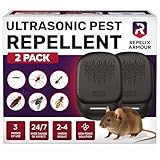
The REPELIX ARMOUR two-pack is the only product in this roundup whose listing name states a coverage figure: up to 1,500 sq ft per device, with three modes. That single number makes it the most useful product here for planning purposes, because you can compare it directly against the size of the rooms and buildings you actually need to cover — and against the size of an acre.
Who it suits: readers who want to do the arithmetic before spending; owners of large open-plan rooms, barns or workshops where an unobstructed coverage claim is more nearly achievable; and anyone who wants mode selection at a budget price.
Key specs at a glance
- Two plug-in ultrasonic units per box
- Listing states coverage up to 1,500 sq ft per device
- Three operating modes per unit
- Budget price tier
- Indoor use; one wall outlet per unit
The coverage figure is worth taking seriously and also worth discounting. A 1,500 sq ft claim describes an open, unobstructed area — roughly a 39 ft by 39 ft square with nothing in it. Real rooms contain drywall partitions, furniture, stored goods and closed doors, and ultrasonic energy at rodent-relevant frequencies is attenuated quickly in air and blocked almost completely by solid barriers. A more realistic working figure for a cluttered farmhouse room is somewhere in the 400–700 sq ft range, which means a 1,500 sq ft claim is best read as an upper bound rather than a target.
Run that against an acre and the picture becomes clear. An acre is 43,560 sq ft. At the stated 1,500 sq ft per device, covering one acre of open ground would take about 29 units. At a more realistic 700 sq ft, it would take around 62. At a conservative 500 sq ft, roughly 87. Even setting aside wind, foliage and the fact that ultrasound does not travel usefully across open ground, the arithmetic alone tells you why acreage coverage is not a single-purchase problem.
Pros
- Only device here with a stated per-unit coverage figure
- Three modes at a budget price — the cheapest mode-selectable option
- Makes coverage planning possible instead of guesswork
- Two units suit a pair of large rooms or one room plus an outbuilding
- Good value per unit for a budget device
Cons
- Only two units — a large property will need several packs
- The 1,500 sq ft figure assumes an unobstructed space
- Indoor only; the coverage claim is not a weatherproofing claim
- No stated frequency range behind the three modes
- Budget build quality relative to premium single units
Compared with the nearest alternative: the LeafZap indoor unit offers three modes at a premium price with a stated 25–65 kHz range; the REPELIX ARMOUR pair offers three modes at a budget price with a stated coverage figure instead. If you want to know which frequencies you are deploying, LeafZap answers that question. If you want to know how many devices a room needs, REPELIX ARMOUR answers that one — and for acreage planning, the coverage number is the more useful of the two.
12. Bell + Howell Ultrasonic Pest Repeller Home Kit (Pack of 3) – Best for an Entry-Level Three-Zone Setup

The Bell + Howell three-pack home kit is the smallest multi-unit purchase here and the simplest way to start. Three plug-in emitters cover a kitchen, a pantry and a utility room — the three rooms where a rural rodent problem almost always announces itself first — at the lowest total cost of any multi-pack in this roundup.
Who it suits: first-time buyers on a budget; small rural properties, cabins and holiday lets where the problem is confined to a couple of rooms; and anyone who wants to add units to an existing deployment without buying a large pack.
Key specs at a glance
- Three plug-in ultrasonic units per box
- Home-kit format from a well-known consumer housewares brand
- Budget price tier
- Indoor deployment; one wall outlet per unit
- No stated frequency range, mode count or coverage figure
Three units is a genuine constraint on a large property, and it is better to say so than to imply otherwise. If your farmhouse has eight or ten candidate rooms, three emitters will cover the highest-priority third of them, and the rest will need either more devices or a different approach. The kit’s value is as an entry point and as a top-up: buy it alongside a larger pack to cover a specific cluster of rooms, or buy it alone if the problem is genuinely localised.
The brand is the other consideration. Bell + Howell is a long-established consumer products name, which means straightforward retail availability and easy replacement, but it also means these are general-purpose home devices rather than specialised rural hardware. Expect no weather rating, no electromagnetic stage and no frequency documentation — just three plug-in emitters at a low price.
Pros
- Lowest-cost multi-unit entry point in this roundup
- Recognisable brand with broad retail availability
- Three units cover the most common activity rooms
- Useful as a top-up pack alongside a larger purchase
- No configuration required
Cons
- Three units is well short of whole-house coverage on acreage
- No mode, frequency or coverage information published
- Indoor only
- Per-unit cost is higher than the larger packs
- No wiring-path protection for stored vehicles or machinery
Compared with the nearest alternative: the Bell+Howell four-pack and the Neatmaster four-pack both give you one more unit for a similar budget outlay, so the three-pack only makes sense if you specifically need three units, want to add to an existing set, or find it at a price that undercuts the four-packs. For a first purchase on a large property, a four-pack or larger is usually the better starting point.
How to Choose
Choosing an ultrasonic repeller for acreage is mostly an exercise in refusing to believe the coverage claim on the box. The devices on this page are indoor plug-ins and enclosed-structure hardware; none of them is a field device, and the ones that claim larger-area performance do so through building wiring rather than through open air. The


