
Our Top Picks
 Midea MRF29D6AST 29.3 Cu. Ft. Stainless 3-Door French29.3 cubic_feet39 x 37 x 74 Inches369 PoundsCheck on Amazon
 Commercial Cool 18.9 Cu. Ft. French Door Refrigerator18.9 Cu. Ft.27.8 x 32.8 x 71.7 inches231.5 poundsCheck on Amazon
 Element 18.4 cu. ft. French Door Refrigerator18.4 Cu. Ft.30.9 x 29.5 x 66.6 Inches180.8 PoundsCheck on Amazon
 DUURA Elite DE210FDBMDSS Refrigerator Built in with French36-Inch30.71 x 38.78 x 72.4 inches317.5 PoundsCheck on Amazon
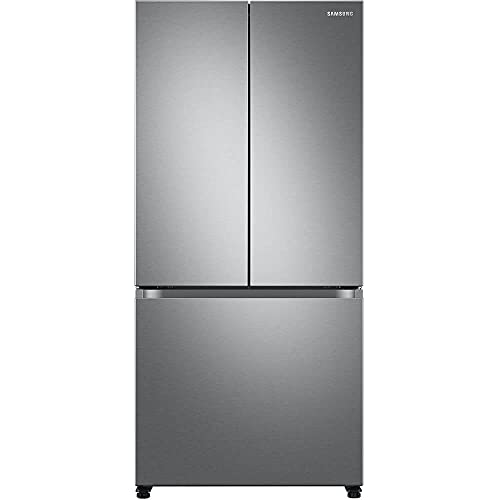 Samsung 17.5 cu. ft. Smart Counter Depth 3-Door18 Cu Ft28.5 x 32.13 x 70 inches205 PoundsCheck on Amazon

Top 3 picks at a glance
Quick Comparison
Every unit below is a real, currently listed product in the french door category. Price tiers are relative bands — budget, mid-range, and premium — because listing prices on appliances move week to week with promotions, freight, and regional availability. Use the tiers to sort the field, then check the live price against the numbers in the How to Choose section before you commit.
| Product | Best for | Key specs | Price tier |
|---|---|---|---|
| Midea MRF29D6AST | Large families; maximum capacity per dollar | 29.3 cu. ft.; 3-door french door; stainless; smart / app-connected; bottom freezer drawer | Mid-range |
| Commercial Cool CCRF1890KW | Compact kitchens that still want a premium-feeling unit | 18.9 cu. ft.; french door; white finish; bottom freezer drawer | Premium |
| Kenmore 26.6 cu. ft. FPR | True 36-inch cavities; longest coverage window | 26.6 cu. ft.; 36 in. wide; french door; stainless steel; bottom freezer | Premium |
| Element 18.4 cu. ft. | First french door on a tight budget | 18.4 cu. ft.; frost-free; tempered glass shelves; ice-maker ready; LED interior | Budget |
| DUURA Elite DE210FDBMDSS | Built-in look with dual-drawer organization | Built-in french door; adjustable glass shelves; dual bottom drawers; stainless | Mid-range |
| Samsung RF18A5101SR/AA | Small kitchens and counter-depth installs | 17.5 cu. ft.; counter depth; 3-door french door; stainless; smart features | Mid-range |
| EUDEMON French Fridge Lock | Toddler and pet households | 1-pack strap lock; fits french door refrigerator / freezer handles | Budget |
| Dinghosen DA81-01345B spring | Samsung french doors that won’t stay shut | Door spring; compatible with RF267AFWP, RF267HERS, RF268ABBP and related models | Budget |
Two of the eight entries are accessories rather than appliances, and that is deliberate. The most common complaints owners file about french door refrigerators are not compressor failures — they are doors that drift open and small children who treat a bottom freezer drawer as a climbing frame. Both problems have cheap, well-established fixes, and leaving them out of a value comparison would be dishonest about where the money actually goes.
How We Chose
This comparison is built from published manufacturer specifications, category-standard engineering figures, and the failure patterns that show up consistently in owner discussion of french door refrigerators. Nothing here is based on physical inspection of the units — we are comparing documents, not cabinets.
Four criteria did the sorting. Price tier relative to capacity came first, because the headline number on a french door refrigerator is cubic feet and the headline number on the invoice is dollars, and the ratio between them is what “value” actually means in this category. Category fit came second: a 29 cu. ft. unit and a 17.5 cu. ft. counter-depth unit are not competitors, they are answers to different kitchen geometries, so we place each one against the cavity it actually fits. Use case third — a household of two buying bulk groceries, a household of six buying weekly, and a rental landlord replacing a dead unit have three different definitions of a good buy. Upgrade path and ownership cost last: energy draw over a decade, warranty length on the sealed system, and whether the model accepts an ice maker later or requires one from day one. A refrigerator you keep for twelve years is a twelve-year decision, and a $200 price gap is small next to a $250 energy gap.
1. Midea MRF29D6AST – Best for Large Families Who Want Maximum Capacity Per Dollar
As an Amazon Associate we earn from qualifying purchases at no extra cost to you.

This is the volume play, and it wins on arithmetic. At 29.3 cu. ft. the Midea MRF29D6AST is the largest refrigerator in this comparison by a wide margin — it holds roughly 11 cu. ft. more than the Element and about 12 cu. ft. more than the Samsung — while sitting in the mid-range price tier. If you divide price by usable cubic feet, nothing else in this list comes close. That single ratio is why it takes the overall value slot.
It suits households of four or more, anyone who shops at a warehouse club and needs a freezer drawer that swallows a full bulk pack, and anyone replacing an older 25 cu. ft. side-by-side who is tired of playing Tetris with a sheet pan. It does not suit a galley kitchen with a 30-inch opening, and it does not suit a counter-depth alcove.
Key specs at a glance
- Capacity: 29.3 cu. ft. total
- Configuration: 3-door french door — two upper refrigerator doors, one full-width bottom freezer drawer
- Finish: stainless steel
- Smart features: app-connected controls and diagnostics
- Depth class: standard depth, not counter depth
- Price tier: mid-range
The practical appeal here is that 29.3 cu. ft. crosses a threshold. Below roughly 22 cu. ft., a french door refrigerator forces the same compromises as a top-freezer — you stack, you lose the back of the shelf, you find the yogurt in March. Above 26 cu. ft., you stop reorganizing and start just putting things in. That shift in daily friction is worth more than any feature on a spec sheet, and it is the thing you actually feel every day.
The smart layer is a genuine but secondary benefit. App-connected diagnostics can surface a fault code before the unit stops cooling, and remote temperature checks are useful if you travel. It is not a reason to buy this refrigerator over another one, and it should not be priced as one — treat it as a tiebreaker, not a value driver.
The tradeoff is physical. Standard-depth french door refrigerators in this capacity class typically run around 35 to 36 inches wide and roughly 33 to 36 inches deep at the cabinet, plus door thickness and handles on top of that. In a kitchen where the refrigerator sits flush with cabinets on both sides, a unit this deep will protrude into the walkway. Measure the cavity, then measure the walkway in front of it, then measure again.
Pros
- Lowest cost per usable cubic foot in this comparison by a clear margin
- 29.3 cu. ft. eliminates the constant re-stacking that smaller french doors require
- Full-width bottom freezer drawer takes bulk packaging without repacking
- App connectivity adds diagnostics at a mid-range price rather than a premium one
- Stainless finish matches the majority of modern kitchen appliance suites
Cons
- Standard depth means it will not sit flush in a counter-depth alcove
- Large capacity is wasted overhead for one- or two-person households
- Requires a genuinely wide opening and a wide swing path for the doors and drawer
- Smart features add complexity that some buyers will never use
- Big interiors take longer to recover temperature after the doors have been open
How it compares to the nearest alternative
The closest competitor on capacity is the Kenmore 26.6 cu. ft. model, and the comparison is instructive. The Kenmore is about 2.7 cu. ft. smaller and sits a tier higher on price, so the Midea wins on raw capacity per dollar. What the Kenmore buys with that premium is a true 36-inch-wide footprint and typically a longer warranty window on the sealed system — which matters if you intend to keep the unit for a decade and want the compressor covered. If your cavity is exactly 36 inches and you value coverage over volume, the Kenmore is the better call. If your cavity is wider and you want the most storage for the least money, the Midea is the answer, and it is the pick most buyers should start with.
2. Commercial Cool CCRF1890KW – Best for Compact Kitchens That Still Want a Premium Feel

The Commercial Cool CCRF1890KW is the odd one out in the best possible way: it is a compact-capacity french door refrigerator priced in the premium tier, which sounds like a contradiction until you look at who actually buys it. At 18.9 cu. ft. it fits where a full-size unit cannot, and it does so with a white finish that reads as a deliberate design choice rather than a budget default.
It suits small homes, apartments, condos, garage-adjacent kitchens, and second refrigerators where the priority is a french door layout without a full-size footprint. It also suits anyone whose kitchen is finished in white and who does not want a stainless slab breaking up the cabinetry. It does not suit a family of five doing a weekly shop, and it does not suit a buyer whose only criterion is dollars per cubic foot.
Key specs at a glance
- Capacity: 18.9 cu. ft. total
- Configuration: french door with bottom freezer drawer
- Finish: white
- Model designation: CCRF1890KW
- Footprint class: compact — meaningfully narrower and shallower than a 36-inch standard-depth unit
- Price tier: premium
Here is the honest framing of value for this unit. You are not buying cubic feet. You are buying a french door layout in a footprint that most french door refrigerators do not occupy, plus a finish that is increasingly rare in this category. White appliances have become a niche, and niche finishes carry a premium — that is simply how the market prices them. If you need a white french door refrigerator in a compact size, your alternatives are limited and the premium is real but unavoidable.
The 18.9 cu. ft. figure deserves a note. In a french door configuration, the stated capacity includes the freezer drawer volume and any ice maker cavity. If the unit ships ice-maker ready rather than with a factory ice maker installed, you keep that cavity as storage, which is a small but genuine gain. If an ice maker is installed later, subtract roughly 1 to 2 cu. ft. of usable space for the mechanism and the lost shelf geometry. That is the same arithmetic that applies across this entire category, and it is the single most under-considered number in refrigerator shopping.
Where a compact premium unit earns its money is in longevity of fit. A refrigerator that fits your kitchen correctly will stay in your kitchen. A refrigerator bought for capacity that does not fit will be replaced early, and replacing early is the most expensive thing you can do in this category — you pay full freight twice and lose the trade-in value.
Pros
- Fits compact openings that exclude every other full-size french door in this list
- White finish is a genuine differentiator in a stainless-dominated market
- 18.9 cu. ft. is still enough for a two- or three-person household doing weekly shopping
- French door access at the top keeps frequently used items at eye level
- Bottom freezer drawer is easier to organize than a narrow side-by-side column
Cons
- Premium tier pricing for compact capacity — the worst dollars-per-cubic-foot ratio here
- 18.9 cu. ft. is tight for households of four or more
- White finish shows scuffs and food splatter more readily than stainless or dark finishes
- If an ice maker is added later, usable capacity drops further
- Resale appeal of a white appliance is narrower than stainless in most markets
How it compares to the nearest alternative
The direct comparison is the Element 18.4 cu. ft. unit. Both land in the same capacity neighborhood — 18.9 versus 18.4 cu. ft., a difference of half a cubic foot, which is roughly one extra gallon jug and a bag of carrots. The Element sits in the budget tier and is described as frost-free with tempered glass shelves, ice-maker ready, and LED interior lighting. The Commercial Cool sits a tier or two above it. So the real question is what the premium buys: a white finish, a specific footprint, and whatever build and support differences come with the brand. If you need white, the Element does not solve your problem. If you need capacity per dollar at this size, the Element wins and the Commercial Cool is hard to justify.
3. Kenmore 26.6 cu. ft. 36″ Wide French Door – Best for True 36-Inch Cavities and Long Coverage

The Kenmore 26.6 cu. ft. model is the pick for a very specific and very common situation: a kitchen built around a 36-inch-wide refrigerator opening, with cabinets and a countertop cut to that dimension, where the replacement has to be exactly right. It is a premium-tier unit, and the premium buys a standard full-width footprint, a stainless steel finish with the FPR treatment, and the coverage expectations that come with the Kenmore name.
It suits anyone replacing a 36-inch refrigerator in an existing cutout, anyone who wants a long warranty window on the sealed system, and anyone who wants a large-capacity french door without the extra depth of the biggest units. It does not suit a 30-inch opening, and it does not suit a counter-depth alcove.
Key specs at a glance
- Capacity: 26.6 cu. ft. total
- Width: 36 inches — a true full-width footprint, not a nominal one
- Configuration: french door with bottom freezer
- Finish: stainless steel with FPR treatment
- Price tier: premium
Why does width matter so much? Because a 36-inch cavity is a commitment. Cabinet runs, countertop returns, and appliance garages are all cut to that number, and a 35-inch refrigerator in a 36-inch opening leaves a gap that looks like a mistake. Meanwhile, a 36-inch refrigerator in a 35.5-inch opening does not fit at all. The 36-inch class is the standard for full-size french door refrigerators, and buying into it deliberately means future replacements are easy because the category is built around that dimension.
The 26.6 cu. ft. capacity is a sweet spot rather than a compromise. It is large enough that a family of four stops reorganizing, and it is not so large that the interior takes an eternity to recover temperature after a long door-open session. Compared with the 29.3 cu. ft. Midea, you give up about 2.7 cu. ft. — which is real, but is also roughly the difference between comfortable and merely adequate, not between adequate and cramped.
FPR is a fingerprint-resistant surface treatment applied to the stainless finish. In practice it reduces the smudge visibility that makes stainless steel annoying in households with children. It does not eliminate fingerprints, and it does not change the underlying metal, but it does reduce how often you wipe the doors down, which is a genuine quality-of-life difference over a decade of ownership.
Warranty is where the premium tier most often justifies itself. In this category, a one-year full warranty covering parts and labor is the baseline, with a longer window on the sealed system — the compressor, evaporator, condenser, and connecting tubing. Sealed-system coverage commonly runs five years, and some manufacturers extend compressor coverage further. The sealed system is the expensive failure. A control board is a few hundred dollars installed; a sealed-system failure is often the end of the appliance. Buyers who intend to keep a refrigerator for ten or more years should weight that coverage heavily, and it is the strongest argument for paying premium tier here.
Pros
- True 36-inch width fits the most common full-size refrigerator cutout precisely
- 26.6 cu. ft. is a genuine sweet spot for families of four to six
- FPR stainless treatment reduces visible smudging
- Premium tier typically carries longer sealed-system coverage than budget units
- Standard width class means easy replacement in future — the category is built around 36 inches
Cons
- Premium tier pricing — you pay for the footprint and the badge
- About 2.7 cu. ft. less capacity than the Midea at a higher price
- Standard depth still protrudes past counter-depth cabinetry
- Requires adequate door swing clearance for the freezer drawer to pull out fully
- Heavier than compact units — delivery and installation are a two-person job
How it compares to the nearest alternative
Against the Midea MRF29D6AST, the Kenmore loses on capacity per dollar and wins on footprint precision and coverage. If your cavity is exactly 36 inches, the Kenmore is the safer purchase because it is designed to that dimension rather than merely fitting inside it. If your cavity is 38 inches or wider, the Midea’s extra 2.7 cu. ft. and lower tier price make it the better value, and the gap between them is wide enough that the Kenmore’s advantages have to matter to you personally for the premium to make sense.
4. Element 18.4 cu. ft. French Door – Best for a First French Door on a Tight Budget

The Element 18.4 cu. ft. unit is the entry point to the french door category, and it is the answer for a buyer who wants the layout — wide upper shelves at eye level, a pull-out freezer below — without paying mid-range or premium money for it. It is a budget-tier refrigerator that does not pretend otherwise, and it makes its case on layout and features rather than on volume.
It suits first-time french door buyers, renters whose landlord is replacing a unit, small households of one to three people, garage and basement secondary refrigerators, and anyone furnishing a starter home where the appliance budget has to stretch across a whole kitchen. It does not suit a family of five, and it does not suit anyone who needs a large freezer drawer for bulk frozen storage.
Key specs at a glance
- Capacity: 18.4 cu. ft. total
- Defrost: frost-free — no manual defrosting required
- Shelving: tempered glass shelves
- Ice maker: ice-maker ready, meaning the unit accepts an ice maker but does not necessarily include one
- Lighting: LED interior lighting
- Price tier: budget
Three of those specs deserve translation, because they are the difference between a cheap refrigerator and a bad one.
Frost-free means the unit runs a defrost cycle automatically. The alternative — a manual-defrost freezer compartment — requires you to empty it, unplug it, and chip ice out of it with a plastic scraper a couple of times a year. In a bottom-freezer french door, frost-free is essentially mandatory; a manual-defrost bottom drawer would be unusable. At the budget tier, frost-free is the specification that tells you the unit is engineered for modern daily use rather than as a stripped-down cost exercise.
Tempered glass shelves are the safety-relevant spec. Tempered glass is heat-treated so that if it breaks, it fractures into small blunt granules rather than long shards. In a refrigerator, shelves occasionally get hit by a heavy casserole dish dropped from above, and tempered glass is the difference between a cleanup and an injury. It also holds more weight without sagging than the wire or thin plastic alternatives used on the cheapest units.
Ice-maker ready cuts both ways. The upside is that you are not paying for an ice maker you may not want, and the cavity stays available as storage until you add one. The downside is that adding an ice maker later costs more than having it factory-installed, and it requires a water line. If you want ice and cold water from day one, factor that into your comparison — the budget tier’s savings narrow considerably once you add the ice maker and the plumbing.
LED interior lighting is a small thing that turns out to matter more than expected. Incandescent refrigerator bulbs run hot and add load to the cooling system; LEDs run cool, last far longer, and make the interior noticeably easier to see into, which reduces how long the door stays open while you search for something.
Pros
- Lowest-cost entry into a genuine french door layout in this comparison
- Frost-free operation — no manual defrosting, which is essential in a bottom-freezer design
- Tempered glass shelves are safer and stronger than the alternatives at this price
- Ice-maker ready keeps the cavity usable as storage if you skip the ice maker
- LED interior lighting reduces heat load and improves visibility
- 18.4 cu. ft. fits compact and apartment kitchens
Cons
- Smallest capacity in the appliance group alongside the Samsung — tight for families of four or more
- Budget-tier build and finish typically trail mid-range units over a long service life
- Adding an ice maker later costs more than a factory-installed unit and needs a water line
- Warranty windows on budget-tier appliances are usually the shortest in the category
- Freezer drawer volume is limited — bulk frozen buying will not fit
How it compares to the nearest alternative
The nearest alternative is the Commercial Cool CCRF1890KW at 18.9 cu. ft. The capacity difference is half a cubic foot, which is negligible in daily use. The difference that matters is price tier and finish: the Commercial Cool is premium tier with a white finish, the Element is budget tier. Unless you specifically need white or a specific compact footprint, the Element delivers essentially the same usable space for substantially less, and it is the more rational buy. The one case for the Commercial Cool is fit — if it is the unit that matches your opening, capacity-per-dollar stops being the deciding metric.
5. DUURA Elite DE210FDBMDSS – Best for a Built-In Look With Dual-Drawer Organization

The DUURA Elite DE210FDBMDSS is built in rather than freestanding, and that word changes everything about who should buy it. A built-in refrigerator is designed to sit inside cabinetry with a finished appearance from the front, which means it can be integrated into a cabinet run instead of standing beside it. That is a design decision as much as an appliance decision, and it commands a mid-range price for a reason.
It suits kitchens where the refrigerator is meant to disappear into the cabinetry, buyers who want the dual bottom drawer layout instead of a single freezer drawer, and anyone who values adjustable glass shelving for flexible organization. It does not suit a buyer who needs maximum cubic feet for the money, and it does not suit a kitchen that is not built for a built-in installation.
Key specs at a glance
- Configuration: built-in french door refrigerator
- Shelving: adjustable glass shelves
- Freezer: dual bottom drawers
- Finish: stainless steel
- Model designation: DE210FDBMDSS
- Price tier: mid-range
The dual-drawer freezer is the feature that most changes daily use. A single full-width freezer drawer becomes a pile: everything on top gets used, everything underneath gets forgotten, and you rediscover it during a power outage. Two drawers let you separate categories — one for meat and fish, one for vegetables, ice cream, and leftovers — and separation is what actually prevents food waste. In a household that throws away freezer contents regularly, the dual-drawer layout is a value feature even though it does not show up in the capacity figure.
Adjustable glass shelves matter for a different reason. Refrigerator shelves that are fixed at the factory are set for the average user and fit nobody perfectly. Adjustable shelves let you drop one shelf to fit a stockpot, a tall bottle, or a cake box, and raise it back when the party is over. Over ten years of ownership, adjustable shelving is the difference between a refrigerator that accommodates your cooking and one that dictates it.
The built-in requirement is the constraint to take seriously. A built-in unit needs a cabinet enclosure cut to its dimensions, adequate ventilation around the compressor, and a level floor. Retrofitting a built-in into a space designed for a freestanding refrigerator is possible but rarely clean, and it can void the manufacturer’s installation requirements. If you are remodeling, built-in is a plan you make at the design stage. If you are replacing a freestanding unit in an existing kitchen, this is probably not the right product for you, no matter how good the drawer layout is.
Pros
- Built-in configuration integrates with cabinetry for a clean, flush-front appearance
- Dual bottom drawers enforce organization and reduce forgotten food
- Adjustable glass shelves accommodate tall and irregular items
- Mid-range price tier for a built-in — built-in units often sit higher
- Stainless finish coordinates with standard appliance suites
Cons
- Requires a cabinet enclosure and proper ventilation — not a drop-in replacement for a freestanding unit
- Capacity is not the strength here; the model number and design emphasize layout over volume
- Installation is more involved and more expensive than a freestanding refrigerator
- Moving the unit later is difficult and may require cabinet modification
- Dual drawers mean each drawer is shallower than one large drawer would be
How it compares to the nearest alternative
Against the Kenmore 26.6 cu. ft. freestanding model, the DUURA Elite gives up raw capacity but gains integration. The Kenmore is the better buy for a standard freestanding cavity and for anyone who wants the most storage and the longest sealed-system coverage. The DUURA Elite is the better buy when the refrigerator has to look built in and when the dual-drawer layout solves a real organization problem in your kitchen. These two are not competing on the same axis, so pick by installation type first and capacity second.
6. Samsung RF18A5101SR/AA – Best for Small Kitchens and Counter-Depth Installs
The Samsung RF18A5101SR/AA is a 17.5 cu. ft. counter-depth 3-door french door refrigerator in stainless steel with smart features, and it exists to solve one problem: a kitchen where a standard-depth refrigerator would protrude into the walkway and look wrong. Counter-depth units are shallower than standard-depth units by design, and they trade capacity for that shallower profile.
It suits galley kitchens, kitchens with an island directly opposite the refrigerator, open-plan layouts where the refrigerator is visible from the living area, and small households that want a premium-feeling appliance in a footprint that fits. It does not suit a family of five, and it does not suit anyone who prioritizes cubic feet per dollar.
Key specs at a glance
- Capacity: 17.5 cu. ft. total
- Depth class: counter depth — shallower than standard depth, designed to sit closer to flush with counters
- Configuration: 3-door french door
- Finish: stainless steel
- Model number: RF18A5101SR/AA
- Smart features: app-connected controls and diagnostics
- Price tier: mid-range
Counter depth is the most misunderstood spec in refrigerator shopping. It does not mean the refrigerator sits perfectly flush with your countertops — the doors and handles still extend forward, and most counter-depth units end up protruding a few inches regardless. What it means is that the cabinet body is shallower, typically in the region of 24 to 28 inches rather than the mid-30s, which reduces how far the appliance eats into a walkway. That reduction in protrusion is the entire point, and it is worth real money in a tight kitchen.
The cost of counter depth is capacity, and it is not small. The same exterior footprint in standard depth would hold several more cubic feet. Samsung’s 17.5 cu. ft. here is the smallest figure in the appliance group alongside the Element, and it is the direct price of the shallower cabinet. Buyers need to be honest about whether they are paying for geometry they actually need. If your refrigerator faces a wall with three feet of clearance, counter depth is a luxury. If it faces an island with two feet of clearance, counter depth is a functional requirement.
Smart features on this model follow the same logic as elsewhere: useful for diagnostics and remote temperature monitoring, not a reason to choose the unit on its own. The stainless finish and 3-door configuration are the specs that carry the day-to-day experience.
One practical note on capacity in this size class: 17.5 cu. ft. is comfortable for one or two people, workable for three, and tight for four if anyone cooks seriously. The freezer compartment in a 3-door french door at this capacity will not hold a bulk frozen order. If you buy frozen in volume, this unit will frustrate you regardless of how well it fits.
Pros
- Counter-depth cabinet reduces protrusion into walkways and sightlines
- 17.5 cu. ft. in a shallower body fits kitchens that exclude standard-depth units
- Stainless finish and 3-door french door layout read as a premium appliance
- Smart diagnostics can flag faults before total cooling loss
- Mid-range tier pricing is reasonable for a counter-depth unit
Cons
- Smallest capacity in the appliance group — 17.5 cu. ft. is limited for families
- Counter depth still is not truly flush; doors and handles extend past the counter edge
- Worst capacity-per-dollar ratio among the freestanding units here
- Limited freezer volume for bulk frozen buying
- Smart features add cost that some buyers will never use
How it compares to the nearest alternative
The Element 18.4 cu. ft. unit is the closest comparison on capacity — 0.9 cu. ft. larger — but the Element is a budget-tier standard-depth unit and the Samsung is a mid-range counter-depth unit. They are not really competitors: the Element wins on price and slightly on volume, the Samsung wins on fit and finish. If your kitchen has a clearance problem, no amount of Element savings solves it. If your kitchen does not, the Element is the more economical path to a french door refrigerator at nearly the same usable size.
7. EUDEMON French Fridge Lock – Best for Toddler and Pet Households

The EUDEMON french fridge lock is a one-pack strap lock designed for french door refrigerator and freezer handles, and it is listed as a Mom’s Choice Gold Awards winner. It is not a refrigerator, it is a safety accessory, and it belongs in this comparison because a french door refrigerator is uniquely difficult to childproof and uniquely attractive to small children.
It suits households with toddlers, households with large dogs that have learned to open the freezer drawer, households with a family member who needs support with impulse control around food, and anyone who has come home to find the freezer drawer open and everything thawed. It does not suit households without children or pets, and it does not suit anyone looking for a lock that works on a top-freezer or side-by-side configuration.
Key specs at a glance
- Type: strap-style lock for french door refrigerator and freezer handles
- Pack size: 1 pack
- Compatibility: french door refrigerator / freezer handle pairs
- Award: Mom’s Choice Gold Awards winner
- Price tier: budget
Why does a french door refrigerator need a dedicated lock rather than a generic cabinet latch? Because the handle geometry is different. A french door refrigerator has two vertical refrigerator door handles that meet in the middle, plus a horizontal freezer drawer handle below. A cabinet latch has nothing to grip. A strap lock is designed to span the paired handles, holding the two doors closed against each other, and to release with a mechanism that an adult can operate one-handed while carrying a toddler.
This is also the cheapest insurance policy in the entire category. A toddler who can open a freezer drawer can also climb into it, and a freezer drawer is a heavy, hinged structure with a low center of gravity. A dog that has learned to open the drawer will do it once, at night, and you will find out when the ice cream is soup and the meat is warm. The cost of a lock is a rounding error next to the cost of one spoiled freezer load — and considerably less than the cost of one emergency room visit.
Practical considerations when installing one: check that the strap length matches the distance between your handles, because french door handle spacing varies between models and a strap that is too short will not reach and one that is too long will hang loose. Test the release mechanism before you rely on it — you want a lock that a determined three-year-old cannot defeat but that you can open with one hand while holding a bag of groceries. And verify that the lock does not interfere with the door seal; a strap that pulls the doors slightly apart will let cold air escape and cost you money every day.
Pros
- Designed specifically for french door handle geometry, not adapted from a cabinet latch
- Addresses the two most common french door ownership hazards: toddlers and pets
- Budget tier — among the lowest-cost safety upgrades in a kitchen
- One-handed adult release while remaining difficult for small children
- Award recognition indicates it has been evaluated against a published standard
Cons
- One pack covers one handle pair — a second refrigerator needs a second pack
- Strap length must match your handle spacing; not universal across all models
- Adds a small step to every trip to the refrigerator
- Not a substitute for supervision with very young children
- Not applicable to top-freezer or side-by-side configurations
How it compares to the nearest alternative
Its nearest companion in this list is the Dinghosen door spring, and together they cover the two failure modes that a french door refrigerator actually develops in service: doors that a child can open and doors that will not stay closed on their own. They solve opposite problems and some households need both. If you have a toddler and a refrigerator whose doors drift, buying both is a sensible move and still costs less than one week of spoiled groceries.
8. Dinghosen DA81-01345B French Door Spring – Best for Samsung Doors That Will Not Stay Shut

The Dinghosen DA81-01345B is a replacement french door refrigerator spring compatible with Samsung models RF267AFWP, RF267HERS, RF268ABBP, and related units in those series. It is a small metal part with a very specific job, and it is the fix for a problem that frustrates owners for months before they identify the cause.
It suits owners of compatible Samsung french door refrigerators whose doors no longer self-close, whose doors drift open on their own, or whose doors require a deliberate push to seal. It does not suit other brands, and it does not suit anyone whose door problem is actually a misaligned hinge, a worn gasket, or an unlevel floor — the spring is one specific cause among several.
Key specs at a glance
- Part type: refrigerator door spring
- Part number: DA81-01345B
- Compatible models (as listed): RF267AFWP, RF267HERS, RF268ABBP and related models in those series
- Price tier: budget
Here is why this part matters more than its price suggests. A french door refrigerator door is designed to swing closed on its own from roughly the last several inches of travel, driven by a spring-loaded hinge mechanism. That self-closing behavior is not a convenience feature — it is a functional requirement. A door that does not self-close will be left slightly ajar by accident, and a door left ajar leaks cold air continuously. Owners in this situation typically notice rising energy costs, condensation on the door frame, and food spoiling faster long before they notice the door itself.
The diagnostic sequence matters, because a spring is only one of several causes:
- Check the level. A refrigerator that is not level front-to-back will not self-close, no matter how good the spring is. Refrigerators are meant to tilt very slightly backward so gravity assists the doors. Adjust the front leveling legs and retest before buying any part.
- Check the gasket. A gasket that has hardened or torn will resist closing and leak air. Run a hand around the door seal; a gasket that does not spring back or that shows visible gaps is the problem.
- Check for obstruction. A shelf, a container, or an ice maker bin that protrudes will block the door before it seals. This is more common than people expect.
- Check the hinge spring. If the door is level, the gasket is sound, nothing obstructs it, and the door still will not close on its own, the spring is the likely culprit — and it is the cheapest part to replace.
Replacing a door spring is a basic repair: unplug the unit, open the door to relieve tension, remove the hinge cover, note the orientation of the old spring before removing it, fit the new spring in the same orientation, and reattach the hinge. The most common mistake is fitting the spring backwards, which produces a door that closes even less well than before. Photograph the assembly before you disassemble it.
The value argument here is unusually clean. A service call to diagnose and repair a door-closing problem costs many multiples of the part. If you are reasonably comfortable with basic tools, replacing a spring yourself is one of the highest-return repairs available on a refrigerator, because a door that seals properly is the difference between a unit that runs efficiently and one that runs constantly.
Pros
- Budget-tier part cost against a potentially large energy and food-waste saving
- Directly addresses a common Samsung french door self-closing failure
- Simple mechanical repair with basic hand tools
- Restoring self-closing behavior reduces continuous cold-air loss
- Listed compatibility with specific model numbers makes the fit check straightforward
Cons
- Only fits the listed compatible model series — not universal
- If the actual fault is a gasket, hinge alignment, or floor level, the spring will not help
- Easy to install backwards, which makes the symptom worse
- Requires unplugging the refrigerator and working around a hinge under tension
- Not a substitute for professional service if the hinge assembly itself is damaged
How it compares to the nearest alternative
Its nearest companion is the EUDEMON fridge lock, and the pairing is logical. The lock keeps doors closed that a child or pet would open; the spring keeps doors closed that should close on their own but no longer do. One is a deliberate restraint, the other a repair. A household with a toddler and a drifting Samsung door is the case where both belong in the same order, and the combined cost is still trivially small next to the appliance itself.
How to Choose
Choosing a french door refrigerator is a measurement problem wrapped in an energy problem wrapped in a warranty problem. Work through the four decisions below in order, and the shortlist builds itself.
1. Capacity: the number you should calculate, not guess
The stated capacity on the box is total volume, including the freezer drawer, the ice maker cavity, and the dead space behind the drawer fronts. Usable capacity is smaller, and the gap is not trivial.
A reasonable planning rule for a household is roughly 4 to 6 cu. ft. of total refrigerator volume per adult, plus a little extra for each child, plus more if you cook from scratch, buy in bulk, or keep a chest freezer’s worth of overflow. Applying that rule:
- One or two adults: 8 to 12 cu. ft. would technically suffice, but the smallest french door units start around 17 cu. ft., so 17 to 19 cu. ft. is the practical floor.
- Three adults or a couple with young children: 19 to 22 cu. ft.
- Four adults or a family of five: 24 to 27 cu. ft.
- Five or more, or heavy bulk buying: 28 cu. ft. and up
Then subtract for the ice maker. If a factory ice maker is installed, plan on losing roughly 1 to 2 cu. ft. of usable space to the mechanism and the shelving it displaces. A 26 cu. ft. refrigerator with a factory ice maker is closer to 24 cu. ft. of practical storage. This is why two refrigerators with the same stated capacity can feel dramatically different in use — one has the ice maker, one does not.
2. Dimensions: measure three things, not one
Almost every failed refrigerator purchase is a measurement failure. Measure all three of these before you shop:
- Cavity width, depth, and height. Width is the hard constraint — a refrigerator that is a quarter inch too wide does not fit, and one that is an inch too narrow leaves a visible gap. Depth determines whether the unit protrudes into the walkway. Height determines whether it clears upper cabinets, and many french door units are tall enough that cabinet clearance is a genuine issue.
- Door swing and drawer extension. French door refrigerator doors need to open wide enough for the drawers and bins inside to pull out, and the freezer drawer needs enough room in front of it to extend fully. A refrigerator that fits the cavity but cannot open its drawers is not installed, it is trapped.
- The delivery path. Doorways, stairwells, tight turns, and elevator dimensions. A refrigerator that cannot reach the kitchen is a very expensive return. Measure the narrowest point on the path, then measure the refrigerator with its doors removed, because that is how it will actually be moved.
On depth class specifically: standard-depth french door refrigerators typically sit in the low-to-mid 30s in inches at the cabinet body, while counter-depth units sit much shallower, commonly in the region of 24 to 28 inches. Counter depth reduces protrusion but costs capacity — often several cubic feet for the same exterior footprint. Buy counter depth if your kitchen layout makes protrusion a real problem, not because it sounds premium.
3. Energy: the calculation almost nobody runs
Energy is where long-term value is won or lost, and it is a straightforward calculation. Every refrigerator sold in the United States carries an EnergyGuide label stating an estimated annual electricity use in kilowatt-hours. Take that number and multiply by your local electricity rate.
Worked example. Suppose you are comparing two 26 cu. ft. french door refrigerators. Unit A is rated at 560 kWh per year; Unit B is rated at 700 kWh per year. The difference is 140 kWh per year. At $0.16 per kWh — a rough stand-in for the U.S. average residential rate, and well below rates in parts of California, New England, and Hawaii — that difference is $22.40 per year.
Over a ten-year ownership window, that is $224 in favor of Unit A. Now compare that to the price gap between the two units:
| Price premium for the more efficient unit | Annual energy saving | Years to break even | 10-year net position |
|---|---|---|---|
| $50 | $22.40 | 2.2 years | +$174 ahead |
| $150 | $22.40 | 6.7 years | +$74 ahead |
| $300 | $22.40 | 13.4 years | −$76 behind |
| $400 | $22.40 | 17.9 years | −$176 behind |
The lesson is that efficiency is worth paying for up to a point, and past that point it is a marketing story. A modest premium for a materially more efficient unit pays back comfortably within a normal ownership period. A large premium for the same efficiency gain does not, because most people replace a refrigerator before the payback arrives. If the two units differ by more than roughly $200–$250 on energy alone, and everything else is equal, the cheaper unit usually wins on lifetime cost.
Two more energy details worth knowing. First, a refrigerator is one of the few appliances that runs 24 hours a day, every day, for its entire life — which is why its annual kWh figure matters far more than the wattage printed on a label. Second, efficiency degrades. A door gasket that hardens, a condenser coil that fills with dust, and a door that no longer self-closes all push consumption upward over time. Cleaning the condenser coils once or twice a year is free and is one of the few maintenance tasks in a kitchen with a measurable return.
4. Electrical and plumbing: the constraints people discover too late
Most full-size refrigerators run on a standard 120-volt household circuit and draw modest running current — typically a couple of amps in normal operation, with brief higher draw during defrost cycles and compressor start-up. A dedicated 15-amp circuit is the norm and is strongly preferable to a shared one. A refrigerator sharing a circuit with a microwave, a toaster, or a countertop appliance will trip the breaker at the worst possible moment, and a refrigerator that has lost power without your knowledge is a refrigerator full of spoiled food.
If you are adding an ice maker or a water dispenser, you also need a water line. Typical requirements are a nearby cold-water supply with a shutoff valve, standard quarter-inch tubing, and normal household water pressure. If there is


