
The best virtual pinball machine for a home game room in 2026 comes down to one measurement: how much free wall you can surrender. If you can give up roughly 8 to 10 feet of wall, a dedicated outlet, and a five-figure budget, the Stern Pinball Pokémon Premium Edition with Insider Connected is the best overall pick — it is a full-size, arcade-scale machine with the deepest play experience and the strongest upgrade path of anything here. If your room tops out at a card table, the Fat Brain Toys Electronic Arcade Pinball is the better answer: a self-contained electronic unit that needs no cabinet, no wiring, and no floor space beyond a tabletop. Everything else in this guide sits between those two poles. The honest framing for the category is that “virtual pinball” describes two different purchases — a digital cabinet you build around a screen and a PC, and the physical machines and tabletop games that occupy the same corner of a game room. Knowing which one you are actually shopping for is the whole decision.
Our Top Picks
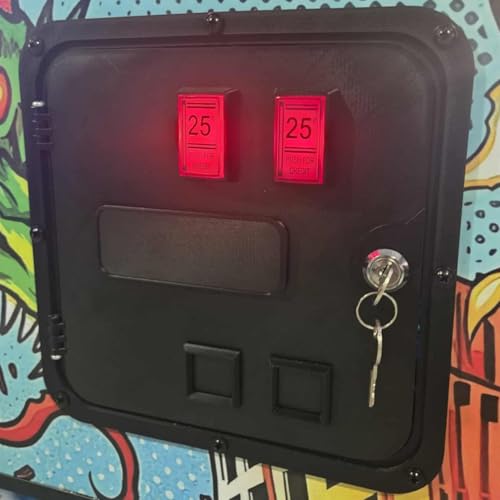 XICAOMP Replacement Coin Slot Works with Virtual PinballOne Size10 x 8 x 10 inches1 poundsCheck on Amazon

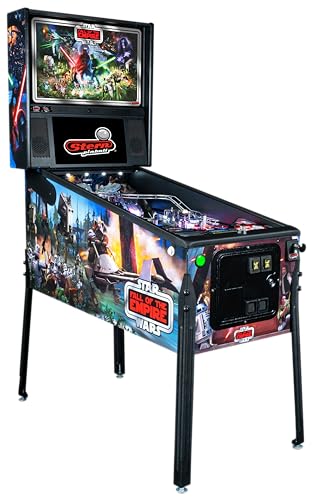


Top 3 picks at a glance
Quick Comparison
| Product | Best for | Key specs | Price tier |
|---|---|---|---|
| Stern Pinball Pokémon Premium Edition | Dedicated full-size arcade corner | Full-size cabinet (~2–2.5 ft wide, ~4.5–5 ft deep, ~6.5 ft tall at backbox); standard playfield scale; Insider Connected Wi-Fi; Premium-tier mechanical extras over Pro | Premium |
| Stern Pinball Star Wars: Fall of The Empire Pro Edition | Licensed theme on a tighter budget | Full-size cabinet, same footprint class; Pro-tier build (fewer mechanical extras than Premium); Insider Connected Wi-Fi; solid-state lighting and audio | Mid-range |
| Stern Pinball John Wick Pro Edition | Fast, modern ruleset for adults | Full-size cabinet, same footprint class; Pro-tier build; Insider Connected Wi-Fi; designed around a modern film license | Mid-range |
| XICAOMP Replacement Coin Slot for Virtual Pinball Machines | Making a home virtual cabinet feel coin-op | Replacement coin slot / coin-door component; removable upgrade mod; compatible with virtual pinball cabinets; small flat-rate shipping item | Mid-range |
| Stern Pinball Deadpool Premium Edition | High-energy licensed theme, premium build | Full-size cabinet, same footprint class; Premium-tier mechanical extras; Insider Connected Wi-Fi; Marvel license | Premium |
| Game Room Guys Pinball Balls, Steel, 1-1/16 in | Keeping a real machine playing true | 1-1/16 in (27 mm) standard-diameter steel pinballs; carbon steel with a hard chrome finish; standard 80 g class ball weight | Budget |
| Stern Pinball Foo Fighters Premium Edition | Music-license centerpiece for a bar corner | Full-size cabinet, same footprint class; Premium-tier mechanical extras; Insider Connected Wi-Fi; band license with music-driven rules | Premium |
| Schylling Space Race Pinball Game | Retro analog play on a shelf or desk | Portable tabletop pinball; lever-launched plunger; metal balls; sturdy tin-and-plastic construction; no power required | Budget |
| Fat Brain Toys Electronic Arcade Pinball | Small rooms and young players | Tabletop electronic pinball; battery-powered lights and sounds; electronic scoring; rated for ages 6+ | Mid-range |
| Schylling Classic 10″ Pinball Games, Space Race & Home Run Bundle | Two-player household gift set | Two 10 in tabletop pinball games in one bundle; analog lever action; metal balls; no power required | Budget |
| BRIO 34017 Pinball Game | Wooden-toy buyers and family rooms | Classic vintage-arcade-style tabletop pinball; wood-and-metal construction in the BRIO house style; mechanical scoring | Mid-range |
| JA-RU Mini Pocket Size Pinball Game | Stocking stuffers and desk toys | Handheld mini pinball; palm-sized; single toy per pack; mechanical lever action, no batteries | Budget |
How We Chose
This list is built from published product listings and well-established category facts, not from bench testing — we do not claim to have unboxed, played, or measured any of these items. The selection criteria were footprint, category fit, use case, and upgrade path. Footprint came first because a game room is a fixed volume: a full-size machine eats roughly 8 to 10 feet of usable wall once you allow for the shooter stance and the space needed to lift the playfield, while a tabletop unit eats about 2 square feet of table. Category fit came second, because “pinball machine” spans analog toys, electronic tabletop units, full-size physical cabinets, and the virtual cabinets you assemble around a screen and a mini-PC — mixing those without labeling them would mislead a buyer. Use case came third: a machine for a solo adult collector is a different product from one for a six-year-old with siblings. Upgrade path came last and mattered most at the top end, where a licensed machine with a connected platform and a healthy aftermarket is worth more over five years than a cheaper one you cannot service. Every product below was kept only because it fits a real room scenario; nothing was added to pad the list.
1. Stern Pinball Pokémon Premium Edition – Best for a dedicated full-size arcade corner
As an Amazon Associate we earn from qualifying purchases at no extra cost to you.

This is the machine to buy if the room already exists and the question is what goes in the corner. Stern is the largest manufacturer of full-size arcade pinball machines, and a Premium Edition sits one rung below the Limited Edition in the company’s tier structure — it is the version most collectors end up with, because it keeps the mechanical extras that make a playfield feel alive without the limited-run price premium. The Pokémon license does a lot of work here: it is one of the broadest-appeal themes you can put in a shared space, which matters if the game room doubles as a room other people use. It suits an adult buyer with a finished basement, a spare bedroom, or a garage bay, a five-figure budget, and the patience to level a machine properly on an uneven floor.
- Cabinet class: full-size arcade pinball cabinet — roughly 2 to 2.5 ft wide, 4.5 to 5 ft deep, about 6.5 ft tall at the top of the backbox
- Playfield: standard full-size playfield scale, the same physical class the industry has used for decades
- Edition tier: Premium — generally adds mechanical and lighting extras over the Pro version of a given title, and the exact list varies by title
- Connectivity: Insider Connected — Stern’s Wi-Fi platform for QR-code player login, achievement and quest tracking, leaderboards, and pushed code updates
- Power: runs from a standard household outlet; budget for a circuit you are not already loading with a space heater or a window air conditioner
- Weight class: loaded full-size machines typically land in the 250–350 lb range, which matters for stairs and for anything other than a slab or a well-braced main floor
What makes it the overall pick is the combination of a real, physical playfield and a connected platform. Insider Connected is not a gimmick in a home setting: it gives you persistent scoring, per-player stats, and a reason to keep playing the same table for months instead of weeks, and it lets Stern push software updates to the machine rather than leaving you with the ruleset it shipped with. Premium-tier hardware also means the tactile layer — flippers, slingshots, a shaker, the whole physical feedback loop — is present in a way that no screen-based cabinet fully reproduces, and that feedback loop is the reason people keep a pinball machine for a decade.
Pros
- Full-size playfield with genuine mechanical feedback, not a simulated one
- Insider Connected adds persistent progression, leaderboards, and updateable code
- Broad-appeal license that works in a shared or family game room
- Premium tier sits below Limited Edition pricing while keeping the mechanical extras
- Deep aftermarket for parts, mods, and service documentation
Cons
- Needs roughly 8 to 10 feet of usable wall including service clearance — the single biggest constraint
- Five-figure purchase plus delivery; stairs and tight doorways are a real logistical problem
- Heavy enough that floor placement deserves thought before delivery day
- Premium-tier pricing is well above the Pro version of a comparable title
Against the nearest alternative in this list, the Star Wars: Fall of The Empire Pro Edition, the Pokémon Premium trades price for mechanical depth and theme breadth. Both occupy the same footprint and both include Insider Connected, so the decision is not about space — it is about whether the extra mechanisms and the Pokémon license are worth stepping up a tier. If your game room is a Star Wars room, the Pro wins on theme; if it is a general-purpose room that other people walk through, Pokémon is the easier sell and the easier resale.
2. Stern Pinball Star Wars: Fall of The Empire Pro Edition – Best for a licensed theme on a tighter budget
The Pro Edition is Stern’s entry tier for a full-size title, and it is the right call for a buyer who wants a real machine in a real cabinet but cannot justify Premium-tier money. Star Wars is one of the most durable licenses in the arcade world, and “Fall of The Empire” leans into the original-trilogy era that most buyers of a certain age actually want. This suits an adult collector with a finished basement and a mid-range budget who would rather own one well-supported licensed machine than two lesser ones, and who is comfortable with the idea that a Pro-tier playfield has fewer mechanical toys than the tier above it.
- Cabinet class: full-size arcade pinball cabinet, same footprint family as the Premium machines above
- Edition tier: Pro — the base tier of a Stern title; expect solid-state lighting, a full ruleset, and fewer added mechanisms than Premium
- Connectivity: Insider Connected Wi-Fi with QR-code player profiles and online leaderboards
- Audio: full cabinet speaker system with the film-score and callout package the license provides
- Maintenance: standard coil, rubber, and flipper service items, all widely available
- Footprint requirement: plan on the same 8–10 ft of wall as any full-size machine
The value argument here is straightforward. A Pro Edition gives you the same cabinet, the same playfield layout, the same software, and the same connectivity as the tier above it — what it removes is the extra hardware. For a home player who cares about shot geometry and scoring depth more than about a shaker motor and a second ramp, that is the correct trade. The license also does something practical: Star Wars machines hold attention with non-pinball guests, which is worth real money in a room you share with other people.
Pros
- Full-size physical playfield at the lowest tier Stern offers for a licensed title
- Same software and Insider Connected platform as the higher tiers
- Star Wars license reads instantly to guests and holds resale value
- Standard service parts; no exotic components to source
Cons
- No mechanical extras — no shaker, fewer animated toys than Premium
- Still a full-size machine, so it still needs the same 8–10 ft of wall
- Pro-tier lighting and art packages are less elaborate than Premium
- Licensed themes carry a price premium over unlicensed designs
Compared with the Pokémon Premium Edition, this is the “spend less, lose the toys” option: identical footprint, identical connectivity, lower tier. Compared with the John Wick Pro Edition, the difference is theme and ruleset tempo rather than hardware — both are Pro-tier, both occupy the same cabinet class, and the choice between them is almost entirely about which license you want to look at for the next ten years.
3. Stern Pinball John Wick Pro Edition – Best for a fast modern ruleset aimed at adults
John Wick is the adult-audience pick on this list. The license is contemporary, the theme is action-driven, and a Stern Pro-tier build keeps the hardware honest without premium-tier add-ons. This machine suits a buyer whose game room is genuinely theirs — a basement bar, a garage, a den — rather than a family room where a six-year-old’s friends will be cycling through. It is also a sensible choice for someone who wants a modern-feeling machine with an active code-update history rather than a nostalgia title.
- Cabinet class: full-size arcade pinball cabinet, standard footprint family
- Edition tier: Pro — base-tier hardware with the full ruleset and solid-state lighting
- Connectivity: Insider Connected Wi-Fi, QR login, achievement and quest tracking
- Theme: modern action-film license aimed at adult players
- Service items: standard flipper, coil, and rubber consumables
- Space requirement: the same 8–10 ft of wall and roughly 3 ft of front clearance as any full-size machine
The case for this one is tempo. Modern Stern designs under contemporary licenses tend to be built around fast, flowing shots and layered mode progressions, which is exactly what a player who has already owned a couple of machines wants. Because it is a Pro-tier build, you are paying for the layout and the software rather than for added mechanisms, and the money you save against a Premium can go straight into lighting, a proper stool, and a mat for the floor.
Pros
- Contemporary license that suits an adult-only game room
- Pro-tier pricing keeps the entry point at the lower end of full-size machines
- Insider Connected for progression, stats, and pushed code updates
- Full-size playfield with standard, easy-to-source service parts
Cons
- Not a family-room theme — the license limits who you can hand the machine to
- Pro tier means fewer mechanical features than the Premium machines on this list
- Full-size footprint and weight regardless of the lower price
- Adult-themed art may not suit a shared or kid-facing space
The nearest alternative is the Star Wars Pro Edition. Both are Pro-tier full-size machines with Insider Connected, so the comparison is nearly pure theme preference — Star Wars is the safer room-reader and the safer resale, John Wick is the sharper, more adult choice. If your game room doubles as a guest space, Star Wars is the lower-risk purchase; if it is a private bar, John Wick is the more interesting machine to own.
4. XICAOMP Replacement Coin Slot for Virtual Pinball Machines – Best for making a home virtual cabinet feel coin-op

This is the one item on the list that is explicitly a virtual pinball part, and it is also the cheapest way to make a home-built virtual cabinet stop feeling like a PC in a wooden box. The listing describes a replacement coin slot that works with virtual pinball machines as a removable upgrade mod — in other words, a coin-door-style component you fit to the front of a cabinet to complete the arcade illusion. It suits a builder who has already assembled or bought a virtual pinball cabinet and wants the last 5 percent of the experience: the physical act of dropping a coin or token before a game, which changes how guests interact with the machine.
- Type: replacement coin slot / coin-door component, sold as a removable upgrade mod
- Compatibility: designed for virtual pinball machines and virtual pinball cabinets
- Installation class: front-panel fitment on a cabinet that has a coin-door cutout or a blank panel you can cut
- Removability: listed as removable, so it can be swapped back out without committing the cabinet
- Footprint: a component, not a machine — it consumes no floor space
- Power: a mechanical coin-slot assembly adds no meaningful electrical load to the cabinet
Why it matters more than the price suggests: a virtual pinball cabinet’s weakness is tactile credibility. The playfield is a screen, the flippers are solenoids or haptics, and the coin door is usually the first thing to get skipped. Fitting a real coin slot closes that loop for guests in a way that a software menu cannot. It is also the most reversible upgrade on this list — if you decide you would rather have a plain front panel, the listing describes it as removable, so the commitment is low.
Pros
- Directly targets the weakest point of a home virtual cabinet — physical authenticity
- Removable design means low commitment and easy reversal
- Consumes no floor or wall space, which matters in a virtual-cabinet build
- Cheapest upgrade on this list relative to the experience it adds
Cons
- It is a component, not a machine — you need a cabinet already built or bought
- Requires some fabrication or at least a cutout if your cabinet lacks a coin-door opening
- Fitment varies by cabinet, so measure your panel before ordering
- Does nothing for the software, display, or control side of a build
Its nearest alternative in this list is not another machine but the consumables and toys around it — the Game Room Guys steel balls and the Schylling tabletop games. Those are analog-fun purchases; this is a build-completion part. If you are assembling a virtual pinball cabinet and you are at the “what am I forgetting” stage, this is the item that makes the finished machine read as arcade hardware rather than as furniture.
5. Stern Pinball Deadpool Premium Edition – Best for a high-energy licensed theme with premium hardware
Deadpool is the loudest machine on this list in every sense — theme, art, callouts, and playfield energy. It is a Marvel-licensed Premium-tier Stern build, which puts it in the same hardware class as the Pokémon Premium: mechanical extras over Pro, full-size cabinet, Insider Connected. It suits a buyer who wants a game room centerpiece with personality, who is comfortable with irreverent humor on the backglass, and who has the budget for the premium tier. It is a strong second machine for someone who already owns a family-friendly title and wants contrast.
- Cabinet class: full-size arcade pinball cabinet, standard footprint family
- Edition tier: Premium — mechanical and lighting extras above the Pro tier for this title
- Connectivity: Insider Connected Wi-Fi with QR-code profiles, quests, and leaderboards
- License: Marvel / Deadpool, with the tone that implies
- Space: same 8–10 ft of usable wall, with roughly 3 ft of clearance front and rear for play and service
- Service: standard Stern coil, rubber, and flipper parts
What this machine does better than the quieter titles here is generate a crowd. Premium-tier hardware means the playfield has the extra mechanisms that produce the physical moments people remember — the thumps and kicks that a Pro-tier build simply does not have. The Marvel license also means it holds value in the used market, which is worth thinking about if you might rotate machines every few years rather than keep one forever.
Pros
- Premium-tier mechanics on a full-size playfield
- High-recognition license with strong used-market demand
- Insider Connected platform for progression and code updates
- Distinct personality — a room centerpiece rather than a wallflower
Cons
- Premium-tier price, which sits well above the Pro machines here
- Adult humor in the art and callouts limits it as a family machine
- Full-size footprint and 250–350 lb weight class
- Loud theme and loud hardware — not a late-night apartment machine
Compared with the Foo Fighters Premium Edition, this is the same hardware tier with a completely different room energy: Deadpool is a licensed-character machine with a Marvel audience, Foo Fighters is a music machine that behaves more like a jukebox with flippers. Both cost roughly the same tier of money and both eat the same wall space, so the choice is about which one you want guests to react to — a joke they recognize or a song they know.
6. Game Room Guys Pinball Balls, Steel, 1-1/16 in – Best for keeping a real machine playing true

Every full-size machine on this list is only as good as the balls rolling on it. The Game Room Guys steel pinballs are standard 1-1/16 in (27 mm) carbon-steel balls with a hard chrome finish — the size and material class the entire pinball industry is built around. They suit anyone who owns a physical machine, whether that is a Stern title or an older cabinet, and they are the correct answer to the most common “why is my machine playing badly” question in the hobby: worn, pitted, or magnetized balls.
- Diameter: 1-1/16 in (27 mm) — the standard pinball size used across full-size machines
- Weight class: approximately 80 g (2.8 oz) per ball, the standard for this diameter in carbon steel
- Material: carbon steel with a hard chrome plating
- Quantity: sold as a set — check the listing for the count in the pack
- Use case: replacement consumable for full-size physical pinball machines
- Storage: keep spares dry; chrome-plated steel can corrode if stored in a damp garage
The information a spec sheet leaves out is when to replace them. Balls pick up micro-scratches from the playfield, the trough, and the shooter lane, and a scratched ball acts like sandpaper on your playfield’s clearcoat — the damage compounds. In a home machine that sees a few games a day, a fresh set once a year is a cheap insurance policy against a much more expensive playfield repair. Balls also slowly magnetize in machines with magnets on the playfield, which changes how they behave on the flippers and in the trough, and that is a problem no amount of cleaning fixes.
Pros
- Correct standard 1-1/16 in diameter for full-size machines
- Carbon steel with chrome plating — the industry-standard construction
- Cheap relative to the playfield damage worn balls cause
- Useful spare to keep on hand regardless of which machine you own
Cons
- Consumable, not a machine — it does nothing on its own
- Only fits full-size physical machines; tabletop games use their own smaller balls
- No benefit if your playfield already has significant wear
- Requires remembering to actually swap them, which most owners do not
The nearest comparison is the XICAOMP coin slot: both are small accessories rather than machines, but they serve opposite ends of the hobby. The coin slot is for a virtual cabinet build, the balls are for a physical machine. If you own a Stern machine, buy the balls; if you are building a virtual cabinet, buy the coin slot. If you own both, buy both — the combined cost is a rounding error against either machine.
7. Stern Pinball Foo Fighters Premium Edition – Best for a music-themed bar corner

A music-license machine is a different animal from a character-license machine, and Foo Fighters Premium is the clearest example here. Stern builds these titles around the band’s catalog, with a ruleset that ties modes to songs and a cabinet that reads as a piece of music memorabilia as much as a game. It suits an adult buyer with a bar corner, a finished basement, or a rec room where music is already part of the atmosphere — and it suits someone who wants a machine that guests gravitate toward without needing to know pinball.
- Cabinet class: full-size arcade pinball cabinet, standard footprint family
- Edition tier: Premium — mechanical and lighting extras above the Pro tier for this title
- Connectivity: Insider Connected Wi-Fi for player profiles, quests, and leaderboards
- License: Foo Fighters, with a music-driven software package
- Audio: full cabinet sound system carrying the band’s catalog
- Space: same 8–10 ft of usable wall as every full-size machine here
The strength of a music machine in a home setting is repeat play. Character licenses pull people in once; music licenses keep them standing there, because the soundtrack does half the work of holding attention. Premium-tier hardware adds the mechanical moments — the extra devices that make a playfield feel dense — and Insider Connected gives you the same persistent progression and code-update path as the other Stern titles. For a game room that also functions as a social space, this is one of the two machines on this list most likely to get used by people who did not come downstairs to play pinball.
Pros
- Music license that works as background atmosphere as well as gameplay
- Premium-tier mechanics on a full-size playfield
- Insider Connected for progression, stats, and updates
- Strong fit for a bar corner or rec room that already hosts people
Cons
- Premium-tier pricing
- Full-size footprint and weight class — no small-room option
- Band-specific appeal; less universal than a film or game license
- Audio-heavy machines are louder than most home rooms want late at night
Against the Deadpool Premium Edition, this is the same hardware tier and the same wall-space cost, with a different social function. Deadpool is the machine people walk over to look at; Foo Fighters is the machine people keep playing while they talk. If your game room is a hangout, the music machine gets more hours. If it is a showpiece, the Marvel machine gets more attention.
8. Schylling Space Race Pinball Game – Best for retro analog play on a shelf or desk

Schylling’s Space Race is a portable retro tabletop pinball game — the tin-toy end of the pinball spectrum, and a genuinely different product from everything else here. The listing describes sturdy construction with a lever, metal balls, and a classic space-race theme, and it needs no power at all. It suits a buyer who wants pinball flavor in a room without pinball commitment: a desk, a shelf, a kid’s room, a waiting area. It also suits a collector who wants a period-style toy next to a modern machine.
- Type: portable tabletop pinball game, analog mechanical action
- Launch mechanism: lever-style plunger
- Balls: metal, sized for the tabletop playfield rather than full-size 1-1/16 in
- Construction: sturdy tin-and-plastic style build typical of retro tabletop toys
- Power: none — fully mechanical, no batteries, no cord
- Footprint: tabletop; think a few inches of depth on a shelf or desk
What this gets right is honesty about what it is. There is no screen, no code update, no leaderboard — just gravity, a spring, and a set of pins. That makes it the best possible “second pinball thing” in a game room: it costs almost nothing, it works when the power is out, and it is the item a guest actually picks up and fiddles with while waiting for their turn on the big machine. It is also the safest pinball purchase for a household with young children, because there is nothing to break and nothing to plug in.
Pros
- No power, no setup, no maintenance beyond occasionally wiping it down
- Genuinely portable — moves from desk to shelf to table in seconds
- Retro aesthetic that complements a full-size machine rather than competing with it
- Very low entry cost
Cons
- Not a virtual pinball machine in any sense — no screen, no electronics, no library
- Play depth is limited by the physical playfield size
- Small metal balls are a choking hazard for very young children
- Cannot be expanded, upgraded, or connected
The nearest alternative in this list is the Schylling two-pack bundle, which pairs this style of game with a baseball-themed unit for a little more money. If you want one retro tabletop game, buy this; if you want two — one for a kid and one for you — the bundle is the better value. Against the Fat Brain Toys electronic unit, the trade is obvious: this one is analog and silent, that one adds lights, sound, and electronic scoring at a higher price.
9. Fat Brain Toys Electronic Arcade Pinball – Best for small rooms and young players

This is the best small-room answer on the list and the closest thing to a virtual pinball machine you can put on a table. Fat Brain Toys builds it as a tabletop electronic pinball machine rated for kids 6 and up, with electronic scoring, lights, and sounds standing in for the mechanical playfield of a full-size cabinet. It suits a family with limited space: an apartment, a bedroom, a playroom, or a game room where the floor plan simply will not accept a 5-foot-deep cabinet.
- Type: tabletop electronic pinball machine
- Player age: rated for ages 6 and up
- Scoring: electronic, with a display rather than mechanical reels
- Feedback: lights and sound effects tied to playfield events
- Power: battery-powered class — no cabinet wiring, no dedicated circuit
- Footprint: tabletop; needs a stable surface roughly the size of a small tray
The reason this earns the “small room” slot rather than the retro toys is that it introduces the electronics layer that defines virtual pinball — scoring that persists, sounds that respond, lights that react. A six-year-old who learns on this machine is learning the same loop they will find on a full-size cabinet later: aim, shoot, chase a score, try again. It also survives a room with no free wall at all, which is the constraint that eliminates every full-size option on this list.
Pros
- Needs only a tabletop — zero wall space, zero floor space
- Electronic scoring and sound give a taste of the virtual-pinball experience
- Age-rated for younger players, which the full-size machines are not
- Battery power means no outlet, no cable management, no circuit budget
Cons
- Tabletop scale — nothing like a full-size playfield in shot variety or feel
- No game library, no connectivity, no upgrade path
- Not aimed at adult players who want depth
- Batteries are a recurring cost and a recurring failure point
Compared with the Schylling Space Race, this is the electronic upgrade: more money, more features, more engagement for a child, and a much better fit for a kid who has already outgrown a purely mechanical toy. Compared with a full-size Stern machine, it is a different category entirely — the Fat Brain unit is what you buy when the room says no and the budget says no, and it is the correct purchase in that situation rather than a compromise you will regret.
10. Schylling Classic 10″ Pinball Games, Space Race & Home Run Bundle – Best for a two-player household gift set

This bundle pairs two of Schylling’s classic 10 in tabletop pinball games — the Space Race unit and a Home Run baseball-themed game — in a single gift set. It is the practical answer to a household with two kids, or to a buyer who wants one retro toy in the game room and one somewhere else in the house. Like the standalone Space Race, both units are analog, lever-launched, metal-ball toys with no power requirement.
- Contents: two 10 in tabletop pinball games in one bundle
- Themes: Space Race and Home Run (baseball)
- Action: analog lever launch with metal balls
- Power: none — fully mechanical
- Construction: classic 10 in tabletop format, sturdy retro-toy build
- Footprint: two tabletop units; each needs a shelf or desk surface
The bundle’s advantage is not the discount, it is the fact that two different themes solve the “they both want the same one” problem. Two kids, two machines, two themes, no arguing. It is also a genuinely good gift for a household that already has a full-size machine in the basement, because the tabletop units live upstairs where the family actually spends time, and they cost a fraction of a single accessory for the big machine.
Pros
- Two complete games in one purchase, in two different themes
- No power, no assembly, no maintenance
- Better value per unit than buying the tabletop games separately
- Safe, simple play for a wide age range
Cons
- Both units are simple analog toys with limited depth
- Metal balls pose a choking hazard for very young children
- No electronics, no scoring display, no connectivity
- If you only want one tabletop game, this is one unit too many
Against the standalone Schylling Space Race, the bundle is the better buy for a household with two players and the worse buy for a single desk. Against the Fat Brain Toys electronic unit, the bundle wins on quantity and loses on features — you get two silent mechanical toys instead of one electronic machine with lights, sound, and scoring. If the goal is keeping two kids busy, buy the bundle; if the goal is one machine that feels modern, buy the electronic unit.
11. BRIO 34017 Pinball Game – Best for wooden-toy buyers and family rooms

BRIO’s 34017 is the family-room option: a classic vintage-arcade-style tabletop pinball game built in the wood-and-metal house style BRIO is known for, positioned as a brain game for kids and adults and as a gift item. It is the machine to buy when the game room is also the living room and the furniture has to look like it belongs there. It suits parents who want a screen-free game, grandparents buying a durable gift, and anyone who cares more about materials than about feature count.
- Type: classic vintage-arcade-style tabletop pinball game
- Construction: wood-and-metal build in the BRIO toy tradition
- Scoring: mechanical, integrated into the playfield design
- Power: none — no batteries, no cord
- Audience: marketed for kids and adults as a gift-friendly brain game
- Footprint: tabletop; sits comfortably on a coffee table or shelf
The argument for BRIO over the cheaper tabletop toys is durability and aesthetics. Wood-and-metal construction survives being handed around a family room in a way that thin stamped-metal toys do not, and the finish reads as a designed object rather than as a novelty. That matters in a room where the pinball machine is visible from the sofa. It is also the tabletop option most likely to be played by an adult without feeling silly, which is not a small thing in a shared space.
Pros
- Wood-and-metal construction that holds up to family use
- Looks intentional in a living room or family room
- No power, no assembly, no maintenance
- Gift-friendly packaging and brand recognition
Cons
- Higher price than the stamped-metal tabletop games for a similar play loop
- Still a tabletop toy — no electronic scoring, no library, no connectivity
- No virtual pinball functionality whatsoever
- Playfield size limits shot variety
Compared with the Schylling 10 in games, the BRIO is the premium build of the same basic idea: you pay more for materials and finish, and you get a game that survives a decade of family-room use instead of a couple of years. Compared with the Fat Brain Toys electronic unit, it is the analog-versus-digital trade again — BRIO gives you silence and materials, Fat Brain gives you lights and a score display.
12. JA-RU Mini Pocket Size Pinball Game – Best for stocking stuffers and desk toys

The JA-RU mini pocket pinball game is exactly what the name says: a palm-sized handheld arcade toy, sold as a single unit, with mechanical lever action and no batteries. It suits the smallest possible use cases — a stocking stuffer, a party favor, a desk toy, a travel distraction for a kid on a long drive. It is not a game room machine and it is not trying to be.
- Type: handheld mini pinball game
- Size class: pocket / palm sized
- Pack contents: one toy per pack
- Action: mechanical lever launch, no electronics
- Power: none — no batteries required
- Footprint: effectively zero; it lives in a pocket or a drawer
Its role in a game room is smaller than its role in a household. This is the item you buy several of, not one of: hand it to a kid at a birthday party, drop it in a gift bag, keep one in a glovebox. The absence of batteries is the real feature — it never dies, never needs a charger, and never makes noise, which makes it the one pinball-adjacent toy you can safely hand to a child in a car or a restaurant.
Pros
- Lowest-cost pinball purchase on this list
- No batteries, no noise, no setup
- Genuinely pocketable — works as a travel or desk toy
- Buy several at once for party favors or gift bags
Cons
- Very limited play depth; the playfield is the size of your palm
- Not suitable for a game room as a primary machine
- Small parts make it inappropriate for very young children
- No scoring system, no electronics, no upgrade path
Against the Schylling tabletop games, this is the same analog idea shrunk to pocket scale at a fraction of the price — the Schylling units are games, this is a fidget. Buy it as a filler gift or as a stocking stuffer for someone who already has everything else on this list. Do not buy it expecting it to occupy a corner of a game room, because it will not.
How to Choose
Buying pinball for a home game room is a measurement problem before it is a shopping problem. Work through the five constraints below in order, and the shortlist will pick itself.
1. Measure the wall, then subtract the service envelope
A full-size arcade pinball cabinet is roughly 2 to 2.5 ft wide, 4.5 to 5 ft deep, and about 6.5 ft tall at the top of the backbox. That is the machine. What you actually need is the machine plus an envelope. Plan on about 3 ft of clearance at the front for a shooter stance, and about 2 to 3 ft behind the cabinet so you can tip the playfield up for service without hitting a wall. Side to side, leave 1 to 2 ft on at least one side so you can get a hand in behind the backbox.
Do the arithmetic once and it stops being abstract. A single machine plus envelope wants a wall run of about 8 ft if you are generous and about 6.5 ft if you are squeezing. Two machines side by side need roughly 12 to 14 ft of wall, because you want a walkway between the shooter stances and you do not want two people back to back. A 12 × 14 ft room can comfortably host two full-size machines against one wall with circulation space left over; a 10 × 10 ft room can host one, and only if a door does not swing into the shooter stance.
Tabletop units invert the math entirely. A 10 in tabletop game needs about 1 square foot of surface; the Fat Brain Toys electronic unit needs a stable surface roughly the size of a small tray plus a little elbow room. A mini handheld needs a pocket. If your room has no free wall, stop reading the full-size sections — they are not options, no matter how good the machine is.
2. Do the display math if you are building a virtual cabinet
If you are assembling a virtual pinball cabinet rather than buying a physical machine, the display decision is the one that costs the most money and is hardest to change later. A typical full-size virtual cabinet uses a 43 in 4K playfield screen laid at the playfield angle, a 32 in backglass screen standing vertically, and a 15.6 in or 10.4 in third screen standing in for the dot-matrix display. Mini virtual cabinets scale down to roughly a 32 in playfield, a 27 in backglass, and a small third screen.
Then check the bandwidth, because this is where builds fail. Uncompressed video bandwidth is resolution × refresh × color depth. At 1920 × 1080 × 60 Hz × 24-bit color you need about 3.0 Gbit/s, which any HDMI 1.4 or better cable handles without thinking. At 3840 × 2160 × 60 Hz × 24-bit you need about 12 Gbit/s, which means you need an HDMI 2.0-class cable and port — 18 Gbit/s of headroom — and you should not be using the decade-old cable you found in a drawer. At 3840 × 2160 × 120 Hz × 24-bit you need roughly 24 Gbit/s, which pushes you into HDMI 2.1 territory at 48 Gbit/s. The practical rule: if you are running 4K at 60 Hz on three screens, buy certified cables rated for the full bandwidth and keep runs under about 15 ft, because long passive runs at 12 Gbit/s and above are where intermittent black screens come from.
Refresh rate matters more


