
For most RX 6700 XT owners who play mostly rasterized games, upgrading to the RX 9060 XT 16GB is a modest step rather than a big leap. Reviews put the raw raster gain anywhere from near parity to roughly 25%. The upgrade pays off if you want ray tracing, FSR 4 upscaling, extra VRAM or a cooler, quieter system that draws about 70 W less. If you’re buying fresh with no card to sell, the RX 9060 XT 16GB is clearly the better purchase. If you already own a 6700 XT and only want more frames, consider a bigger jump such as an RX 9070-class card, which will feel like a real upgrade.
As an Amazon Associate we earn from qualifying purchases at no extra cost to you.



Our Top Picks
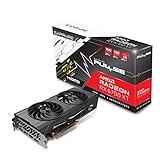
 ASUS Dual Radeon RX 9060 XT 16GB GDDR6RX9060XT|16GB|Black8 x 4.7 x 1.9 Inches1.3 poundsCheck on Amazon
Top 3 picks at a glance
What Changes on Paper
| Specification | RX 6700 XT (current card) | RX 9060 XT 16GB (upgrade) |
|---|---|---|
| Architecture | RDNA 2.0 | RDNA 4.0 |
| Release date | 3 March 2021 | 4 June 2025 |
| Launch MSRP | $479 | $349 |
| Shaders | 2560 | 2048 |
| Boost clock | 2581 MHz | 3130 MHz |
| Process | 7 nm | 4 nm |
| TDP | 230 W | 160 W |
| Memory | 12 GB GDDR6 | 16 GB GDDR6 |
| Bus / bandwidth | 192-bit / 384.0 GB/s | 128-bit / 322.3 GB/s |
| Cache | 3 MB L2 + 96 MB Infinity Cache | 4 MB L2 + 32 MB Infinity Cache |
| Interface | PCIe 4.0 x16 | PCIe 5.0 x16 |
| Power connectors | 1x 6-pin + 1x 8-pin | 1x 8-pin |
| Length / width | 267 mm, 2-slot | 267 mm, 2-slot |
| Outputs | 1x HDMI, 3x DisplayPort | 1x HDMI 2.1b, 2x DP 2.1a |
The new card looks weaker on several lines: fewer shaders, a narrower bus, less bandwidth and a smaller Infinity Cache. It closes the gap through RDNA 4’s higher clocks, a newer 4 nm process and an updated compute-unit design that does more work per clock, especially in ray tracing. Spec sheets understate the RX 9060 XT.
How Much Faster Is It, Really?
Reviewers don’t fully agree on this one, so here is the range. Gamers Nexus, in its launch review, found the RX 9060 XT 16GB nearly identical to the RX 6700 XT in rasterized results across its test suite. Data from AMD’s review guide, as reported in leaked reviewer slides, put the 9060 XT level with the RX 7700 XT at 1080p and about 3% behind it at 1440p, which would make it roughly 15–25% faster than a 6700 XT. Large aggregated benchmark databases built on newer 2025–2026 games show a similar 25% or so advantage.
The likely explanation is the game selection. Older and lighter titles favor the 6700 XT’s wider memory bus and bigger cache. Newer engines, especially those using ray tracing, mesh shaders or heavy compute, favor RDNA 4. Here is what to expect in each case:
- Older raster games and esports titles: little to no visible difference.
- Recent AAA games at 1440p: about 15–25% higher frame rates, more in titles where 12 GB runs short.
- Ray-traced games: a much larger gain, often 50% or more, because RDNA 2 is weak at ray tracing.
Treat all FPS changes as approximate. They vary with settings, CPU, driver version and game patches.
The Features Gap Is the Real Upgrade
FSR 4 now versus FSR 4.1 later
FSR 4, AMD’s machine-learning upscaler, runs natively on the RX 9060 XT using RDNA 4’s FP8 hardware. It removes much of the shimmer and ghosting associated with FSR 2 and 3, and its quality is far closer to DLSS than earlier FSR versions. The RX 6700 XT, as an RDNA 2 card, is still on FSR 3.1. AMD has announced FSR 4.1 for RDNA 2 with a target of early 2027. Based on TechPowerUp’s findings on RDNA 3, where the INT8 version of FSR 4.1 runs noticeably slower than FSR 3.1, expect it to cost more performance on the 6700 XT than it does on RDNA 4.
Ray tracing becomes usable
On a 6700 XT, ray tracing in modern games is mostly something you switch off. RDNA 4 roughly doubles ray-tracing throughput per compute unit compared with RDNA 3, and the gap to RDNA 2 is wider still. With FSR 4 Quality or Balanced, medium RT settings at 1080p and 1440p become realistic on the 9060 XT.
Display and media
The 9060 XT adds HDMI 2.1b and DisplayPort 2.1a outputs and AMD’s newer media engine. Streamers will notice that, because the 6700 XT can decode AV1 but can’t encode it, while the 9060 XT can. It has one fewer DisplayPort than the 6700 XT, so triple-monitor DisplayPort setups may need a different arrangement.
VRAM: From 12 GB to 16 GB
Twelve gigabytes is still workable at 1440p, but a handful of recent games already push past it at max textures with RT enabled. The jump to 16 GB matters most in three cases:
- You play at 1440p with ultra textures in new releases.
- You turn on ray tracing and frame generation together, which both add memory overhead.
- You run local AI or content-creation workloads alongside gaming.
Make sure you choose the 16 GB model. The 8 GB RX 9060 XT would be a step backward in memory from your 6700 XT, and Hardware Unboxed’s testing showed it falling badly behind the 16 GB card in memory-heavy titles.
Power and PSU: The Upgrade Uses Less
The RX 9060 XT 16GB is rated at 160 W, compared with 230 W for the RX 6700 XT, and it needs just one 8-pin connector instead of 6-pin + 8-pin. Any power supply that runs your 6700 XT will run the upgrade with more margin to spare.
PSU check using GPU TDP + CPU + about 150 W headroom, with a 105 W gaming CPU:
- RX 6700 XT: 230 + 105 + 150 = 485 W, so you’re probably already on a 550–650 W unit.
- RX 9060 XT 16GB: 160 + 105 + 150 = 415 W, so a quality 500 W unit is enough.
The 70 W reduction also means less heat in the case and lower fan noise under load, which you’ll notice in small or poorly ventilated cases. Physical fit shouldn’t be a concern, since both cards are listed at 267 mm and two slots. Partner models vary, so check the dimensions of the specific card you buy.
The Real Upgrade Cost
The RX 6700 XT usually sells for $180–$240 used, depending on model and condition. If you sell it and buy an RX 9060 XT 16GB at its $349 MSRP, the upgrade costs roughly $110–$170 out of pocket. Here’s what that buys:
- Raster gain of ~20% (midpoint): $140 net / 20 = about $7 per percentage point of raster improvement.
- Ray-tracing gain of 50%+: under $3 per percentage point.
- Plus 4 GB more VRAM, FSR 4 now, about 70 W lower power, and a new warranty.
Compare that with skipping a tier: an RX 9070-class card costs considerably more but delivers a much larger raster jump over a 6700 XT. If raster frame rate is your only goal, saving for the bigger card often gives better value per dollar of upgrade. If features and efficiency matter to you, the 9060 XT 16GB at net cost is a reasonable, low-risk upgrade.
Who Should Upgrade and Who Should Wait
| Your situation | Recommendation |
|---|---|
| 1080p esports or older games | Keep the 6700 XT; the gain will be hard to notice |
| 1440p AAA, no ray tracing | Optional; worth it mainly for FSR 4 image quality |
| Want to start using ray tracing | Upgrade; the RT difference is large |
| Hot or small case, noisy system | Upgrade; 70 W less heat |
| Want a major raster jump | Skip to an RX 9070-class card instead |
| Building a new PC from scratch | Buy the 9060 XT 16GB rather than a used 6700 XT |
Selling Your RX 6700 XT
Clean the card, run a quick stress test so you can show stable temperatures, and keep the original box if you have it. Listings that include the model name, cooler type and usage history (gaming only, not mining) tend to sell faster. Prices for the 6700 XT have been stable thanks to its 12 GB of VRAM, which keeps it popular with 1080p and 1440p budget builders.
Frequently Asked Questions
Is the RX 9060 XT 16GB faster than the RX 6700 XT?
Yes, but by how much depends on the games tested. Gamers Nexus found near-parity in raster across its suite, while other data sets put the 9060 XT around 15–25% ahead in newer titles. In ray tracing the 9060 XT’s lead is much larger.
Will my power supply handle the RX 9060 XT 16GB?
Almost certainly. It’s rated at 160 W against the RX 6700 XT’s 230 W and uses a single 8-pin connector. Any quality PSU that powered your 6700 XT has more than enough capacity.
Can the RX 6700 XT use FSR 4?
Not yet officially. AMD has announced FSR 4.1 upscaling for RDNA 2 cards with a target of early 2027. Until then the 6700 XT uses FSR 3.1, which looks noticeably softer and less stable than FSR 4.
Is 12 GB of VRAM still enough in 2026?
For 1080p and most 1440p gaming, yes, as long as you sometimes drop textures a notch in the heaviest new releases. It becomes limiting when you combine 1440p ultra textures with ray tracing and frame generation.
Should I buy a used RX 6700 XT instead of a new RX 9060 XT 16GB?
For a new build, choose the 9060 XT 16GB. It costs more but adds FSR 4, much better ray tracing, 16 GB of VRAM, lower power draw and a warranty. A used 6700 XT makes sense only when the price difference is large and you play mainly raster games.


