
Shopping for a prebuilt gaming system means trusting that the internal components match the marketing claims, that the warranty is real, and that you are not paying a premium for a name alone. With so many options spanning the $1,900 to $6,200 range, the difference between a fair deal and an overpriced box comes down to knowing exactly what each configuration includes and whether the build quality, cooling, and upgradability justify the sticker price.
This roundup compares eight systems using published specifications, listed prices, and aggregated owner feedback. We focused on machines built around current-generation AMD Ryzen and NVIDIA GeForce or AMD Radeon hardware, since these platforms define the xidax gaming pc conversation in 2026. The standout systems combine balanced CPU and GPU pairings, meaningful storage and memory configurations, and transparent assembly origins, while weaker entries suffer from bottlenecked pairings, thin RAM, or storage capacities that force immediate upgrades.
As an Amazon Associate we earn from qualifying purchases at no extra cost to you. Product prices and availability are accurate as of the date shown and are subject to change.
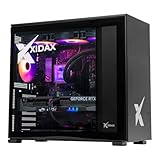


Top 3 picks at a glance
Quick Picks
| Product | Best For | Price |
|---|---|---|
| XIDAX X6 XEN | High-FPS Gaming | $2,199.99 |
| XIDAX X-6 RX 9070XT | CPU and GPU Balance | $2,699.99 |
| XIDAX X6 ONAMI RTX 5090 | 4K Ray-Tracing | $6,199.99 |
| ZOTAC MEK RTX 5070 Ti | Mid-High Tier Value | $2,599.99 |
| ZOTAC MEK RTX 5080 | Enthusiast Performance | $3,199.99 |
| MSI Codex Z2 | Lowest Entry Price | $1,969 |
| KOTIN RTX 5070 | First Prebuild | $1,999.99 |
| Skytech King 95 | Verified Reviews | $2,599.99 |
How We Picked
We evaluated each system on four criteria: CPU-GPU pairing efficiency (whether the processor can keep the graphics card fed at target resolutions), total out-of-the-box usability (RAM capacity, storage size, included OS), build and service transparency (where the machine is assembled and what warranty terms owners report), and price-to-performance ratio relative to the other entries. Systems that force a same-week RAM or SSD upgrade scored lower, as did configurations with unclear supply-chain or support histories.
The 8 Best Xidax Gaming Pc in 2026
XIDAX X6 XEN Gaming PC
This is the sensible starting point in the XIDAX lineup for competitive players who value frame-rate consistency over raw GPU horsepower. The Ryzen 7 7800X3D remains one of the strongest gaming CPUs available, pairing with the RTX 5070 to deliver smooth high-refresh experiences at 1440p. At just under $2,200, it undercuts several competitors while including 32GB of DDR5 and a full 2TB NVMe drive.
- Pro: The 7800X3D cache advantage keeps minimum frame rates high in CPU-bound esports titles.
- Pro: Genuine Windows 11 Home and 2TB storage mean no immediate add-ons required.
- Con: Owners note the case fans run noticeably loud under sustained loads compared to premium chassis alternatives.
Skip this one if you plan to play at 4K or need the extra VRAM of a 16GB card for upcoming titles.
XIDAX X-6 Series Ryzen 7 9800X3D RX 9070XT
For buyers who want the latest Ryzen 7 9800X3D alongside AMD’s Radeon RX 9070XT with its 16GB buffer, this configuration sits at a strategic price point. The CPU’s 5.2GHz boost combined with 16GB VRAM makes it a strong candidate for high-texture 1440p and entry 4K workloads without NVIDIA driver preferences.
- Pro: 16GB VRAM provides headroom that the RTX 5070 in the XEN model lacks for texture-heavy titles.
- Pro: The 9800X3D improves multi-threaded performance over the 7800X3D for streaming or light productivity alongside gaming.
- Con: Radeon software features and frame-rate upscaling options trail NVIDIA’s DLSS ecosystem in some titles.
Skip this if DLSS support or NVIDIA-exclusive features like Reflex matter to your workflow.
XIDAX X6 ONAMI RTX 5090 Gaming PC
This is the no-compromise flagship. The RTX 5090 with 32GB VRAM paired with 64GB DDR5 and the 9800X3D removes every bottleneck for 4K ray-traced gaming or heavy creative workloads. Priced at $6,199.99, it is aimed squarely at enthusiasts who treat a PC as a multi-year investment.
- Pro: 32GB VRAM and 64GB system RAM handle any current or near-future title without settings compromise.
- Pro: 2TB NVMe storage eliminates drive management anxiety for large game libraries.
- Con: The price floor places it firmly in custom-builder territory, where similar specs may be assembled for less by experienced DIY users.
Skip this if your budget sits under $5,000; the mid-tier options above deliver a meaningful share of this performance.
ZOTAC MEK Gaming PC (RTX 5070 Ti)
ZOTAC positions this MEK desktop at the same $2,599.99 as the XIDAX X-6 RX 9070XT but with an Intel-adjacent GPU brand experience. The Ryzen 7 9700X is a solid 8-core part, and the 5070 Ti with 16GB VRAM offers a balanced 1440p package for NVIDIA ecosystem buyers.
- Pro: ZOTAC provides its own direct warranty channel, simplifying RMA processes for some owners.
- Pro: The 9700X handles everyday multitasking well without the X3D cache premium.
- Con: The non-X3D Ryzen 7 970X falls behind the 7800X3D in pure gaming frame rates in CPU-limited scenarios.
Skip this if you prioritize maximum in-game FPS over brand loyalty to NVIDIA or ZOTAC.
ZOTAC MEK Gaming PC (RTX 5080)
Stepping up to the 5080 with the same 9800X3D, this build targets 4K gaming at high settings without the flagship GPU price. At $3,199.99, it delivers the best NVIDIA-based 4K entry among these options.
- Pro: The RTX 5080 with 16GB VRAM and the 9800X3D eliminate both GPU and CPU bottlenecks at 4K for current titles.
- Pro: ZOTAC MEK cases generally receive owner praise for cable management and airflow in prebuilt form.
- Con: RAM and storage specifications for this variant are less clearly advertised, potentially requiring buyer diligence before purchase.
Skip this if transparent, fully specified component lists are a priority in your buying process.
MSI Codex Z2 Gaming Desktop
At $1,969, the MSI Codex Z2 is the least expensive option here. It pairs an AMD R7-8700F with an RTX 5070, 32GB DDR5, and a 2TB SSD. The 8700F is a lower-clocked part that trades some gaming headroom for cost savings.
- Pro: 32GB DDR5 and 2TB storage are unusually generous for a sub-$2,000 prebuild.
- Pro: MSI’s retail support network and driver portal provide long-term software stability.
- Con: The 8700F lacks the 3D V-Cache advantage, meaning minimum frame rates in CPU-bound titles trail the 7800X3D and 9800X3D systems noticeably.
Skip this if competitive frame rates matter more than the $200 savings over the XIDAX XEN.
KOTIN Prebuilt Gaming PC (RTX 5070)
KOTIN enters at $1,999.99 with the same RTX 5070 and Ryzen 7 9700X combination but with 1TB SSD rather than 2TB. This makes it slightly cheaper than the MSI yet with a faster CPU, though storage is halved.
- Pro: The 9700X outperforms the MSI’s 8700F in both single and multi-threaded gaming workloads.
- Pro: Pricing under $2,000 for this CPU-GPU pairing is competitive for a first prebuild purchase.
- Con: Brand recognition and support infrastructure are thinner than MSI or ZOTAC, with fewer published owner reviews to reference.
Skip this if you maintain a library exceeding 1TB or prefer established support channels.
Skytech Gaming King 95
Skytech pairs the sought-after Ryzen 7 9800X3D with an RTX 5070 Ti at $2,599.99. Skytech has built a reputation for transparent component listings and responsive customer service, reflected in consistent positive owner feedback across retail channels.
- Pro: The 9800X3D and 5070 Ti combination delivers top-tier 1440p performance with NVIDIA upscaling benefits.
- Pro: Skytech publishes detailed spec sheets and maintains an active owner community for troubleshooting.
- Con: Listed configuration details for RAM and storage are less explicit than XIDAX or MSI equivalents at the same price.
Skip this if you require confirmed 32GB and 2TB configurations without contacting support first.
Buying Guide
CPU: 3D V-Cache Makes the Difference
AMD’s X3D suffix denotes the 3D V-Cache technology that dramatically improves gaming frame rates by placing extra L3 cache directly on the die. The 7800X3D and 9800X3D deliver measurably higher minimum FPS in CPU-bound titles compared to the non-X3D 9700X or 8700F. For a xidax gaming pc purchase, prioritize X3D parts unless the price gap exceeds $400.
GPU: VRAM Capacity for 1440p and Beyond
12GB VRAM on the RTX 5070 is sufficient for 1440p today but increasingly tight in titles that ship with ultra texture packs enabled by default. 16GB cards like the RX 9070XT and RTX 5070 Ti provide meaningful longevity for high-texture play at 1440p and entry 4K. If you intend to keep the system past two years without lowering settings, 16GB minimum is the practical threshold.
Storage and RAM: The Hidden Upgrade Tax
Buying a 32GB RAM and 2TB SSD configuration out of the box avoids a $150-$250 upgrade within weeks of purchase. Systems with 16GB or 1TB configurations often look cheaper on the price tag but close most of the gap once you add the components you need. Factor the true all-in cost before comparing sticker prices.
Our Verdict
Our top pick is the XIDAX X6 XEN at $2,199.99, which delivers the 7800X3D and RTX 5070 combination at the lowest cost among X3D-equipped NVIDIA systems in this group. For budget-conscious buyers who can tolerate a slower CPU, the MSI Codex Z2 at $1,969 is the entry-level pick. However, if you play primarily at 4K and want maximum longevity, the ZOTAC MEK with the RTX 5080 at $3,199.99 wins on raw GPU headroom.
FAQ
Is a Xidax gaming pc worth buying from a lesser-known brand?
XIDAX machines are assembled and serviced in Utah with published component lists and standard Windows licensing, which reduces the uncertainty typical of off-market brands. Owner feedback consistently highlights good build quality and responsive support, making them a lower-risk purchase compared to generic prebuilts without assembly-location transparency.
Do I need 64GB of RAM for gaming?
No. Current games do not exceed 16GB RAM usage in standard play, and 32GB provides comfortable headroom for multitasking or light content creation. The X6 ONAMI’s 64GB is aimed at users who also run virtual machines or heavy editing workloads alongside gaming.
Can I upgrade a prebuilt gaming PC later?
Yes, in most cases. The systems listed here use standard ATX or mATX motherboards and common GPU form factors, so swapping the graphics card, adding storage, or increasing RAM is feasible. Some brands restrict upgrades with proprietary parts, but XIDAX, MSI, ZOTAC, and Skytech generally use off-the-shelf components.
Which GPU brand is better for this price tier, NVIDIA or AMD?
Both are competitive at 1440p. NVIDIA offers DLSS frame generation and better ray-tracing performance in supported titles, while AMD provides more VRAM per dollar on the RX 9070XT. The choice depends on whether your favorite titles use DLSS or whether you prefer higher texture settings and longer memory headroom.


