
A desktop computer marketed as an “instant gaming pc” promises to arrive ready for play—no component hunting, no cable confusion, no BIOS troubleshooting. That pitch is valuable precisely because it removes the friction that keeps players from upgrading. But the category is flooded with machines that pair a decent CPU with a GPU that cannot sustain 1080p at 60 fps, or that cram an i5 alongside integrated graphics and slap an RGB sticker on the case.
What separates a genuinely capable instant gaming pc from a marketing shell is straightforward: the GPU tier determines frame rates, the RAM and storage capacity determine longevity, and the power supply determines whether the whole thing survives a demanding title three years from now. We compared published specifications and recurring owner feedback across eight machines to find which ones actually deliver on the “instant” promise and which ones quietly fail after the first unboxing.
As an Amazon Associate we earn from qualifying purchases at no extra cost to you. Product prices and availability are accurate as of the date shown and are subject to change.


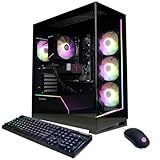


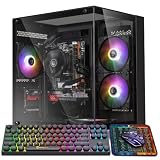
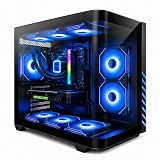

Top 3 picks at a glance
Quick Picks
| Product | Best for | Price |
|---|---|---|
| KOTIN Prebuilt RTX 5070 12GB | High-refresh 1440p gaming | $1999.99 |
| KOTIN Gaming PC RTX 5060 Ti 8GB | Best balance of price and power | $1299.99 |
| CyberPowerPC RTX 5060 Ti 8GB | Brand-name warranty and support | $1349.99 |
| CyberPowerPC i5-14400F RTX 5060 | Entry-level 1080p at a fair price | $1286 |
| Evounic GTX 1080 Ti 11GB | 1080p gaming on a tight budget | $758.88 |
| Desktop Gaming PC i5 16GB | Light gaming and everyday use | $269.99 |
| Liquid Cooled Ryzen 7 RTX 4060 Ti | Quiet operation with solid 1080p | $1158.88 |
| OKAMUS Pre-Built i5 No GPU | Absolute minimum budget build | $245.99 |
How We Picked
We evaluated every machine against four criteria: GPU tier relative to asking price, RAM and storage headroom for multi-year use, power supply adequacy for the installed components, and consistency of owner-reported issues such as coil whine, driver conflicts, or thermal throttling. A build that looks strong on a spec sheet but generates recurring complaints about airflow or noise loses ground quickly.
The 8 Best Instant Gaming Pc in 2026
KOTIN Prebuilt Gaming PC RTX 5070 12GB
This is the build for someone who wants to play at 1440p with high refresh rates without assembling a single component. The RTX 5070 with 12GB of VRAM handles current AAA titles comfortably, and the Ryzen 7 9700X keeps CPU-bottleneck scenarios rare. Thirty-two gigabytes of DDR5 and a full terabyte of NVMe storage mean no immediate upgrades are needed.
- 12GB VRAM provides genuine headroom for texture-heavy titles well into the next generation.
- The 9700X is one of the strongest gaming CPUs available at this price tier.
- Owners note the case airflow leaves something to be desired under sustained loads.
Skip this if your monitor tops out at 1080p—you are paying for horsepower you cannot display.
KOTIN Gaming PC Desktop RTX 5060 Ti 8GB
The standout value pick in this lineup pairs a current-generation 5060 Ti with a Ryzen 7 8700F, 16GB of DDR5, and a 1TB SSD at a price that undercuts bigger-name builders. For 1080p ultra settings, this machine is genuinely overbuilt, and 1440p at medium-high is entirely feasible. The 8700F is an eight-core part that handles background tasks without stutter.
- The lowest price point among current-gen GPU builds here.
- 16GB DDR5 and 1TB storage are generous for the asking price.
- 8GB of VRAM will become a limiting factor in future titles at higher resolutions.
Skip this if you plan to game at 1440p or above within two years.
CyberPowerPC Gaming PC RTX 5060 Ti 8GB
Same GPU tier as the KOTIN rival above, but from a builder with a long-standing name in prebuilts. You pay roughly $50 more, and in exchange you get a company with established RMA channels and multi-year warranty infrastructure that smaller sellers often lack. The Ryzen 7 8700F is identical to the competitor, so raw performance is a wash.
- CyberPowerPC’s warranty and support network is more mature than budget builders.
- Spec-for-spec performance matches the KOTIN 5060 Ti build.
- The premium over the KOTIN equivalent is modest but not nothing.
Skip this if you are comfortable self-servicing and want to save every dollar.
CyberPowerPC Gaming PC i5-14400F RTX 5060
A step down from the 5060 Ti but a meaningful one in price. The i5-14400F is a six-performance-core chip that handles gaming well without the premium of a Ryzen 7. The RTX 5060 is a capable 1080p card that also manages 1440p in less demanding titles. This suits a buyer who wants current-gen hardware without breaking the twelve-hundred-dollar mark.
- Lowest price for a new-generation NVIDIA GPU in this roundup.
- The i5-14400F runs cool and quiet in standard airflow cases.
- 8GB VRAM on the 5060 is adequate today but tight for future titles.
Skip this if your primary monitor is 1440p or ultrawide.
Evounic Gaming Desktop PC GTX 1080 Ti 11GB
This machine exists because a GTX 1080 Ti with 11GB of VRAM still outperforms several newer entry-level cards in raw rasterization. For 1080p gaming at high settings, it remains surprisingly relevant. The trade-off is an older 12-core CPU that lacks modern instruction sets and a power draw that pushes any budget PSU hard.
- 11GB of VRAM is more than any current entry-level card offers.
- Under $760, it beats several modern 8GB cards in pure shader throughput.
- The platform is aging: no PCIe 4.0, no DDR5, limited upgrade path.
Skip this if you care about power efficiency or want a PC you can upgrade within three years.
Desktop Computer Gaming PC i5 Up to 3.6GHz
At $269.99, this is not a gaming PC in any competitive sense. It is a desktop with a modest i5, 16GB of RAM, and a 256GB SSD that will run older titles, indie games, and emulators. The value proposition is a general-purpose machine that happens to be marketed toward gamers on a near-zero budget.
- 16GB of RAM is generous for a build at this price.
- Solid for emulation, older titles, and productivity alongside light gaming.
- 256GB of storage fills up with two or three modern titles.
Skip this entirely if you intend to play anything released in the last five years at medium or higher settings.
Gaming PC Desktop Liquid Cooled Ryzen 7 8700F RTX 4060 Ti
A previous-generation GPU paired with a liquid-cooled Ryzen 7 and 16GB of DDR5, this build trades absolute GPU performance for quiet operation and thermal headroom. The 4060 Ti with 16GB of video memory is one of the few cards in its price range that will not hit a VRAM wall in the near future. For a quiet bedroom setup at 1080p, it is excellent.
- 16GB of VRAM on the 4060 Ti provides unusual longevity for its tier.
- Liquid cooling keeps noise levels low even under sustained loads.
- Priced above newer RTX 5060 builds that offer comparable raster performance.
Skip this if silence is not a priority and you want the newest GPU architecture.
OKAMUS Pre-Built PC i5 No GPU
Two hundred and forty-six dollars buys a machine with integrated graphics, 8GB of RAM, and a 256GB drive. It will play League of Legends, Minecraft, and older titles at 720p. It will not run anything requiring a discrete GPU. The three RGB fans and WiFi 6 are cosmetic additions that do not change the fundamental limitation: no graphics card.
- WiFi 6 and Bluetooth 5.3 are rare inclusions at this price.
- A solid starting point for someone who will add a GPU later.
- 8GB of RAM and a 400W PSU limit upgrade options significantly.
Skip this if you cannot or do not plan to add a discrete graphics card soon.
Buying Guide
GPU Tier Determines Everything
The graphics card dictates your playable resolution and settings. A current-generation 5060 Ti handles 1080p at ultra and 1440p at medium-high. A 5070 pushes into 1440p ultra territory. Older cards like the GTX 1080 Ti still render well but lack newer API features such as mesh shaders and modern ray tracing. VRAM matters: 8GB is the practical minimum in 2026, and 12GB or more buys you two or three additional years of relevance before textures start choking.
RAM and Storage Are Your Upgrade Insurance
Eighteen gigabytes is the new practical floor for gaming. Sixteen works but leaves little room for background applications. Thirty-two gigabytes removes the concern entirely. On storage, a 256GB drive is a liability—modern games frequently exceed 100GB individually. One terabyte is the minimum we recommend, and NVMe speed matters more than raw capacity for load times.
Power Supply and Cooling Set Longevity
A build paired with an underpowered or unbranded PSU is a ticking clock. Look for at least 550W for RTX 5060-class cards and 650W or more for anything above. Cooling determines whether your components throttle during long sessions. Liquid cooling adds cost but removes fan noise and keeps sustained clocks higher. For compact builds, three intake fans and one exhaust fan are the minimum configuration that keeps thermals reasonable.
Our Verdict
Our top pick is the KOTIN Gaming PC with RTX 5060 Ti at $1299.99. It delivers current-generation graphics, sufficient RAM, and a full terabyte of storage at a price that undercuts every branded competitor in its tier. The OKAMUS at $245.99 is our budget pick, but only with the explicit caveat that it is a platform awaiting a GPU, not a gaming machine on its own. If brand warranty and RMA simplicity matter more to you than saving $50, the CyberPowerPC 5060 Ti at $1349.99 is the same performance with better support infrastructure.
FAQ
What does “instant” mean for a gaming PC?
It means the system ships fully assembled, with the operating system installed and drivers pre-loaded. You plug it in, connect a monitor, and play within minutes. No component installation, no BIOS configuration, no driver hunting.
Can I upgrade an instant gaming PC later?
Most prebuilt desktops use standard ATX or micro-ATX components, so GPU and storage upgrades are straightforward. RAM upgrades depend on whether the motherboard has open slots. The main constraint is the power supply wattage, which budget builds often undersize.
Is 8GB of VRAM enough for gaming?
For 1080p at high settings, yes, for the next two years or so. At 1440p and above, 12GB or more is strongly preferable, as texture packs and ray tracing buffers consume VRAM quickly in modern titles.
Should I buy a prebuilt or build my own?
Building your own saves roughly ten to fifteen percent on parts, but a prebuilt arrives with a single warranty point of contact and no assembly risk. For buyers who value time and simplicity, the premium is worth it. For enthusiasts who enjoy the process, self-assembly remains the better financial choice.


