
Modern AAA titles regularly cross the one-hundred-gigabyte mark, and internal NVMe slots fill up fast. An SSD external storage device for gaming pc is the practical fix when your primary drive can no longer hold your library without constant uninstalling. The right pick keeps load times short, survives being tossed in a backpack, and connects without fuss across whatever port your rig offers.
What separates a smart purchase from a wasted one comes down to three things: sustained sequential read speed (anything under 500MB/s starts to feel sluggish during texture streaming), actual flash-based storage rather than a spinning HDD wearing an SSD label, and price per terabyte. Several drives below look like SSDs on the listing page but use mechanical internals that will bottleneck your GPU. This roundup compares published specs, listed prices, and owner-reported reliability data so you can match a drive to your build without falling for marketing shorthand.
As an Amazon Associate we earn from qualifying purchases at no extra cost to you. Product prices and availability are accurate as of the date shown and are subject to change.




Top 3 picks at a glance
Quick Picks
| Product | Best For | Price |
|---|---|---|
| Samsung T7 Portable SSD 1TB | Balanced speed and reliability | $241.85 |
| Samsung T9 Portable SSD 1TB | Maximum throughput on Gen 2×2 ports | $239.99 |
| WD P40 Game Drive SSD 1TB | Aggressive price with gamer aesthetics | $174.99 |
| Samsung T7 Portable SSD 2TB | Large library on a single drive | $382.99 |
| UnionSine 2TB Portable Drive | Mass cold storage, not active gaming | $133.98 |
| GODBPNYMU 500GB External Drive | Budget backup of smaller indie titles | $34.82 |
| Sandisk 2TB Extreme Portable SSD | Rugged durability for LAN events | $289.99 |
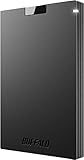
| BUFFALO External SSD 1TB | Cross-platform play with PS5 and PC | $159.99 |
How We Picked
We evaluated each drive against four criteria that matter most for this category: published sequential read speed (since game engines stream assets in large blocks, sustained throughput directly affects level-load times), flash versus mechanical storage (a listing that says “SSD” but ships with a spinning platter is a disqualifier for active play), connector type and protocol compatibility with current motherboards, and real-world price per usable terabyte. Owner feedback from long-term users informed our reliability notes, particularly around sustained-write throttling and cable longevity.
The 8 Best Ssd External Storage Device For Gaming Pc in 2026
Samsung T7 Portable SSD 1TB
The go-to choice for anyone who needs a reliable external drive without overthinking it. USB 3.2 Gen 2 connectivity paired with up to 1,050MB/s reads keeps load times competitive with internal SATA SSDs, and Samsung’s firmware handles thermal throttling gracefully during long sessions.
- Pro: Consistent speed across sessions with minimal thermal drops reported by owners.
- Pro: Aluminum shell dissipates heat and survives backpack knocks without cracking.
- Con: At $241.85 for a single terabyte, the price-per-GB is high compared to the WD P40.
Skip it if your board has Gen 2×2 ports and you want to double your throughput for the same money—the T9 offers that option.
Samsung T9 Portable SSD 1TB
Aimed at owners of motherboards with USB 3.2 Gen 2×2 headers, this drive pushes up to 2,000 MB/s reads—nearly matching internal NVMe performance over an external cable. For large open-world titles with aggressive asset streaming, the difference is noticeable in level transitions.
- Pro: Doubles throughput over the T7 at a nearly identical price point of $239.99.
- Pro: Compact form factor that fits any cable-management setup without strain.
- Con: Requires a Gen 2×2 port to unlock full speed; on Gen 2 or Gen 1 it falls back to the T7’s ceiling, wasting the premium.
Skip it if your motherboard lacks a 20Gbps USB header—you will pay the same as the T7 for no gain.
Western Digital P40 Game Drive SSD 1TB
The cheapest flash-based drive on this list at $174.99, the P40 delivers up to 2,000MB/s reads with RGB lighting that actually adds to a showcase build. It bridges the gap between pure performance and gaming aesthetics without the Samsung price premium.
- Pro: Best price-per-MB/s ratio among SSD options here.
- Pro: Cross-platform compatibility with PlayStation, Xbox, and PC reduces friction if you game on multiple systems.
- Con: The RGB housing makes it bulkier than the T7 or T9, and some owners report software bloat from WD’s bundled dashboard.
Skip it if you prefer a minimalist desk setup or need the absolute smallest form factor for travel.
Samsung T7 Portable SSD 2TB
Same architecture as the 1TB T7, doubled capacity. For a library spanning thirty or more AAA titles, this is the volume-per-connection sweet spot at $382.99—still cheaper per terabyte than buying two 1TB drives with separate cables.
- Pro: Eliminates the need to manage multiple external drives for different game libraries.
- Pro: Proven platform—owner complaints center on price, not reliability or thermal behavior.
- Con: Nearly $383 is the highest absolute cost here, and you still cap out at 1,050MB/s on Gen 2 ports.
Skip it if you have a Gen 2×2 port and want 2TB of NVMe-class speed; no comparable option exists on this list yet, but the T7 2TB still feels fast enough for most genres.
UnionSine 2TB Ultra Slim Portable External Hard Drive HDD
A warning: despite its slim exterior, this is a mechanical hard drive, not a solid-state device. At $133.98 for 2TB the price is tempting, but spinning-platter internals mean sequential reads hover around 120MB/s—well below what any modern game engine expects.
- Pro: Double the capacity of the T7 1TB for roughly half the price, useful for archiving completed games.
- Pro: Slim and light enough to stack alongside a console shelf.
- Con: No flash memory; mechanical failure risk is significantly higher than any SSD here.
Skip it if you intend to install and play AAA titles directly from the drive. Use it only for cold storage or media files.
GODBPNYMU 500GB External Hard Drive
At $34.82 this is the lowest-cost option, but it is a USB 3.0/USB-C mechanical hard drive with 500GB capacity—less than a single modern AAA game. It serves as a last-resort backup for indie libraries or game saves.
- Pro: Nearly free compared to any SSD on this list.
- Pro: Dual USB-A and USB-C connectors offer flexible legacy compatibility.
- Con: Mechanical storage paired with tiny capacity makes it unsuitable for active gaming on any recent title.
Skip it unless your sole need is a throwaway drive for save files or mod backups.
Sandisk 2TB Extreme Portable SSD
The older-model Sandisk Extreme holds up well at $289.99 for 2TB with up to 1,050MB/s reads and a rubberized housing rated for drops and rain. LAN attendees and content creators who tote drives between venues find the ruggedness worth the small price bump over the Samsung T7 2TB.
- Pro: Best-in-class durability rating; survives drops that would crack an aluminum shell.
- Pro: Strong owner-reported reliability over multi-year use without significant speed decay.
- Con: Listed as an old model, meaning firmware and hardware revisions may not match the latest Sandisk architecture or warranty terms.
Skip it if you prioritize having the newest controller or the lowest absolute price per terabyte on a flash drive.
BUFFALO External SSD 1TB
At $159.99, the BUFFALO sits between the WD P40 and Samsung T7 in price while offering USB 3.2 and dual USB-C/USB-A connectors. Its cross-platform certification with PS4 and PS5 makes it a natural pick for hybrid console-and-PC households.
- Pro: Lowest priced flash-based SSD on this list for owners who need console compatibility.
- Pro: Includes both cable types in the box, removing an accessory cost.
- Con: Published speed rating is unspecified beyond the USB 3.2 protocol, leaving it short of the 1,050MB/s ceiling that Samsung and WD advertise.
Skip it if you want the fastest possible loads and your gaming is PC-exclusive; the T7 or P40 deliver more assured throughput.
Buying Guide
Read Speed and Why It Gates Your Game
Game engines stream textures, audio, and geometry from storage during play. A drive reading below 500MB/s will cause visible asset pop-in in titles like Cyberpunk 2077 or Starfield. Anything at or above 1,000MB/s matches what you get from a mid-range internal SATA SSD. If your board exposes USB 3.2 Gen 2×2, a drive rated at 2,000MB/s eliminates the storage bottleneck entirely.
Interface Protocol and Cable Length
Match the drive’s USB generation to your motherboard header. A Gen 2 drive plugged into a Gen 1 port runs at a fraction of its rated speed. Keep external cables under one meter where possible; longer runs degrade signal integrity and can cause disconnects during writes. Dual-connector drives like the BUFFALO and GODBPNYMU reduce adapter needs but do not change the underlying protocol ceiling.
SSD Versus HDD: The Listing Trap
Two drives on this list—UnionSine and GODBPNYMU—are mechanical despite appearing in SSD searches. Check whether the product description says “HDD” or lists rotational speed (5400 RPM or 7200 RPM). A spinning drive will always be slower, louder, and more fragile than flash at any price. For gaming, insist on NAND-based solid-state storage.
Our Verdict
Top pick: Samsung T7 Portable SSD 1TB. Its thermal management, published 1,050MB/s reads, and aluminum construction make it the safest default for any gaming PC regardless of port generation. Budget pick: Western Digital P40 Game Drive SSD 1TB at $174.99 delivers double the rated speed for $67 less. Condition that changes the winner: if your motherboard has a USB 3.2 Gen 2×2 port, the Samsung T9 at $239.99 becomes the best value, because you unlock twice the throughput for a dollar less than the T7.
FAQ
Can I run games directly from an external SSD?
Yes. Modern Windows and Steam handle external library folders transparently, and a USB 3.2 Gen 2 drive at 1,000MB/s or above delivers load times within a few seconds of an internal SATA SSD.
Is USB 3.0 enough for gaming?
USB 3.0 caps at 5Gbps theoretical bandwidth, which limits sustained reads to roughly 400-500MB/s in practice. That is workable for older titles and indies but will cause noticeable asset streaming in current-gen AAA games.
Do I need to format the drive for my console?
PlayStation and Xbox each require the drive to be formatted through the console’s own storage menu before games can be installed or transferred to it. A drive formatted for PC will be readable for media but not for console games until re-formatted.
Will an external SSD slow down over time?
Mild performance decay is normal as NAND cells wear, but quality drives from Samsung, WD, and Sandisk report single-digit percentage degradation over two to three years of typical gaming use. Avoid mechanical drives here, where failure is sudden rather than gradual.


