A dive watch under 500 dollars sits in an odd sweet spot: low enough that you can skip the Swiss luxury brands, high enough that you can demand real water resistance, a proper rotating bezel, and a movement you will not regret in five years. The decision is rarely about depth. Almost nobody takes a watch below a few dozen meters. It is about whether you want a battery-free automatic, a grab-and-go quartz, or a solar-charged workhorse, and how much steel, resin, or titanium you want on your wrist.
This guide is for buyers who want a genuine diver for swimming, snorkeling, boating, or simply daily wear, and who want to understand what the listing numbers mean before committing. The seven watches below are judged only from their stated specs, so use the notes as a checklist against what matters to you in 2026.
Our Top Picks
 Casio Men's Quartz Day-Date Indicator Black Resin DiveAdult0 x 0 x 0 inches0.1 poundsCheck on Amazon



Top 3 picks at a glance

Quick Picks
As an Amazon Associate we earn from qualifying purchases at no extra cost to you.


| Product | Best for | Key spec from the title |
|---|---|---|
| Casio MDV106-1A | Simple, proven daily diver | 200M water resistance |
| Stuhrling Depthmaster Heritage | Dressier diver look | 42mm steel, Swiss quartz, 100M |
| IRONWAY Solar Diver | Deep rating, no battery swaps | 300M/30ATM, solar Japanese quartz |
| HAZARD 4 Heavy Water Diver | Rugged titanium statement | 50mm titanium, tritium, 300M |
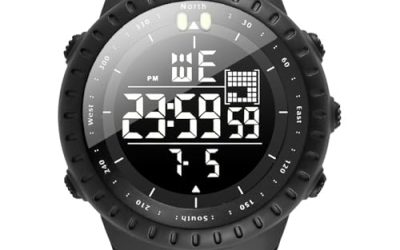
| Casio MRW200H-1B | Lightweight resin beater | Quartz, day-date, black resin |
| UNDONE Aquadeep | Customizable automatic | Automatic movement |
| ADDIESDIVE 8215 Automatic | Mechanical value | 200M, 8215 movement, synthetic sapphire |
How to Choose
Water resistance ratings that actually matter
A 100M rating covers swimming and snorkeling. A 200M rating is the usual minimum for scuba-style marketing, and 300M adds margin for rough use. For real diving, look for a screw-down crown and a unidirectional bezel. Ratings are lab pressure figures, not depth permits, so seals still age and should be re-checked after a few years. If the listing shows only a number of meters and no mention of a screw-down crown, assume the rating is meant for swimming and light water sports, and treat it that way.
Quartz, solar, or automatic
Quartz keeps better time and costs less to service. Solar quartz removes battery changes. Automatics offer a mechanical sweep and a heritage feel but need periodic servicing and can drift by several seconds per day. Pick based on how often you wear the watch and whether you enjoy winding or setting it.
Case size, material, and crystal
Cases from 40mm to 44mm suit most wrists. A 50mm case is a bold choice and will overwhelm smaller wrists. Titanium cuts weight, resin cuts cost, and stainless steel splits the difference. Sapphire resists scratches better than mineral glass, and synthetic sapphire is common at this level.
Lume, bezel, and what to ignore
Good lume lets you read the dial in dim water. Ignore inflated depth claims on watches you will wear in a pool, and ignore decorative skeleton touches that reduce legibility. Budget models cut corners on bracelet clasps and bezel action, so check those details first. A flimsy clasp or a bezel that wobbles is a bigger daily annoyance than a modest depth rating, and neither shows up in a headline spec.
The 7 Best Options
Casio MDV106-1A
This is the classic entry point for anyone who wants a real diver without fuss. The listing states 200M water resistance and a black dial, which is plenty for swimming, snorkeling, and daily wear. It is the pick for buyers who want something reliable that can take a beating and be forgotten on the wrist. Casio has long used this model name for entry-level divers, which means replacement straps and service knowledge are easy to find, and that matters more over a decade of ownership than any single spec on the listing. It also makes a sensible backup for people who already own a pricier mechanical diver and want something to wear on the boat.
- Strength: a 200M rating covers recreational water use.
- Strength: a simple black design pairs with almost anything.
- Trade-off: it uses a standard quartz movement, so there is no solar or mechanical charm.
Skip it if you want a titanium case or an automatic movement.
Stuhrling Depthmaster Heritage Diver
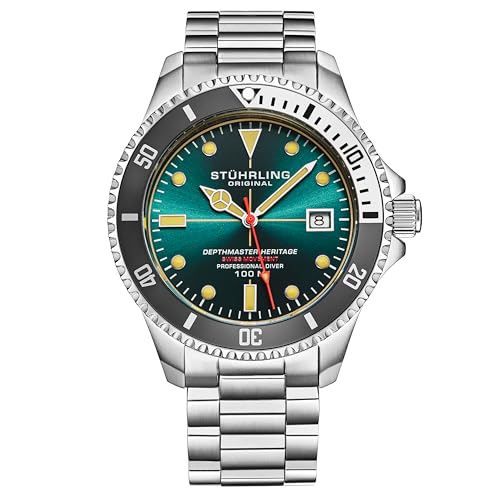
A 42mm stainless steel diver with a teal dial and Swiss quartz. At 100M it is better suited to swimming than serious diving, but the dressier look makes it a good desk-to-pool watch. Buyers who want color without a loud design will like the teal face. The listing also mentions a rugged build, which suggests it is meant for real wear rather than a drawer. A 42mm stainless case slides under a shirt cuff more easily than the bulkier tool watches here, so it works for office days that end at the pool.
- Strength: Swiss quartz accuracy with a stainless steel case.
- Strength: a 42mm size fits most wrists.
- Trade-off: 100M water resistance is the lowest in this group.
Skip it if you plan on boating or snorkeling regularly and want a larger margin.
IRONWAY 300M Solar Dive Watch
A 300M/30ATM rating paired with solar Japanese quartz and a scratch-resistant crystal. The solar feature means no battery swaps, which suits travelers and frequent swimmers who do not want a watch in the repair shop. It combines strong water resistance with low maintenance. The title also calls out a scratch-resistant crystal, which helps a watch that will spend its life knocking against dock rails and car doors. Pairing a deep rating with light-powered timekeeping is a rare combination at this tier, and it is the main reason to consider this model over the quartz-only rivals.
- Strength: the 300M rating is among the highest here.
- Strength: solar charging removes routine battery changes.
- Trade-off: an unfamiliar brand makes long-term parts support harder to judge.
Skip it if you prefer a mechanical movement.
HAZARD 4 Heavy Water Diver
A 50mm titanium case with tritium illumination and a titanium bracelet, rated 300M or 990 feet. It is built for someone who wants a rugged, oversized tool watch that shrugs off knocks and glows without charging. The titanium keeps the weight down despite the size. Tritium tubes are a self-powered light source, so the dial stays readable at night or in murky water even if the watch sat in a drawer for weeks. This is the model for people who want a watch that looks and feels like equipment, not jewelry, and who accept the visual weight that comes with it.
- Strength: titanium case and bracelet reduce weight.
- Strength: tritium lume glows without light exposure.
- Trade-off: 50mm is large and suits bigger wrists only.
Skip it if you have a small wrist or want a slim profile.
Casio MRW200H-1B
A black resin quartz diver with a day-date indicator. It is light, affordable, and tough, aimed at buyers who want a beater watch for the beach, the garden, or the gym. The day-date window adds everyday usefulness. Because resin is forgiving, this is the one to pack for camping, kayaking, or long hikes where a steel case might pick up dings. It also works as a first dive watch for teenagers, since losing it would hurt far less than losing a titanium piece.
- Strength: a resin case is light and shrugs off scratches in daily use.
- Strength: the day-date display is practical.
- Trade-off: resin does not carry the premium feel of steel.
Skip it if you want a heavier, dressier watch.
UNDONE Aquadeep Black
An automatic dive watch from a brand known for customizable designs. The listing is sparse on specs, so buyers should confirm details before purchase. It suits those who want a mechanical movement and a stylish black look. Because the title lacks depth and size details, treat this as a candidate to verify rather than a sure thing: read the full product page for the rating, case diameter, and crystal type before deciding. If those numbers line up with your needs, the automatic movement gives it a character the quartz options cannot match.
- Strength: an automatic movement needs no battery.
- Strength: the black design is easy to dress up or down.
- Trade-off: the title does not state water resistance or case size.
Skip it if you need verified depth numbers on the listing.
ADDIESDIVE 8215 Automatic Diver
A 200M automatic with the 8215 mechanical movement, synthetic sapphire, and super luminous markers. It offers a mechanical feel at a modest tier, and the blue dial stands out. For buyers curious about automatics, it is a low-risk starting point. The super luminous markers help in dark water, and a blue dial photographs well in sunlight. Expect to set the time more often than on a quartz piece, and treat that routine as part of the appeal of owning a mechanical watch.
- Strength: a 200M rating and an automatic movement.
- Strength: synthetic sapphire resists scratches.
- Trade-off: mechanical watches drift more than quartz.
Skip it if you want grab-and-go accuracy.
Which One Fits Your Situation
First real diver, minimal fuss
The Casio MDV106-1A is straightforward, with a 200M rating and no learning curve. It is also the safest option for a gift, since the design is neutral and the quartz movement asks nothing of the wearer.
You are tired of battery changes
The IRONWAY Solar Diver charges from light and carries a 300M rating.
You want a mechanical watch
The ADDIESDIVE 8215 gives a 200M automatic with sapphire, while the UNDONE Aquadeep offers another automatic option.
Big wrist, big personality
The HAZARD 4 Heavy Water Diver has a 50mm titanium case and tritium lume, ideal for outdoor use. Check the strap length before buying, because a titanium bracelet that is too short for a large wrist can be hard to fix.
Common Mistakes
- Treating a 100M rating as permission to dive deep.
- Ignoring wrist size and picking an oversized case.
- Expecting an automatic to be as accurate as quartz.
- Never resealing a watch whose gaskets have aged.
- Operating the crown underwater when it is not screwed down.
Related guides
- Gaming Chair Cushions And Lumbar Supports
- Business Laptops With Long Battery Life
- Travel Backpack With Laptop Compartment
Frequently Asked Questions
Is 200M enough for snorkeling?
Yes. A 200M rating comfortably covers swimming and snorkeling. Serious divers should also look for a screw-down crown and a bezel.
Quartz or automatic for a first dive watch?
Quartz is easier to own because it keeps time accurately with little service. Automatic suits those who enjoy a mechanical movement and accept that it will gain or lose a few seconds each day, which most owners find part of the charm.
Does titanium matter?
It cuts weight, which helps on bigger cases. For smaller cases the benefit is modest. Measure your wrist before ordering: a lug-to-lug span wider than your wrist makes any diver feel awkward, no matter how good the specs read.
How often should the seals be checked?
Every couple of years is sensible, especially if the watch sees regular swimming. A quick pressure test at a local watch shop is usually inexpensive and catches a failing gasket before water gets inside the case.
Related guides
More from Amazon
Programs that pair well with the guide above. Offers and eligibility are set by Amazon and may change.
Free shipping on eligible items, Prime Video and more. Eligible new members can start with a free trial.
Start a Prime free trialAd-free music streaming. Eligible new subscribers can start with a free trial.
Try Music Unlimited freeA Prime membership for ages 18-24 with a trial period. Eligibility is set by Amazon.
See Prime for Young AdultsAudiobooks and podcasts to listen to on the go. Eligible new members can start with a free trial.
Try Audible freeAs an Amazon Associate we earn from qualifying purchases.