A set of car speakers can transform a commute, but “quality” is a slippery word on a spec sheet. Maximum wattage figures are printed in giant type, while the numbers that matter for sound, such as RMS power, impedance, cone material and tweeter design, hide in smaller print. When shoppers search for the best quality car speakers, they are usually trying to escape the thin, muddy sound of the factory paper cones without rewiring the whole car.
This guide is for drivers replacing door speakers in a car or truck, with or without a separate amplifier. We compare nine models for 2026 using only the facts printed in each listing: sizes, power ratings, impedance, driver count and materials. Several of them are midrange or 6×9 drivers rather than full-range coaxial sets, and that difference changes what you need to buy alongside them, so read the how-to-choose section before ordering.
Our Top Picks
 Kenwood KFC-1666S Car Stereo Speaker 6-1/2" 2-Way Speakers6.5 Inches3.6 x 7.6 x 13.5 inches2.8 poundsCheck on Amazon


Top 3 picks at a glance
Quick Picks
As an Amazon Associate we earn from qualifying purchases at no extra cost to you.


| Product | Best for | Key spec from the title |
|---|---|---|
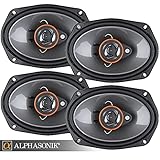
| Alphasonik AS268P | Vehicles with 6×8 door openings | 2 pairs, 6×8, 350W max, 3-way, 4 ohms |
| JVC CS-J620 | Simple coaxial upgrade | 6.5″ 2-way, mica cone woofer, 1″ PEI tweeter |
| JBL GTO629 | Factory-size replacement | 6.5″ 2-way, 360W max power |
| BOSS Audio CH6530 | Tight budgets | 6.5″ 3-way, 300W per pair |
| DS18 PRO-GM6B | Amplified midrange builds | 6.5″ midrange, 140W RMS, 8 ohms |
| Kenwood KFC-1666S | Easy installation | 6-1/2″ 2-way |
| Alphasonik AS265P | Standard 6.5″ openings, two pairs | 2 pairs, 6.5″, 350W max, 3-way |
| DS18 PRO-GM6.4B | 4-ohm amplifier setups | 6.5″ midrange, 140W RMS, 4 ohms |
| DS18 PRO-X694 BM | 6×9 rear deck or door builds | 6×9 midrange, 200W RMS, 4 ohms |
A note on reading the table: the two Alphasonik listings and the two DS18 midrange 6.5-inch listings look almost identical at a glance, and the differences are exactly the details that decide fitment and sound. Size, impedance and whether the driver is full-range or midrange are the three checks to make before anything else, because a wrong guess on any of them means a return rather than an upgrade.
How to Choose
Confirm the size before anything else
Speaker size decides whether a model fits at all. The most common door size is 6.5 inches, while many trucks and older cars use 6×8 or 6×9 openings. Look up your vehicle in a fitment guide or measure the opening, and note the mounting depth too, since a deep magnet can hit a window track. A factory-size replacement, as one JBL listing puts it, saves cutting and adapters.
Read RMS, not the maximum number
Peak or “max” wattage describes a brief burst. RMS describes what the speaker can handle continuously, and it is the figure to match against your head unit or amplifier. A factory stereo usually delivers modest power, so efficient coaxial speakers suit it better. Listings with a printed RMS value, such as 140W or 200W, help you size an amplifier; listings that give only a max or per-pair number leave more guesswork.
Understand coaxial, component and midrange
A coaxial speaker places a tweeter at the center of the woofer and works on its own. A midrange driver, including the DS18 models here, handles the middle of the frequency range and typically needs a separate tweeter and crossover to sound complete. A 3-way coaxial adds a super-tweeter or midrange element, but extra drivers do not guarantee better sound at low budgets. Cone materials such as mica and tweeter materials such as PEI are worth noting because they affect clarity.
Match impedance and avoid cheap shortcuts
Most car stereos and amplifiers are designed for 4 ohms. An 8-ohm driver draws less current and may sound quieter on the same power, so confirm what your amplifier supports. Budget speakers often cut corners with thin surrounds, small magnets and lightweight baskets that resonate at higher volume. Ignore peak wattage claims and focus on size, RMS, impedance and the build materials the listing actually names.
The 9 Best Options
Alphasonik AS268P
The AS268P is a package of two pairs of 6×8 speakers, listed as 3-way with 350W max and 4 ohms. The unusual 6×8 size matches certain trucks and older cars, and four speakers in one box can cover front and rear doors in one go. It aims at buyers who need coverage for the whole vehicle.
- Strength: two pairs in a single purchase cover four doors.
- Strength: 4-ohm rating suits common car stereos.
- Trade-off: only a max wattage is listed, with no RMS figure to size an amplifier.
Skip it if your doors take 6.5-inch speakers or if you want a published continuous power rating.
JVC CS-J620
The CS-J620 is a 6.5-inch 2-way coaxial set with a mica cone woofer, a 1-inch PEI tweeter and a hybrid surround. Those material callouts are the kind of detail that signals thought about sound rather than headline wattage. The listing rates it at 300W and promotes easy installation for a drop-in swap.
- Strength: mica cone and PEI tweeter are named materials that point to a clearer sound than plain paper.
- Strength: coaxial design works straight from a factory stereo.
- Trade-off: 6.5-inch only, so odd-size openings are out.
Skip it if you want to run separate components or need a 6×9 fit.
JBL GTO629
The GTO629 comes from the Grand Touring series, a 6.5-inch 2-way pair with 360 watts max power and a factory-sized replacement fit. The pitch is a familiar-brand upgrade that bolts into existing door openings without hacking. It suits drivers who want recognized name and a straightforward swap.
- Strength: factory-sized fit keeps installation simple.
- Strength: 2-way coaxial layout works with stock head units.
- Trade-off: the title lists only the max rating, so continuous power needs a look at the full spec sheet.
Skip it if your vehicle uses 6×8 or 6×9 openings.
BOSS Audio Systems CH6530
The CH6530 is a 6.5-inch 3-way set rated at 300 watts per pair, positioned as the entry price option. Three-way designs add a third driver in the center, and buyers on small budgets often choose them for the extra high-frequency element. It is a basic upgrade over worn factory cones.
- Strength: 3-way layout adds an extra driver at a low tier.
- Strength: a standard 6.5-inch size fits many doors.
- Trade-off: the listing offers little detail on materials or RMS power, so quality is hard to judge from the title.
Skip it if sound refinement matters more than lowest cost.
DS18 PRO-GM6B
The PRO-GM6B is a 6.5-inch midrange loudspeaker with a red aluminum bullet, 480W max, 140W RMS and 8 ohms. It is a pro-audio style driver meant for builds with an amplifier and separate high-frequency drivers. The 140W RMS rating is useful for sizing power.
- Strength: both max and RMS ratings are published.
- Strength: aluminum bullet design suits loud, amplified builds.
- Trade-off: 8 ohms and midrange duty mean you need an amplifier and tweeters to get a full sound.
Skip it if you want a plug-and-play replacement for a factory stereo.
Kenwood KFC-1666S
The KFC-1666S is a 6-1/2 inch 2-way speaker with an easy installation message and the weight of a well-known audio brand. It is the plain option for drivers who just want a clean swap with no extra parts or tuning. The title keeps its claims modest, which is itself a sign of a mainstream product.
- Strength: 2-way coaxial design with a simple installation path.
- Strength: established brand with broad retail presence.
- Trade-off: the title gives no power or impedance numbers, so check the spec sheet against your stereo.
Skip it if you plan an amplifier build that demands RMS figures upfront.
Alphasonik AS265P
The AS265P mirrors the AS268P in format but uses 6.5-inch openings. Two pairs come in the box, rated 350W max, 3-way and 4 ohms. For a car with four standard door positions, it covers each location in one order.
- Strength: four speakers in one package for front and rear doors.
- Strength: 6.5-inch size is the most widely used.
- Trade-off: no RMS value is listed, so amplifier matching is guesswork.
Skip it if you only need two speakers or want published continuous power.
DS18 PRO-GM6.4B
The PRO-GM6.4B is the 4-ohm sibling of the GM6B, with the same 6.5-inch midrange format, 480W max and 140W RMS. Four ohms is what most car amplifiers and head units expect, so this version is often the easier match. Like its sibling, it works best with tweeters added to complete the range.
- Strength: 4-ohm rating suits typical car amplifiers.
- Strength: RMS rating is published for amplifier planning.
- Trade-off: it is a midrange driver, so highs need separate tweeters.
Skip it if you want a single-box, full-range solution.
DS18 PRO-X694 BM
The PRO-X694 BM is a 6×9 midrange speaker rated at 400W max, 200W RMS and 4 ohms. The oval 6×9 format fits rear decks in many sedans and certain door cutouts. It carries the highest RMS figure in this group, aimed at louder amplified systems.
- Strength: 200W RMS gives the most headroom in this roundup.
- Strength: 4-ohm rating is easy to pair with common amplifiers.
- Trade-off: 6×9 midrange duty needs an amplifier and tweeters for a complete sound.
Skip it if your car has only 6.5-inch openings or you run a factory stereo.
Which One Fits Your Situation
You are keeping the factory stereo
Go with the JVC CS-J620 or the Kenwood KFC-1666S. Both are coaxial pairs designed to run from stock power, and the JVC lists specific cone and tweeter materials.
You drive a truck with 6×8 doors
The Alphasonik AS268P is the listing that names the size and gives you two pairs. Measure first, since 6×8 and 6×9 are not interchangeable.
You want a brand-name bolt-in swap
The JBL GTO629 is sold as a factory-sized replacement, which suits a quick Saturday install with no cutting.
You are building an amplified system
Look at the DS18 PRO-GM6.4B for 6.5-inch doors or the PRO-X694 BM for 6×9 positions. Budget for an amplifier and tweeters, and size the amplifier to the printed RMS rating.
Common Mistakes
- Shopping by the biggest wattage number instead of RMS and impedance.
- Ordering the wrong size, such as 6×8 for a 6×9 opening, without measuring depth and diameter.
- Buying midrange drivers and expecting full-range sound without tweeters and a crossover.
- Driving 8-ohm speakers from an amplifier or stereo built for 4 ohms and wondering why they sound quiet.
- Skipping sound-deadening or gasket rings in the door, which leaves rattles that no speaker can fix.
Related guides
- Gaming Chair Cushions And Lumbar Supports
- Business Laptops With Long Battery Life
- Travel Backpack With Laptop Compartment
Frequently Asked Questions
Do I need an amplifier for new car speakers?
Not for efficient coaxial speakers, which run fine from a factory stereo. Midrange and high-RMS drivers like the DS18 models are built for amplifier power.
What does 3-way mean?
A 3-way speaker adds a third driver, usually a super-tweeter or midrange element, to the woofer and tweeter. More drivers can widen the range, but build quality still decides the sound.
Is RMS or max power more useful?
RMS is the more useful number because it describes continuous power. Max or peak power is a short-burst rating and rarely reflects day-to-day use.
Can I mix speaker brands in one car?
You can, but matching front and rear speakers keeps the tonal balance even. If you mix, keep sizes and impedance compatible with your amplifier.
Related guides
More from Amazon
Programs that pair well with the guide above. Offers and eligibility are set by Amazon and may change.
Free shipping on eligible items, Prime Video and more. Eligible new members can start with a free trial.
Start a Prime free trialAd-free music streaming. Eligible new subscribers can start with a free trial.
Try Music Unlimited freeA Prime membership for ages 18-24 with a trial period. Eligibility is set by Amazon.
See Prime for Young AdultsAudiobooks and podcasts to listen to on the go. Eligible new members can start with a free trial.
Try Audible freeAs an Amazon Associate we earn from qualifying purchases.