
Owning an in-ground pool means a permanent war against leaves, sand, insects, and the slow green creep of algae. You either spend hours each week skimming, brushing, and vacuuming by hand, or you invest in one of the polaris pool cleaners that does the job on autopilot. The difference between a mediocre day and a clean pool often comes down to whether the unit actually reaches every corner of the basin and whether it clogs on the first gusty autumn weekend.
Across the Polaris lineup, the gap between good and mediocre is defined by a handful of practical factors: the type of power source your pool can support, the navigation pattern the cleaner follows, and how much ongoing maintenance the unit demands from you. We compared published specifications, current pricing, and owner feedback on each model below to separate the genuine workhorses from the ones that will leave you frustrated.
As an Amazon Associate we earn from qualifying purchases at no extra cost to you. Product prices and availability are accurate as of the date shown and are subject to change.



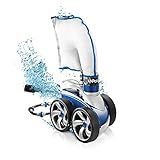

Top 3 picks at a glance
Quick Picks
| Product | Best for | Price |
|---|---|---|
| Vac-Sweep 280 | Traditional pressure-side reliability | $599 |
| MAXX | Pool owners without a booster pump | $599 |
| Vac-Sweep 360 | Budget-conscious pressure-side buyers | $574 |
| PCX 868 iQ | Smart robotic with app control | $1149 |
| Freedom Plus | Large pools needing cordless freedom | $1399 |
| 9550 Sport | Robotic performance without a premium price | $988.77 |
| Vac-Sweep 3900 Sport | Upgraded pressure-side wall climbing | $899.99 |
| VRXIQ+ | The complete smart-cleaning package | $1499 |
How We Picked
Four criteria carried the most weight across this comparison. First, power source compatibility: pressure-side units need a booster pump or sufficient return-line pressure, suction-side models tie into your skimmer or main drain, and robotic cleaners simply plug into an outlet. Second, navigation quality: units with programmable or intelligent pathing clean faster and more thoroughly than random-bounce designs. Third, maintenance burden: filter bags versus canisters versus internal cartridges each carry different long-term effort. Fourth, value relative to the asking price, weighed against real-world durability reported by owners over multiple seasons.
The 8 Best Polaris Pool Cleaners in 2026
Polaris Vac-Sweep 280 Pressure-Side In-ground Pool Cleaner
For pool owners who already have a booster pump installed, the Vac-Sweep 280 remains a proven workhorse. Its three-wheel design and pressure-side mechanism deliver consistent wall climbing and floor coverage without relying on electrical power beyond your pool pump. Owners praise its durability and straightforward parts availability. The twin-engine turbine provides strong vacuum action on textured plaster and vinyl surfaces. Its main drawback is the need for a booster pump, which adds upfront cost if your setup does not include one. Skip this model if your pool lacks a pressure return line strong enough to drive it, or if you prefer the simplicity of a plug-and-play robotic unit.
Polaris MAXX Premium Suction-Side Automatic Pool Cleaner
The MAXX is built for pool owners who want automated cleaning without a booster pump or a robot. It draws suction directly from your skimmer or dedicated main drain line, making installation a matter of adjusting a flow regulator and dropping the unit in. Its programmable clean cycles and smart navigation let you tailor run times to your pool’s debris load. Owners note its effectiveness on fine silt and small particles. One common complaint is that it can lose suction on larger leaves unless you keep the skimmer basket clear. Skip the MAXX if your existing filtration system struggles with additional suction demand or if you prefer a self-contained filter bag.
Polaris Vac-Sweep 360 Pressure-Side Cleaner for In-Ground Pools
At $574, the Vac-Sweep 360 is the most affordable pressure-side option in this lineup and handles floors and walls competently. Its patented Vortex vacuum sweeps debris into a large-capacity bag, and the three-wheel drive navigates most rectangular and freeform shapes reliably. It runs on pool pump pressure alone, so no booster pump is required. Owners appreciate the low operating cost and quiet performance. The tradeoff is slower floor coverage compared to higher-end robotic models. Skip it if you need to clean steps or waterlines automatically, or if you want smart scheduling and app control.
Polaris PCX 868 iQ Smart Robotic Pool Cleaner
The PCX 868 iQ brings app-based scheduling and intelligent navigation into the mid-range robotic segment. It connects to the iAquaLink platform, letting you start, stop, and monitor cycles from a phone. The PowerClean system scrubs tile and vinyl surfaces, and the smart navigation maps your pool to avoid redundant passes. Owners report strong pickup on sand and algae. Its single top-mounted filter cartridge means you rinse it weekly. Skip it if your pool has complex steps or ledges where its turning radius can leave small uncleaned strips near the waterline.
Polaris Freedom Plus Cordless Robotic Pool Cleaner for In-Ground Pools
The Freedom Plus is the cordless answer for anyone tired of routing a floating cable across the deck. It runs on an internal battery, meaning no tether, no tangling, and no cable wear. Its PowerWave mobility system handles walls and waterlines without assistance. Owners value the setup freedom, especially on pools where an outlet sits far from the water’s edge. The battery does require recharging between runs, and run time on larger pools may demand a second cycle. Skip this one if you have a very large pool and want single-cycle whole-pool coverage, or if you prefer the guaranteed uptime of a wired robotic.
Polaris 9550 Sport Robotic Pool Cleaner, Automatic Vacuum
The 9550 Sport sits at a compelling price point for what it delivers. It is a fully self-contained robotic with its own filter, scrubbers, and active brush that agitates debris before the vacuum intake captures it. Owners consistently rate its floor and wall cleaning as thorough on in-ground pools. The setup is essentially plug-in-and-go with no pump adjustments needed. Its cable management is reliable but still a floating cable you must store between runs. Skip it if you want smart app integration or cordless operation, since the 9550 Sport is a capable standalone without those conveniences.
Polaris Vac-Sweep 3900 Sport Pressure Side Pool Cleaner
The 3900 Sport upgrades the pressure-side formula with a tripod drive and an all-wheel steering mechanism that covers floor, walls, and steps more systematically than the 360. It uses your pool pump pressure and includes a leaf canister to handle larger debris without constant emptying. Owners note it climbs walls aggressively and handles textured surfaces well. The unit is noticeably heavier than the 360, making removal for winter storage a two-handed task. Skip it if your pump is undersized or if your pool lacks the return-line pressure to drive it effectively.
Polaris VRXIQ+ Smart Robotic Pool Cleaner with iAquaLink Control
At $1499, the VRXIQ+ is the flagship of this comparison. It combines PowerClean active brushing, cyclonic suction, smart navigation with 360-degree sensing, and iAquaLink app control in a single package. Owners describe it as the most comprehensive Polaris robot available, cleaning floors, walls, steps, and waterline tile with minimal user input. The dual cartridge filter system separates fine and coarse debris, and the mobile app lets you schedule cycles by day. Its price is the primary barrier. Skip it if you do not need app control or already have a pressure-side pump configured, since cheaper options cover basic cleaning adequately.
Buying Guide
Match the Cleaner to Your Power Source
Pressure-side cleaners like the 280, 360, and 3900 Sport require either a booster pump or robust return-line pressure. Robotic units like the VRXIQ+ and 9550 Sport only need a nearby GFCI outlet. Suction-side models like the MAXX tie into your existing skimmer and reduce flow to other returns. Before choosing any polaris pool cleaner, confirm which infrastructure your pool already has, because adding a booster pump or electrical outlet changes the true cost significantly.
Understand Filter Capacity and Maintenance
Robotic cleaners carry their own filter, which you rinse weekly or after heavy debris events. Pressure-side models use large leaf bags that are easy to empty but can harbor mold if left wet. Suction-side units send debris to your pool’s skimmer or pump basket, meaning more frequent basket cleaning but fewer separate parts to maintain. If you dislike weekly manual tasks, a robotic with a top-access filter cartridge saves time over the long run.
Navigation and Coverage on Complex Pools
Rectangular pools with flat floors are straightforward for any cleaner. Freeform pools with steps, shelves, and curved walls punish random-bounce designs. Smart navigation systems on the VRXIQ+ and PCX 868 iQ map the pool and plan passes, while pressure-side tripod drives like the 3900 Sport handle steps mechanically. If your pool has more than one step level or ledges below the waterline, prioritize models with programmable paths or aggressive climbing over basic floor-only sweepers.
Our Verdict
Our top pick is the Polaris VRXIQ+ Smart Robotic Pool Cleaner. It covers every surface a pool can present, handles maintenance with minimal input, and the iAquaLink integration means you never think about the cleaner until you want to. For a budget pick, the Vac-Sweep 360 at $574 delivers reliable pressure-side cleaning on most in-ground pools without a booster pump requirement. That said, if your pool already has a booster pump installed, the Vac-Sweep 3900 Sport at $899.99 is the smarter buy because it turns that existing infrastructure into superior step and wall coverage without the premium of a robotic.
FAQ
Do I need a booster pump for a pressure-side Polaris?
Most pressure-side models from Polaris, including the 280 and 3900 Sport, require either a dedicated booster pump or a return-line pressure source sufficient to drive the cleaner’s internal turbine. Check your pool’s plumbing before purchasing to confirm you have the required pressure, or choose a suction-side or robotic model instead.
How long does a robotic Polaris cleaner run per cycle?
Most robotic Polaris models default to a 90-minute to 2-hour clean cycle, which is sufficient for standard residential in-ground pools. The PCX 868 iQ and VRXIQ+ let you set custom durations through the iAquaLink app, so you can shorten or extend cycles based on your pool size and debris level.
Can a suction-side cleaner handle large leaves and acorns?
Suction-side models like the MAXX perform best on fine debris such as pollen, sand, and small twigs. Large leaves can clog the hose or overwhelm the skimmer basket. If your pool sits under trees that drop broad leaves or acorns, a pressure-side or robotic model with a dedicated debris bag or canister will save you frustration.
What is the typical lifespan of a Polaris pool cleaner?
Owners commonly report five to eight seasons of use on well-maintained units. Pressure-side models with replaceable wear parts tend to last the longest. Robotic units can develop battery or motor issues earlier, especially if stored improperly during winter. Regular rinsing of filters and checking hoses for wear extends life on any model.


