
Walk into any PC-building conversation and the 16 GB versus 32 GB debate comes up within minutes. It is tempting to treat it like a specs battle, but what you are really deciding is this: do you want the cheapest build that plays today’s games well, or do you want headroom for the games, browser tabs, streaming apps, and background software you will actually be running two or three years from now? RAM is one of the easier upgrades to plan for, since a standard desktop DDR4 kit of 16 GB (two 8 GB sticks) currently runs about $125–$130, while doubling to 32 GB typically adds another $60–$130 depending on speed and brand. This guide breaks down where each amount of memory wins, what it costs over five years, and which choice fits your home and the way you use your computer.
Top 3 picks at a glance


Quick Verdict
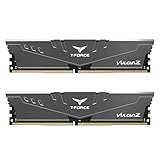
For most gamers in 2026, 16 GB is still the sweet spot for pure gaming at 1080p and 1440p, and modern dual-channel 16 GB kits like the Silicon Power Value Gaming DDR4 16GB (2x8GB) 3200MHz CL16 kit or the TEAMGROUP T-Force Vulcan Z 16GB kit deliver smooth frame rates for well under $130. Choose 32 GB if you stream, edit video, run virtual machines, or play heavily modded titles — the second 16 GB usually costs less than the hassle of a mid-cycle upgrade. If your motherboard has only two DIMM slots, decide now, because replacing 16 GB with 32 GB later means selling or shelving the original sticks.
As an Amazon Associate we earn from qualifying purchases at no extra cost to you. Product prices and availability are accurate as of the date shown and are subject to change.

Side by Side
| Factor | 16 GB | 32 GB |
|---|---|---|
| Comfort in everyday gaming | Handles nearly all modern titles at 1080p–1440p without stutter | Effortless headroom; games never come close to the limit |
| Comfort with multitasking | Fine with a game plus a browser; tighter with Discord, Spotify, and 20+ tabs | Game, stream, chat apps, and heavy browsing coexist easily |
| Durability and longevity | Comfortable for 2–3 more years before newer titles may push past it | Should stay relevant for the life of a typical 5-year build |
| Price range | Approximately $125–$140 for 2×8 GB DDR4-3200 CL16 kits | Approximately $190–$260 for 2×16 GB DDR4-3200 CL16 kits |
| Maintenance | None beyond dusting; low-profile sticks (around 1.2–1.6 inches tall) fit under most coolers | Same; heatspreaders add a few grams, no ongoing care needed |
| Space needed | Two DIMM slots, leaving room in a four-slot board to expand | Two slots with 16 GB sticks, or all four slots with 8 GB sticks |
| Look | Kits like the T-Force Vulcan Z offer clean grey heatsinks; RGB versions cost slightly more | Four-stick setups fill the board and look fuller in windowed cases |
| Resale value | Modest; used 16 GB kits sell for roughly 40–60% of retail | Modestly better; 32 GB holds appeal as games demand more memory |
| Power draw | Around 3–6 W per kit | Around 6–12 W total — negligible on most systems |
| Best for | Budget builds, students, pure gamers | Streamers, creators, modders, long-term keeps |
Where 32 GB Wins
Streaming is the clearest case. OBS or Streamlabs encoding, a game, and a chat overlay can push combined usage past 16 GB, and once RAM fills, Windows swaps to your much slower storage drive and frame times suffer. Video editing and 3D work benefit even more — a 4K timeline in DaVinci Resolve or Premiere can comfortably consume 12–20 GB on its own, so a gaming-plus-editing machine genuinely needs 32 GB to avoid constant cache thrashing.
Heavy modding is another winner. Modded Skyrim or Fallout installs, city builders with asset packs, and simulator titles like Microsoft Flight Simulator load enormous texture sets into memory. Simulation and strategy games with large maps (Factorio megabases, late-game Stellaris) also scale their memory use with your empire’s size. Finally, 32 GB removes upgrade friction entirely: you buy once, populate two slots with 2×16 GB, keep two slots free, and never think about it again for the life of the build. If your rig doubles as a home office machine running virtual machines, Docker containers, or dozens of Excel workbooks alongside games, the extra capacity pays for itself in avoided frustration.
Where 16 GB Ram for Gaming Wins
Pure performance per dollar is the argument. For roughly $125–$130 — the street price of kits like the Silicon Power Value Gaming DDR4 16GB (2x8GB) 3200MHz or the TEAMGROUP T-Force Vulcan Z DDR4 16GB kit, both running CL16 timings at 1.35V — you get memory that keeps modern GPUs and CPUs fed in virtually every game released to date. Frames-per-second benchmarks between 16 GB and 32 GB systems with identical components are usually within a percent or two of each other, because games rarely need more than 12–14 GB today.
That money saved is better spent almost anywhere else in a budget build. Shifting $70–$100 from RAM to your graphics card or SSD produces a far more noticeable improvement in load times and image quality. 16 GB also keeps builds simpler: two sticks means two slots, easy clearance under tower air coolers, and less memory for the motherboard to train at high speeds. And for a first PC for a teenager, a dorm build, or a secondary gaming machine, 16 GB matched to realistic usage is simply the rational choice.
Cost Over 5 Years
Assume a mid-range desktop kept for five years. A 16 GB DDR4-3200 kit costs about $128–$130 today. If game requirements creep upward, upgrading at year two or three means buying a 32 GB set — roughly $190–$260 — and the original sticks either get resold for $50–$70 or sit in a drawer. Realistic five-year spend: $190–$260, with the hassle of an upgrade in the middle.
Buying 32 GB up front costs about $190–$260 once, with no upgrade labor, no compatibility worries, and no resale losses. RAM also sips power — roughly 3–6 W per 16 GB kit, or under $10 of electricity over five years either way — so operating costs are effectively a wash. The up-front 32 GB route usually ends up $0–$60 cheaper over five years and saves an afternoon of tinkering. The 16 GB route only wins financially if you never upgrade, which is plausible for a dedicated gaming-only machine.
Which One for Your Home
Memory choice does not depend on square footage, but how a household shares and uses a computer absolutely changes the math.
Small Apartment
One machine does everything: gaming at night, work during the day, maybe light content creation. A single 32 GB kit (2×16 GB, around $190–$260) avoids compromise when the same tower runs spreadsheets at noon and shooters at midnight. If budget is tight, start with a $130 16 GB kit and confirm your board has two free slots before committing.
Family with Kids or Pets
Shared or kid-adjacent computers accumulate background chaos — game launchers, school software, forty Chrome tabs. That is exactly the environment where 16 GB struggles and 32 GB quietly absorbs everything. Also favor kits with heatspreaders, like the grey Vulcan Z or Silicon Power Value sticks, for a bit of thermal margin in cramped, dust-prone cases, and keep the case where paws and juice boxes cannot reach it.
Rental
If you move often or game on a machine you may sell within two years, 16 GB is the smarter play. Cheap, fast, easy to resell, and adequate for every game in that window. Renters also often use compact cases and smaller motherboards with only two RAM slots — another reason to buy exactly what you need rather than planning an expansion that may never fit.
Long-Term Home
A desktop meant to last five or more years justifies 32 GB from day one. Game memory requirements have climbed steadily, and a build you will not open up again should be speced for where requirements are heading, not where they are. Populate two slots with 16 GB sticks, leave the other two empty, and you retain a clean path to 64 GB if your needs ever become serious creative work.
FAQ
Will 32 GB give me more FPS than 16 GB?
Rarely. With identical components, the difference in most games is a frame or two at most. Extra capacity prevents stutters when RAM runs out — it does not make a GPU render faster. Spend on the graphics card first if raw FPS is the goal.
Is 2×8 GB or 1×16 GB better for 16 GB?
Two 8 GB sticks enable dual-channel mode, which can improve performance noticeably in CPU-bound scenarios. All the mainstream kits mentioned here, including the Silicon Power and TEAMGROUP 2×8 GB sets, are dual-channel. A single stick is only preferable when you plan to add a second identical stick later.
Does RAM speed matter as much as capacity?
For gaming, capacity comes first, speed second. DDR4-3200 CL16 is the value standard; going faster yields low single-digit gains in most titles. Do not buy 3600 MHz RAM if it means dropping from 32 GB to 16 GB on a machine that needs the capacity.
Can I mix a 16 GB kit with another 16 GB kit later?
Often, but not guaranteed. Mixing kits from different batches or brands can cause instability even at identical rated speeds. If you plan to upgrade by adding sticks, buy the same model in the same capacity, or simply buy a matched 32 GB kit up front — which is why most builders who anticipate needing 32 GB start there.


