
Top 3 picks at a glance
The Short Answer
Most modern mid-tower cases comfortably accept graphics cards between 10.5 and 12.5 inches (267–318 mm) long. If you want a single rule of thumb: measure the distance from the rear of your PCIe slot bracket to the first obstruction inside the case — usually the front fan mount, a drive cage, or a cable shroud — then subtract about 0.4 inches (10 mm) for airflow clearance. Cards like the RTX 4060 (roughly 9.4 inches / 240 mm) fit nearly everywhere, while triple-fan flagships such as the RTX 4090 at 13.7 inches (348 mm) or longer demand full-tower or generously sized mid-tower enclosures. Always check two numbers before buying: the manufacturer’s stated card length and your case’s maximum GPU clearance. When those two numbers overlap with room to spare, you are safe.
Standard Sizes
Graphics cards cluster into a few predictable size bands, and so do the cases built to hold them. Use the table below as a quick cross-reference before you measure anything.
As an Amazon Associate we earn from qualifying purchases at no extra cost to you. Product prices and availability are accurate as of the date shown and are subject to change.


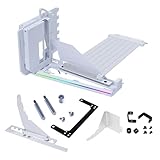
| Card Class | Typical Length (in / cm) | Typical Width (Slots) | Typical Weight | Case That Fits |
|---|---|---|---|---|
| Compact / single-fan (e.g., RTX 4060 low-profile) | 6.7–8.3 in / 170–210 mm | 2 slots | 1–1.5 lb / 450–700 g | Mini-ITX and small SFF cases |
| Dual-fan mid-range (e.g., RTX 4060 Ti, RX 7600) | 8.7–10.6 in / 220–270 mm | 2–2.5 slots | 1.8–2.4 lb / 800–1,100 g | Micro-ATX and compact mid-tower |
| Triple-fan performance (e.g., RTX 4070 Ti, 4080 Super) | 11.4–12.9 in / 290–328 mm | 2.5–3 slots | 2.6–3.5 lb / 1,200–1,600 g | Standard mid-tower or larger |
| Flagship (e.g., RTX 4090) | 13.1–14.4 in / 333–366 mm | 3–4 slots | 4.4–5.5 lb / 2,000–2,500 g | Large mid-tower or full tower |
Note that width matters as much as length. A card listed as “3.5 slots” can overhang the PCIe slots below it, blocking access for riser cables and vertical mounts. Popular 4-slot vertical GPU kits, such as riser-based brackets in the $70–90 range, require roughly 2.8 inches (70 mm) of lateral clearance inside the case — check that your side panel and case width support it before ordering.
How to Measure Your Space
- Power down and unplug. Lay the case on its side on a stable surface so you can see and reach the interior safely.
- Locate the PCIe x16 slot. This is where the card’s bracket seats against the rear panel. The usable length starts at the bracket.
- Find the first obstruction. Look toward the front of the case. Common blockers: front intake fans, a radiator, 2.5-inch drive cages, the PSU shroud edge, or routed cables.
- Measure bracket-to-obstruction. Use a rigid tape measure or ruler. Measure in millimeters if possible — most manufacturers list card length in mm.
- Subtract 10 mm (0.4 in) for airflow. Cards pressed flush against a fan wall run hotter and louder. This buffer also accounts for power cable overhang, which can add 0.8–1.2 inches (20–30 mm) to a card’s effective footprint at the connector end.
- Check vertical clearance. Measure from the top PCIe slot’s surface to the case’s cable-management gutter or top panel. Cards 3 slots or thicker need 2.4–3.1 inches (60–80 mm) here.
- Compare against the spec sheet. Every card maker publishes exact dimensions on the product page. Match your measurement against the stated length, not a marketing nickname like “compact” or “OC.”
One extra tip: sagging is a length problem, too. Cards over 12 inches (305 mm) and 3 pounds (1.4 kg) put real stress on the PCIe slot. Plan for an anti-sag bracket, which most modern card makers include in the box, or budget $8–15 for an adjustable support arm.
By Room or Use Case
Desk-Built Gaming PC (Mid-Tower Under or Beside the Desk)
This is the most common setup, and most mid-towers released in the last several years offer 13–14 inches (330–355 mm) of GPU clearance. That covers everything from an RTX 4070 Super up to most 4090 models, though triple-slot 4090 variants at 4+ pounds deserve a case rated for 14.4 inches (366 mm) or more. Expect to pay $90–160 for a case in this clearance class.
Small Form Factor (SFF) and ITX Builds
SFF cases typically cap out at 8.7–12 inches (220–305 mm), and many fall well below that. If you are building in a compact enclosure, short dual-fan cards in the 9.5–11 inch (240–280 mm) range are the sweet spot, paired with an SFX power supply to free up interior space. Check thickness limits too — many SFF designs only accept 2–2.5 slot cards.
Lan-Party and Travel Rigs
If you haul your build to tournaments or friend’s houses, card protection matters as much as fit. Hard-shell carrying cases sized around 14.2 x 6.3 x 2 inches (36 x 16 x 5 cm) hold flagship-length cards like the 4090 snugly, with foam lining to guard against scratches and drops. These run $14–25, weigh about a pound empty, and are a smart buy if your card cost $600 or more — cheaper than replacing a cracked fan shroud.
Showcase and Vertical-Mount Builds
Vertical mounting trades clearance for looks. A 4-slot vertical GPU kit with a PCIe 5.0 riser (typically $60–90) moves the card parallel to the side panel, but you must confirm your case has room between the motherboard tray and the glass: 2.8 inches (70 mm) minimum for a triple-fan card, more for thicker models. Poor vertical clearance causes the card to press against tempered glass, choking airflow and raising temperatures noticeably.
Common Sizing Mistakes
- Ignoring power connector overhang. A 12VHPWR or 8-pin connector sitting flush against the card’s edge adds up to 1.2 inches (30 mm) of effective length once the cable bends. Measure to the connector, not just the shroud.
- Trusting card “series” labels. A “4070” is not one size — partner models range from 10.6 to 12.5 inches (270–318 mm). Always look up the specific board partner model.
- Forgetting the front radiator. Adding a 360 mm AIO to the front of a case can cut GPU clearance by 1.5–2 inches (38–51 mm). Plan the whole build together, not piece by piece.
- Overlooking slot thickness. A 4-slot card in a case with five expansion slots leaves no room for a capture card or sound card below it.
- Buying a case on clearance alone. Cases rated for 14 inches of GPU length but only 6.3 inches of CPU cooler clearance or a cramped PSU bay create other headaches. Match all the numbers.
- Skipping the airflow buffer. A card that technically fits but sits 2 mm from the fan wall will run several degrees hotter and measurably louder under load.
FAQ
Will a 13-inch GPU fit in my mid-tower case?
Almost certainly, if the case was sold within the last several years — most current mid-towers list 330–355 mm (13–14 inches) of clearance. Verify on the manufacturer’s spec page, and remember to reserve about 0.4 inches (10 mm) for airflow plus any power-cable overhang.
How do I know if my GPU is too heavy for the slot?
Cards over roughly 3 pounds (1.4 kg) or 12 inches (305 mm) long benefit from support. Look for visible drooping of the rear edge — a sure sign. Adjustable anti-sag arms cost $8–15, and many premium cards now include a bracket in the box, so check your accessories before buying one.
Does a vertical GPU mount change how long a card can be?
Length matters less, but lateral space matters more. A 4-slot riser kit pushes the card toward the side panel, so you need about 2.8 inches (70 mm) between the motherboard and glass for a triple-fan card. Thicker or longer cards can end up touching the panel, so measure before committing.
What if my case clearance is slightly less than the card length?
Options, in order of preference: choose a shorter partner model of the same GPU chip (dual-fan versions are often 1.5–2 inches shorter), remove the front drive cage if your case allows it, or upgrade the case. Never force a card into a tight spot — you risk cracking the shroud, stressing the slot, and starving the fans of air.


