
If you have been staring at your 1440p monitor wondering why every game and every editing timeline stutters, you are not alone. The used and refurbished GPU market has become the smart shopper’s secret weapon, and it is especially attractive if your entire budget sits under $300. The catch is that “refurbished” covers everything from workstation pull-outs to recertified budget cards, and the difference between a great buy and a doorstop is bigger than ever.
We spent weeks digging through listings, checking VRAM capacities, bus widths, power draws, and physical dimensions so you do not have to gamble on a card that will not fit your SFF case or light up your old 300W power supply. The list below spans true entry-level cards that double as display outputs for multi-monitor desks up to a 12GB workstation powerhouse. Pick based on what your rig actually needs, not just the biggest number on the box.
As an Amazon Associate we earn from qualifying purchases at no extra cost to you. Product prices and availability are accurate as of the date shown and are subject to change.




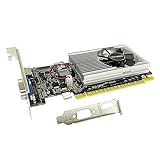

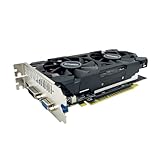

Top 3 picks at a glance
Quick Picks
| Product | Best for | Price |
|---|---|---|
| Dell AMD Radeon R5 240 1GB DDR3 (Renewed) | Dirt-cheap display output for a dead GPU | $15.99 |
| ARDIYES GT 740 4GB GDDR5 Low Profile | Quad-monitor workstations | $79.99 |
| MSI Gaming GeForce GT 1030 4GB DDR4 OC | Compact 1080p/entry builds with modern ports | $119.99 |
| QTHREE GeForce GT 730 4GB DDR3 | SFF office PCs on Windows 11 | $89.99 |
| QTHREE GeForce GT 210 1GB DDR3 | Legacy systems and basic HTPCs | $37.99 |
| NVIDIA Quadro K6000 12GB GDDR5 (Renewed) | Workstation and creative workloads under $300 | $299 |
| QTHREE GeForce GTX 750 4GB GDDR5 128-bit | The best gaming value on this list | $86.99 |
| Glorto GeForce GT 730 4G Low Profile | Home theater and dual-HDMI setups | $89.99 |
How We Picked
We filtered hundreds of renewed and refurbished listings against four practical criteria. First, price: every card here lands between $15.99 and $299, so the full list fits your $300 ceiling with room to spare. Second, VRAM and bus width, because 1GB of DDR3 on a 64-bit bus behaves very differently from 4GB of GDDR5 on a 128-bit bus. Third, physical fit and power: we noted low-profile brackets, single-slot designs, and cards that draw all their power from the PCIe slot, which matters enormously in SFF and prebuilt systems. Fourth, port selection — DVI, DisplayPort, HDMI, and VGA — since older refurb cards are often bought precisely to drive older monitors.
We deliberately avoided inventing benchmark numbers. Instead, each mini-review tells you who the card is for, its real strengths and weaknesses, and when you should keep scrolling. If a card cannot honestly handle 1440p gaming, we say so — and tell you what it does well instead.
The 8 Best Picks
1. Dell AMD Radeon R5 240 1GB DDR3 F9P1R (Renewed) — $15.99
This is not a gaming card and we will not pretend otherwise. What the R5 240 does is bring a dead PC back to life for less than the cost of a pizza. With 1GB of DDR3, DVI and DisplayPort outputs, and a low power draw that sips from the PCIe slot, it is the ultimate “my integrated graphics died and I need a screen tomorrow” solution. IT departments and home-lab builders buy these in multiples.
- Extremely cheap at $15.99, with a DVI and DisplayPort output for basic displays
- Slot-powered, low-profile friendly Dell OEM design fits almost anything
- Only 1GB of DDR3 — no realistic 1440p gaming here
Skip it if your monitor runs above 1080p for anything beyond the desktop.
2. ARDIYES GT 740 4GB GDDR5 Low Profile — $79.99
Four HDMI ports on one card is the whole story here. If you run a trading desk, a security-camera wall, or a streamer’s monitor farm, the ARDIYES GT 740 drives four independent displays from a single low-profile card. The 4GB of GDDR5 gives it more bandwidth headroom than DDR3 rivals, and it is silent — no fan to whine at you across an eight-hour workday. It is a productivity tool, not a frame-rate machine.
- Quad HDMI output for a genuine four-monitor setup from one slot
- 4GB GDDR5 with silent, fanless cooling and low power draw
- Not built for 1440p gaming — expect older or esports titles only
Skip it if you need DisplayPort or DVI for your monitors.
3. MSI Gaming GeForce GT 1030 4GB DDR4 LP OC — $119.99
The GT 1030 4GD4 LP OC is the most modern-feeling card on this list. MSI’s low-profile OC design adds DisplayPort and HDMI with HDCP support, DirectX 12 compatibility, and a single fan that stays quiet in small cases. The 64-bit DDR4 memory bus limits raw gaming punch, but for esports titles at 1080p and smooth 1440p desktop driving, it is a tidy, name-brand option that fits half-height SFF builds.
- MSI build quality with DisplayPort plus HDMI and a low-profile bracket
- 4GB VRAM and DirectX 12 support, including Windows 11 systems
- 64-bit DDR4 bus throttles gaming performance versus GDDR5 cards
Skip it if raw frame rates matter more than port selection and fit.
4. QTHREE GeForce GT 730 4GB DDR3 — $89.99
The QTHREE GT 730 hits a sweet spot for office and SFF upgrades: 4GB of DDR3, two HDMI outputs plus DisplayPort and legacy VGA, all on a low-profile, slot-powered board on a PCIe x8 interface. It officially supports Windows 11, which matters as older cards drop out of driver support. For media playback, multi-monitor office work, and general desktop use at 1440p, it is a competent, quiet, worry-free pick.
- Four video outputs (2x HDMI, DP, VGA) for flexible monitor mixes
- Low profile, slot-powered, and Windows 11 compatible
- DDR3 memory and a 64-bit bus make it unsuitable for modern 3D games
Skip it if you plan to game at anything above esports settings.
5. QTHREE GeForce GT 210 1GB DDR3 — $37.99
The GT 210 is a legacy lifeline. If you are reviving an old tower with PCIe 2.0, need VGA for an aging monitor, and want HDMI for a TV, this 1GB DDR3, 64-bit card does exactly that for under $40. It draws minimal power, generates almost no heat, and fits low-profile cases. Treat it as display hardware, nothing more — there is no serious 3D capability in this silicon.
- HDMI plus VGA outputs for under $40, ideal for HTPC and legacy revivals
- Very low power draw on a PCIe 2.0 x16 interface
- Only 1GB VRAM and zero gaming usefulness at 1440p
Skip it for any gaming or GPU-accelerated creative work.
6. NVIDIA Quadro K6000 12GB GDDR5 384-bit (Renewed) — $299
Here is the card that legitimately earns the “$300” ceiling. The Quadro K6000 is a former workstation flagship: 12GB of GDDR5 on a massive 384-bit bus, full-height dual-slot design, PCIe 3.0 x16. Refurbished units were built for 24/7 professional duty cycles, so used examples are often in excellent shape. For GPU-accelerated rendering, large Photoshop canvases, CAD, and older CUDA-capable workflows, it delivers workstation muscle no consumer card at this price matches. Gaming drivers are not its priority, though.
- 12GB GDDR5 and a 384-bit memory bus — enormous capacity for the money
- Pro-grade build quality and drivers, full-height PCIe 3.0 x16
- Older architecture with limited support in the newest games and software
Skip it if you want a pure gaming card or have a compact case.
7. QTHREE GeForce GTX 750 4GB GDDR5 128-bit — $86.99
If your goal is actual 1440p-era gaming on a tight budget, the GTX 750 is the most important card on this list. It is the only sub-$100 option here with a 128-bit GDDR5 memory interface and 4GB of VRAM — the architecture that Kepler-and-Maxwell-era games were actually designed around. HDMI, DVI, and VGA cover every monitor type, and Maxwell’s efficiency means it runs from the slot in most boards without extra power connectors. For older AAA titles and esports, it punches far above its $86.99 price.
- 128-bit GDDR5 bus and 4GB VRAM — real gaming architecture for under $90
- HDMI, DVI, and VGA plus low power draw, no external connector needed
- Maxwell-era performance means modern AAA titles will require low settings
Skip it only if your games demand features this generation cannot provide.
8. Glorto GeForce GT 730 4G Low Profile — $89.99
The Glorto GT 730 is the QTHREE 730’s sibling with a PCIe 2.0 x8 interface, aimed squarely at SFF towers and home theater PCs. You get 4GB of DDR3, dual HDMI for a TV-plus-monitor setup, DisplayPort, and VGA, with Windows 11 compatibility confirmed. It runs silent and slot-powered, making it a zero-drama card for living-room PCs where the priority is 4K video playback and a clean desktop at 1440p, not frame rates.
- 2x HDMI, DP, and VGA on a low-profile, silent, slot-powered board
- 4GB VRAM and Windows 11 compatibility for long-term office use
- DDR3 and entry-level silicon — no meaningful 3D gaming performance
Skip it if gaming, not display duty, is your main goal.
Buying Guide
Match the Memory to the Mission
VRAM capacity and memory type matter more than marketing names. DDR3 on a 64-bit bus (the GT 730 and GT 1030 DDR4 cards) is fine for displays and video but chokes on textures. GDDR5 on a 128-bit bus — the GTX 750 and the Quadro K6000 — is the minimum we recommend for anything you would call gaming or GPU compute. If your workload is a 1440p desktop with browsers and spreadsheets, 4GB of DDR3 will do the job quietly and cheaply.
Check Fit, Power, and Ports Before You Click Buy
Refurb cards are frequently OEM pulls, so measure first. Low-profile cards like the GT 730 variants and GT 1030 need roughly half-height brackets and fit SFF cases around 3 inches wide internally; the Quadro K6000 is a full-height, dual-slot card around 10 inches long that demands a standard tower. Slot-powered cards draw about 25 to 75W and need no PCIe power cable, while workstation cards may pull well over 200W — verify your PSU. Finally, count your monitor inputs: four HDMI (ARDIYES) is not the same as DVI-plus-DisplayPort (R5 240).
Buy Refurbished With a Safety Net
Renewed listings are only as good as their seller. Prioritize cards backed by a 90-day (or longer) replacement guarantee, sold by high-volume refurbishers with thousands of ratings rather than one-off resellers. OEM cards from Dell and workstation pulls from enterprise refresh cycles tend to have lived in climate-controlled rooms, not gaming dens. On arrival, update drivers from the official vendor before judging stability, and stress-test within the return window so a marginal card never outlives its warranty.
Our Verdict
Be honest about what “1440p under $300” means: none of these budget cards will run the newest AAA blockbusters at high settings. What they will do is fix broken PCs, drive multi-monitor desks, power home theaters, and — in two standout cases — deliver genuine performance. If you want the most versatile card under $100 for actual gaming, the QTHREE GeForce GTX 750 4GB GDDR5 at $86.99 is our top pick thanks to its 128-bit GDDR5 bus. If your workload is creative and memory-hungry, the NVIDIA Quadro K6000 12GB at $299 is the only card here with true workstation muscle. And for pure display duty, the ARDIYES GT 740 with four HDMI ports at $79.99 is unbeatable value heading into 2026.
FAQ
Can a refurbished GPU under $300 really handle 1440p gaming?
For desktop use, video, and older or esports titles, yes — the GTX 750 and Quadro K6000 are the realistic options. For modern AAA games at high settings at 1440p, this budget will not get you there; expect to lower resolutions or settings significantly.
Is buying a refurbished graphics card risky?
Less than you might think, if you buy from a refurbisher offering at least a 90-day guarantee. Enterprise and OEM pulls like the Quadro K6000 and Dell R5 240 often came from clean office environments. Always test within the return window.
Do these cards need extra power connectors?
Most cards here are slot-powered, drawing roughly 25 to 75W from the PCIe slot, so they work in almost any PC including SFF builds. The Quadro K6000 is the exception — check your power supply’s wattage and connectors before buying.
Will these older cards work with Windows 11?
The QTHREE and Glorto GT 730s and the MSI GT 1030 explicitly support Windows 11, which is a real advantage as older GPUs lose driver support. Very old silicon like the GT 210 works best in legacy systems running older operating systems.


