
The Short Answer
It depends on one condition: what you are putting the power supply in. For a standard ATX gaming PC build, a refurbished power supply is generally not worth the risk when a new, warranted 750W 80+ Gold unit costs $80 to $110. For a secondary purpose — like replacing a dead proprietary server PSU in a homelab, test bench, or a budget office conversion — a refurbished unit like the IBM 39Y7200 675W for around $15 can be a smart buy.
If the PSU is going to power a modern gaming GPU like an RTX 4070, 5070, or higher, buy new. The cost savings of $40 to $70 on a refurbished unit is not worth the risk to $400 to $800 worth of graphics card, CPU, and motherboard. If you need a cheap, redundant-style replacement for a specific IBM/Lenovo chassis such as an x3550 M2 or x3650 M2, a renewed server pull makes practical sense.
As an Amazon Associate we earn from qualifying purchases at no extra cost to you. Product prices and availability are accurate as of the date shown and are subject to change.

What You Actually Get
A refurbished or “Renewed” power supply is not a new unit. It is typically a used pull from a decommissioned system that has been cleaned, tested for basic power-on functionality, and repackaged by a third-party seller. It is not remanufactured by the original manufacturer to new-unit standards.
Take the two products referenced for this decision as an example of how different the market is:
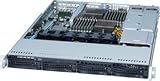
The IBM 39Y7200 is a 675-watt server power supply, Rev E. This is not a standard ATX PSU. It is a hot-swap, proprietary form factor designed specifically for the IBM System x3550 M2 and x3650 M2 2U rack servers. It measures approximately 10.2 x 4.2 x 3.4 inches and weighs about 2.8 pounds. It provides server-specific connectors, not the standard 24-pin ATX, 8-pin EPS, and PCIe cables a gaming motherboard needs. You cannot install it in a typical mid-tower gaming case without an adapter plate and breakout board, and even then it is not intended for gaming loads.
The alternative is a new retail gaming PSU like the MSI MAG A750GL PCIE5. This is a standard ATX 3.1 unit, measuring 140mm (W) x 150mm (D) x 86mm (H) — the compact ATX form factor that fits virtually any mid-tower or full-tower case. It is fully modular, rated 750W with 80+ Gold efficiency, and includes modern native connectors including the dual-color 12V-2×6 cable for PCIe 5.1 GPUs. It weighs around 3.5 pounds with cables and comes with a 10-year manufacturer warranty.
The core difference is not just wattage. A new gaming PSU in 2026 is built to handle the sharp transient power spikes of modern GPUs, often 2x to 3x the card’s rated power draw for milliseconds. A decade-old refurbished server PSU, even if it still delivers 675W, was never designed or tested for those spikes, its capacitors have aged for years, and it comes with a 30 to 90-day seller warranty at best, versus 7 to 12 years for a new unit from major brands like Corsair, Seasonic, MSI, or be quiet!.
Pros
- Very low upfront cost: A renewed server PSU like the IBM 39Y7200 often sells for $15 to $25, compared to $89.99 to $119.99 for a new 750W Gold ATX 3.1 unit. For the right chassis, that is an 80% saving.
- OEM-specific replacement: If you own an IBM x3550 M2/x3650 M2, this is the correct drop-in replacement. Buying new old-stock for these discontinued servers can cost $80 to $150, so renewed is the only economical option.
- Tested and working (usually): Reputable renewed sellers do verify the unit powers on and delivers voltage within spec before shipping, which is more assurance than buying untested used parts from a private seller.
- Lower e-waste impact: Reusing a functional server pull keeps a heavy electronic component in service for a few more years instead of sending it to recycling.
- Useful for non-gaming projects: For a homelab NAS, pfSense router, or lab server where uptime is not critical and redundancy is handled by dual PSUs, a cheap renewed unit is perfectly adequate.
Cons
- Unknown remaining lifespan: Capacitors age whether the PSU is used or sitting on a shelf. A unit pulled from a server that ran 24/7 for five to eight years has significantly less life left than a new unit, and there is no way to know how many hours are on it.
- Extremely limited warranty and support: Most renewed PSUs carry a 30 to 90-day Amazon Renewed or seller warranty. A new gaming PSU includes a 5 to 10-year manufacturer warranty that covers failure and often connected component damage.
- No guarantee of clean power delivery: Basic power-on testing does not measure ripple, voltage regulation under load, or transient response. Degraded components can deliver noisy power that stresses your motherboard and GPU over time.
- Wrong form factor and connectors for gaming PCs: Server PSUs like the 39Y7200 do not have standard ATX, EPS, or PCIe cables. Adapting them is messy, may require a separate breakout board costing $20 to $40, and can create fire risk if done incorrectly.
- Missing modern protections and standards: Older refurbished units lack ATX 3.1 compliance, PCIe 5.1 native 12V-2×6 connectors, and may have slower over-current, over-voltage, and short-circuit protection response compared to current designs.
- Risk to expensive components: The PSU is the one component that can destroy every other part if it fails catastrophically. Saving $60 on the PSU while risking a $500 GPU and $200 motherboard is poor value math.
- Often louder and less efficient: Server pulls use small, high-RPM 40mm fans designed for rack airflow, not silence. They are also typically 80+ Bronze or uncertified by modern Gold standards, wasting more energy as heat.
Who Should Buy It
You should consider a refurbished power supply if you meet all of these criteria:
You already own the supported proprietary chassis. If you have an IBM x3550 M2 or x3650 M2 that needs a replacement 675W PSU to get a homelab running again, buying the $15 to $25 renewed 39Y7200 is logical. It is the intended part for that system.
You are building a secondary, low-value system where budget is the primary constraint and failure is an inconvenience, not a disaster. Think a test bench for troubleshooting, a file server built from retired enterprise hardware, or a system you are reselling where you will disclose the PSU condition.
You understand the limitations and have redundancy. Many 2U servers run dual hot-swap PSUs. If one renewed unit fails, the other keeps the system alive, which lowers the risk considerably.
Who Should Skip It
You should skip any refurbished or renewed PSU and buy new if you are building or upgrading a primary gaming PC. This is especially true if:
You are buying a new graphics card. Any GPU from the RTX 3060 / RX 6700 class and above deserves a new ATX 3.0 or 3.1 power supply with native PCIe 5.0/5.1 support. The $89.99 to $119.99 cost of a 750W Gold unit is cheap insurance.
You want quiet operation, full modularity, and clean cable management. Refurbished server units offer none of these.
You need long-term reliability and peace of mind. If you expect your gaming PC to last four to six years without opening it up, the 10-year warranty and 100,000-hour rated lifespan of a new PSU from a reputable brand is what you are paying for.
You do not have the exact server that the refurbished unit was made for. Do not try to adapt an IBM server PSU to a standard ATX gaming case to save money. The adapters, breakout boards, and custom wiring will cost more and create safety issues that erase any savings.
Cheaper Alternatives
| Option | Cost | Trade-off |
|---|---|---|
| New 650W-750W 80+ Bronze (Non-Modular) from reputable brand | $55 – $75 | Much safer than refurbished, full warranty (5 years), but non-modular cables make building harder and Bronze efficiency costs $5-$10 more per year in electricity. |
| New 750W 80+ Gold ATX 3.1 Fully Modular (e.g., MSI MAG A750GL) | $85 – $120 | Best value for gaming. Pays for itself in efficiency and warranty. 10-year coverage and native 12V-2×6 support for modern GPUs. |
| Renewed Server Pull (IBM 39Y7200 675W) | $15 – $25 | Only viable if you own the matching IBM x3550/x3650 M2 chassis. Not ATX-compatible, 90-day warranty max, unknown lifespan. |
| Used ATX PSU from private seller | $20 – $40 | Even riskier than renewed. No testing guarantee, no return window, no warranty. Never recommended for gaming hardware. |
FAQ
Can I use an IBM 39Y7200 server power supply in a regular gaming PC case?
No, not directly. The 39Y7200 is a proprietary hot-swap unit for 2U rack servers. It is physically larger in length than ATX, lacks the 24-pin motherboard connector, and uses a different mounting and backplane system. You would need a server chassis or a specialized breakout adapter, and it is still not recommended for gaming loads due to its age and lack of ATX 3.1 transient handling.
Is a renewed 675W PSU enough for a modern gaming GPU?
Wattage alone is misleading. While 675W is enough on paper for a mid-range build, a renewed server unit from that era was not designed for the rapid power spikes of modern GPUs. A new 750W ATX 3.1 unit is rated to handle spikes up to 200% of its capacity for short durations. An older refurbished unit is not, which can cause shutdowns or instability even if total wattage seems sufficient.
How long does a refurbished power supply typically last?
There is no fixed lifespan. Some renewed units run for another three to five years in a low-stress homelab, others fail within months. Without knowing the original runtime hours and capacitor condition, it is a gamble. New PSUs are rated for 100,000 hours at typical temperatures and are covered for 7 to 10 years for that reason.
What should I check before buying any refurbished PSU?
Check the exact model and revision compatibility with your chassis, the seller’s return window and warranty length in days, whether the listing says “tested” or just “cleaned,” and the connector types included. For any gaming PC, also check the manufacturing date if listed — a unit more than five to six years old is past its prime regardless of refurbished status. If the price difference to a new Bronze or Gold unit is under $50, buy new.


