
Designing an intentional home office or family entertainment hub involves balancing technology, spatial design, and acoustic comfort. When assembling a mid-range workstation or casual gaming PC, building around a entry-level to mid-tier processor—typically drawing between 65W and 125W of thermal design power (TDP)—brings you to a classic crossroads. Weighing an air cooler vs liquid cooler for budget cpu builds isn’t strictly an engineering exercise; it directly impacts your desk space, visual decor, noise footprint, and ongoing home maintenance routine.
While enthusiast hardware channels often obsess over extreme thermal benchmarks on high-wattage chips, entry-level processors operate under fundamentally different physical constraints. Selecting the right thermal system requires assessing how liquid radiator loops and traditional aluminum fin-stacks fit into your domestic environment, your room’s ambient climate, and your financial planning.
As an Amazon Associate we earn from qualifying purchases at no extra cost to you. Product prices and availability are accurate as of the date shown and are subject to change.


Top 3 picks at a glance
Quick Verdict
For the vast majority of home setups featuring a budget processor (such as an Intel Core i3/i5 or AMD Ryzen 5), a classic air cooler is the superior practical choice. Single-tower and dual-tower air units priced between $20 and $50 offer virtually silent operation under modest loads, zero risk of liquid leaks, and a mechanical lifespan that can outlast your entire computer system.
However, an All-In-One (AIO) liquid cooler becomes the right choice if your PC chassis sits on a minimalist, open-concept desk where high-profile aluminum towers feel visually clunky, or if you prefer an open glass view featuring customized A-RGB lighting inside compact quarters.
Side by Side
| Factor | Air Cooler | Liquid Cooler (AIO) |
|---|---|---|
| Acoustic Comfort | Whisper-quiet at low RPMs; zero pump noise hum | Low fan noise, but continuous low-frequency pump vibration |
| Durability & Lifespan | 10+ years (only fan moving parts, easily swappable) | 3 to 6 years (pump wear, fluid permeation over time) |
| Price Range | $20 – $50 for budget/mid-tier performers | $60 – $110 for entry-level 240mm to 360mm AIOs |
| Maintenance | Occasional dusting with compressed air | Dusting radiator mesh; total unit replacement upon pump failure |
| Space Needed | Requires 150mm–165mm CPU clearance height above motherboard | Requires dedicated 240mm/360mm radiator wall mounts in chassis |
| Visual Look | Industrial, bulky aluminum fin-stack blocking motherboard RAM | Sleek pump block, clean interior layout, exposed RGB trim |
| Resale Value | High utility retention; standard mounting hardware lasts generations | Moderate-to-low; fluid degrading deters second-hand buyers |
| Best For | Value-focused home offices, quiet study spaces, long-term stability | Showcase desks, aesthetic-focused glass chassis, compact builds |
Where Air Cooler Wins
Air cooling remains the champion of value and peace of mind for residential technology setups. A traditional air cooler relies on direct-contact copper heat pipes that pull thermal energy up into a stack of aluminum fins, where a 120mm or 140mm fan dissipates the heat directly into the internal case airflow. When pairing this technology with a 65W–90W budget processor, the physical surface area of even a modest $25 cooler is often overkill—in the best possible way.
The primary advantage in a residential setting is absolute mechanical simplicity. An air cooler has exactly one moving part: the fan bearing. If a fan fails after five years of daily home office use, replacing it costs under $15 and takes three minutes without removing the heatsink from the motherboard. There are no fluid channels to clog, no flexible tubing under constant pressure, and zero risk of micro-evaporation or catastrophic leaks over electrical components.
From an acoustic perspective, air coolers excel in quiet working environments. While a liquid cooler must continuously run a mechanical pump at 2,000 to 3,000 RPM—producing a faint, high-pitched hum in an otherwise silent room—an air cooler fan can drop down to 400 RPM or idle entirely when you are merely drafting emails or browsing web pages. If your primary goal is maintaining a serene atmosphere in a shared living room or bedroom office, a basic single-tower heatsink offers total silence under everyday tasks.
Where Liquid Cooler for Budget Cpu Wins
While liquid cooling might seem thermally unnecessary for a low-wattage processor, evaluating an air cooler vs liquid cooler for budget cpu builds involves visual ergonomics and structural design inside modern interior spaces. Liquid All-In-One (AIO) units transfer heat away from the socket through liquid tubes to a dedicated radiator mounted along the top or front panel of the PC case.
This layout removes the physical bulk from the middle of your motherboard. Large air coolers often hover around 155mm to 165mm in height, weighing anywhere from 700g to 1,300g. They can overhang memory slots, blocking tall RGB RAM modules and making standard motherboard maintenance cumbersome. In contrast, a liquid cooling pump block sits just 40mm to 50mm tall, creating an open, airy visual aesthetic that looks stunning through tempered glass side panels on a clean desk.
Furthermore, liquid cooling offers exceptional transient thermal absorption. Water has a significantly higher specific heat capacity than aluminum or copper. When your CPU experiences sudden spike loads—such as launching software, rendering a short video, or decompressing large home media files—the liquid loop absorbs these temperature bursts without instantly ramping up fan speeds. This prevents the distracting fan-whine surges that can occur with compact air coolers during intermittent tasks.
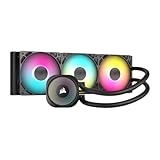
For users who want to future-proof their chassis aesthetics while keeping entry-level components chilly, accessible 360mm liquid options exist. Hardware like the ARCTIC Liquid Freezer III Pro 360 A-RGB ($76.99) or the CORSAIR Nautilus 360 RS ARGB Liquid CPU Cooler ($99.99) provides expansive radiator surface area and subtle, customizable lighting that transforms a modest computer into an elevated home design focal point.
Cost Over 5 Years
Evaluating technology for your home requires calculating the total cost of ownership rather than just the initial checkout price. When comparing hardware over a five-year lifecycle, the economic advantage leans heavily toward air cooling.
- Initial Outlay: A high-performing budget air cooler costs between $20 and $40. An entry-to-mid level liquid AIO cooler ranges from $75 to $100. This leaves a $35 to $60 savings upfront on an air-cooled system, which can be reallocated toward faster storage or quiet room climate accessories.
- Operating & Maintenance Expenses: Air coolers pull between 2W and 4W of power via a single fan header. Liquid coolers require power for both multiple radiator fans and the continuous fluid pump, drawing between 6W and 12W. Over five years, the electrical cost difference is negligible, but component longevity differs sharply. An air cooler’s metal heatsink never degrades; a liquid cooler’s internal impeller and flexible hoses suffer physical wear and fluid loss, often requiring complete unit replacement after 4 to 6 years.
- Ambient Room Balancing: Remember that heat removed from your CPU is dumped directly into your room. No CPU cooler lowers the thermal energy entering your living space; they simply move it away from the silicon. If your home office gets warm during hot afternoons, managing ambient air comfort with dedicated room fans—such as a quiet DREO Tower Fan for Bedroom ($52.08) or a high-velocity Levoit Tower Fan for Bedroom ($54.92)—is far more effective for personal comfort than upgrading your PC cooler.
Which One for Your Home
Small Apartment or Studio Workspace
In tight living quarters where your desk shares space with your sleeping area, noise and spatial balance are paramount. A compact single-tower air cooler (150mm height profile) is ideal here. It produces zero idle pump whine during late-night study or work sessions, takes up no extra radiator mounting room in compact micro-ATX cases, and keeps the overall footprint of your desk small and unobtrusive.
Family Home with Kids or Pets
Household environments with roaming pets and active children naturally collect higher levels of dust and animal dander. Air coolers excel in this scenario due to their rugged nature. Dust can be cleared from an air cooler’s thick fin-spacing in seconds using compressed air. Furthermore, if a child bumps or shakes the desk, an air cooler poses zero liquid risk to the interior hardware, ensuring your home network or homework station remains safe.
Rental Property Setup
If you live in a rental home where you frequently move between apartments, structural rigidity matters. Large, heavy air coolers exert physical torque on the motherboard during transit unless removed. If you move often, a low-profile liquid cooler pump block puts minimal weight on the socket during car rides, while the radiator stays securely bolted to the chassis frame. Alternatively, choosing a lightweight, standard 500g budget air cooler offers the best of both worlds: light socket load and effortless packing.
Long-Term Home Office Investment
For a dedicated home office built around low maintenance, reliability, and decade-long durability, pair a budget 65W CPU with a quality dual-heatpipe air cooler. With no fluids to permeating through rubber hoses and no complex pump electronics to fail, you can set up your workstation and let it run reliably for years without ever opening the chassis for mechanical maintenance.
FAQ
Does a budget CPU actually generate enough heat to require a liquid cooler?
No. Budget processors (typically 65W to 125W TDP) operate efficiently under standard thermal loads. A baseline $20 to $30 air cooler easily maintains safe operating temperatures (well below 75°C) even under extended heavy workloads. Liquid cooling a budget CPU is done primarily for visual styling, lower transient noise spikes, or personal aesthetic preference rather than thermal necessity.
How do room ambient temperatures affect air vs liquid cooling performance in 2026?
Both air and liquid cooling systems rely on surrounding ambient room air to dissipate heat; neither can cool a processor below the temperature of your room. In hot summer months, if your home office reaches 28°C (82°F), both air and liquid systems will see their baseline CPU temperatures rise accordingly. Liquid coolers take slightly longer to reach peak heat due to fluid volume, but both ultimately depend on comfortable room airflow.
Is a liquid cooler safe around household pets and dust-heavy homes?
Modern All-In-One liquid coolers are factory-sealed, pressure-tested loops designed to prevent leaks under normal use. However, dust accumulation on radiator fins can restrict airflow faster than on standard air coolers due to tighter fin spacing. In pet-friendly homes, you will need to gently vacuum or dust the radiator intake mesh every few months to maintain optimal airflow.
Will a large air cooler block my RAM slots or strain my motherboard during moves?
Substantial dual-tower air coolers can overhang the inner RAM slots on standard motherboards, requiring low-profile memory sticks. However, single-tower budget air coolers (designed with offset heat pipes) generally provide 100% RAM clearance. Regarding motherboard strain, budget air coolers weigh around 500g to 700g, which is completely safe for normal stationary home use and standard room re-arrangements.


