
The best 43-inch TVs for small rooms and desks are the Samsung QN90D for bright-room gaming, the LG OLED C4 42-inch for contrast and PC use, and the Sony X85K or TCL Q6 43-inch for lower-cost everyday viewing.
A 43-inch screen works well from roughly 3.5–6 feet away, while a 42-inch OLED can also serve as a large desktop monitor at about 32–40 inches if you can lower its brightness and manage burn-in risk. The key differences are not just picture quality: peak brightness, viewing distance, input bandwidth, and whether the TV can accept 4K at 120Hz determine whether it behaves more like a bedroom TV or a giant gaming display.
As an Amazon Associate we earn from qualifying purchases at no extra cost to you.




Our Top Picks

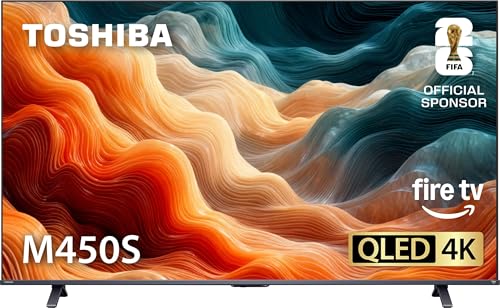


Top 3 picks at a glance
Best 43-inch TVs at a glance
| Model | Best use | Comfortable viewing distance | Approx. peak brightness | HDMI 2.1 / 120Hz | Typical market range |
|---|---|---|---|---|---|
| Samsung QN90D 43-inch | Bright rooms and PC gaming | 3.5–6 feet | About 1,000–1,300 nits HDR highlights | Yes; 4K/144Hz on a compatible input | Usually $800–$1,200 |
| LG OLED C4 42-inch | Desk gaming and movie contrast | 2.5–5 feet | About 700–1,000 nits HDR highlights | Yes; 4K/120Hz and VRR | Usually $900–$1,300 |
| Sony X85K 43-inch | Console gaming and upscaling | 3.5–6 feet | About 500–700 nits HDR highlights | Yes; 4K/120Hz on two HDMI inputs | Usually $450–$700 |
| TCL Q6 43-inch | Affordable mixed use | 3.5–6 feet | About 350–500 nits HDR highlights | No full HDMI 2.1 gaming input; 4K/60Hz class | Usually $250–$450 |
Brightness figures are useful for comparing classes, not guaranteed measurements. Picture mode, window size, firmware, and measurement method can produce different results. The QN90D and C4 are the strongest choices when high-refresh gaming matters; the TCL Q6 is better viewed as a value 4K TV than a true 4K/120Hz gaming monitor.
1. Samsung QN90D 43-inch: best for a bright bedroom or gaming room
The Samsung QN90D combines a Mini LED backlight with a 43-inch size that remains manageable on a dresser or compact desk. Its high brightness is the main reason to choose it over OLED: daylight, lamps, and reflections are less likely to flatten the image. Local dimming also gives it substantially better HDR impact than ordinary edge-lit LED TVs.
It is particularly appealing for PC gaming because the 43-inch model supports high refresh rates, including 4K at up to 144Hz with a suitable graphics card and cable. Variable refresh rate helps reduce tearing, while Samsung’s Game Bar exposes resolution, refresh rate, and HDR status without opening a full settings menu.
Choose it if:
- Your room has windows or strong overhead lighting.
- You want one screen for a PC, PS5, Xbox Series X, and streaming.
- You sit around 4–6 feet away and want a punchy HDR picture.
Its limitations are blooming around bright objects on dark backgrounds, narrower viewing angles than OLED, and a price that often approaches 42-inch OLED territory. For a desk, use a deeper surface or wall mount; 43 inches can feel overwhelming below about 30–32 inches.
2. LG OLED C4 42-inch: best large desktop display
The LG OLED C4 is technically 42 inches rather than 43, but it belongs in this comparison because it is one of the most practical small OLED TVs for a desk. Every pixel emits its own light, producing near-perfect black levels, no LCD blooming, and very fast response times. Text and game interfaces look especially clean when the TV is connected to a PC at 4K.
All four HDMI inputs support the high-bandwidth features PC and console owners usually want, including 4K/120Hz, VRR, and ALLM. Compatible PCs can also use higher refresh rates at lower resolutions. For a desk, start with the TV’s PC input label and enable 4K resolution, 120Hz, and HDR in the operating system only after the basic signal is stable.
Important OLED desk precautions
- Use a moderate SDR brightness setting rather than maximum brightness all day.
- Enable the panel’s screen-shift, logo dimming, and automatic pixel-care features.
- Hide static taskbars and rotate between games, videos, and desktop applications.
- Do not leave a paused game or desktop window on screen for many hours.
The C4 is less suitable than the QN90D for a sunlit room, and OLED’s long-term image-retention risk matters more when it replaces a monitor used for repetitive office work. Choose it when contrast, response time, and desk distance matter more than maximum brightness.
3. Sony X85K 43-inch: a sensible console and living-room compromise
The Sony X85K is an LED television with a 120Hz panel and HDMI 2.1 support on two inputs. It is a good match for PS5 and Xbox Series X owners who want 4K/120Hz, VRR, and reliable motion handling without paying for Mini LED or OLED.
Sony’s processing is useful for lower-quality streams, broadcast content, and older consoles. However, its HDR effect is more restrained than the QN90D’s because the backlight cannot produce the same bright highlights or deep local contrast. Its VA-style panel can also lose color and contrast when viewed far from the center.
For a bedroom, place the screen so your eyes are close to the center of the panel. From 4–6 feet, the 43-inch size is large enough for movies and games without requiring constant head movement. It is less comfortable as a desktop monitor than the LG OLED because its pixel response and viewing-angle behavior are not as desktop-friendly.
4. TCL Q6 43-inch: the budget choice when 60Hz is enough
The TCL Q6 is a reasonable value pick for streaming, casual console use, and a second-room TV. Its QLED layer can produce more saturated color than basic LCD sets, but its 43-inch version should not be treated as a full HDMI 2.1 gaming display. Expect 4K at 60Hz rather than the 4K/120Hz experience available from the QN90D, C4, or X85K.
That limitation is not important if your console is a Nintendo Switch, an older console, or a PC that normally renders games below 120 frames per second. It is more noticeable with a PS5, Xbox Series X, or a powerful gaming PC, where 120Hz can make camera movement and aiming feel smoother.
The Q6 generally costs less than the other recommendations, often around $250–$450 depending on sales and generation. Its lower brightness also makes it better in a controlled room than beside a large sunny window.
How to choose the right viewing distance
A practical starting point is to multiply the screen’s diagonal by about 0.9–1.5 for mixed TV and gaming use. For a 43-inch screen:
- About 32–40 inches: immersive desktop distance; best reserved for the LG C4 with sensible brightness and burn-in precautions.
- About 4 feet: strong gaming immersion without excessive head movement.
- About 5–6 feet: comfortable bedroom or small living-room distance.
- Beyond 7 feet: a larger TV may provide a more satisfying cinematic image.
At a desk, measure from your eyes—not the chair—to the panel. A 43-inch TV is about 37.5 inches wide, so allow extra space for its stand and viewing angle. If your desk is only 24 inches deep, a monitor arm or wall mount may be more comfortable than placing the TV on its original feet.
HDMI 2.1 and bandwidth: what your gaming setup actually needs
Uncompressed 4K at 120Hz with 10-bit color can require roughly 40–48Gbps of HDMI bandwidth, depending on chroma format and timing. That is why a TV advertised as “120Hz” is not automatically capable of 4K/120Hz from every input.
Use this decision matrix:
| Your situation | Minimum useful specification | Best match |
|---|---|---|
| Streaming and cable in a dim bedroom | 4K, good upscaling, 60Hz acceptable | TCL Q6 |
| PS5 or Xbox Series X from 4–6 feet | 4K/120Hz, VRR, at least two HDMI 2.1 inputs | Sony X85K or Samsung QN90D |
| Gaming PC at a desk | 4K/120Hz or higher, VRR, low response time | LG OLED C4 or Samsung QN90D |
| Bright room with daytime glare | High sustained brightness and effective reflection control | Samsung QN90D |
| Lowest cost for ordinary viewing | 4K/60Hz and acceptable upscaling | TCL Q6 |
For a 4K/120Hz connection, use an Ultra High Speed HDMI cable rated for 48Gbps, connect to the labeled HDMI 2.1 port, and verify the signal in the TV’s game information panel. If the computer only offers 4K/60Hz, check Windows or the GPU control panel for the refresh-rate setting before blaming the TV.
Frequently asked questions
Can a 43-inch TV replace a computer monitor?
Yes, but the LG OLED C4 is the most suitable model for desktop use. It provides sharp 4K text, fast response times, 4K/120Hz, VRR, and ALLM. A 43-inch screen can feel overwhelming below about 30–32 inches, so a deeper desk, monitor arm, or wall mount may be more comfortable. OLED precautions are important for repetitive office work.
Which of these TVs is safest for a sunny room?
The Samsung QN90D is the best choice for a sunny room because its Mini LED backlight produces high brightness and its reflection control helps preserve the image. The LG OLED C4 is less suitable for a sunlit room, while the TCL Q6 is better in a controlled room than beside a large sunny window. Lamps and daylight are less likely to flatten the QN90D’s picture.
Do all four TVs support gaming at 4K and 120Hz?
No, the TCL Q6 is the exception because its 43-inch version is a 4K/60Hz-class television rather than a full HDMI 2.1 gaming display. The Samsung QN90D, LG OLED C4, and Sony X85K support 4K/120Hz features, although the QN90D can reach 4K/144Hz with a compatible graphics card and cable.
Which TV is best for a PS5 or Xbox Series X?
The Sony X85K is a sensible choice for PS5 or Xbox Series X owners because it supports 4K/120Hz, VRR, and HDMI 2.1 on two inputs. The Samsung QN90D is also a strong option if the room is bright or you want higher HDR impact. The TCL Q6 is less suitable when 120Hz motion is important.
What should I do if my TV shows a lower refresh rate than expected?
First, use an Ultra High Speed HDMI cable rated for 48Gbps and connect it to the labeled HDMI 2.1 port. Then check the TV’s game information panel and verify the computer’s refresh-rate setting in Windows or the GPU control panel. A TV advertised as 120Hz is not automatically capable of 4K/120Hz from every input.
Bottom line
Choose the Samsung QN90D for the brightest room and the most flexible high-refresh gaming. Choose the LG OLED C4 42-inch for the best desk experience, deepest blacks, and fastest-feeling response. Choose the Sony X85K for a balanced 4K/120Hz console TV at a lower price, and the TCL Q6 when 4K/60Hz is sufficient and keeping the budget down matters most.


