
Our Top Picks
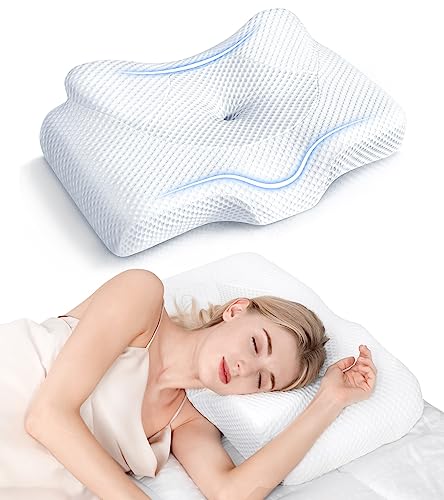 Osteo Cervical Pillow for Neck Pain ReliefQueen(25.5*16.5*5.2/4.1 inches)25.5 x 16.5 x 5.2 inches4 PoundsCheck on Amazon

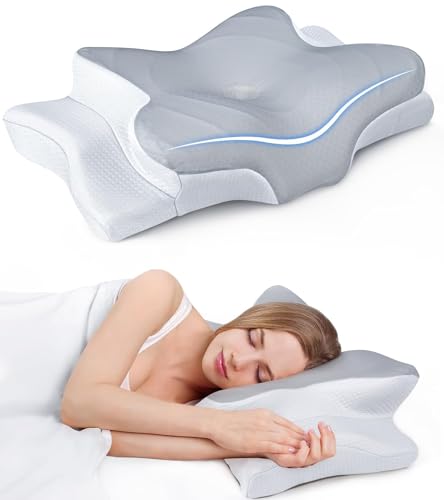

Top 3 picks at a glance
Best Adjustable Beds for Back Pain Relief: The Short Answer
The best adjustable beds for back pain are the ones that let you fine-tune spinal position without forcing your mattress to bend against the base. For many people, a split-king base with independent head and foot movement is the most flexible choice; if pain is concentrated in the lower back, prioritize a model with separately adjustable lumbar support. Look for a useful zero-gravity preset, a quiet motor, and a return policy that gives you time to check whether the position actually helps.
A preset alone does not treat back pain, and “zero gravity” is a marketing label rather than a standardized position. It usually raises the head and legs to reduce pressure and shift how weight is distributed. The useful test is whether the resulting position feels comfortable and keeps your back relaxed—not whether the remote uses a particular name.
As an Amazon Associate we earn from qualifying purchases at no extra cost to you.


What Matters More Than the Preset Count
Zero gravity you can adjust
A good zero-gravity preset should be easy to save or modify. A position that raises the knees too high can round the lower back uncomfortably; too little leg lift may not relieve pressure. Start with your head raised slightly and your knees supported, then make small changes. The “best” angle depends on your body, mattress, and pain pattern.
Independent lumbar adjustment
Some premium bases have a lumbar section that moves separately from the head and legs. This can add support under the lower back without requiring a larger change to the whole bed’s shape. It is worth considering if you prefer a firmer-feeling support zone, but it is not essential for everyone. Confirm whether lumbar adjustment is powered and independent, or merely a fixed lumbar bar—those are not equivalent features.
Motor noise in decibels
Motor noise is most noticeable during nighttime adjustments, especially in a shared room. Manufacturers do not always publish comparable sound measurements, and a decibel figure is meaningful only when the measuring distance and conditions are stated. As a practical guide, under about 45 dBA at the bedside is relatively quiet for a brief adjustment; 45–55 dBA is audible but often tolerable; above 55 dBA may be disruptive to a light sleeper. Treat those ranges as screening targets, not guarantees. Ask for the measurement method, and check whether the base has a “snore” or other automatic feature that might move it while you sleep.
Mattress Compatibility: The Base Has to Bend, Too
An adjustable base cannot compensate for a mattress that resists flexing. Most all-foam and latex mattresses flex readily, provided the maker approves them for adjustable-base use. Many pocketed-coil hybrids also work, but edge reinforcement, thick comfort layers, and the coil unit’s construction can affect how cleanly the mattress bends. Traditional interconnected-coil innersprings are more likely to resist articulation or feel strained.
Before ordering, check the mattress warranty and the base’s weight and mattress-thickness limits. A mattress that is too thick, heavy, or stiff may not track the base’s movement well. Avoid adding a rigid board or other improvised support: it can prevent articulation and may void warranties.
| Mattress type | Typical flex compatibility | What to verify |
|---|---|---|
| All-foam | Usually very good | Manufacturer approval, thickness, and weight limit |
| Latex | Usually good | Whether the specific latex construction is approved to bend |
| Pocketed-coil hybrid | Often good, but model-dependent | Warranty language, coil design, and edge reinforcement |
| Interconnected-coil innerspring | Often poor or uncertain | Explicit adjustable-base approval before purchase |
Choose by Your Situation
| Your priority | Base features to prioritize | Trade-off to consider |
|---|---|---|
| Lower-back comfort and targeted support | Independent powered lumbar adjustment; adjustable head and legs | Costs more, and extra movement is not automatically better |
| Sharing a bed with different preferences | Split king with independent sides and separate remotes | Two mattresses can create a center gap or feel unlike one continuous surface |
| Simple elevation on a tighter budget | Head-and-foot articulation, programmable positions, clear warranty | May lack lumbar movement, massage, or advanced presets |
| Very light sleeper | Documented low-noise operation and no unwanted automatic movement | Published sound figures may not use comparable test conditions |
How to Compare Specific Bases
Rather than choosing by brand claims or preset count, compare models against the same checklist. Established adjustable-base ranges from brands such as Tempur-Pedic, Sleep Number, and Leggett & Platt include models with different feature sets; availability and specifications vary by model and year, so verify the exact configuration before buying.
- For the most precise positioning: Look for independently controlled head, foot, and powered lumbar sections. Check whether lumbar movement can be used without changing the head or leg angle.
- For couples: Compare split-king options with true independent controls. Confirm whether each side has its own motor system and whether your existing mattress or sheets are compatible with a split setup.
- For a basic upgrade: A head-and-foot base with a customizable preset may be more sensible than paying for massage, lighting, or many rarely used positions.
- For noise-sensitive rooms: Request a decibel figure measured at a stated distance, or use a return period to assess nighttime operation in the actual room.
A Practical Setup That Reveals Fit Problems
Use this short process to find out whether a base and mattress work together before committing to a particular preset:
- Check the mattress first. Confirm that its warranty permits adjustable-base use. If not, choose an approved mattress before testing positions.
- Begin nearly flat. Raise the head by a small amount and the knees slightly. Change one section at a time so you can tell which movement helps or worsens discomfort.
- Save a comfortable position. If the remote allows custom presets, save your preferred angle rather than assuming the factory zero-gravity setting is ideal.
- Watch the mattress edges and center. During movement, check that the mattress follows the deck without excessive bowing, slipping, or lifting away from the platform.
- Listen from the pillow. Run the motor once while lying down. A sound that seems modest beside the bed may be more noticeable at pillow level.
- Recheck after several nights. Comfort can change with pillow height and sleep position. Keep adjustments small, and stop using a position that increases pain or causes numbness.
Costs, Warranty, and the Final Decision
As a broad 2026 market guide, basic adjustable bases often fall around $400–$800, midrange models around $800–$1,500, and feature-rich bases with advanced articulation or lumbar adjustment can run about $1,500–$3,000 or more. Mattress and split-king costs may be separate. These are general ranges, not quotes; size, promotions, delivery, and setup can change the total.
Before purchase, read the warranty for motor coverage, structural coverage, weight limits, and the process for service. Also check whether a trial or return period applies to the base itself, not just the mattress. For back-pain relief, the strongest choice is usually the simplest base that provides a comfortable, repeatable position, works with your mattress, and does not create unwanted noise or motion. If back pain is persistent, severe, or accompanied by weakness or numbness, consult a healthcare professional rather than relying on a bed adjustment alone.
Frequently asked questions
Can an adjustable bed cure back pain?
No—the article does not suggest that an adjustable bed cures back pain. It may help you find a comfortable, repeatable position, but a preset alone does not treat pain. Stop using a position that increases pain or causes numbness, and consult a healthcare professional if pain is persistent, severe, or accompanied by weakness or numbness.
Is a split-king base necessary for back-pain relief?
No, a split-king base is not necessary for everyone. It is a flexible choice when two people want independent controls or different positions. For a simpler upgrade, the article suggests considering a head-and-foot base with a customizable preset; the right features depend on your priorities and mattress.
Can I keep using my current mattress with an adjustable base?
Possibly, but check the mattress warranty and the manufacturer’s approval for adjustable-base use first. Flexibility varies: all-foam and latex mattresses usually flex readily, while pocketed-coil hybrids are model-dependent and interconnected-coil innersprings may resist articulation. Also check the base’s weight and mattress-thickness limits.
How can I tell whether a position is right for me?
A position is worth keeping if it feels comfortable and keeps your back relaxed. Start nearly flat, raise your head and knees slightly, and change one section at a time. Save a comfortable setting if possible, then reassess over several nights. Stop using any position that increases pain or causes numbness.
What should I check before buying an adjustable base?
Check that the mattress is approved for adjustable-base use and fits the base’s weight and thickness limits. Review the warranty, including motor and structural coverage, and confirm whether a trial or return period applies to the base itself. For a split setup, check mattress and sheet compatibility; for a noise-sensitive room, ask how any decibel figure was measured.


