A student phone has a short list of jobs: stay alive from the first lecture to the last study session, run a messaging app, a note app, a school portal, and a music or video app, and survive a backpack. It does not need the fastest processor, but it does need enough memory to keep apps open, enough storage for course material, and a battery that does not leave you stuck on a campus bus with a dead screen. A student also tends to be hard on a phone, with drops in hallways, crowded bags, and constant charging from different outlets, so a phone that is cheap enough to replace without panic has real appeal.
This guide is for students, parents buying a first or replacement phone, and anyone on a tight allowance who wants an unlocked Android handset without a contract. The six phones below are all budget-tier, and their listings range from a compact 5 inch model to larger 6.5 inch screens with big batteries. Everything is judged from the listed specs, so verify network bands and carrier compatibility before ordering in 2026. Lesser-known brands often skip the certifications that major carriers like, so the compatibility check is the single most important step before you pay.
Our Top Picks


Top 3 picks at a glance
Quick Picks
As an Amazon Associate we earn from qualifying purchases at no extra cost to you.


| Product | Best for | Key spec from the listing |
|---|---|---|
| Unnecto Bolt One | Basic calls and messaging | 5.0 inch display, Android 14 Go, 2000mAh |
| Ulefone Note 22 | Small-hand, pocketable use | 5 inch, Android 16 Go, removable 3000mAh battery |
| Ulefone Note 23 | Long days and bigger screens | 6.56 inch, 90Hz, 5000mAh, Android 16 |
| MIRO 4G Android 14 Go | Headphone jack and expandable storage | 6 inch, 2GB+32GB, 3.5mm jack |
| Redbeat D5 | Most RAM and storage on the list | 6GB RAM, 64GB ROM, 5000mAh |
| HeyxFome Unlocked Phone | Large expandable storage | 6.5 inch HD+, 13MP camera, up to 256GB card |
How to Choose
Memory and storage decide how long it feels fast
2GB of RAM runs messaging and note apps but struggles with a browser full of tabs. 3GB is a small step up, and 6GB, as on the Redbeat D5, is more comfortable. Some listings add virtual RAM, which borrows from storage and is slower than real memory, so judge by the physical figure. For storage, 32GB fills quickly with textbooks and photos; look for a card slot, since several listings mention expandable storage. Remember that the operating system itself takes a good share of the first few gigabytes, so the free space on a 32GB phone is noticeably smaller than the label suggests. A memory card is the cheapest fix.
Battery life matters more than speed
A 5000mAh battery, as on the Note 23 and Redbeat D5, usually lasts a full school day with moderate use. A 2000mAh cell, such as in the Bolt One, suits a light user who charges nightly. A removable battery, as on the Note 22, lets you carry a spare for long days without a power outlet. Battery capacity is only half the story, because a bright large screen drains faster than a small one, but as a general rule a bigger cell gives a student a much better chance of reaching the evening charger.
Check the software version
Android 14 or newer receives security patches longer than older versions. Android 12, listed on the HeyxFome, is older and may not receive updates. Go editions are lightweight versions built for low-memory phones; they run smoothly on 2GB but offer a narrower app experience. Some apps ship lighter versions for Go devices, while others may behave less smoothly, so check that the learning, banking, and messaging apps you need are available before you commit.
Confirm carrier compatibility and ignore the camera count
Unlocked 4G phones need to match your carrier’s bands. Check the compatibility list on the product page, and avoid models that say they are not compatible with some carriers. A dual camera on a budget phone often includes a 2MP depth sensor, which adds little. Budget phones cut corners on screen brightness, charging speed, and software updates, so a headphone jack and a big battery matter more than megapixels. Charging speed is another place where budget models cut corners, so expect a slow overnight top-up rather than a quick boost between classes.
The 6 Best Options
Unnecto Bolt One
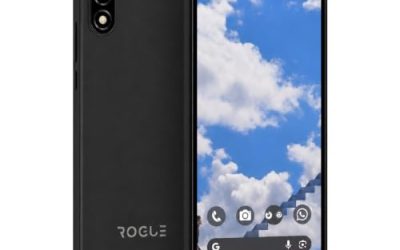
The Bolt One is a compact unlocked phone with a 5.0 inch display, 32GB of storage, dual SIM, Android 14 Go, and a 2000mAh battery. It is for students who want a simple device for calls, texts, and basic apps, or for a first phone where a parent wants to limit distractions. The compact size slips into a pocket easily, and the warranty listing offers a little reassurance on a device that may be handled roughly.
- Strength: Android 14 Go keeps the interface light.
- Strength: a US warranty is listed, which is useful for a first phone.
- Trade-off: the 2000mAh battery is small for a school day.
Skip it if you stream video, read long documents on screen, or run many apps at once.
Ulefone Note 22
A compact 5 inch 4G phone running Android 16 Go, with 3GB of RAM plus virtual memory, 32GB of storage, expandable up to 2TB, and a removable 3000mAh battery. It is aimed at users who value small size and a swappable battery. A student who spends long days away from outlets can carry a second cell in a bag and swap it between lectures, which is something most modern phones simply cannot offer.
- Strength: the removable battery allows a spare for long days.
- Strength: a recent Android 16 Go version is listed.
- Trade-off: the 20GB RAM figure is mostly virtual, with 3GB physical.
Skip it if you want a large screen for reading or watching video, since a 5 inch panel is small for those tasks.
Ulefone Note 23
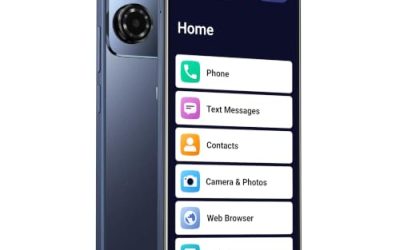
The Note 23 steps up to a 6.56 inch 90Hz screen, a 5000mAh battery, 3GB of RAM plus 32GB of storage, a Unisoc T7100 processor, and Android 16. It targets students who read and watch on the phone, whether that means course readings, lecture recordings, or a quick episode on the commute. A larger smooth screen and a big battery make for a more comfortable day than the compact models.
- Strength: the 5000mAh battery and 90Hz display suit long days.
- Strength: storage can be expanded through a card up to 2TB.
- Trade-off: 3GB of physical RAM limits heavy multitasking.
Skip it if you need a compact phone that fits easily in a small pocket.
MIRO 4G Android 14 Go
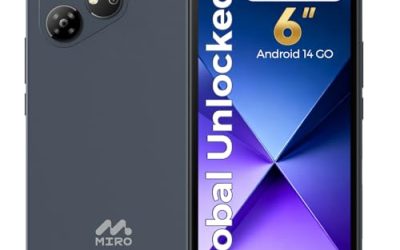
The MIRO offers a 6 inch display, 2GB of RAM plus 32GB of storage with 256GB expandable, a 3000mAh battery, dual SIM, and a 3.5mm headphone jack. It suits students who use wired earbuds and want a simple device. Wired audio avoids the charging and pairing hassles of wireless earbuds, and it is a handy feature for lecture recordings and language practice. The expandable storage means you can load a semester of audio without clearing space.
- Strength: the headphone jack avoids adapters.
- Strength: dual SIM supports separate numbers for home and school.
- Trade-off: 2GB of RAM is the minimum for daily use.
Skip it if you multitask across several apps, because 2GB of RAM leaves little headroom.
Redbeat D5
This Android 14 phone lists an 8-core 1.6GHz processor, a 6.52 inch IPS display, a 5000mAh battery, 6GB of RAM, and 64GB of storage expandable up to 1TB. It carries 13MP and 5MP cameras and dual 4G support. That mix of memory, storage, and battery makes it the most balanced all-round phone on the list for a student who runs a chat app, a notes app, and a browser together.
- Strength: 6GB of RAM is the highest on this list.
- Strength: 64GB of storage and 1TB expansion give room for coursework.
- Trade-off: the 1.6GHz processor is modest for gaming.
Skip it if you want the newest Android version, or if you need a fast processor for demanding games.
HeyxFome Unlocked Phone
A 6.5 inch HD+ phone listed for T-Mobile use, with 6GB RAM options, 16GB of storage, a 256GB TF card, octa-core processor, a 13MP camera, and dual SIM. It is for students who store a lot of media on a card, such as music, saved videos, and scanned notes. The large screen is comfortable for reading, and the card slot keeps the internal memory free for apps.
- Strength: a large display with card storage up to 256GB.
- Strength: octa-core processor and 6GB of RAM are listed.
- Trade-off: Android 12 is older and may miss updates.
Skip it if security updates are a priority, since an older Android version is a poor fit for banking and school accounts.
Which One Fits Your Situation
You commute and need a battery that lasts
The Ulefone Note 23 combines a 5000mAh battery with a larger display, which suits students who commute and read on the way. The Redbeat D5 is a close alternative if you care more about memory.
You want the most memory on a budget
The Redbeat D5 has 6GB of RAM and a 5000mAh battery, which makes it the most comfortable choice if you switch between a messaging app, a notes app, and a browser all day.
You prefer a small phone and spare battery
The Ulefone Note 22 lets you swap batteries in a compact body, so a spare cell in the bag covers an all-day schedule away from outlets.
You listen on wired earbuds
The MIRO 4G has a 3.5mm headphone jack and dual SIM, so you can use wired earbuds and keep a separate number for school or family. The Unnecto Bolt One is the simplest option if a basic phone is all you need.
Common Mistakes
- Counting virtual RAM as real memory and expecting flagship speed.
- Skipping a carrier band check and ending up without LTE.
- Choosing a tiny battery for a full school day.
- Ignoring the Android version and its update support.
- Filling a 32GB phone with downloads and forgetting to buy a memory card, then finding there is no room for updates.
Related guides
- Gaming Chair Cushions And Lumbar Supports
- How To Use Camelcamelcamel For Amazon Deals
- Business Laptops For Graphic Designers
Frequently Asked Questions
How much RAM does a student phone need?
3GB is a workable minimum for messaging and notes, while 6GB feels smoother when you switch between apps. Physical RAM matters more than virtual RAM. If a listing quotes a large total, look for the real figure in the fine print before you decide.
Are Go edition phones good for students?
They run well on low memory, but offer a lighter app experience. They fit light use and are not ideal for heavy multitasking.
Do I need 5G?
Most of these phones are 4G only, which is enough for messaging, video calls, and streaming at typical speeds. 5G is a bonus, not a necessity.
Will these work on my carrier?
Check the band list on each product page against your carrier. Unlocked phones from lesser-known brands sometimes lack support for all US bands. Ask the seller or read the specification tab before you buy, and keep the return window in mind in case calls or data do not work.
Related guides
More from Amazon
Programs that pair well with the guide above. Offers and eligibility are set by Amazon and may change.
Free shipping on eligible items, Prime Video and more. Eligible new members can start with a free trial.
Start a Prime free trialAd-free music streaming. Eligible new subscribers can start with a free trial.
Try Music Unlimited freeA Prime membership for ages 18-24 with a trial period. Eligibility is set by Amazon.
See Prime for Young AdultsAudiobooks and podcasts to listen to on the go. Eligible new members can start with a free trial.
Try Audible freeAs an Amazon Associate we earn from qualifying purchases.