Water is the quiet killer of phones: a dropped handset in a sink, a surprise downpour on a trail, a kayak trip that goes sideways. Buyers searching for waterproof smartphones in 2026 usually want one of two things, a regular phone that shrugs off splashes, or a tougher device that can be hosed off after a muddy shift. The listings below belong mostly to the second group, because most of the truly waterproof choices at accessible tiers come from rugged-phone makers rather than from mainstream brands.
That shapes how to shop. Instead of comparing camera sensors and glass finishes, you compare ingress ratings, battery size, and how clearly the seller states the protection. The six phones here were picked from the brief after removing repeat listings of the same model, and each is judged only on facts in its product title. Where a title says “waterproof” without naming a rating, this guide says so, because a named standard such as IP68 or IP69K is a much stronger promise than a general claim.
Our Top Picks


Top 3 picks at a glance
Quick Picks
As an Amazon Associate we earn from qualifying purchases at no extra cost to you.


| Product | Best for | Key spec from the title |
|---|---|---|
| Ulefone Armor X12 | Basic waterproof phone, lowest tier | 6GB + 32GB, 4860mAh, Android 13 |
| FOSSIBOT F101P | Compact build with huge battery | 5.45″ screen, 10600mAh, 123dB |
| Ulefone Armor X16 Pro 5G | 5G speed and a high-refresh screen | Dimensity 6300, 16GB + 256GB, 120Hz |
| Blackview Rugged (18GB + 256GB) | Named IP69K protection plus storage | IP69K, 10000mAh, 90Hz, Android 16 |
| Ulefone Armor X12 Pro | Upgraded budget option | Android 16, 8GB + 64GB, 4860mAh |
| CAT S31 | Warranty-focused buyers on GSM carriers | Network certified GSM, 2-year warranty |
How to Choose
Ratings that actually mean something
Look for a named ingress rating. IP67 covers brief immersion, IP68 covers longer submersion to a stated depth, and IP69K covers high-pressure, high-temperature jets. A title that simply says “waterproof” leaves the depth and time unknown. Also remember that seals wear: saltwater, soapy water, and repeated drops can degrade a rated phone over time, so rinse with fresh water after the beach and keep the port covers fully closed. Rugged phones usually use rubber plugs or flaps over the charging port, and a plug left slightly open defeats the whole rating, so check the seal each time you finish charging.
Battery and charging
Waterproof rugged phones carry bigger batteries than regular models, typically 4800mAh up to 10600mAh in this group. More capacity means a thicker, heavier phone. If you are a swimmer, kayaker, or fisher, a mid-size battery is plenty; a 10000mAh phone is overkill unless you spend days off the grid. Check the charging wattage when the title lists it, since a huge battery with slow charging is frustrating, and remember that wet or corroded charging ports are the most common reason a waterproof phone stops charging.
Software, network, and storage
A phone running Android 16 will generally be supported longer than one running Android 13, though smaller brands rarely match mainstream update schedules. Confirm carrier bands before buying an unlocked phone; some titles name T-Mobile or GSM only. For storage, 64GB is a floor if you shoot photos, and expandable storage helps if the phone doubles as a trail camera.
What to ignore and where budget models cut corners
Ignore megapixel inflation and “AI” labels that come from the seller. Budget waterproof phones cut corners on processors and camera quality, so expect slower apps and mediocre photos. A loud speaker rating in decibels is a nice extra for noisy places but does not tell you anything about sound quality. Face recognition and similar convenience features are fine to have but should never be the reason you pick one model over another, since the rating, battery, and carrier fit carry far more weight.
The 6 Best Options
Ulefone Armor X12
This is the entry-level pick for a first waterproof phone. The title lists an octa-core processor, Android 13, 6GB of RAM with 32GB of storage, dual SIM global 4G LTE, a 4860mAh battery, and face recognition. It suits a parent buying a backup phone for a child who spends time at the pool or a casual user who wants basic protection without a large device. Think of it as insurance for a phone that lives near sinks, pools, and playgrounds rather than a showcase of current hardware, and budget your expectations for app speed accordingly.
- Strength: the lowest-commitment way into a rugged, water-focused phone.
- Strength: dual SIM with global 4G LTE helps with travel.
- Trade-off: 32GB of storage and Android 13 are both on the older side.
Skip it if you want long software support or plenty of storage.
FOSSIBOT F101P
A compact rugged phone with a very large battery for its size. The title lists a 5.45-inch screen, 7GB of RAM with 64GB of storage and support for up to 1TB, a 10600mAh battery, 18W charging, a 123dB speaker, OTG, and 4G dual SIM. It fits anglers, campers, and anyone who prefers a smaller screen but needs a battery that lasts. The OTG mention means it can read a USB drive or camera card directly, a small but handy extra for people who shoot photos on a trip and want to move files without a laptop.
- Strength: a 10600mAh battery in a 5.45-inch body.
- Strength: storage expansion up to 1TB for photos and maps.
- Trade-off: the title says waterproof but does not name an IP rating.
Skip it if you want a large display or a named water-resistance standard.
Ulefone Armor X16 Pro 5G
The modern, faster option. The title lists 5G, a MediaTek Dimensity 6300 processor, 16GB of RAM with 256GB of storage, Android 16, a 64MP and 25MP main camera, a 10360mAh battery, and a 6.56-inch 120Hz screen with a Corning Gorilla mention. It is for buyers who want rugged water protection plus a screen that feels smooth. A household with several people sharing one durable phone, or a traveler who streams maps and video while moving through wet weather, will find the extra memory and refresh rate keep the experience from feeling like a compromise.
- Strength: 5G and a 120Hz display make it feel closer to a regular phone.
- Strength: 16GB and 256GB cover heavy app and photo use.
- Trade-off: the title excerpt shown does not state a specific IP rating.
Skip it if you only need basic calls and texts at a lower tier.
Blackview Rugged (18GB + 256GB)
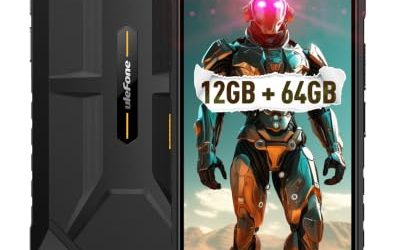
The model with the clearest water claim. The title lists IP69K, 18GB of RAM with 256GB of storage expandable to 2TB, a 10000mAh battery, Android 16, a Gemini AI mention, a 6.56-inch 90Hz screen, and T-Mobile dual SIM. It suits users who want a named high-pressure water rating and generous storage in one phone. For a fishing guide or a paddler who needs offline maps, photos, and a full day of battery, those three pieces together matter more than any single headline number.
- Strength: IP69K is explicitly named.
- Strength: storage can grow to 2TB.
- Trade-off: the T-Mobile mention narrows carrier flexibility.
Skip it if you use a different carrier or want a compact phone.
Ulefone Armor X12 Pro
An upgraded sibling of the first pick. The title lists Android 16, 8GB of RAM with 64GB of storage, an octa-core processor, dual SIM global 4G LTE, a 4860mAh battery, and face recognition. It is a sensible step up for someone who wants a newer Android version and more memory in the same small-battery package. It keeps the same compact charging profile as the standard model, so the main gain is software and headroom rather than endurance, and the price premium should be weighed against that.
- Strength: newer Android version than the standard X12.
- Strength: 64GB of storage is a more usable minimum.
- Trade-off: the 4860mAh battery is modest compared with the rest of the group.
Skip it if you need multi-day battery life.
CAT S31
A different kind of purchase, built around certification and warranty. The title lists an unlocked rugged waterproof smartphone, network certified for GSM carriers, US optimized with a single SIM, and a 2-year warranty including a screen guarantee. It suits buyers on GSM networks who value warranty coverage and a recognizable name over the latest specs. It also appeals to people who carry a work SIM on a GSM carrier and want a phone that has been certified for it, instead of gambling on band coverage with an unlocked import.
- Strength: a 2-year warranty is listed in the title.
- Strength: network certification for GSM carriers.
- Trade-off: single SIM only, and the title lists none of the modern specs of the newer picks.
Skip it if you want 5G, high refresh rates, or big storage.
Which One Fits Your Situation
You swim, kayak, or fish regularly
The Blackview Rugged is the safest choice because it names IP69K. The FOSSIBOT F101P suits you if you prefer a small screen and a huge battery, though you should confirm its rating with the seller first because the title only says waterproof. Rinse either phone with fresh water after salt exposure.
You want 5G and a smooth screen
Pick the Ulefone Armor X16 Pro 5G. It is the only 5G model here and has a 120Hz display, so it is the one that most resembles an everyday flagship while still carrying rugged intent.
You need an inexpensive backup or kid-friendly phone
The Ulefone Armor X12 or X12 Pro keep the cost down, with the Pro offering newer Android and more memory.
You value warranty above specs
The CAT S31 stands out with its listed 2-year warranty and network certification for GSM carriers.
Common Mistakes
- Treating “waterproof” as a guarantee without a named IP rating.
- Skipping a fresh-water rinse after saltwater or pool use.
- Buying an unlocked phone without checking carrier bands.
- Choosing the biggest battery when a smaller, lighter phone would be more comfortable.
- Ignoring that older Android versions will receive fewer updates.
Related guides
- Gaming Chair Cushions And Lumbar Supports
- Warranty Considerations When Buying On Sale
- Business Laptops For Graphic Designers
Frequently Asked Questions
Can I take a waterproof phone swimming?
Only if its rating covers submersion and you stay within the stated depth and time. IP68 usually covers that; IP69K is about high-pressure spray rather than depth.
Does waterproofing last forever?
No. Seals degrade with drops, heat, and repeated exposure to soap or saltwater. Keep port covers shut and rinse the phone after use. If the phone has taken a hard drop, treat its water rating as unproven until you have inspected the seals and plugs.
Are rugged phones the only waterproof option?
Many mainstream phones carry water ratings, but this list focuses on rugged models where protection is a headline feature, usually at lower tiers. The trade is a thicker body, a plainer camera, and slower software updates than the big mainstream brands offer.
Do I need 5G?
Not unless your area has good 5G coverage and you stream heavily. 4G LTE is enough for most calls, maps, and browsing, and it often delivers better battery life than a 5G phone in weak-signal areas such as trails and lakes.
Related guides
More from Amazon
Programs that pair well with the guide above. Offers and eligibility are set by Amazon and may change.
Free shipping on eligible items, Prime Video and more. Eligible new members can start with a free trial.
Start a Prime free trialAd-free music streaming. Eligible new subscribers can start with a free trial.
Try Music Unlimited freeA Prime membership for ages 18-24 with a trial period. Eligibility is set by Amazon.
See Prime for Young AdultsAudiobooks and podcasts to listen to on the go. Eligible new members can start with a free trial.
Try Audible freeAs an Amazon Associate we earn from qualifying purchases.