
The best gaming PC for DOOM: The Dark Ages in this set is the KOTIN listing with the 12GB RTX 5070, because it pairs that card with a Ryzen 7 9700X, 32GB of DDR5 and an 850W Gold supply, and that mix leaves room to raise settings later. The game is built around ray-tracing hardware, so the graphics card decides most of your experience, and the cheaper listings below differ mainly in GPU tier and video memory rather than in anything else on the spec sheet. The sections that follow give a comparison table, one write-up per PC, a power-supply worked example, a four-gate decision flow and a compatibility checklist you can run against any listing.
Our Top Picks
Top picks at a glance

KOTIN Prebuilt Gaming PC RTX 5070 12GB, Ryzen 7 9700X, 32GB DDR5, 1TB SSD | 11.3in Smart Display, 850W 80+ Gold PSU, 360mm Liquid Cooler, WiFi 7, 1440p 4K ARGB Windows 11 Gaming Desktop Computer


As an Amazon Associate we earn from qualifying purchases. Product prices and availability are accurate as of the date/time indicated.

Skytech Gaming PC Desktop, Intel i5 14400F, RTX 5060, 16GB RAM, 1TB SSD | Windows 11, NVMe SSD, DDR5 6000, 750W GOLD PSU, Wi-Fi 5, Archangel 5 Series


As an Amazon Associate we earn from qualifying purchases. Product prices and availability are accurate as of the date/time indicated.

The Horizon Autherium Dragon RGB I9 RTX Gaming PC || 64GB RAM || 5TB Storage || Core I9 Upto 5.4Ghz || RTX 5070 OC || Windows 11 PRO || 360MM AIO || 2.4GB/s WiFi, VR, Gaming Ready Desktop Computer




As an Amazon Associate we earn from qualifying purchases. Product prices and availability are accurate as of the date/time indicated.

KOTIN Gaming PC Desktop, i5-14400F, RTX 5060 Ti 8G, 16GB DDR4, 1TB NVMe SSD | Prebuilt Tower Computer with Wi-Fi, ARGB Cooling, Windows 11 Home, 650W 80+ Gold PSU for 1080p/1440p PC Gaming & Streaming


As an Amazon Associate we earn from qualifying purchases. Product prices and availability are accurate as of the date/time indicated.

Skytech Gaming PC Desktop, Ryzen 7 5700, RTX 5060, 32GB RAM, 1TB SSD | Windows 11, NVMe SSD, DDR4 3200, 650W GOLD PSU, Wi-Fi 5, Crystal Series


As an Amazon Associate we earn from qualifying purchases. Product prices and availability are accurate as of the date/time indicated.

KOTIN Gaming PC Desktop, Ryzen 7 8700F, RTX 5060 Ti 8GB, 16GB DDR5, 1TB SSD | Prebuilt Gaming Tower with WiFi 7, Windows 11 Home, DLSS 4, ARGB Cooling, 650W Gold PSU for 1080p/1440p PC Gaming & Streaming


As an Amazon Associate we earn from qualifying purchases. Product prices and availability are accurate as of the date/time indicated.

ZYNEEX Prebuilt Gaming Desktop PC, AMD Ryzen 5 5500, GeForce RTX 3050 6GB,16GB DDR4 3200MHz RAM, 1TB NVMe SSD, ARGB Air Cooling, Wi-Fi,Tower Computer for Gaming, Streaming, Editing


As an Amazon Associate we earn from qualifying purchases. Product prices and availability are accurate as of the date/time indicated.
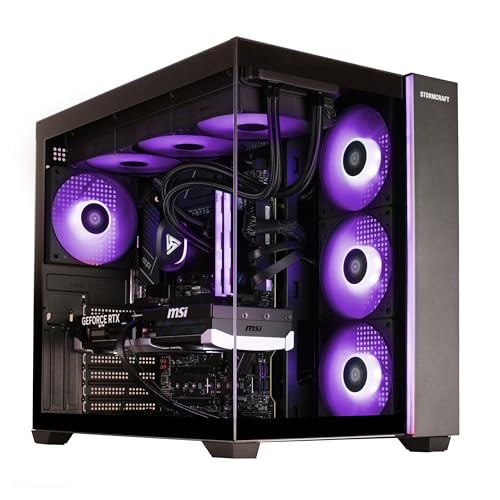
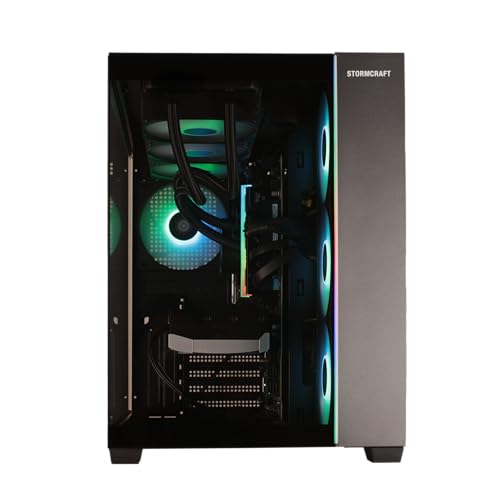
STORMCRAFT Falcon U7 270K Plus PC Gaming,RTX 5060 Ti 16GB,32GB DDR5,1TB SSD | Intel Core Ultra 7 Series,6000MHz RGB DRAM,360mm AIO,B860 Chipset,850W Gold,10 RGB Fans,Wi-Fi 7,Win 11 Home Desktop Computer





As an Amazon Associate we earn from qualifying purchases. Product prices and availability are accurate as of the date/time indicated.
| Model | Key point from the title | Price tier | Best for |
|---|---|---|---|
| KOTIN RTX 5070 / Ryzen 7 9700X | 12GB RTX 5070, 32GB DDR5, 850W Gold, 360mm liquid cooler, WiFi 7 | Premium | Highest GPU class that is not a bargain-bin gamble |
| STORMCRAFT Falcon U7 270K Plus | RTX 5060 Ti 16GB, 32GB DDR5, 850W Gold, 360mm AIO, B860, WiFi 7 | Premium | Players who worry about video memory |
| The Horizon Autherium Dragon | RTX 5070 OC, 64GB RAM, 5TB storage, Core i9, 360mm AIO | Premium | Gaming plus heavy multitasking, if the odd wording checks out |
| KOTIN Ryzen 7 8700F / RTX 5060 Ti 8GB | 16GB DDR5, 1TB SSD, WiFi 7, 650W Gold | Mid | 1080p and 1440p with upscaling |
| KOTIN i5-14400F / RTX 5060 Ti 8G | 16GB DDR4, 1TB NVMe, 650W Gold | Mid | Buyers who want the 5060 Ti class for less |
| Skytech Archangel 5 | i5 14400F, RTX 5060, 16GB, DDR5 6000, 750W Gold | Mid | Simple 1080p build with DDR5 |
| Skytech Crystal | Ryzen 7 5700, RTX 5060, 32GB DDR4, 650W Gold | Budget to mid | Lots of RAM, older platform |
| ZYNEEX Ryzen 5 5500 / RTX 3050 6GB | 16GB DDR4, 1TB NVMe, ARGB air cooling | Budget | Entry-level only, with caveats |
What this game asks of a PC
Start with the one requirement that rewrites a shopping list: publisher requirement pages for this title have called for a graphics card with hardware ray-tracing support. That is a different filter from the usual “can it hit 60 frames” question, because cards from before the ray-tracing generation are simply excluded. Every PC in this roundup carries a modern RTX card, so the filter does not remove any of them, but it does explain why the lowest listing here, the RTX 3050 6GB tower, deserves a harder look than its price suggests.
After that, the shopping order is predictable. The graphics card comes first, then its video memory, then the processor, and only after those do the extras such as RGB fans and displays matter. Nothing on this page claims a frame rate for any listed machine. Published requirements, upscaling support and buyer feedback are the only legitimate inputs, so use the store page for the current minimum and recommended lines.
Upscaling and frame generation change the math. DLSS on GeForce cards and FSR on most others let a mid-range card render at a lower internal resolution and present a sharper image than that suggests, and the RTX 50-series listings advertise newer versions of these tools. They are best treated as a way to buy a tier down without feeling it, not as a license to buy the weakest card.
Video memory deserves its own sentence. Modern ray-traced games with high-resolution textures tend to push against 8GB at 1440p, and the usual symptoms are texture pop-in and stutter rather than a crash. Processor demands are gentler in a single-player shooter than in strategy games, so a Core i5-14400F or Ryzen 7 8700F is not a bottleneck here. Storage should be an NVMe SSD with free space.
How these picks were chosen
The comparison rests on published specifications, manufacturer documentation and buyer reviews of the listings, read against the typical needs of a ray-tracing-heavy single-player shooter. Each PC is judged on graphics class, video memory, system RAM generation, power supply headroom, cooling, upgrade path and how honest or confusing the title is. Nobody on the team used or measured these units. Where a title leaves something out, such as a power supply brand or the number of free storage slots, this page says so and points you to the listing instead of guessing.
The eight PCs, one by one
KOTIN Prebuilt Gaming PC, RTX 5070 12GB and Ryzen 7 9700X
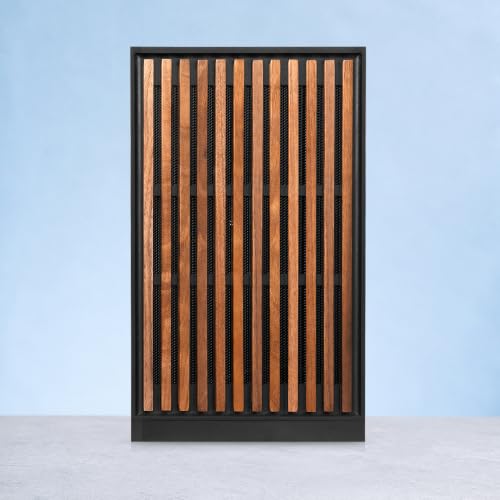
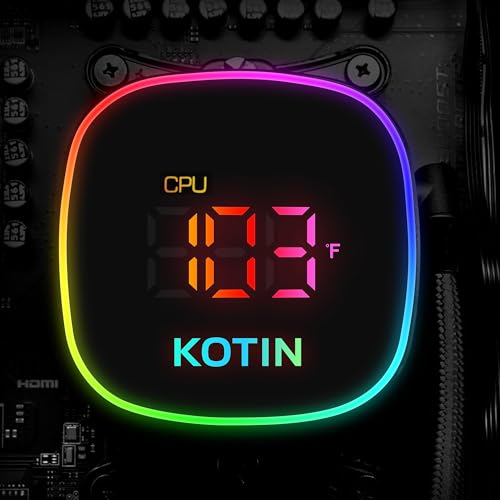
This is the only listing in the set that combines a 12GB RTX 5070, a Ryzen 7 9700X, 32GB of DDR5 and a 1TB SSD, and the title adds an 850W 80+ Gold supply, a 360mm liquid cooler and WiFi 7. For a game that leans on ray-tracing hardware, a 12GB card in the RTX 5070 class gives more room for textures and effects than the 8GB cards further down. The title also mentions an 11.3-inch smart display. Treat that as a styling extra and check the listing for what it shows and whether it needs software running in the background.
The title says 1440p and 4K. Read that as marketing reach: the 5070 class is generally pitched at 1440p, and 4K in a ray-traced shooter would normally rely on upscaling. The main practical limit is the single 1TB drive, because modern shooters are large and Windows plus a couple of other games fill it fast.
- Pros: 12GB graphics memory; 32GB DDR5; 850W Gold supply leaves wide margin; WiFi 7 for future routers
- Cons: only 1TB of storage; smart display adds a feature you may not use; premium pricing relative to the set; PSU brand not named in the title
Ask before buying: is there a free M.2 slot, and who stands behind the warranty on the liquid cooler?
STORMCRAFT Falcon U7 270K Plus with RTX 5060 Ti 16GB
The distinguishing line in this title is the 16GB RTX 5060 Ti. Most 5060 Ti listings carry 8GB, so this one gives the video memory headroom that ray-traced shooters reward. It also lists 32GB of DDR5 at 6000MHz, an Intel Core Ultra 7 processor on a B860 board, a 360mm AIO, an 850W Gold supply, ten RGB fans and WiFi 7. The name “270K Plus” is not a processor model the title explains, so read the listing page for the exact CPU before you rely on any assumption about its speed.
Against the RTX 5070 listings, the trade is memory capacity versus raw graphics class. A 16GB card holds large textures comfortably, while a 12GB 5070 is generally the faster graphics chip of the two. If you play at 1440p and like high texture settings, the extra memory is attractive. If you chase frame rate at a high refresh, the 5070 class has the edge on paper.
- Pros: 16GB video memory; 32GB DDR5; 850W Gold; WiFi 7; B860 platform with a modern socket
- Cons: CPU name “270K Plus” needs checking; ten fans may be loud; 1TB storage only; lesser-known brand
Ask before buying: which exact Core Ultra model is installed, and can fan speeds be changed in the BIOS?
The Horizon Autherium Dragon with RTX 5070 OC and Core i9
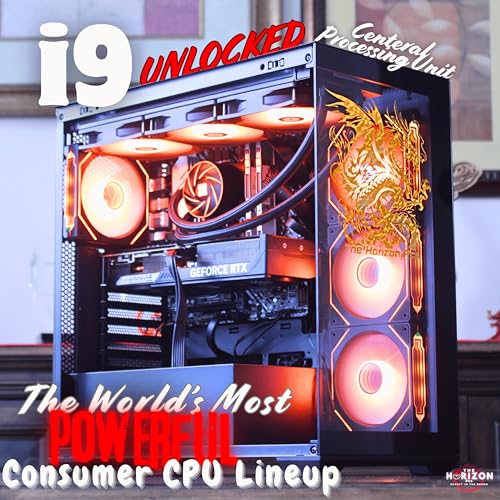
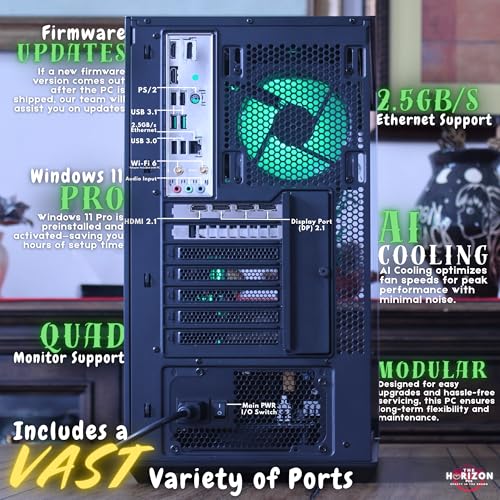
On raw numbers this is the most generous title in the group: an RTX 5070 OC, 64GB of RAM, 5TB of storage, Windows 11 Pro, a 360mm AIO and an unspecified Core i9 quoted at up to 5.4GHz. Sixty-four gigabytes of memory is far more than a shooter needs, and 5TB is welcome if you keep a large library installed. The problem is clarity. The title never names the exact i9 model, does not say whether the RAM is DDR4 or DDR5, and describes its wireless as “2.4GB/s WiFi”, which is not a standard way to state wireless speed because Wi-Fi is normally quoted in megabits or gigabits per second.
None of that means the machine is poor, but it does mean you should insist on the full parts list before paying. The RTX 5070 OC part is the same GPU class as the KOTIN and Skytech 5070 builds, so gaming performance should sit in the same neighborhood if the cooling and power are sound. The extra RAM and storage are the real differentiators.
- Pros: RTX 5070 class; 64GB RAM; 5TB storage; Windows 11 Pro; 360mm AIO
- Cons: CPU model, RAM type and PSU wattage unspecified; unusual wireless wording; premium tier; extras beyond gaming needs
Ask before buying: what is the exact CPU, memory generation, motherboard and power supply?
KOTIN Ryzen 7 8700F with RTX 5060 Ti 8GB and DDR5
This listing is a balanced mid-tier tower: a Ryzen 7 8700F, an 8GB RTX 5060 Ti, 16GB of DDR5, a 1TB SSD, WiFi 7, ARGB cooling and a 650W Gold supply. The title mentions DLSS 4, and that matters here because upscaling and frame generation are how an 8GB card stretches into 1440p in a demanding game. At 1080p the card should have less trouble, and the DDR5 platform gives a better upgrade runway than the AM4 builds elsewhere in this set.
The 8GB frame buffer is the thing to weigh. In this tier you are paying for a card that is faster than the plain RTX 5060 but holds the same amount of memory as many cheaper cards, so the benefit shows up in speed, not in capacity. The 650W supply is within normal guidance for this class, but there is little spare capacity if you later upgrade to a hungrier card.
- Pros: DDR5 platform; WiFi 7; DLSS 4 support; sensible 1080p and 1440p target
- Cons: 8GB video memory; 16GB RAM only; 650W leaves limited upgrade margin; single 1TB drive
Ask before buying: is the RAM a single stick or a dual-channel pair, and is a spare slot free?
KOTIN i5-14400F with RTX 5060 Ti 8G and 16GB DDR4
This sibling swaps the platform for an Intel Core i5-14400F with 16GB of DDR4 and a 1TB NVMe SSD, keeping the RTX 5060 Ti 8G and a 650W 80+ Gold unit. The title positions it for 1080p and 1440p gaming and streaming. Graphics performance should be in the same class as the Ryzen version, since the GPU is the same name, and for a game that is graphics-led the processor difference between a 14400F and an 8700F is small.
The reason to choose or skip it comes down to platform. The DDR4 board is a dead end for memory upgrades beyond the current generation, which matters only if you plan to keep the machine for many years. If the price is meaningfully lower than the DDR5 KOTIN, the saving is real for a player who mostly cares about the graphics card.
- Pros: RTX 5060 Ti class; solid mid-range CPU; 650W Gold supply; likely lower price than the DDR5 sibling
- Cons: DDR4 platform; 8GB video memory; 16GB RAM; older socket upgrade path
Ask before buying: how much cheaper is it than the DDR5 version once shipping and warranty are compared?
Skytech Archangel 5 with Core i5 14400F and RTX 5060
Skytech’s Archangel 5 lists a Core i5 14400F, an RTX 5060, 16GB of RAM, a 1TB SSD, DDR5 at 6000, a 750W Gold supply and Wi-Fi 5. The 750W unit is more generous than the 650W supplies on several rivals, which helps if you plan a later card upgrade. The RTX 5060 is a step below the 5060 Ti, so this machine fits 1080p play with settings tuned and upscaling enabled better than it fits a 1440p ambition.
Wi-Fi 5 is the weakest link in the title, since most current routers support something newer, and a wired Ethernet connection removes the issue for a single-player game anyway. DDR5 memory at 6000 is a pleasant surprise at this tier and gives some future-proofing on the memory side.
- Pros: DDR5 6000; 750W Gold supply; i5 14400F is a sensible CPU for a graphics-led game
- Cons: RTX 5060 is the entry of its generation; video memory size not stated in the title; Wi-Fi 5; 16GB RAM
Ask before buying: how much video memory does the RTX 5060 in this build carry, as stated on the product page?
Skytech Crystal with Ryzen 7 5700 and RTX 5060
The Crystal Series pairs a Ryzen 7 5700 with an RTX 5060, 32GB of DDR4 3200, a 1TB SSD and a 650W Gold supply. The 32GB of memory is the attraction, since it is rare at this tier and handy if you keep browsers and chat apps open. The Ryzen 7 5700 is an eight-core part on the older AM4 platform, which is perfectly adequate for a graphics-led shooter but offers a limited upgrade path because new Ryzen generations moved to a different socket.
Compared with the Archangel above, this build trades DDR5 and a stronger supply for twice the RAM. For a game that does not need more than 16GB, that RAM is a convenience feature rather than a performance feature, so the choice rests on what else the PC will do.
- Pros: 32GB RAM; eight-core CPU; 650W Gold; competitive tier
- Cons: AM4 and DDR4 platform; Wi-Fi 5; RTX 5060 class graphics; limited CPU upgrade path
Ask before buying: is the motherboard a full-size ATX board with a spare PCIe slot and BIOS support for later CPUs?
ZYNEEX Ryzen 5 5500 with RTX 3050 6GB
This is the weakest class in the set, and the page should say so plainly. The title lists a Ryzen 5 5500, a GeForce RTX 3050 6GB, 16GB of DDR4 3200, a 1TB NVMe SSD, ARGB air cooling and Wi-Fi. The RTX 3050 6GB supports ray tracing in hardware, but it is among the least capable cards that do, and ray-traced shooters are hard on entry hardware. Its 6GB of video memory is also below the 8GB mark that many current games treat as a practical floor for higher textures.
It can make sense for someone who wants to experience the game at low settings, 1080p and aggressive upscaling, and who has a hard budget cap. It is not the machine for a player who wants a smooth high-refresh experience.
- Pros: lowest cost in the set; 1TB NVMe; 16GB RAM; hardware ray-tracing support
- Cons: 6GB video memory; entry-class GPU for a demanding game; AM4 platform; PSU not named
Ask before buying: will the extra spend on an RTX 5060 build save you from replacing this one within a year?
Which PC for which player
| If you are… | Look at | Why | Watch out for |
|---|---|---|---|
| Playing at 1440p with high textures | KOTIN RTX 5070, STORMCRAFT 16GB | 12GB and 16GB of video memory | Single 1TB drive on both |
| Wanting maximum RAM and storage | The Horizon Autherium Dragon | 64GB and 5TB in the title | Unnamed CPU, memory type and PSU |
| On a 1080p monitor, mid budget | KOTIN 8700F or Skytech Archangel 5 | DDR5 platforms with a modern GPU | 8GB on the Ti card; confirm the 5060 memory size |
| Saving every dollar on a 5060-class card | Skytech Crystal, KOTIN i5 DDR4 | Lower cost, older platform | DDR4 upgrade ceiling |
| On a strict entry budget | ZYNEEX RTX 3050 6GB | Lowest ray-tracing-capable entry | Low settings and heavy upscaling |
Buying guide for a ray-tracing-first shooter
Graphics tier and video memory
In this roundup the GPU names run from the RTX 3050 6GB up to the RTX 5070 12GB. Within one generation, the card name usually tells you the order: the RTX 5060 sits below the 5060 Ti, which sits below the 5070. Memory capacity does not always follow that ladder, which is why the 16GB 5060 Ti in the STORMCRAFT listing is interesting. A faster card with less memory can fall behind a slower card with more when textures overflow.
Processor and platform life
A graphics-led shooter rarely asks the processor to work hard, so the i5-14400F, Ryzen 7 8700F and Ryzen 7 5700 are all acceptable. The better question is platform life: DDR5 boards on newer sockets accept more future parts, while the AM4 builds are near the end of that socket. If you plan to change only the graphics card later, power supply capacity matters more than platform age.
| Spec concept | What to look for | Why it matters for this game |
|---|---|---|
| GPU family | RTX 50-series name in the title | Hardware ray tracing and current upscaling tools |
| Video memory | 12GB or 16GB for 1440p; 8GB acceptable at 1080p | Textures and ray-tracing buffers share the same pool |
| System RAM | 16GB minimum, 32GB comfortable | Background apps and Windows overhead |
| Storage | NVMe SSD, free M.2 slot | Large installs and patches |
| PSU | Named brand, 80+ Gold, enough wattage | Stability when the GPU spikes |
| Cooling | Named cooler, adjustable fans | Sustained load and noise |
Power supply worked example
Power supply sizing is the original piece of arithmetic to run before you order. The figures below are labeled estimates built on stated assumptions, not measurements: confirm each card’s recommended wattage on the manufacturer’s page, because board partners differ.
| Build class | GPU board power (assumed) | CPU under gaming (assumed) | Rest of system (assumed) | Sum | Sum with 40 percent headroom | Listing PSU |
|---|---|---|---|---|---|---|
| RTX 5060 class | about 145W | about 90W | about 75W | about 310W | about 435W | 650W to 750W |
| RTX 5060 Ti class | about 180W | about 90W | about 75W | about 345W | about 485W | 650W |
| RTX 5070 class | about 250W | about 120W | about 75W | about 445W | about 620W | 850W (KOTIN) |
The 40 percent headroom figure is a rule of thumb that covers transient power spikes, aging components and a later upgrade. By that rule, the 650W units on the 5060 Ti listings are fine for the card they ship with, and the 850W supply on the RTX 5070 and 5060 Ti 16GB builds is more than the sum requires, which is useful if you move up a class later. The unknown is the Horizon title, which names no wattage at all.
Four gates before you click order
- Gate one, the GPU. Is it an RTX 50-series card or the entry RTX 3050? If it is the 3050, are you content with low settings and upscaling?
- Gate two, the memory. Does your monitor resolution justify 12GB or 16GB, or will 8GB do?
- Gate three, the power. Does the PSU named in the listing meet the card maker’s recommended wattage with headroom?
- Gate four, the paperwork. Is there a named seller, a warranty period and a return window you can read?
Compatibility checklist
| Item | What to verify | Why |
|---|---|---|
| Ray-tracing support | GPU name matches the current requirement page | The game relies on it |
| Case clearance | Long cards and 360mm radiators fit the chassis | Matters if you swap parts later |
| Free expansion | Spare M.2, spare RAM slot, spare PCIe slot | Cheap upgrades later |
| Operating system | Windows 11 edition and activation status | Avoids a surprise cost |
| Display outputs | HDMI and DisplayPort versions on the card | High refresh at your resolution |
| Warranty | Length, who services it, shipping cost | Prebuilt sellers differ widely |
Mistakes buyers make
Paying for the display or RGB instead of the card. A smart display and ten RGB fans are visible features, but they do nothing for frame rate. Put the budget into the graphics tier first.
Treating “1440p 4K” in a title as a promise. Titles describe target markets, not guaranteed results. A 12GB RTX 5070 is a 1440p card first, and 4K in a ray-traced game usually means upscaling.
Ignoring the PSU line. A title that names a wattage but not a brand tells you half the story. A good unit protects the rest of the PC.
Verdict by use case
For the strongest overall result in this set, the KOTIN RTX 5070 listing is the safest recommendation, and the STORMCRAFT 16GB RTX 5060 Ti is the alternative if you value memory capacity. For a balanced mid-tier PC, the KOTIN Ryzen 7 8700F build with DDR5 is the neat choice. For a lower price, the Skytech Archangel 5 and Crystal fit 1080p. The ZYNEEX RTX 3050 tower is the last resort. If you are comparing other ranges, our prebuilt gaming PC roundup under 1500 covers the same mid tier, and picking the GPU tier first explains the ladder in more detail. If your budget is lower still, see these entry-level gaming desktops.
Frequently asked questions
Does DOOM: The Dark Ages need a ray-tracing graphics card?
Publisher requirement pages for the game have called for a GPU with hardware ray-tracing support, which rules out older cards that lack it. Every PC in this roundup carries an RTX 50-series or RTX 3050 class card that supports ray tracing in hardware, but the RTX 3050 6GB listing sits at the very bottom of that group. Always compare the current minimum and recommended lines on the store page against the exact graphics card named in the listing before ordering.
Is 8GB of video memory enough for this game?
It depends on resolution and texture settings. At 1080p with moderate texture quality, 8GB cards are commonly workable in modern ray-traced titles, but at 1440p with high textures video memory becomes the usual pinch point, and you may need to lower texture quality or lean on upscaling. If you want fewer compromises, the 12GB RTX 5070 listings and the 16GB RTX 5060 Ti listing give noticeably more room. Check the store page for the recommended VRAM figure.
How much system RAM should the PC have?
Sixteen gigabytes is a workable floor for the game alone, but 32GB leaves space for Windows, a browser, voice chat and capture software running beside it. Three of the eight listings include 32GB in the title, four list 16GB, and the Horizon model lists 64GB. DDR5 listings also give a longer upgrade runway than the DDR4 ones, though the difference in actual play is usually small compared with the graphics card.
Should I pay extra for a 360mm liquid cooler?
Not for the game’s sake. A good air cooler handles mid-range processors such as the Core i5-14400F, Ryzen 5 5500 or Ryzen 7 8700F without drama, and the graphics card produces most of the heat during play. A 360mm all-in-one mostly buys lower noise at sustained load and a cleaner look, and it adds a pump that can fail eventually. Choose by cooler warranty terms and fan noise reports, not radiator size alone.
Is a 650W power supply enough for these builds?
For the RTX 5060 and RTX 5060 Ti listings paired with a mid-range processor, a quality 650W Gold unit is generally within the manufacturer guidance for those cards, and the worked example in this article shows the arithmetic with stated assumptions. For RTX 5070 and larger cards, the 750W to 850W listings give more margin. Always check the card maker’s recommended wattage and confirm the PSU brand in the listing.
Related guides
More from Amazon
Programs that pair well with the guide above. Offers and eligibility are set by Amazon and may change.
Free shipping on eligible items, Prime Video and more. Eligible new members can start with a free trial.
Start a Prime free trialAd-free music streaming. Eligible new subscribers can start with a free trial.
Try Music Unlimited freeA Prime membership for ages 18-24 with a trial period. Eligibility is set by Amazon.
See Prime for Young AdultsAudiobooks and podcasts to listen to on the go. Eligible new members can start with a free trial.
Try Audible freeAs an Amazon Associate we earn from qualifying purchases.


