
Our Top Picks
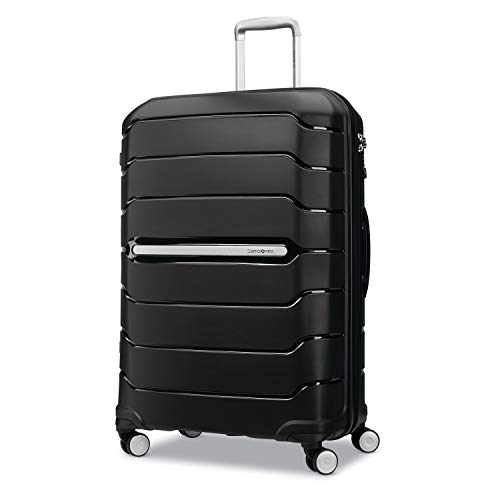 Samsonite Freeform Large Checked Luggage with Dual 360°Checked-Large Spinner20.95 x 13.78 x 31.1 inches9.5 poundsCheck on Amazon
 Amazon Basics 30" Hardside Large Checked LuggageLarge Checked20.7 x 12.6 x 30.7 inches12.7 PoundsCheck on Amazon
 Samsonite Freeform 28-Inch Large Luggage with Dual 360°Checked-Large Spinner20.9 x 13.8 x 31.1 inches9.59 poundsCheck on Amazon
Top 3 picks at a glance
Best Hardside Checked Luggage
The best hardside checked luggage for most travelers is a polycarbonate suitcase with four replaceable spinner wheels, a reinforced telescoping handle, a useful interior compression system, and exterior dimensions that stay below your airline’s checked-bag limit—typically 62 linear inches and 50 lb in economy.
There is no single best suitcase for every trip. A frequent flyer may value repair support and a long warranty more than minimum weight, while a family traveler may prefer maximum capacity and a lower replacement cost. The right choice depends on shell material, wheel construction, interior layout, airline restrictions, security hardware, and how realistically the case can be repaired after baggage-handler damage.
As an Amazon Associate we earn from qualifying purchases at no extra cost to you.


Quick Decision Guide
| Traveler or priority | Best specification target | Suitable product examples |
|---|---|---|
| Frequent international flyer | Thick polycarbonate shell, replaceable wheels, strong warranty, 28–30 inch size | Briggs & Riley Sympatico, Rimowa Essential |
| Maximum packing capacity | Expandable case with a deep lid, compression panels, and approximately 100–120 liters | Briggs & Riley Baseline or a large expandable polycarbonate case |
| Lower weight and moderate price | Polypropylene or lightweight polycarbonate, under about 11 lb for a large case | Samsonite Freeform, Travelpro Maxlite Air |
| Rough handling and occasional travel | Textured shell, recessed hardware, simple interior, readily available replacement parts | Midrange polycarbonate or polypropylene spinner |
| Premium repairability | Manufacturer service network, replaceable wheels and handles, documented warranty | Briggs & Riley or Rimowa |
Shell Materials: Polycarbonate Is Usually the Best Balance
Polycarbonate
Polycarbonate is the strongest all-around shell material for checked luggage. It can flex under impact rather than immediately cracking, and it usually offers a better strength-to-weight ratio than thick ABS plastic. A textured finish also hides scratches better than a glossy one.
Look for luggage described as 100% polycarbonate rather than a “polycarbonate” case whose main panels contain ABS. Mixed shells can still be good value, but they generally do not offer the same impact resistance as a full-polycarbonate construction.
Polypropylene
Polypropylene is light and naturally flexible. It is useful when every pound matters, especially because a checked-bag weight limit includes the suitcase itself. Its weakness is that thin polypropylene can feel less rigid, and some lightweight designs have less robust wheel housings or frames.
ABS and aluminum
ABS is often the least expensive option. It can work for occasional trips, but it is more likely to crack after repeated impacts or cold-weather handling. Aluminum is rigid, attractive, and easy to close securely, but it is heavier, more expensive, and prone to dents. It also usually gives up some interior capacity because of its frame and latches.
For most buyers, the material ranking is full polycarbonate first, well-built polypropylene second, aluminum for premium durability and appearance, and ABS mainly when purchase price is the overriding concern.
Size and Capacity: Check Linear Inches Before Liters
Airlines commonly define a standard checked bag by adding length, width, and height. The familiar limit is 62 linear inches, which could mean 30 × 20 × 12 inches. However, airlines can impose different limits, and oversized fees may apply even when a suitcase is only slightly larger.
| Nominal case size | Typical exterior dimensions | Approximate linear inches | Usable capacity range |
|---|---|---|---|
| 24-inch checked case | 26 × 17 × 11 inches | 54 inches | 60–75 liters |
| 26-inch checked case | 28 × 18 × 12 inches | 58 inches | 75–95 liters |
| 28-inch checked case | 30 × 20 × 12 inches | 62 inches | 95–115 liters |
| Large expandable case | 31 × 21 × 13 inches when expanded | 65 inches | 110–135 liters |
These are useful planning ranges, not universal specifications. Wheels, handles, corner guards, and expansion zippers may be included in the manufacturer’s exterior measurements—or omitted—so measure the case in its travel configuration.
A simple capacity calculation explains why the largest case is not always the best choice. Suppose a 28-inch case has 105 liters of interior space but weighs 12 lb. If your airline allows 50 lb, the contents can weigh at most:
50 lb limit − 12 lb suitcase = 38 lb of belongings.
A lighter 9 lb case may provide slightly less volume but leave 3 lb more for clothing, shoes, or equipment. For heavy items, the lighter case may be the more practical choice even if its advertised capacity is smaller.
Wheels and Handles Matter More Than Decorative Features
Four-wheel spinner luggage is easier to maneuver through terminals, but the wheels are exposed to more lateral impact than the two large wheels on a traditional roller. For checked luggage, prioritize wheels mounted in recessed housings, with substantial axles and a replacement procedure that does not require destroying the shell.
Double spinner wheels can distribute load and roll smoothly, but wheel count alone does not prove durability. A small, tightly mounted wheel with a metal axle may outlast a larger wheel attached to a flimsy plastic bracket.
Test the telescoping handle for side-to-side movement. A small amount of play is normal, but excessive wobble suggests that the handle rails or attachment points may bend under a heavy load. A handle that locks at multiple heights is useful when the suitcase is carried beside you rather than pulled behind you.
Interior Design: Capacity Needs Organization
A good checked case should have two usable compartments rather than a deep cavity covered by a thin divider. Full-coverage zippered panels keep contents contained when the case is opened on a bed, while adjustable compression panels reduce shifting and help prevent clothing from occupying the entire lid.
- Compression panels: Best for clothing and soft goods; they reduce movement without requiring extra packing cubes.
- Expansion zippers: Useful for souvenirs, but expand only after checking the resulting external dimensions.
- Water-resistant lining: Helpful against spills, although it is not a guarantee against rain or a leaking toiletry bottle.
- Removable laundry bags: Convenient, but they should not replace a proper waterproof pouch for liquids.
- Flat interior surfaces: Better for maximizing space than bulky built-in accessories.
For business equipment, camera gear, or other dense items, use clothing to distribute weight and keep heavy objects near the wheel end when the case is standing. This reduces the tendency to tip and places less stress on the handle.
Security Features Without False Expectations
A TSA-recognized combination lock is useful for travelers departing from or arriving in the United States because authorized security personnel can open compatible locks without cutting them. It does not make a suitcase theft-proof. Zippers can be forced, shells can be opened after damage, and a lock does not protect the contents from being inspected.
Integrated locks are less likely to be misplaced than loose padlocks, while standard zipper pulls are easier to replace. Double-coil zippers and reinforced zipper tracks are preferable to ultra-light single-track designs. Aluminum cases with frame closures can resist zipper puncture, but their latches and alignment need more careful maintenance.
Never pack passports, medication, keys, cash, irreplaceable documents, or electronics that you cannot afford to lose in checked luggage. Security hardware is a delay mechanism, not a substitute for carry-on packing.
Repairability and Warranty Should Influence the Price
Checked luggage eventually suffers damage. Before buying, search the manufacturer’s support pages for replacement wheels, handles, corner parts, and zipper pulls. A suitcase with a lifetime warranty is more valuable when the company actually provides a repair route and stocks parts for older models.
Briggs & Riley is known for a lifetime repair policy on many of its bags, while Rimowa offers a lifetime warranty on eligible suitcases under its current policy. Those brands command premium prices, often roughly $500–$1,400 depending on materials and size. Samsonite Freeform and Travelpro Maxlite Air models typically occupy a more moderate range, often about $150–$350, while premium polycarbonate cases from established brands commonly cost $300–$700.
Read the warranty exclusions. Cosmetic scratches, airline damage, normal wear, and damage caused by overpacking may be treated differently from manufacturing defects. Keep the model name and purchase documentation, and photograph the suitcase before a major trip. If an airline damages it, report the damage before leaving the baggage-claim area and follow the carrier’s claim deadline.
Best Overall Buying Formula
Choose a 26- or 28-inch full-polycarbonate case that measures no more than 62 linear inches when packed, weighs preferably under 11–12 lb, and has recessed replaceable spinner wheels. Add a compression divider, a sturdy telescoping handle, an integrated TSA-compatible lock, and a warranty that explains how repairs are handled.
Choose a lighter polypropylene case when you frequently approach the 50 lb limit. Choose a premium repairable model when you check luggage often enough that replacing a damaged suitcase every few years would cost more than paying for service support. Avoid buying solely by advertised liters: the best hardside checked luggage is the case that combines usable capacity with airline compliance, durable contact points, and a realistic path to repair.
Frequently asked questions
How much should a checked suitcase weigh before packing?
A suitcase should leave enough of the airline’s checked-bag allowance for your belongings. With a 50 lb limit, a 12 lb case leaves 38 lb for contents, while a 9 lb case leaves 3 lb more. The lighter case may therefore be more practical for travelers carrying heavy clothing, shoes, or equipment.
Should I expand my suitcase before going to the airport?
No, expand it only after checking the resulting external dimensions. An expandable case may exceed the airline’s limit when fully opened; for example, a large case measuring 31 × 21 × 13 inches when expanded reaches 65 linear inches, beyond the familiar 62-linear-inch standard. Airlines may impose different limits and oversized fees.
What should never be packed in checked luggage?
Do not pack passports, medication, keys, cash, irreplaceable documents, or electronics that you cannot afford to lose in checked luggage. A TSA-recognized combination lock can allow authorized security personnel to open a compatible case without cutting it, but it does not make the suitcase theft-proof or protect its contents from inspection.
Is a four-wheel spinner suitcase always better than a two-wheel case?
No, four-wheel spinner luggage is easier to maneuver through terminals, but its wheels can receive more lateral impact than the two large wheels on a traditional roller. Recessed housings, substantial axles, and a replacement process matter more than wheel count alone. A tightly mounted wheel with a metal axle may outlast one on a flimsy bracket.
How can I tell whether a suitcase is truly polycarbonate?
Look for luggage described as 100% polycarbonate rather than a case whose main panels contain ABS under a general polycarbonate description. Full polycarbonate is presented as the strongest all-around shell material because it can flex under impact and usually has a better strength-to-weight ratio than thick ABS. Mixed shells can still offer value but generally less impact resistance.


