
The best lenses for Nikon Z6 III are the Nikkor Z 50mm f/1.8 S and 85mm f/1.2 S for portraits, the Nikkor Z 180-600mm f/5.6-6.3 VR and 400mm f/4.5 VR S for wildlife, the Nikkor Z 14-30mm f/4 S and 24-120mm f/4 S for landscape, and the Nikkor Z 35mm f/1.8 S and 24-70mm f/2.8 S for video and low-light, because they match the Z6 III’s 24.5MP partial stacked sensor, 6K internal video, and 8-stop in-body stabilization without adding unnecessary weight or cost.
As an Amazon Associate we earn from qualifying purchases at no extra cost to you.



Our Top Picks
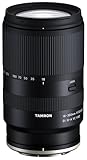
 Tamron 70-300mm F/4.5-6.3 Di III RXD for NikonNikon Z Mount5.9 x 3.03 x 3.03 inches1.3 poundsCheck on Amazon


Top 3 picks at a glance
What Makes a Lens Ideal for the Z6 III
The Nikon Z6 III is not a high-resolution Z8 or a low-light specialist like the Zf. Its 24.5MP sensor with fast readout, up to 120 fps stills, and 6K 60p N-RAW video rewards lenses that focus quickly, handle rolling shutter well, and stay sharp across the frame at wide apertures. The camera’s IBIS is rated to 8.0 stops with compatible lenses, but that rating only applies when the lens communicates correctly via Z-mount and has Synchro VR support.
Four specs matter most on this body:
- Focal range: Determines field of view and working distance. The Z6 III’s FX/DX crop gives you flexibility, but native focal length still dictates perspective compression.
- Maximum aperture: Controls low-light capability and depth of field. On a 24.5MP full-frame sensor, the difference between f/1.8 and f/2.8 is about 1 1/3 stops of light and visibly shallower depth of field at portrait distances.
- Stabilization: The Z6 III has IBIS, but lenses with built-in VR add Synchro VR for up to 8 stops combined. Non-VR primes rely solely on IBIS, which is less effective past 100mm.
- Weight and balance: The Z6 III body is 760g. A 1,400g lens changes handling, battery drain from VR and AF motors, and gimbal requirements for video.
Top Z-Mount Lenses Compared for the Z6 III
| Lens | Focal Range | Max Aperture | Stabilization | Weight | Best For |
|---|---|---|---|---|---|
| Nikkor Z 14-30mm f/4 S | 14-30mm | f/4 | None (IBIS only) | 485g | Landscape, architecture, vlogging |
| Nikkor Z 35mm f/1.8 S | 35mm | f/1.8 | None (IBIS only) | 370g | Video, low-light, environmental portrait |
| Nikkor Z 50mm f/1.8 S | 50mm | f/1.8 | None (IBIS only) | 415g | Portrait, general low-light |
| Nikkor Z 85mm f/1.2 S | 85mm | f/1.2 | None (IBIS only) | 1,160g | Portrait, shallow depth of field |
| Nikkor Z 24-120mm f/4 S | 24-120mm | f/4 | None (IBIS only) | 630g | Landscape, travel, hybrid stills/video |
| Nikkor Z 24-70mm f/2.8 S | 24-70mm | f/2.8 | None (IBIS only) | 805g | Video, events, low-light zoom |
| Nikkor Z 70-200mm f/2.8 VR S | 70-200mm | f/2.8 | VR + Synchro VR (5.5 stops) | 1,360g | Portrait, wildlife (close), sports |
| Nikkor Z 100-400mm f/4.5-5.6 VR S | 100-400mm | f/4.5-5.6 | VR + Synchro VR (5.5 stops) | 1,435g | Wildlife, sports, versatile telephoto |
| Nikkor Z 180-600mm f/5.6-6.3 VR | 180-600mm | f/5.6-6.3 | VR + Synchro VR (5.5 stops) | 1,955g | Wildlife, birds, airshows |
| Nikkor Z 400mm f/4.5 VR S | 400mm | f/4.5 | VR + Synchro VR (6.0 stops) | 1,160g | Wildlife handheld, low-light tele |
Best Lenses by Shooting Discipline
For Portraits: 50mm f/1.8 S and 85mm f/1.2 S
The Z6 III’s eye-AF excels with fast primes. The 50mm f/1.8 S is the value core of the system, usually $400–$600 range, sharp wide open with minimal chromatic aberration and light enough to keep the camera nimble for full-day shoots. On the 24.5MP sensor, it resolves fine detail without the extreme file sizes of a 45MP body.
For subject separation, the 85mm f/1.2 S is the definitive Z portrait lens. At f/1.2 and a 2m focus distance, depth of field is roughly 4cm, creating heavy background blur while retaining eye sharpness thanks to the Z6 III’s accurate eye detection. It is heavy at over 1.1kg, but the rendering and lack of focus breathing make it ideal for both stills and interview-style video. If weight is a concern, the Nikkor Z 85mm f/1.8 S at 470g delivers 90% of the sharpness for general portrait work.
The 70-200mm f/2.8 VR S bridges portrait and wildlife. Its versatility for headshots at 200mm f/2.8 and environmental portraits at 70mm makes it the one-lens solution for wedding and event shooters who cannot swap primes.
For Wildlife: Reach Beats Speed on the Z6 III
The Z6 III’s 120 fps mode with AF demands lenses with fast, quiet STM or Silky Swift VCM motors. The 180-600mm f/5.6-6.3 VR is the most practical wildlife option for this body. It covers the critical 300-600mm range without teleconverters, focuses internally, and balances on a monopod. At 600mm f/6.3, you will need higher ISO than with a prime, but the Z6 III’s noise performance up to ISO 6400 remains usable.
For handheld agility, the 400mm f/4.5 VR S is superior. At 1,160g, it is almost 800g lighter than the 180-600mm and a full stop faster at 400mm. Pair it with the Z Teleconverter TC-1.4x to get a 560mm f/6.3 combination that still autofocuses reliably on the Z6 III. The 100-400mm f/4.5-5.6 VR S sits in the middle for those who need zoom flexibility for larger animals and want to stay under 1.5kg.
For Landscape: Wide and Versatile Zooms
Landscape on the Z6 III benefits more from filter compatibility and corner sharpness than from maximum aperture. The 14-30mm f/4 S is unique in the system for accepting 82mm front filters without a bulky holder, crucial for long exposures. It is also the lightest ultrawide at 485g.
The 24-120mm f/4 S has become the default walkaround for Z6 III owners for a reason. It is sharper at 24mm and 120mm than adapted F-mount equivalents, focuses to 0.39m for near-macro detail, and at f/8-f/11 delivers edge-to-edge sharpness that matches primes on the 24.5MP sensor. For maximum light gathering at dawn, the 14-24mm f/2.8 S is an option, generally in the $2,000+ range, but most landscape work does not require f/2.8.
For Video: Light, Quiet, and Minimal Breathing
The Z6 III shoots 6K 30p and 4K 120p internally with no crop at many modes. For video, focus breathing, motor noise, and weight on a gimbal matter more than absolute sharpness.
The 35mm f/1.8 S and 50mm f/1.8 S are favored for video because they exhibit almost no focus breathing, have silent STM motors that will not be picked up by on-camera mics, and are light enough for compact gimbals like the DJI RS 4. The 24-70mm f/2.8 S is the workhorse for run-and-gun video, maintaining a constant f/2.8 for exposure consistency while zooming and supporting linear manual focus.
If you use the Z6 III’s N-RAW or ProRes RAW, avoid adapting F-mount glass via FTZ II for video. Adapted lenses show more focus hunting and lack the full Synchro VR coordination, which increases micro-jitter in handheld footage.
For Low-Light: Aperture and IBIS Interaction
In low light, the Z6 III’s IBIS helps with static subjects, but not with motion. For events, concerts, and street work, a fast prime is still mandatory.
The 35mm f/1.8 S is the best low-light prime for hybrid shooters because 35mm is wide enough for contextual shots at 1/60s handheld and fast enough to keep ISO under 3200 in dim venues. The 50mm f/1.8 S collects the same light but needs a slightly faster shutter speed to avoid subject blur.
Decision Matrix: Match Your Situation to a Lens
Use this to narrow your choice without overspending on focal length you will not use:
| If You Shoot Mostly… | And You Prioritize… | Choose This | Why |
|---|---|---|---|
| Portraits indoors | Shallow depth of field, eye AF accuracy | 85mm f/1.2 S or 85mm f/1.8 S | Compression at 2-4m distance, clean background separation |
| Portraits + events | Versatility, one lens | 70-200mm f/2.8 VR S or 24-70mm f/2.8 S | Constant f/2.8, VR for low light, no lens changes |
| Birds and distant wildlife | Maximum reach on budget | 180-600mm f/5.6-6.3 VR | 600mm without teleconverter, best reach-per-weight |
| Wildlife handheld all day | Weight and low light | 400mm f/4.5 VR S + TC-1.4x | 1,160g base, f/4.5 allows lower ISO than f/6.3 zooms |
| Landscape and travel | Filters, range, low weight | 14-30mm f/4 S + 24-120mm f/4 S | 82mm filters, 14-120mm coverage with two light lenses |
| Video and hybrid | Gimbal balance, silent AF | 35mm f/1.8 S + 24-70mm f/2.8 S | Minimal breathing, light weight, constant aperture zoom |
| Low-light street / documentary | Compact size, discretion | 40mm f/2 or 35mm f/1.8 S | Small footprint on Z6 III, usable at f/2-f/1.8 handheld |
Worked Calculation: Handheld Shutter Speed With and Without Stabilization
Spec sheets list “5.5 stops” or “8 stops” but that does not tell you what shutter speed you can actually use. Here is how to translate it for the Z6 III.
Base rule without stabilization: Minimum handheld shutter speed = 1 / (focal length). For full-frame, use the lens focal length directly.
- At 50mm: 1/50s
- At 200mm: 1/200s
- At 400mm: 1/400s
- At 600mm: 1/600s
Each stop of stabilization halves the required shutter speed. With the Z6 III + 400mm f/4.5 VR S rated at 6.0 stops Synchro VR:
1/400s → 1 stop: 1/200s → 2 stops: 1/100s → 3 stops: 1/50s → 4 stops: 1/25s → 5 stops: 1/13s → 6 stops: ~1/6s
In practice, you should derate by 2 stops for subject motion and pulsation. That means a realistic safe speed for a stationary bird at 400mm is around 1/25s to 1/50s, not 1/6s. This is why f/4.5 matters: at 1/50s, f/4.5 at ISO 800 gives the same exposure as f/6.3 at ISO 1600. On the Z6 III, ISO 1600 shows visibly more chroma noise than ISO 800 when viewed at 100%, so the faster aperture saves you in post.
For video at 24 fps with a 180-degree shutter, your shutter is fixed at 1/48s. Stabilization cannot fix motion blur from a slow shutter, so a lens with VR helps with camera shake but you still need f/1.8-f/2.8 to keep ISO low under indoor lighting. At 1/48s, f/2.8, ISO 3200, a typical dim event (about 50 lux) will expose correctly, while f/4 would push you to ISO 6400.
Concrete Settings for Each Lens Type
Portrait with 85mm f/1.2 S: Aperture Priority, f/1.4-f/1.8 for groups of one, f/2.2-f/2.8 for two people to keep both eyes in focus. Auto ISO max 3200, minimum shutter 1/320s. Set Eye-AF to Auto and Subject Detection to People. Turn off VR-related stabilization delay in Custom Settings d5.
Wildlife with 180-600mm or 400mm: Manual with Auto ISO, f/6.3-f/8 for sharpness, shutter 1/2000s for birds in flight, 1/1000s for mammals. Use High-Speed Frame Capture (C30/C60) and set Focus Mode to AF-C with Bird/Animal detection. VR to Sport mode for panning.
Landscape with 14-30mm f/4 S: Manual, f/8-f/11, base ISO 100, tripod with IBIS off and Electronic Front-Curtain Shutter on. Use Focus Peaking and manual focus at hyperfocal distance. For waterfalls, add a 6-stop ND filter (82mm) to reach 1-2s exposures in daylight.
Video with 35mm f/1.8 S: Manual, 4K 60p, 1/120s shutter, f/1.8-f/2.8, ISO 800-3200, Picture Control N-Log. AF-C with linear focus speed, active VR to Normal. Use a variable ND to keep aperture wide outdoors.
FAQ
Can I use F-mount lenses on the Nikon Z6 III?
Yes, via the FTZ II adapter. AF-S and AF-P lenses retain autofocus, but Z-mount lenses focus faster, are quieter for video, and enable full Synchro VR. F-mount VR lenses only use lens VR or IBIS, not combined. For wildlife burst rates above 60 fps, native Z glass is more reliable.
Do I need VR lenses if the Z6 III has IBIS?
For primes under 85mm, IBIS alone is sufficient for stills down to about 1/15s. For telephoto beyond 100mm, VR lenses add 2-3 effective stops and correct for angular shake that IBIS handles poorly. For video handheld, VR lenses produce smoother footage than IBIS alone.
Is the 24-120mm f/4 S sharp enough for the Z6 III’s 24.5MP sensor?
Yes. At f/5.6-f/8 it matches prime center sharpness on a 24.5MP sensor and outperforms many older F-mount zooms. Only the 85mm f/1.2 S and 50mm f/1.2 S show noticeably higher resolution at pixel level, which matters more on 45MP bodies than on the Z6 III.
What is the lightest kit for travel with the Z6 III?
The 14-30mm f/4 S (485g) plus 24-120mm f/4 S (630g) covers 14-120mm at 1,115g total. Add the 40mm f/2 (170g) for low light and you have a three-lens travel kit under 1.3kg that fits in a small shoulder bag.


