
The best Prime Day VR headset deals usually split into two clear winners: choose the Meta Quest 3 for the most versatile standalone and PC-connected package, or choose the PlayStation VR2 for the strongest console-based PC-tethered experience when its bundle price drops into the mid-$300s.
Prime Day pricing changes quickly, so compare the final headset price with the cost of required accessories. A seemingly cheaper headset may need a head strap, longer cable, prescription lenses, or a battery pack before it is comfortable for longer sessions.
As an Amazon Associate we earn from qualifying purchases at no extra cost to you.


Our Top Picks
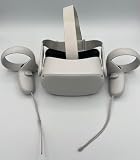
 Oculus Quest 2 Advanced All-in-One Virtual Reality Gmaing16.4 x 7.6 x 5 inches1.83 poundsCheck on Amazon


Top 3 picks at a glance
Quick decision guide
| Best match | Recommended headset | Why it fits | Typical market range |
|---|---|---|---|
| One headset for standalone and PC VR | Meta Quest 3 | High-resolution color passthrough, inside-out tracking, wireless PC VR, and a large standalone library | Usually $400–$600, depending on storage and bundles |
| Lowest-cost entry to modern standalone VR | Meta Quest 3S | Quest 3 software and controllers at a lower price, with lower optical and display specifications | Usually $250–$400 |
| PlayStation 5 owner | PlayStation VR2 | OLED HDR, eye tracking, headset vibration, strong console performance, and Sense controllers | Usually $350–$600, depending on the game bundle |
| Lightest premium PC VR setup | Bigscreen Beyond 2 | Very low headset weight and high-resolution OLED displays for a dedicated PC VR system | Usually $1,000–$1,500 before a complete tracking setup |
| Detailed PC simulation and room-scale VR | Pimax Crystal Light | High-resolution PC-tethered display and optional Lighthouse tracking support | Usually $700–$1,000, depending on configuration |
Standalone versus PC-tethered VR headsets
Standalone headsets contain their own processor, storage, batteries, cameras, and tracking system. They start quickly, work without a gaming computer, and are easier to share with family. The trade-off is limited battery life and lower graphics performance than a capable desktop PC.
PC-tethered headsets draw rendering power from a computer. They are the better option for demanding simulators, high-detail environments, modded games, and applications that benefit from a dedicated graphics card. They require a suitable PC, cable management or wireless networking, and more setup time.
Some headsets combine both approaches. Meta Quest 3 and Quest 3S can run standalone software, connect by USB for wired PC VR, or stream PC VR over Wi-Fi. PlayStation VR2 works with PlayStation 5 and can also connect to a PC with Sony’s PC adapter, although some PS5-specific features are not available on PC.
Meta Quest 3: the best all-round Prime Day target
Quest 3 is the safest choice for most buyers who want one headset for fitness, social VR, mixed reality, and PC gaming. Its pancake lenses provide a larger clear viewing area than the fresnel lenses used in cheaper headsets, making it easier to look around with your eyes instead of constantly repositioning your head.
- Resolution: 2064 × 2208 pixels per eye, with pancake optics and a 90 Hz or 120 Hz display mode.
- Comfort: The standard fabric strap is usable but not ideal for long sessions; budget roughly $40–$100 for a better strap, depending on whether you want extra battery capacity.
- Tracking space: Inside-out tracking works without external base stations. A clear play area of about 2 × 2 meters is practical for room-scale games, although seated and standing modes need less space.
- Battery: Expect roughly 2–3 hours in many mixed-use sessions. Bright passthrough, high refresh rate, wireless PC streaming, and demanding games can reduce runtime.
- Included accessories: Two Touch Plus controllers, charging cable, facial interface, and a basic strap. A power adapter is not always included in every regional package, so check the listing.
The important deal calculation is total usable cost. For example, a $450 headset plus a $60 comfort strap and $25 prescription-lens inserts has a practical setup cost of about $535. If a bundle includes the strap or lenses, a slightly higher headline price may be the better value.
Quest 3 PC connection settings
For wireless PC VR, use a Wi-Fi 6 or Wi-Fi 6E router connected to the gaming PC by Ethernet. Keep the headset in the same room as the router when possible. Begin at 90 Hz with a moderate render resolution, then increase resolution only after confirming that the connection remains stable. At 120 Hz, the headset needs more consistent wireless throughput and the PC must render more frames, so it is not automatically the sharper-looking choice.
Meta Quest 3S: the budget standalone pick
Quest 3S uses the same general standalone software platform and Snapdragon XR2 Gen 2 class performance as Quest 3, so it can run the same current Quest games. It is attractive when a Prime Day discount puts it clearly below Quest 3 pricing.
The compromise is optical. Quest 3S uses fresnel lenses and a lower display resolution of 1832 × 1920 pixels per eye. The clear area is smaller, glare and visible lens artifacts can be more noticeable, and you may need to move your head more often to read small text. For exercise games, family use, and occasional VR, those compromises may be reasonable. For cockpit instruments, productivity, or long reading sessions, Quest 3 is usually worth the extra cost.
Quest 3S includes Touch Plus controllers and supports the same controller-free hand tracking features. Battery life is commonly around 2–2.5 hours, varying with brightness, wireless use, and software. The basic strap remains the first comfort upgrade to budget for.
PlayStation VR2: the console-focused alternative
PlayStation VR2 is the strongest choice for someone who already owns a PlayStation 5 and wants OLED contrast, HDR, eye tracking, and tactile immersion without building a gaming PC. Its 2000 × 2040-pixel-per-eye OLED displays provide deep blacks, while headset vibration and adaptive triggers add effects that standalone headsets do not always reproduce.
- Resolution: 2000 × 2040 pixels per eye, with OLED HDR and a refresh range up to 120 Hz.
- Comfort: The halo-style headband distributes weight well for many users, and the visor can be adjusted for eye relief. It is not wireless and has a single cable to the console.
- Tracking space: Four integrated cameras provide inside-out tracking. Room-scale play generally needs about 2 × 2 meters; seated and standing modes are easier to accommodate.
- Battery: There is no headset battery to recharge because it is wired to PS5 or a PC adapter.
- Included accessories: Two PS VR2 Sense controllers, stereo earbuds, and the headset cable. A PlayStation 5 and, for PC use, the separate PC adapter are additional requirements.
Its limitation is platform flexibility. Quest has a larger selection of standalone applications and can stream PC VR wirelessly, while PS VR2 depends on PS5 or a wired PC connection. On PC, the adapter enables the headset but some features, including HDR, headset feedback, eye tracking, and adaptive triggers, may not be supported in the same way as on PS5.
Premium PC-tethered options
Bigscreen Beyond 2
Bigscreen Beyond 2 targets PC VR enthusiasts who prioritize a small, light headset over convenience. It uses high-resolution OLED microdisplays and is designed around a customized facial fit. That can make it exceptionally comfortable for the right owner, but the headset requires a SteamVR tracking setup and compatible controllers rather than providing complete inside-out tracking on its own.
Choose it only if you already have, or specifically want to build, a Lighthouse-based PC VR system. Add the cost of base stations and controllers to the headset price before comparing it with Quest 3 or PS VR2.
Pimax Crystal Light
Pimax Crystal Light is aimed at simulation players and PC users who value resolution over portability. Its high-resolution display is useful for reading cockpit gauges and distant objects, but the required PC is more demanding than the one needed for most standalone headsets.
At a high render target, a headset with roughly 2880 × 2880 pixels per eye requires approximately 16.6 million displayed pixels per frame:
2880 × 2880 × 2 = 16,588,800 pixels per frame.
At 90 Hz, that is about 1.49 billion pixels per second before lens distortion, supersampling, shadows, antialiasing, and game overhead are counted. This is why a powerful graphics card and careful settings matter more than the headset’s panel specification alone. For a high-resolution PC VR system, 12 GB of graphics memory is a sensible starting point, while 16 GB or more gives greater headroom for simulators and high-resolution texture packs.
Resolution, comfort, tracking, battery, and accessories compared
| Headset | Display resolution | Tracking | Typical runtime or power | Main accessory concern |
|---|---|---|---|---|
| Meta Quest 3 | 2064 × 2208 per eye | Inside-out, six degrees of freedom | About 2–3 hours | Comfort strap or battery strap |
| Meta Quest 3S | 1832 × 1920 per eye | Inside-out, six degrees of freedom | About 2–2.5 hours | Comfort strap; fresnel lens limitations |
| PlayStation VR2 | 2000 × 2040 per eye | Inside-out, six degrees of freedom | Wired; no headset battery | PS5 or PC adapter required |
| Bigscreen Beyond 2 | High-resolution OLED microdisplays | SteamVR Lighthouse setup | Wired; no headset battery | Base stations and controllers |
| Pimax Crystal Light | Approximately 2880 × 2880 per eye | Inside-out or Lighthouse, depending on setup | Wired; no headset battery | Powerful PC and possible tracking hardware |
Which Prime Day deal should you choose?
- Choose Quest 3 if you want the broadest mix of standalone, wireless PC, mixed-reality, and room-scale features.
- Choose Quest 3S if the lowest entry price matters more than lens clarity and you mainly play active or casual games.
- Choose PS VR2 if you own a PS5 and prefer OLED contrast, console simplicity, and a wired experience.
- Choose Bigscreen Beyond 2 if low weight is your priority and you are prepared to assemble a complete SteamVR tracking system.
- Choose Pimax Crystal Light if simulation detail is more important than wireless play, portability, or ease of setup.
Before buying, confirm storage capacity, included controllers, regional power accessories, return terms, and whether the bundle contains a game or comfort accessory you would otherwise purchase. The best Prime Day VR headset deals are the ones that match your existing platform and leave enough budget for the accessory that solves your biggest limitation.


