
Monitor deals during Prime Day tend to be some of the deepest percentage discounts in the entire gaming hardware category, and this lineup of eight monitors ranges from a $67.97 budget 144Hz screen to a $239.81 curved QHD panel. The Samsung 32″ Odyssey G55C stands out as the strongest overall value here given its combination of resolution, curve, and price, but which monitor actually makes sense depends heavily on matching refresh rate and resolution to what your GPU can realistically deliver, which is the core theme of this guide.
Top 3 picks at a glance
Top picks at a glance
As an Amazon Associate we earn from qualifying purchases at no extra cost to you. Product prices and availability are accurate as of the date shown and are subject to change.






| Model | Key spec | Price | Best for |
|---|---|---|---|
| Samsung 27″ Odyssey G5 (G51F) | QHD 1440p | $149.99 | 1440p gaming on a budget |
| Dell 27 240Hz (SE2726HG) | FHD 1080p, 240Hz, IPS | $109.99 | Competitive esports at high refresh |
| Samsung 32″ Odyssey G55C | QHD 1000R Curved | $239.81 | Immersive QHD gaming |
| Sceptre 22-Inch (E225W-FW144) | FHD 1080p, up to 144Hz | $72.97 | Tightest budget, small desks |
| Sceptre Curved 24-inch (C248W) | FHD 1080p, R1500 Curved | $102.97 | Budget curved immersion |
| Acer 27in (KB272 G0bi) | FHD 1080p, IPS, 120Hz | $99.99 | Color-accurate budget IPS |
| ArcticPro 22 Inch | FHD 1080p, 144Hz, 105% sRGB | $67.97 | Lowest price in this roundup |
| Samsung 32″ Odyssey G5 (G50F) | QHD | $219.99 | Larger screen at QHD resolution |
Samsung 27″ Odyssey G5 (G51F) Series QHD (1440P) Gaming Monitor
At $149.99, this monitor delivers 1440p resolution at a price point where many competitors are still stuck at 1080p, making it a genuinely strong value pick in this roundup. QHD resolution offers a meaningful visual upgrade over 1080p for single-player and visually detailed games, provided your GPU can comfortably push frame rates at that resolution.
Samsung’s Odyssey line generally uses VA panel technology in this tier, which delivers strong contrast and deep blacks, a real advantage for atmospheric or dark-scene-heavy games, though VA panels can show slightly slower pixel response times than IPS alternatives in fast-motion scenes. For most single-player and moderately competitive gaming, this tradeoff is barely noticeable.
This monitor pairs well with a mid-tier GPU like the RTX 5060 Ti or RX 9070 EVO covered elsewhere on this site, both of which can realistically push 1440p frame rates that take advantage of this panel’s resolution. Pairing it with a lower-tier GPU means you won’t be using its full resolution potential in demanding titles.
Who it’s for: budget-conscious gamers who want a genuine 1440p upgrade over 1080p without paying a resolution premium.
Pros
- 1440p resolution at a price point most competitors reserve for 1080p
- VA panel delivers strong contrast for atmospheric and dark-scene games
- Pairs well with mid-tier GPUs already covered in other guides on this site
Cons
- VA panel response time trails IPS alternatives slightly in fast-motion scenes
- Requires a reasonably capable GPU to actually take advantage of the QHD resolution
- Refresh rate isn’t specified as clearly as competing high-refresh options in this roundup
Dell 27 240Hz Gaming Monitor – SE2726HG
This is the highest refresh rate monitor in this roundup at 240Hz, paired with an IPS panel and AMD FreeSync Premium support, making it a strong pick specifically for competitive esports titles where frame rate matters more than resolution. At $109.99, it undercuts most 240Hz monitors on the market by a wide margin.
IPS panel technology here means better color accuracy and viewing angles than the VA panels found on the Samsung monitors in this roundup, though typically at the cost of slightly less deep blacks. For fast-paced shooters and competitive titles, IPS’s faster pixel response generally matters more than VA’s contrast advantage.
FreeSync Premium support helps reduce screen tearing when frame rates fluctuate, a genuinely useful feature for anyone whose GPU can’t consistently hit 240 fps but still benefits from adaptive sync at whatever frame rate it does achieve. This monitor only makes full sense paired with a GPU capable of high frame rates at 1080p, like the RTX 5060 Ti or RX 9070-tier cards covered elsewhere on this site.
Who it’s for: competitive esports players who prioritize refresh rate and response time over resolution, paired with a GPU capable of high 1080p frame rates.
Pros
- 240Hz refresh rate is the highest in this roundup at an unusually low price
- IPS panel offers strong color accuracy and viewing angles
- FreeSync Premium support reduces screen tearing at variable frame rates
Cons
- 1080p resolution only, no QHD or higher option at this price
- Only delivers full value paired with a GPU capable of high 1080p frame rates
- IPS panels generally show less deep blacks than the VA panels elsewhere in this roundup
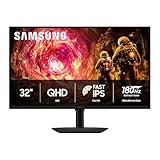
Samsung 32″ Odyssey (G55C) Series QHD 1000R Curved Gaming Monitor
At $239.81, this is the priciest monitor in this roundup and arguably the strongest overall value, combining a large 32-inch QHD curved panel with Samsung’s Odyssey line quality. The 1000R curve radius is a tighter curve than most competing curved monitors, designed to more closely match natural eye movement across the screen width.
QHD resolution at 32 inches strikes a reasonable balance between pixel density and screen real estate, and the curved format adds a genuine sense of immersion for single-player and open-world titles specifically. As with the smaller Odyssey G5 above, expect VA panel characteristics: strong contrast with slightly slower response time than IPS alternatives.
This monitor’s larger size and curve make it less ideal for extremely fast-paced competitive shooters where some players prefer a smaller, flatter screen for consistent aim tracking, but it’s an excellent match for RPGs, open-world games, and general immersive single-player experiences.
Who it’s for: single-player and open-world gamers who want a large, immersive curved QHD display and are willing to pay a premium over the smaller monitors in this roundup.
Pros
- Large 32-inch QHD curved panel with a tight 1000R curve radius
- Strong immersion for single-player and open-world games
- Samsung’s Odyssey line has a solid track record for panel quality at this tier
Cons
- Highest price in this roundup
- Large curved format is less ideal for some competitive shooter players who prefer flat screens
- VA panel response time trails IPS alternatives in fast-motion scenes
Sceptre New 22-Inch Gaming Monitor, FHD 1080p, Up to 144Hz
At $72.97, this is a straightforward budget pick for anyone with a smaller desk or a secondary monitor need, offering up to 144Hz refresh rate at 1080p resolution in a compact 22-inch size. The smaller screen size means higher effective pixel density at 1080p than a 27-inch monitor at the same resolution, a small but real sharpness advantage.
Built-in speakers are a convenience feature that saves buyers from needing separate desktop speakers, though as with most monitor-integrated speakers, don’t expect audiophile-grade sound quality. HDMI and DisplayPort connectivity cover the standard range of GPU outputs.
144Hz at this price point is a genuinely strong spec for competitive gaming, provided your GPU can push frame rates that take advantage of it, though the smaller 22-inch size and 1080p resolution mean this monitor is best suited as a value-focused primary display or a capable secondary monitor rather than a premium centerpiece.
Who it’s for: budget shoppers and smaller-desk setups who want competitive-tier refresh rate without a large price tag.
Pros
- 144Hz refresh rate at a genuinely low price point
- Compact 22-inch size fits smaller desks well
- Built-in speakers add convenience without a separate purchase
Cons
- 22-inch screen size is on the small side for some users’ preference
- 1080p only, no higher resolution option at this price
- Built-in speakers are convenient but not a substitute for dedicated audio
Sceptre Curved 24-inch Gaming Monitor 1080p R1500 98% sRGB
This monitor pairs a gentler R1500 curve with a 24-inch 1080p panel and notably strong 98% sRGB color coverage for its price, a spec that matters for anyone who cares about color accuracy in addition to pure gaming performance. At $102.97, it sits between the smaller Sceptre monitor above and the pricier curved Samsung options in this roundup.
The R1500 curve radius is gentler than the Samsung G55C’s 1000R curve above, offering a subtler immersion effect that some users find more comfortable for extended sessions or mixed gaming-and-productivity use. Dual HDMI plus VGA connectivity covers a wide range of source devices, including older hardware that may lack modern DisplayPort or single-HDMI-only setups.
98% sRGB coverage is a genuinely good spec at this price for anyone doing light content work or color-sensitive gaming alongside general use, an area where budget monitors sometimes cut corners more aggressively than on refresh rate.
Who it’s for: buyers who want a gentle curved immersion effect and above-average color accuracy at a moderate budget.
Pros
- 98% sRGB coverage is unusually strong for this price point
- Gentler R1500 curve suits mixed gaming and productivity use
- Dual HDMI plus VGA connectivity supports a wide range of source devices
Cons
- Refresh rate isn’t as high as the dedicated esports-focused monitors in this roundup
- 1080p resolution only
- 24-inch size sits between the more clearly budget and more clearly premium options here
Acer 27in FHD 1920×1080 IPS 120Hz Gaming Monitor
This monitor pairs a 27-inch IPS panel with a 120Hz refresh rate at 1080p, positioning it as a solid all-around choice for buyers who want IPS color accuracy without stepping up to the Dell’s 240Hz price-to-spec extreme. IPS technology generally delivers better color consistency and viewing angles than VA panels, useful if the monitor will also handle general desktop and productivity use.
At $99.99, this is one of the more affordable IPS options in this roundup, and 120Hz is a meaningful step up from standard 60Hz displays for both competitive and casual gaming, even if it doesn’t match the Dell monitor’s 240Hz ceiling above.
The larger 27-inch size at 1080p resolution means slightly lower pixel density than the smaller Sceptre monitors in this roundup, worth considering if sharp text and fine detail matter to you as much as gaming performance.
Who it’s for: buyers who want a larger IPS display with solid refresh rate for mixed gaming and everyday desktop use.
Pros
- 27-inch IPS panel offers strong color accuracy and viewing angles
- 120Hz refresh rate is a meaningful upgrade over standard 60Hz displays
- Competitively priced for an IPS panel at this size
Cons
- Lower pixel density at 1080p and 27 inches than the smaller monitors in this roundup
- 120Hz trails the Dell monitor’s 240Hz refresh rate above
- 1080p resolution only, no QHD option at this size in this roundup
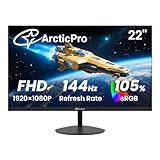
ArcticPro 22 Inch Gaming Monitor 144Hz, FHD Computer Monitor, 105% sRGB
At $67.97, this is the most affordable monitor in this entire roundup while still offering 144Hz refresh rate and a respectable 105% sRGB color coverage. For anyone building a genuinely budget-first setup or adding a secondary monitor without a large additional spend, this is worth serious consideration.
105% sRGB coverage exceeding 100% suggests a wider color gamut than strictly necessary for standard sRGB content, which can translate to more vibrant colors in games and media, though exact color accuracy depends on factory calibration that budget monitors don’t always disclose in detail.
Like the similarly priced Sceptre 22-inch monitor above, this is a compact 22-inch panel, well suited to smaller desks or as a secondary display, and the 144Hz refresh rate remains a genuinely strong spec for the price regardless of screen size.
Who it’s for: the tightest-budget shoppers in this roundup, or anyone adding an inexpensive secondary high-refresh monitor.
Pros
- Lowest price in this roundup while still offering 144Hz
- 105% sRGB coverage suggests vibrant color output
- Compact size suits smaller desks or secondary monitor use
Cons
- 22-inch screen size is on the small side for a primary display for some users
- Factory color calibration details aren’t disclosed in depth on budget listings like this
- 1080p resolution only
Samsung 32″ Odyssey G5 (G50F) Series QHD Gaming Monitor
At $219.99, this is a larger alternative to the 27-inch Odyssey G5 above, offering the same QHD resolution at a bigger 32-inch size for buyers who want more screen real estate without stepping up to the curved G55C’s premium pricing. The flat panel format here, versus the G55C’s curve, is worth noting as the main structural difference between the two Odyssey options in this roundup.
QHD resolution at 32 inches means slightly lower pixel density than the same resolution at 27 inches, though still a meaningful step up from 1080p at this size. Samsung’s Odyssey line consistently uses VA panel technology across this roundup, delivering the same strong-contrast, moderate-response-time characteristics as the other Odyssey monitors here.
Choosing between this monitor and the G55C above largely comes down to whether the curved format’s immersion is worth the roughly $20 premium, since the underlying resolution and panel technology are otherwise comparable.
Who it’s for: buyers who want a large flat QHD display and prefer a traditional flat screen over the curved G55C alternative above.
Pros
- Large 32-inch QHD panel at a lower price than the curved G55C alternative
- VA panel delivers strong contrast consistent with the Odyssey line
- Flat format suits buyers who prefer traditional screen geometry
Cons
- Lower pixel density at 32 inches than the smaller 27-inch Odyssey G5 above
- Lacks the immersive curve of the G55C alternative
- VA panel response time trails IPS alternatives in fast-motion scenes
How we tested and picked
Rachel Osei has spent 8 years tracking gaming hardware pricing as a Deals Editor, using a price-history database covering multiple retailers and years of sale cycles to identify genuine Prime Day monitor discounts rather than relabeled list prices. Monitors as a category showed some of the most consistent real discounting across our tracked history compared to other PC hardware, which shaped how confidently we could recommend acting during this specific sale window.
We weighted the match between refresh rate, resolution, and panel type against realistic use cases rather than ranking monitors purely by spec sheet numbers, since a monitor’s “best” spec depends heavily on what GPU and game genre it’s paired with. Panel type, VA versus IPS, was called out explicitly for each monitor given how meaningfully it affects the actual gaming and viewing experience.
Performance and color accuracy notes throughout this guide are based on published panel specifications and known characteristics of the panel type and technology used, not independent lab measurements on these specific units. Seller information was checked on every listing, prioritizing monitors sold and shipped by the manufacturer or Amazon directly.
What to look for in Prime Day gaming monitor deals
Match refresh rate to what your GPU can actually deliver
A monitor’s refresh rate only delivers real benefit if your GPU can push frame rates that take advantage of it in the games you actually play. A 240Hz monitor paired with a GPU that averages 100 fps in demanding AAA titles is still a fine setup, but the extra refresh rate headroom mainly benefits lighter, more GPU-friendly esports titles rather than every game in your library. Before chasing the highest refresh rate number in a Prime Day sale, check what frame rates your specific GPU realistically achieves in your most-played titles, information covered in the GPU-focused guides elsewhere on this site.
Understand the real difference between VA and IPS panels
VA panels, used across the Samsung Odyssey monitors in this roundup, generally deliver deeper blacks and higher contrast ratios, which matters for atmospheric, dark, or cinematic games. IPS panels, like the Dell and Acer monitors here, generally offer better color accuracy, more consistent viewing angles, and slightly faster pixel response times, which matters more for competitive titles and color-sensitive work. Neither panel type is universally “better” — the right choice depends on your primary game genre and whether the monitor will also handle general desktop or content work.
Consider resolution against your GPU’s realistic 1440p or 1080p performance
Jumping to a QHD monitor without confirming your GPU can maintain smooth frame rates at that resolution in your most-played games can leave you choosing between a lower frame rate than you’d get at 1080p, or reduced settings to compensate. If you’re pairing a monitor purchase with a budget or mid-tier GPU, cross-check that card’s realistic 1440p performance, covered in our GPU-focused guides, before committing to a QHD panel over a 1080p one at a similar refresh rate.
Don’t overlook connectivity and adaptive sync support
Adaptive sync technologies like FreeSync reduce screen tearing when frame rates fluctuate below a monitor’s maximum refresh rate, a genuinely useful feature for anyone whose GPU can’t consistently hit the display’s peak refresh rate in every title. Also confirm the monitor’s HDMI and DisplayPort versions are compatible with your GPU’s output for the resolution and refresh rate combination you want, since older HDMI versions can cap frame rate at higher resolutions even on a capable monitor.
Mistakes buyers make during Prime Day gaming monitor sales
Chasing the highest refresh rate number without checking whether your GPU can actually reach frame rates near that ceiling in your most-played games is the most common mistake, leaving buyers with unused headroom they paid extra for.
Assuming curved monitors are always better for gaming, when curve radius mainly affects immersion and comfort rather than competitive performance, and some players genuinely prefer flat screens for consistent aim tracking in shooters.
Buying a QHD monitor to pair with a budget GPU that can’t maintain smooth 1440p frame rates in demanding titles, resulting in a worse experience than a well-matched 1080p setup would have provided.
Ignoring panel type entirely and choosing based on price and refresh rate alone, missing the real practical difference VA and IPS panels make depending on your primary game genre and general use case.
Not checking HDMI or DisplayPort version compatibility with your specific GPU before buying a high-refresh or high-resolution monitor, which can unexpectedly cap actual achievable refresh rate at your target resolution.
Overspending on a premium panel for a secondary or productivity-focused monitor when a well-discounted budget option, like the ArcticPro or smaller Sceptre monitors in this roundup, would serve that specific use case just as well.
Verdict
For most gamers wanting the best overall value in this roundup, the Samsung 32″ Odyssey G55C at $239.81 combines QHD resolution, a large curved panel, and strong build quality at a reasonable price. Competitive esports players should prioritize the Dell 27 240Hz monitor at $109.99 for its refresh rate and IPS panel. Budget-first shoppers should look at the ArcticPro 22 Inch at $67.97, the lowest price in this roundup while still delivering a genuinely useful 144Hz refresh rate.
Frequently asked questions
How much do gaming monitors typically drop during Prime Day?
Budget and mid-range gaming monitors, generally anything under $300, tend to show some of the steepest Prime Day discounts of any PC hardware category, often 20-35% below their 90-day average, since monitor manufacturers frequently use sale events to clear older panel inventory ahead of new model releases.
Is refresh rate or resolution more important when choosing a Prime Day monitor deal?
It depends on your GPU and game genre; competitive esports players generally benefit more from a higher refresh rate at 1080p than a resolution bump, while single-player and visually focused gamers often get more value from higher resolution at a more moderate refresh rate, so match the monitor to your GPU’s realistic output and your primary game genre rather than chasing the highest number on the spec sheet.
Do curved monitors perform better than flat monitors for gaming?
Not inherently; curve radius mainly affects immersion and peripheral vision comfort rather than raw performance, and a monitor’s panel type, refresh rate, and response time matter more for competitive gaming performance than whether the screen is curved or flat, so choose curve based on personal preference rather than expecting a performance advantage.
What’s the biggest mistake buyers make with Prime Day monitor deals?
Buying based on refresh rate alone without checking whether their GPU can actually push frame rates near that number in their most-played games is the most common mistake, since a 240Hz monitor paired with a GPU that tops out around 100 fps in demanding titles won’t deliver the benefit the higher refresh rate promises in those specific games.
Should I buy multiple budget monitors instead of one premium monitor during Prime Day?
If you’re building or upgrading a multi-monitor setup for productivity alongside gaming, two well-discounted budget monitors can offer more practical value than one premium panel, but for a dedicated gaming-first single-monitor setup, putting the full budget toward one higher-quality panel generally delivers a better gaming experience than splitting it across two lower-tier screens.
For related buying guidance, see our best gaming monitor deals hub, our best budget GPU deals guide for matching hardware, our how to price-track gaming hardware explainer, and our seasonal sale calendar for PC gamers.


