
For most runners in 2026, the best running earbuds and headphones are not one single model but two different form factors for two different routines: secure-fit true wireless earbuds like the Beats Fit Pro, Jabra Elite 8 Active, and Apple AirPods Pro (2nd generation) for gym, treadmill and trail runs where sweat resistance and stability matter most, and open-ear or bone conduction headphones like the Shokz OpenRun Pro 2 and Bose Ultra Open Earbuds for road running where situational awareness is non-negotiable.
As an Amazon Associate we earn from qualifying purchases at no extra cost to you.

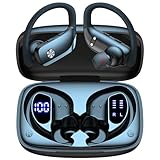


Our Top Picks
 Gavhaio New Bone Conduction Headphones Bluetooth 6.0Standard5.2 x 3.98 x 1.8 inches0.1 poundsCheck on Amazon


Top 3 picks at a glance
Earbuds vs. Headphones for Running: The Core Tradeoff
Closed true wireless earbuds seal the ear canal. That gives you stronger bass, passive noise isolation, and the most secure fit for sprinting and hill work, but it blocks traffic, cyclists, and other runners. Open-ear headphones and bone conduction models do the opposite. They leave the canal open, feeding sound via air conduction just outside the ear or vibration through the cheekbones, so you hear your surroundings clearly at the cost of less bass and more sound leakage.
There is no universal winner. The right choice maps directly to where you run and how much awareness you need. Over-ear headphones like the Sony WH-1000XM5 or Bose QuietComfort Ultra Headphones offer great sound but are rarely ideal for running due to heat buildup, weight, and poor stability when sweating, which is why most runners choose between secure-fit earbuds and open-ear designs.
Fit Security Compared: What Actually Keeps Them In
Fit security is determined by three mechanical systems, not just tip size.
1. In-Ear with Wingtip / Ear Hook (Most Secure)
Models like the Beats Fit Pro and Beats Powerbeats Pro use an integrated wingtip or over-ear hook that braces against the concha and antihelix. Combined with memory foam or silicone tips in three sizes, this creates two anchor points. This class is best for intervals, tempo runs, and trail running with rapid head movement. When fitted correctly, the earbud should not require pushing back in every few minutes and should pass a simple test: you can shake your head vigorously and chew without the seal breaking or the bass dropping out.
2. Standard In-Ear with Ergonomic Shell (Secure for Most)
Apple AirPods Pro (2nd generation), Sony WF-1000XM5, and Jabra Elite 8 Active rely on an ovalized nozzle and pressure-relief vent instead of a hook. The Jabra Elite 8 Active adds its ShakeGrip coating to increase friction when wet. Fit is excellent for steady-state road and treadmill runs, but runners with smaller ear canals or heavy sweating may still get micro-slips during sprints unless they size down the tip and use the built-in fit test in the companion app.
3. Open-Ear and Bone Conduction (Stable but Different Feel)
Shokz OpenRun Pro 2 and Shokz OpenFit Air use a titanium neckband or ear-cuff that sits on the cheekbone or outer ear. Nothing is inside the canal, so there is no seal to break. Stability comes from light clamping force behind the ears. They will not fall out, but they can bounce slightly on very rough trails and let in wind noise at high speed.
Sweat Resistance: What IP Ratings Mean for Runners
Marketing terms like “sweatproof” are meaningless without an IP code. For running, look at the second digit (water resistance) and the testing methodology.
- IPX4: Splash resistant. Handles light sweat and drizzle. Minimum viable for treadmill runners. Found on Apple AirPods Pro (2nd generation) and Sony WF-1000XM5.
- IP55: Dust and water jet resistant. Handles heavy sweat and rain. Found on Jabra Elite 8 Active and Shokz OpenRun Pro 2. The dust protection also helps on dusty trails.
- IPX7/IP57: Can survive immersion. Overkill for running but useful if you frequently run in downpours and forget to dry the case.
An important distinction: the IP rating applies to the buds themselves, not the charging case. Cases are rarely rated above IPX4, and charging pins corrode fastest when you put wet buds back into a damp case. The best practice is to wipe buds and the inside of the case with a dry cloth after a sweaty run and leave the case open for 10 minutes to air out. For saline sweat, which is more corrosive than fresh water, IP55 with a nano-coating and corrosion-tested mesh like that used on the Jabra Elite 8 Active lasts longer than a bare IPX4 driver.
Battery Life and Power Budget for a Running Week
Spec sheets list battery with ANC off at 50% volume, which is not how most people run. Real runtime is lower when you enable ANC/transparency, use a higher volume outdoors, and take calls.
| Model Class | Advertised (ANC Off) | Real Running Runtime (ANC/Transparency On, 70-80% Volume) | Case Recharges | Quick Charge Claim |
|---|---|---|---|---|
| Secure-fit buds (Beats Fit Pro, Jabra Elite 8 Active) | 7-8 hours | 5.5 – 6.5 hours | 3-4 full charges (20-28h total) | 5 min = ~1 hour playback |
| Premium ANC buds (Apple AirPods Pro 2nd gen, Sony WF-1000XM5) | 6-8 hours | 4.5 – 6 hours (5.5h with ANC/Transparency) | 3-4 full charges (24-30h total) | 5 min = ~1 hour playback |
| Open-ear / Bone conduction (Shokz OpenRun Pro 2, Bose Ultra Open Earbuds) | 7.5-12 hours (single charge, no case) | 7 – 10 hours | N/A (USB-C charging only) | 5 min = ~1.5-2 hours playback |
Worked Calculation: Will They Last Your Training Week?
Take a runner doing 5 runs per week at 60 minutes per run, plus 30 minutes of warm-up/cooldown listening per run, for a total of 7.5 hours of playback. Add a 2.5-hour weekend long run, so the weekly total is 10 hours.
If you use Apple AirPods Pro (2nd generation) at ~5.5 hours real runtime per charge with Adaptive Transparency on: 10 hours / 5.5 hours = 1.82 charges per week. You must recharge the buds in the case at least twice mid-week. If you forget to charge the case on Sunday night, you will run out on Friday. With Shokz OpenRun Pro 2 at ~10 hours real runtime per single charge: 10 hours / 10 hours = 1.0 charge per week. One full USB-C charge covers the entire week without touching a case, which is why open-ear models are simpler for high-volume runners even though their per-hour sound quality is lower.
To extend runtime without buying new gear: disable always-on “Hey Siri / Alexa” listening, turn off in-ear detection if you constantly remove one bud, and keep volume at 70% or below. Dropping volume from 90% to 70% typically adds 30-45 minutes to true wireless buds because the amplifier draws less current.
Awareness Features: Transparency vs. Open-Ear
This is the safety decision, not just a comfort feature.
- True transparency mode (Apple AirPods Pro 2nd gen, Bose Ultra Open Earbuds, Jabra Elite 8 Active): Uses external mics to pipe in outside sound with adjustable levels. The best implementations reduce wind noise and let you hear cars at a natural volume. Look for models with wind-reduction algorithms and an adjustable slider in the app, not just on/off. Transparency drains about 15-20% more battery than ANC off.
- Adaptive awareness: Some buds automatically lower volume when they detect speech or a loud horn. Useful in the city but can be distracting on trails if it triggers on heavy breathing. If you run with a partner, choose a model where you can set transparency to stay fixed.
- Native open-ear (Shokz OpenRun Pro 2, Bose Ultra Open Earbuds): No processing needed. You hear everything with zero latency and no battery penalty. The downside is that at paces above ~10 km/h, wind noise can mask music unless you use the included earplugs (for bone conduction) or turn up volume, which defeats the awareness purpose.
For road running, park loops with shared bike lanes, or night runs, native open-ear or a proven transparency mode is recommended by most running clubs. For treadmill, track, or enclosed gym running where traffic is not a factor, a sealed fit with ANC on is better for focus and protects hearing because you can listen at a lower volume without raising it to overcome ambient noise.
Decision Matrix: Match Your Routine to the Right Form Factor
| Your Primary Running Routine | Recommended Form Factor | Why | Example Models to Consider |
|---|---|---|---|
| Roads, city streets, shared paths | Open-ear / Bone conduction | Full awareness, no seal to trap heat, longest single-charge battery | Shokz OpenRun Pro 2, Bose Ultra Open Earbuds |
| Treadmill, gym, indoor track | Sealed ANC earbuds with wingtip | Isolation lets you listen quieter, hook prevents slips from sweat | Beats Fit Pro, Jabra Elite 8 Active |
| Trail, intervals, racing | Secure-fit IP55 earbuds | Maximum stability and washable durability, transparency when needed | Jabra Elite 8 Active, Beats Powerbeats Pro |
| Mixed routine, one pair only | Premium ANC buds with strong transparency | Best all-rounder: seal for gym, transparency for road | Apple AirPods Pro (2nd generation), Sony WF-1000XM5 |
General market ranges in 2026: secure-fit running earbuds usually $150-$250, premium ANC earbuds usually $180-$300, and open-ear/bone conduction headphones usually $130-$230. Over-ear running headphones are niche and usually $300-$400, but most runners avoid them for heat reasons.
Setup Tips That Prevent Common Running Problems
Most complaints about running audio are fit and software settings, not hardware failure:
- Run the fit test with sweaty ears, not dry ears at home. Tips that seal when dry often loosen after 15 minutes of sweat. If the app says “good seal” but bass drops out when you run, go one size smaller or switch to foam tips.
- Set controls for running before you leave: disable tap-to-pause if you get false pauses from rain or hats, and map press-and-hold to transparency/ANC toggle rather than volume, so you can switch awareness modes without your phone.
- On iOS and Android, turn on “Adaptive EQ” or equivalent only if you use transparency; otherwise it can boost bass unnaturally when the seal shifts. For bone conduction, enable the EQ preset labeled “Vocal Booster” or “Outdoor” to compensate for low-end roll-off.
- If you get wind rumble in transparency mode, angle the mic stem slightly forward and enable wind noise reduction in the companion app. Covering the mics with a headband makes it worse, not better.
FAQ
Are bone conduction headphones safe for all road running?
They provide the most awareness because nothing blocks the canal, but they do not make you invincible. You still need to look before crossing, and at high wind speeds music can be hard to hear without raising volume to unsafe levels. For very loud urban roads, a sealed bud with high-quality transparency can sometimes be clearer because wind is filtered digitally.
Can I use regular AirPods or Galaxy Buds for running?
You can for light use, but standard models without an IP55 rating or stability fin will degrade faster from sweat corrosion, and the fit is less reliable for sprints. If you already own them, use a memory foam tip adapter and wipe them dry after each run to extend their life.
How do I clean running earbuds without damaging them?
Remove tips and rinse only the tips with water. Wipe the bud body and sensor mesh with a dry cotton swab, not alcohol or compressed air, which can push sweat into the driver. Let everything dry completely before returning buds to the case.


