
Emulation is one of the most cost-effective corners of PC gaming. You are not chasing 4K ray tracing at 120fps — you are recreating consoles that ran on a fraction of a modern chip’s power. That means a modest, cleverly chosen build can emulate almost everything up to the seventh console generation flawlessly while costing far less than a AAA gaming rig. The trick is knowing where emulators actually stress hardware, because it is not where new games do, and building to those real demands is how you avoid paying for silicon you will never use.
Top 3 picks at a glance
Where emulators spend your money
Most emulators lean heavily on single-thread CPU performance rather than raw core count or GPU muscle. A demanding sixth or seventh generation emulator cares about how fast one core can chew through instructions, so a modern budget CPU with strong single-thread speed will beat an older many-core chip that looks better on paper. The GPU matters mainly when you turn on internal resolution upscaling — rendering an old game at 4x or 8x its native resolution to sharpen it on a modern display. Even then, an entry-level current-gen card handles it comfortably, which is why throwing mid-range or high-end GPU money at an emulation box is largely wasted.
As an Amazon Associate we earn from qualifying purchases at no extra cost to you. Product prices and availability are accurate as of the date shown and are subject to change.
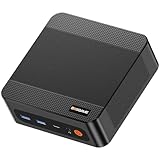





Sensible spec targets
| Era you want to emulate | CPU tier | GPU tier | RAM | Rough build cost |
|---|---|---|---|---|
| Up to 16-bit & early 3D | Any modern 4-core | Integrated graphics | 8GB | $250–400 |
| 6th gen 3D consoles | Budget 6-core, high clock | Entry dedicated GPU | 16GB | $450–650 |
| 7th gen at 2x–4x upscale | Mid-range 6-core | Lower-mid GPU | 16GB | $650–900 |
What to cut and what to keep
Cut the GPU budget hard if you only play up to the sixth generation — integrated graphics on a modern APU can run a huge library without a dedicated card at all. Keep money for a fast NVMe SSD, because large game libraries and save states benefit from quick load times, and a 500GB–1TB drive stores hundreds of titles. Do not overspend on RAM; 16GB is plenty and 8GB works for older systems. A quiet 450W–550W power supply with an 80+ Bronze or Gold rating is all the wattage you need, and buying a bigger unit “just in case” is money that could go toward storage instead.
Refurbished and used angles
Emulation is the ideal place to buy used or refurbished. A three or four year old business desktop with a modern-enough CPU often sells for $150–300 and emulates early generations without complaint. Add a $120–180 entry GPU later if you want higher upscaling. This staggered path keeps your entry cost near the price of a single new console while giving you a machine that plays thousands of games across decades of hardware.
Tuning beats spending
Before upgrading anything, spend an evening on settings. Many performance complaints in emulation come from mismatched configuration — the wrong graphics backend, an overly aggressive upscale, or an emulator that runs better in a different rendering mode on your specific chip. Free tuning routinely turns a stuttering game into a smooth one, saving you a hardware purchase entirely. The value discipline here is to exhaust the free fixes before you reach for your wallet.
FAQ
Do I need a powerful graphics card for emulation?
Not for older systems. GPU load only climbs when you render games above their native resolution. For up to sixth-generation titles at modest upscaling, an entry-level dedicated card or even a modern integrated GPU is enough, saving you $150–300 you would otherwise sink into a card the emulator never fully uses.
Is more RAM better for emulation?
Only up to a point. 16GB covers essentially every mainstream emulator with room to spare, and 8GB handles older systems. Spending extra on 32GB rarely improves emulation, so that money is far better spent on a faster SSD or a slightly quicker CPU that shortens the actual bottleneck.
Bottom line: A retro and emulation machine is where a tight budget goes furthest. Prioritise single-thread CPU speed and a fast SSD, lean on integrated or entry graphics, tune your settings before buying hardware, and consider a used desktop as your base. You can build a library-spanning emulation rig for $400–700 that would embarrass a rig costing twice as much at the one job it is built for.


