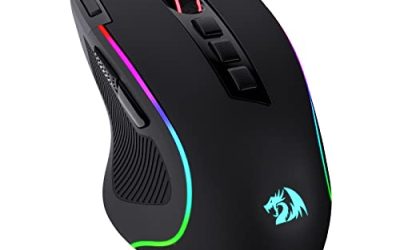
A wired mouse for FPS play is a trade between speed and feel, and the cable is only one part of that story. Polling rate decides how often the mouse reports its position, weight decides how fast you can flick and reset, and shape decides whether your aim stays steady through a long match. A mouse that looks fast on a spec sheet can still fight your hand if the shell is too wide, too flat, or too heavy for your grip.
This guide is for competitive FPS players who want a wired connection with no battery to manage, for claw and fingertip players chasing a lighter shell, and for palm players who need an ergonomic shape that supports the whole hand. Each mouse below was chosen from the name and specifications shown on its Amazon product page, with the focus on sensors, polling rates, weight, and shapes that suit fast aiming.
Our Top Picks


Top 3 picks at a glance

Quick Picks
As an Amazon Associate we earn from qualifying purchases
| Product | Best for | Key spec from title |
|---|---|---|
| Razer DeathAdder V3 Wired | Palm players who want a light ergonomic shell | Focus Pro 30K sensor, 8K Hz HyperPolling |
| Logitech G502 HERO | Players who want extra buttons and tunable weight | HERO 25K sensor, 25,600 DPI |
| BenQ ZOWIE EC2-C | Esports players who want a driverless setup | 3360 sensor, 3,200 DPI, paracord cable |
| GLORIOUS Model O Wired | Fingertip players who want a light honeycomb shell | PixArt 3360 sensor, 67 grams |
| HyperX Pulsefire Haste 2 Wired | Players who want the lightest shell here | HyperX 26K sensor, 8,000 Hz polling |
How to Choose
Sensor and DPI Range
A modern FPS sensor should track cleanly at the sensitivity you actually use, not just at the top of its DPI range. Look for an optical sensor with a high maximum DPI, a fast tracking speed, and no smoothing or acceleration baked into the spec sheet. Most competitive players run between 400 and 1,600 DPI, so a sensor that stays accurate in that band matters more than a headline number. Check the listed tracking speed and acceleration too, because a sensor that loses tracking during a fast flick will cost you duels. The mice in this guide use proven optical sensors from Razer, Logitech, PixArt, and HyperX, with maximum DPI figures ranging from 3,200 to 30,000.
Polling Rate and Latency
Polling rate is how many times per second the mouse reports its position to the computer, and in FPS games a higher rate means fresher aim data. A 1,000 Hz mouse reports every millisecond, while an 8,000 Hz mouse reports eight times as often, which can make tracking feel smoother on a high-refresh display. The gain is subtle, and it only shows up if the rest of your setup keeps pace, including a fast monitor and a strong CPU. Still, when two mice feel similar in the hand, the one with the higher polling rate is the safer pick for competitive play, especially in close-range fights where small corrections decide the round.
Weight and Shape
Weight shapes every flick, and most FPS players now prefer a mouse under 80 grams because a lighter shell is easier to start, stop, and reset. Shape matters just as much: an ergonomic right-handed shell supports a palm grip, while a low, symmetrical shell suits claw and fingertip grips that lift and reposition often. Measure your hand against the listed length and width, and think about how you hold the mouse during a long session. A shell that is too long forces your fingers to stretch, while one that is too narrow leaves your ring finger dragging on the pad.
Cable, Buttons, and Software
A wired mouse lives or dies by its cable, so look for a light, flexible paracord-style cable that does not drag or snag during wide swipes. A stiff cable can feel like a second mouse pulling against your aim, and a bungee only partly fixes that problem. Button count is the next decision: five or six buttons cover FPS needs, while eleven buttons suit players who bind grenades, pings, and voice chat to the mouse. Finally, decide whether you want software for macros and lighting, or a driverless mouse that works the same on any computer with no install step at all.
The 5 Best Options
Razer DeathAdder V3 Wired

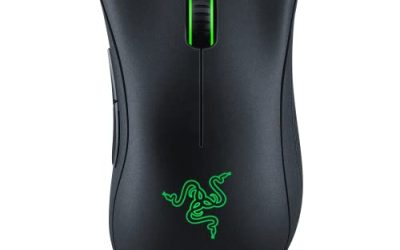
The DeathAdder V3 is the ergonomic pick in this lineup, pairing a right-handed shell with one of the strongest sensor and polling combinations available. At 59 grams it is far lighter than the classic DeathAdder shape it descends from, so palm players get full-hand support without the drag of a heavy shell. The Focus Pro 30K sensor and 8,000 Hz HyperPolling keep tracking fresh during fast flicks, and the Gen-3 optical switches are built for a long service life. It is the all-rounder here for players who hold the mouse with a full palm and want competitive specs in a shape they already know.
Specs
- Focus Pro 30K optical sensor
- Up to 30,000 DPI sensitivity
- Tracking speed up to 750 IPS
- Acceleration up to 70 G
- Weight of 59 grams
- Polling rate up to 8,000 Hz with HyperPolling
- Optical Switches Gen-3 rated for 90 million clicks
- Speedflex cable
- Right-handed ergonomic shape
- 6 programmable buttons
Best for: Palm players who want a light ergonomic mouse with top-tier sensor and polling specs.
Watch out for: The right-handed shape does not suit left-handed players, and the shell has no RGB lighting.
ASIN: B0B6XTDJS1
Logitech G502 HERO
The G502 HERO is the most feature-heavy mouse in this guide, and it suits FPS players who like to bind a lot of actions to the mouse itself. Its HERO 25K sensor reaches 25,600 DPI, and the eleven programmable buttons cover weapon switching, grenades, pings, and push-to-talk without moving your left hand off the keys. The adjustable weight system lets you add or remove tuning weights until the balance feels right, and the dual-mode scroll wheel switches between a notched step for weapon selection and a free spin for fast scrolling. Onboard memory stores up to five profiles, so your setup travels with the mouse.
Specs
- HERO 25K optical sensor
- Up to 25,600 DPI sensitivity
- 11 programmable buttons
- Adjustable weight system with five 3.6-gram tuning weights
- Dual-mode hyper-fast scroll wheel
- LIGHTSYNC RGB lighting
- Onboard memory for 5 profiles
- Wired USB connection
- Base weight of 121 grams
- Model number 910-005469
Best for: Players who want many programmable buttons and a tunable weight system in one wired mouse.
Watch out for: At 121 grams before added weights, it is the heaviest mouse in this guide by a wide margin.
ASIN: B07GBZ4Q68
BenQ ZOWIE EC2-C
The EC2-C is the purist pick, built around the classic ZOWIE ergonomic shape that has been a fixture in competitive FPS for years. It is a medium, right-handed shell that fits palm and claw grips, with a matte coating that stays grippy during long sessions. The paracord-style cable is soft and produces little drag, and the 24-step scroll wheel gives each weapon switch a clear, defined click. There is no software to install: DPI and polling rate are adjusted with buttons on the underside, so the mouse behaves identically on any computer you plug it into.
Specs
- 3360 optical sensor
- DPI levels of 400, 800, 1,600, and 3,200
- Polling rate of 125, 500, or 1,000 Hz
- Weight of 73 grams without cable
- Paracord cable
- 24-step scroll wheel
- Driverless plug-and-play operation
- 5 buttons
- Ergonomic right-handed medium shape
- Matte black coating
Best for: Esports players who want a driverless mouse with a proven ergonomic shape and no software.
Watch out for: Maximum DPI of 3,200 and polling of 1,000 Hz trail the newer sensors in this guide.
ASIN: B09JRZZ4RV
GLORIOUS Model O Wired

The Model O is the honeycomb original, and its perforated shell is still one of the lightest ways to get a full-size ambidextrous mouse. At 67 grams it flicks easily and lifts cleanly for repositioning, which suits fingertip and claw players who reset the mouse often. The PixArt 3360 sensor tracks reliably at the sensitivities competitive players use, and the Omron switches give a crisp, defined click. RGB lighting shines through the honeycomb shell, and the ascended paracord cable is light and flexible enough to stay out of the way during wide arm-aimed swipes.
Specs
- PixArt 3360 optical sensor
- Weight of 67 grams
- Honeycomb shell design
- RGB lighting
- Omron switches
- 6 buttons
- Ambidextrous shape
- Ascended paracord cable
- Matte black finish
- Model number GO-BLACK
Best for: Fingertip and claw players who want a light ambidextrous shell with a honeycomb design.
Watch out for: The honeycomb holes can collect dust over time, and the shell has no side buttons on the right.
ASIN: B07LDH3TWM
HyperX Pulsefire Haste 2 Wired

The Pulsefire Haste 2 is the lightest mouse in this guide at 53 grams, and it gets there with a solid shell rather than a honeycomb cutout. That matters for players who like an ultralight mouse but do not want open holes in the shell. The HyperX 26K sensor reaches 26,000 DPI with tracking up to 650 IPS, and the 8,000 Hz polling rate matches the fastest mice here for fresh aim data. A HyperFlex 2 paracord-style cable keeps drag low, grip tape is included in the box, and the switches are rated for 100 million clicks.
Specs
- HyperX 26K optical sensor
- Up to 26,000 DPI sensitivity
- Tracking speed up to 650 IPS
- Polling rate up to 8,000 Hz
- Weight of 53 grams
- HyperFlex 2 paracord-style cable
- 6 programmable buttons
- HyperX switches rated for 100 million clicks
- Virgin-grade PTFE skates
- Grip tape included in the box
Best for: Players who want the lightest solid-shell mouse here with an 8,000 Hz polling rate.
Watch out for: It is wired only, with no wireless option, and it stores only one onboard profile.
ASIN: B0BX52K6SH
Which One Fits Your Situation
You Play Palm Grip and Want Full-Hand Support
Choose the Razer DeathAdder V3 Wired, because its ergonomic right-handed shell fills the palm and supports the hand through long matches. The 59-gram weight keeps flicks quick despite the larger shape, and the Focus Pro 30K sensor with 8,000 Hz polling gives you the freshest tracking in this guide. If your hand cramps on low symmetrical shells, this is the shape that fixes that problem first.
You Bind Many Actions to the Mouse
Choose the Logitech G502 HERO, because eleven programmable buttons let you map grenades, pings, voice chat, and weapon switching without reaching across the keyboard. The adjustable weight system also lets you tune the balance until the mouse feels planted during slow, precise holds. It is heavy for flick-heavy play, so pick it when button access matters more than raw lightness.
You Want a Mouse That Works Anywhere With No Setup
Choose the BenQ ZOWIE EC2-C, because it is driverless and adjusts DPI and polling rate with buttons on the underside. Plug it into a tournament computer, a friend’s setup, or a fresh install and it behaves exactly the same way. The 73-gram ergonomic shell and paracord cable make it a steady, predictable tool for players who value consistency over headline specs.
You Play Fingertip or Claw and Reset Often
Choose the HyperX Pulsefire Haste 2 Wired, because at 53 grams it is the easiest mouse here to lift and reposition between flicks. The solid shell avoids the dust traps of a honeycomb design, and the 8,000 Hz polling rate keeps tracking fresh during fast corrections. The GLORIOUS Model O Wired is the fallback here if you prefer an ambidextrous honeycomb shell at a similar weight.
Common Mistakes
- Choosing a mouse by maximum DPI alone, when the sensitivity you actually play at matters far more than the top number.
- Picking the lightest mouse available without checking whether its shape fits your grip and hand size.
- Ignoring the cable, because a stiff cable drags against wide swipes and undoes the benefit of a light shell.
- Setting an 8,000 Hz polling rate on a computer that cannot keep up, which can cause stutter instead of smoother aim.
- Buying a mouse with too few buttons for your bindings, then rebinding keys mid-match and breaking your habits.
Frequently Asked Questions
Is a wired mouse better than a wireless mouse for FPS games?
A wired mouse removes battery anxiety and charging from the equation, and the connection is always on with no dongle to lose. Modern wireless mice have closed the latency gap, so the real advantage of wired is consistency and simplicity rather than raw speed. If you play long sessions and dislike managing charge levels, wired is the calmer choice.
What polling rate should I use for FPS games?
Most players should start at 1,000 Hz, which reports the mouse position every millisecond and works well on nearly any setup. An 8,000 Hz rate reports eight times as often and can feel smoother on a high-refresh monitor, but it demands more from the CPU. If you notice stutter after switching to a higher rate, drop back to 1,000 Hz.
How light should an FPS mouse be?
Most competitive FPS players now prefer a mouse under 80 grams, because a lighter shell is easier to flick, stop, and lift for repositioning. Four of the five mice in this guide sit between 53 and 73 grams. Weight is personal, though, and some players aim more steadily with a heavier mouse that resists accidental movement.
Do I need software to use a wired FPS mouse?
Most wired FPS mice work as soon as you plug them in, with basic DPI and button functions available immediately. Software adds macros, lighting control, and custom DPI steps, and it stores those settings on the mouse or the computer. The BenQ ZOWIE EC2-C needs no software at all, which suits players who switch computers often.
Related guides
More from Amazon
Programs that pair well with the guide above. Offers and eligibility are set by Amazon and may change.
Free shipping on eligible items, Prime Video and more. Eligible new members can start with a free trial.
Start a Prime free trialAd-free music streaming. Eligible new subscribers can start with a free trial.
Try Music Unlimited freeA Prime membership for ages 18-24 with a trial period. Eligibility is set by Amazon.
See Prime for Young AdultsAudiobooks and podcasts to listen to on the go. Eligible new members can start with a free trial.
Try Audible freeAs an Amazon Associate we earn from qualifying purchases.