
As we spend more time working, creating, and relaxing in our homes, the line between our living spaces and our technology has completely blurred. The home office is no longer just a corner desk; it is a high-functioning production studio, a gaming sanctuary, and a design statement all at once. When building or upgrading a home computer, one of the most critical decisions you will face does not just affect your frame rates—it directly impacts your physical environment. That decision is choosing between a budget liquid cooler (All-in-One, or AIO) and a premium dual-tower air cooler.
For a home occupant, this is not merely a technical choice. It is a decision about acoustics, space optimization, safety, and long-term home maintenance. A noisy pump can disrupt a quiet evening in a studio apartment, a bulky metal heatsink can ruin the clean aesthetic of a minimalist desk setup, and the minor but real risk of a liquid leak can cause sleepless nights for anyone with expensive hardwood floors. Balancing these factors requires looking past raw performance benchmarks and evaluating how these cooling systems fit into your daily domestic life.
As an Amazon Associate we earn from qualifying purchases at no extra cost to you. Product prices and availability are accurate as of the date shown and are subject to change.



Top 3 picks at a glance
Quick Verdict
If your priority is a clean, modern aesthetic with maximum motherboard visibility and easy installation in tight spaces, a budget liquid cooler is your best bet. However, if you value absolute reliability, whisper-quiet operation at idle, zero maintenance, and a system that will easily last a decade without risk of catastrophic failure, the premium dual-tower air cooler is the superior investment for your home.
Side by Side
To help you visualize how these two cooling philosophies stack up in a residential setting, here is a direct comparison of their key features:
| Feature | Budget Liquid Cooler (AIO) | Premium Dual Tower Air Cooler | |
|---|---|---|---|
| Comfort & Noise | Low hum from pump; variable fan noise under load. | Extremely quiet; gentle, low-pitch wind sound. | Consistent cooling profile. |
| Durability & Lifespan | 3 to 5 years (limited by pump wear and liquid permeation). | 10+ years (only fans can fail and are easily replaced). | |
| Price Range | $70 to $100 | $100 to $130 | |
| Maintenance | None required, but must be replaced entirely upon failure. | Occasional dusting of the cooling fins. | |
| Space Needed | Requires radiator mounting space (typically 240mm to 360mm). | Requires massive vertical clearance (often 160mm to 165mm tall). | |
| Visual Aesthetic | Sleek, minimalist, often features customizable RGB lighting. | Industrial, bulky, dominates the interior of the case. | |
| Resale & Reusability | Lower resale value due to pump degradation over time. | High resale value; mounting brackets can be updated for new CPUs. | |
| Best For | Small cases, RGB-heavy builds, modern minimalist home offices. | Quiet home studios, family computers, low-maintenance setups. |
Where Budget Liquid Cooler Wins
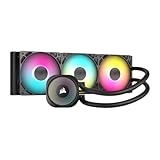
The budget liquid cooler has revolutionized the way we design the interiors of our home computers. By moving the heat dissipation process away from the center of the motherboard to the outer edges of the chassis, these units open up the visual landscape of your PC. If you have spent time selecting beautiful RAM modules, a high-end motherboard, and a sleek graphics card, a budget liquid cooler like the ARCTIC Liquid Freezer III Pro 360 A-RGB ($76.99) allows those components to take center stage. You get a clean, modern look that complements high-end home office furniture and minimalist desk setups.
Beyond aesthetics, budget liquid coolers excel in spatial compatibility around the CPU socket. Because the actual block sitting on your processor is incredibly small, you do not have to worry about tall RAM heat spreaders or bulky motherboard heatsinks. Options like the CORSAIR Nautilus 360 RS ARGB ($99.99) show how easy it is to route flexible tubing through a chassis, making them ideal for compact living room media centers or small-form-factor home theater PCs (HTPCs) where a massive metal tower simply would not fit.
Additionally, liquid coolers have a higher thermal capacity. The liquid in the loop acts as a heat sink, absorbing sudden bursts of heat without immediately ramping up fan speeds. In a quiet home office, this means your computer won’t suddenly scream like a jet engine when you open a heavy application or render a quick video clip; the liquid absorbs the thermal spike quietly, letting the fans ramp up gradually and unobtrusively.
Where Premium Dual Tower Air Cooler Wins
The premium dual-tower air cooler is the undisputed king of reliability and peace of mind. In a home environment, particularly one with children, pets, or expensive carpets, the “set-and-forget” nature of air cooling is invaluable. A premium dual-tower cooler, such as the legendary Noctua NH-D15 chromax.Black ($119.95), has no liquid inside to leak, no pump to fail, and no risk of galvanic corrosion. It is a massive block of aluminum and copper with two high-quality fans attached. If a fan dies after seven years of continuous use, you spend twenty dollars on a replacement fan, clip it on, and your cooler is as good as new.
Acoustically, premium air coolers offer a much more pleasant sound profile for quiet living spaces. While liquid coolers always have a faint, high-frequency pump hum (and sometimes a gurgling sound from air bubbles trapped in the loop), a premium air cooler is dead silent at idle. When the computer is under heavy load, the large 140mm fans on a dual-tower cooler spin at much lower, more pleasant frequencies than the smaller, high-static-pressure fans often found on budget radiators. It sounds like a gentle, organic breeze rather than a mechanical buzz, making it far easier to ignore while working or sleeping in the same room.
Furthermore, air coolers are incredibly durable during home moves or room rearrangements. While a heavy liquid-cooled radiator can put stress on thin chassis panels during transit, a securely mounted air cooler is structurally rock-solid. For long-term home investments, the air cooler wins hands down because manufacturers regularly release cheap or free mounting bracket upgrades for new CPU sockets, allowing you to use the same cooler for decades.
Cost Over 5 Years
When analyzing the total cost of ownership in your home budget, looking only at the sticker price is a mistake. A budget liquid cooler and a premium dual-tower air cooler have vastly different financial trajectories over a five-year period.
A budget liquid cooler typically costs between $75 and $100 upfront. However, the lifespan of a budget pump is generally around three to five years. Over time, the liquid inside the sealed loop slowly permeates through the rubber tubes, reducing the cooling efficiency and increasing the risk of pump burnout. By year four or five, you will likely need to replace the entire unit. This brings your five-year total cost to approximately $150 to $200, plus the time spent dismantling your system and reinstalling a new loop.
A premium dual-tower air cooler costs slightly more upfront, usually between $100 and $120. But because there are no moving parts other than the fans, its lifespan is virtually limitless. The metal heatsink does not degrade. Over five years, your maintenance cost is exactly zero dollars, requiring only an occasional blast of compressed air to clear out dust. Your five-year total cost remains exactly what you paid on day one.
For context, if you are also managing the climate of the entire room, you might pair your quiet PC setup with a dedicated room cooler like the SereneLife Evaporative Air Cooler Tower ($129.9). While a room cooler manages the ambient temperature of your home office using its 5-liter tank and quiet oscillation, your internal PC cooler manages the micro-climate of your processor. Keeping your PC running cool and quiet ensures that your overall room climate control systems do not have to work double-time to fight computer-generated heat dumps.
Which One for Your Home
Small Apartment or Studio
In a small apartment or studio, your computer is often only a few feet away from your bed or your living room couch. Space is tight, and noise pollution is highly noticeable. For this scenario, the premium dual-tower air cooler is the ideal choice. Its dead-silent idle noise means you won’t hear a persistent pump hum while trying to sleep or watch a movie. Its massive physical presence is easily hidden inside a solid, non-windowed chassis, keeping your living space free of flashing RGB lights and visual clutter.
Family with Kids or Pets
If your home is filled with active children, curious cats, or shedding dogs, reliability and safety are paramount. The premium dual-tower air cooler is the clear winner here. There is zero risk of a curious pet knocking the desk and causing a hairline fracture in a liquid tube, which could ruin your expensive hardware. Additionally, air coolers are highly resilient against pet dander; while a dense liquid radiator can quickly get choked by floating pet hair, a spacious dual-tower heatsink is incredibly easy to wipe down or blow clean with a quick gust of air.
Rental Property
For renters who move every year or two, portability and ease of installation are major factors. A budget liquid cooler can actually be a great asset in a rental. Because the weight of the cooler is distributed to the chassis frame via the radiator, there is very little weight hanging off the motherboard. When packing up your computer and moving it down flights of stairs or in the back of a moving truck, a budget liquid cooler poses far less risk of cracking your motherboard than a heavy, 3-pound metal air tower hanging off the center of your system.
Long-Term Home
If you are settled into your forever home and want to build a high-end home office that requires zero mental energy over the next decade, choose a premium dual-tower air cooler. It aligns perfectly with the philosophy of buying high-quality, durable home goods. Looking forward to 2026 and beyond, you can rest easy knowing that your cooling system is completely immune to leaks, evaporation, or pump failure, serving as a silent, reliable workhorse for your household.
FAQ
Do budget liquid coolers leak and ruin home furniture or carpets?
Modern budget liquid coolers are manufactured with high-quality braided tubing and sealed chambers, making leaks extremely rare. However, the risk is never zero. If a leak does occur, it is usually a slow drip inside the computer case rather than a catastrophic spray that would ruin your desk or carpet. Still, for absolute peace of mind, an air cooler eliminates this risk entirely.
Which option is quieter for a quiet home office or bedroom?
At idle or during light tasks like web browsing and writing, a premium dual-tower air cooler is quieter because it has no pump hum. Under heavy loads like gaming or video rendering, both can be quiet, but the premium air cooler tends to have a deeper, less intrusive wind sound compared to the higher-pitched whine of budget radiator fans.
How do these coolers affect the ambient temperature of my room?
Both coolers transfer the exact same amount of heat from your CPU into your room; they just do it differently. A liquid cooler can delay the heat transfer slightly because the water absorbs the heat first, whereas an air cooler dumps the heat into your room immediately. Neither will make your room hotter than the other over a long session, but both will contribute to warming up a small, closed home office.
How much physical space do I need inside my PC case for a dual-tower cooler?
Premium dual-tower coolers are massive, often requiring at least 165mm of vertical CPU cooler clearance inside your case. You also need to check your RAM height, as the front fan of a dual-tower cooler often hovers directly over the RAM slots, requiring you to slide the fan slightly upward, which increases the total height requirement of the cooler.


