
Designing the perfect home gaming setup is about more than just matching wood finishes and choosing ergonomic desk chairs. For the modern home editor, true interior harmony extends inside the computer chassis. A noisy, overheating tower with a rat’s nest of cables can ruin the vibe of a clean, minimalist home office just as quickly as mismatched furniture. When upgrading or building a budget-friendly gaming rig, the storage drive you choose directly impacts your desk space, cable organization, thermal levels, and noise output.
The real decision a buyer faces today is not just about raw megabytes per second; it is about how the physical hardware fits into their home lifestyle. Choosing between a budget SATA SSD and a cheap NVMe SSD for gaming forces you to weigh structural convenience against modern performance. A budget SATA drive requires extra routing of power and data cables behind your desk, but it runs cool and fits into older family computers. A cheap NVMe drive slots directly onto the motherboard, eliminating cable clutter entirely, but it can generate concentrated heat in tight, unventilated home workspaces. Balancing these physical realities with your gaming needs is the key to making the right investment.
As an Amazon Associate we earn from qualifying purchases at no extra cost to you. Product prices and availability are accurate as of the date shown and are subject to change.



Top 3 picks at a glance
Quick Verdict
For most modern homes, a cheap NVMe SSD is the superior choice. It mounts directly to your motherboard, eliminating the clutter of SATA data and power cables, and provides significantly faster load times for modern games. However, if you are reviving an older family desktop that lacks an M.2 slot, or if you need the absolute lowest entry price for a basic media machine, a budget SATA SSD remains a highly reliable, cool-running alternative that preserves your household budget.
Side by Side
To understand how these two storage formats compare across both physical home integration and technical performance, look at the structural breakdown below:
| Feature | Budget SATA SSD | Cheap NVMe SSD |
|---|---|---|
| Comfort (Installation) | Moderate; requires mounting in a drive bay and routing two separate cables. | High; slides directly into the motherboard M.2 slot with a single tiny screw. |
| Durability | High; encased in metal or plastic housing, highly resistant to physical vibration. | High; solid-state with no moving parts, but sensitive to extreme heat. |
| Price Range | $15 to $60 for typical budget capacities (120GB to 500GB). | $35 to $90 for entry-level gaming capacities (500GB to 1TB). |
| Maintenance | Low; standard dust management inside the PC drive bays. | Very Low; sits flat on the motherboard, though may require checking thermal pads over time. |
| Space Needed | Requires a standard 2.5-inch drive bay (approx. 100mm x 70mm x 7mm space). | Extremely compact M.2 2280 form factor (22mm x 80mm x 2.3mm). |
| Look (Aesthetic) | Visible black/gray box; adds cable clutter to the interior of glass-paneled cases. | Nearly invisible; sits flat, keeping the PC interior exceptionally clean and modern. |
| Resale Value | Low; older technology that is slowly phasing out of modern builds. | Moderate; highly compatible with newer motherboards and external enclosure conversions. |
| Best For | Older home PCs, secondary media drives, and ultra-tight hardware budgets. | Modern gaming setups, minimalist home offices, and cable-free builds. |
Where Budget Sata Ssd Wins
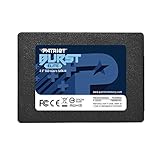
Budget SATA SSDs, using the traditional 2.5-inch form factor, remain incredibly useful for specific home setups. Their greatest advantage is universal compatibility. If you are refurbishing an older family computer, a school workstation for your kids, or an antique gaming tower, it likely lacks the specialized M.2 slots required for NVMe drives. A budget drive like the Patriot Burst Elite 120GB SATA 3 2.5 Inch SSD (priced at $26.99) or the PNY CS900 250GB 2.5″ SATA III Internal SSD (priced at $48.73) can breathe new life into older machinery without requiring a costly motherboard upgrade.
From a thermal perspective, SATA SSDs are incredibly well-behaved. They operate at lower wattages (typically between 1.5W and 3W under load) compared to NVMe drives. Because they are housed in protective 2.5-inch casings and run cool, they do not require dedicated heatsinks or high-airflow environments. This makes them ideal for quiet home environments where you want to minimize case fan noise. Additionally, because they mount away from the motherboard in dedicated drive bays, they keep heat concentrated away from your expensive graphics card and CPU, helping your home office stay quiet and serene during long gaming sessions.
Where Cheap Nvme Ssd for Gaming Wins
Cheap NVMe (Non-Volatile Memory Express) SSDs win decisively on speed and physical design. Operating over the PCIe interface rather than the legacy SATA interface, even a low-cost NVMe drive can easily reach read speeds of 2,500 MB/s to 3,500 MB/s. While this is lower than premium flagship drives like the Samsung SSD 990 PRO 1TB (priced at $239.99) or the massive Samsung SSD 990 PRO 2TB (priced at $389.99), it is still five to six times faster than the absolute limit of any SATA drive, which tops out at around 550 MB/s. For modern gaming, this speed difference directly translates to near-instantaneous level loading and smoother open-world streaming.
For the home organizer, the physical layout of an NVMe drive is its most beautiful feature. An M.2 drive measures a tiny 22mm by 80mm and weighs less than 8 grams. It plugs directly into the motherboard, drawing its power and transmitting its data through the slot itself. This means zero cables. You do not have to struggle with stiff SATA power connectors from your power supply or route thin data cables through the back of your chassis. If you have a modern glass-windowed PC case sitting on your desk, an NVMe drive keeps the interior looking immaculate, unobstructed, and dust-free.
Furthermore, gaming technology is rapidly shifting toward DirectStorage—a system where the graphics card pulls game assets directly from the SSD. This architecture requires the high bandwidth of NVMe. By choosing a cheap NVMe drive now, you ensure your home gaming system remains fully compatible with major game releases leading up to 2026 and beyond.
Cost Over 5 Years
When calculating the true cost of ownership for storage in your home, you must look beyond the initial checkout price. Over a five-year lifespan, the financial differences between budget SATA and cheap NVMe drives manifest in power draw, system upgrades, and wear-and-tear replacement.
SATA drives are highly efficient at idle, often drawing less than 0.5 Watts, and rarely exceeding 3 Watts under heavy gaming loads. Over five years of daily home use, this translates to pennies on your electric bill. Furthermore, because they run cool, they do not degrade from thermal stress. However, because budget SATA drives use older controller technology, their write endurance (measured in Terabytes Written, or TBW) is often lower, meaning a heavily used budget drive may need to be replaced sooner if used as a primary drive for downloading large, modern games.
Cheap NVMe drives draw slightly more power under load (typically between 3 Watts and 8 Watts). In a home setting, this tiny power difference is negligible on your utility bill, but the heat generated requires attention. Without proper passive airflow or a basic motherboard heatsink, a cheap NVMe drive can run hot, potentially shortening its lifespan if it constantly operates above 70 degrees Celsius. However, because NVMe drives are the modern standard, they offer better long-term value. A cheap NVMe drive purchased today can easily be migrated to your next computer upgrade or repurposed into a high-speed external USB drive down the road, saving you from buying new storage when you eventually upgrade your home computer system.
Which One for Your Home
The right drive depends heavily on your specific living space, family dynamics, and long-term housing plans. Here is how to choose the right storage drive for your household scenario:
Small Apartment
In a compact apartment or a shared studio space, thermals and noise are your primary enemies. A loud, buzzing computer fan can easily disrupt a quiet evening or wake a sleeping partner. If you are building a small-form-factor (Mini-ITX) PC to save desk space, a cheap NVMe SSD is highly recommended. It eliminates bulky cables that block critical airflow in tiny cases, allowing your small system to run quieter. Just ensure your motherboard includes a basic metal heatsink to keep the drive cool without needing high-speed, noisy case fans.
Family with Kids and Pets
A busy family home means dust, pet dander, and occasional bumps to the desk. In this environment, a budget SATA SSD is incredibly resilient. Because these drives are fully enclosed in tough plastic or metal cases and mounted securely in internal drive bays, they are completely shielded from internal dust buildup. If a child or pet bumps the desk, the physical stability of a mounted SATA drive ensures your data remains perfectly safe. It is a highly practical, set-it-and-forget-it solution for a shared family media and gaming center.
Rental Home
For renters who move every few years, modularity and ease of packing are essential. A computer built with an NVMe SSD is much easier to transport. Because there are no loose SATA cables or dangling drive mounts inside the case, there is less risk of components shaking loose or getting damaged during a move. When it is time to pack up your desk, your PC remains a solid, self-contained unit that can handle the bumpy ride to a new apartment.
Long-Term Home
If you are established in a long-term home with a dedicated home office or gaming room, you want to build for the future. In this scenario, investing in NVMe technology is the only logical path. Even if you start with a highly affordable, entry-level NVMe drive today, you are setting up your system on a modern motherboard platform. This ensures that as your budget grows, you can easily add premium, high-capacity storage like the Samsung SSD 990 PRO series without rewriting your entire system architecture or redesigning your cable pathways.
FAQ
Can I use a budget SATA SSD and a cheap NVMe SSD together in the same home PC?
Absolutely. This is a highly efficient setup for budget-conscious households. You can install a cheap NVMe SSD as your primary drive to hold your operating system and active games for fast load times, while using an ultra-affordable budget SATA drive to store family photos, documents, and older games that do not require high transfer speeds.
Do cheap NVMe SSDs require a heatsink for casual home gaming?
Generally, cheap NVMe drives do not run hot enough during casual gaming to require a massive, expensive heatsink. However, if your home office gets warm in the summer, or if your PC case has limited airflow, using a basic, inexpensive metal heat spreader (often included with your motherboard) is a smart way to protect your drive and extend its lifespan.
Is a 120GB or 250GB SSD large enough for a modern home gaming setup?
A 120GB drive is best reserved for basic home office tasks and operating systems. For gaming, modern titles easily exceed 100GB each. If you plan on gaming, look for a minimum of 500GB to 1TB of storage so you do not have to constantly delete and reinstall games, saving your home internet bandwidth.
Will switching from a budget SATA to a cheap NVMe drive improve my in-game frame rates?
No. Upgrading your storage drive will not increase your frames per second (FPS). However, it will significantly reduce game loading screens, eliminate texture pop-in as you explore open worlds, and make your entire computer feel much faster and more responsive during everyday household tasks.


