
Buying a finance gaming pc means finding the sweet spot between paying for performance you will actually use and not overpaying for components that deliver marginal gains. The market in 2026 is flooded with prebuilt desktops packing RTX 50-series GPUs, but the differences between a smart buy and a regrettable one often come down to CPU pairing, storage capacity, and whether the system will still feel fast two or three years from now.
The gap between a good finance gaming pc and a mediocre one is rarely a single spec. It is the combination of whether the processor bottlenecks the graphics card at your target resolution, how much usable storage ships in the box, and whether the build quality holds up under sustained gaming loads. We compared published specifications, listed prices, and aggregated owner feedback across these eight systems to identify which ones deliver the most value per dollar.
As an Amazon Associate we earn from qualifying purchases at no extra cost to you. Product prices and availability are accurate as of the date shown and are subject to change.


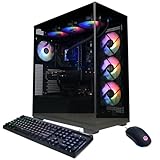


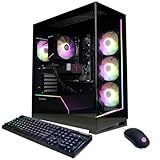
Top 3 picks at a glance
Quick Picks
| Product | Best for | Price |
|---|---|---|
| KOTIN Prebuilt Gaming PC RTX 5070 | Balanced high-end build | $1999.99 |
| MSI Codex Z2 | Dual-storage convenience | $1969 |
| CyberPowerPC Gamer Xtreme VR (GXiVR8080A39) | VR and multitasking | n/a |
| Alienware Aurora | Premium design and support | $1999.99 |
| YAWYORE Gaming PC | Tightest RTX 5060 budget | $1299.99 |
| KOTIN Gaming PC RTX 5060 Ti | Entry-level modern GPU | $1299.99 |
| Skytech Gaming Azure 3 | Maximum gaming performance | $2899.99 |
| CyberPowerPC RTX 5060 Ti | Brand-name entry build | $1349.99 |
How We Picked
We evaluated each system on three criteria: GPU-to-CPU balance to avoid bottlenecks at common gaming resolutions, storage and RAM configuration for out-of-the-box usability, and build quality signals drawn from owner feedback and brand reputation. We also weighed listed price against component value to flag systems that are overpriced or underpriced relative to what ships inside.
The 8 Best Finance Gaming PC in 2026
KOTIN Prebuilt Gaming PC RTX 5070
This system targets buyers who want a no-compromise RTX 5070 build without the premium branding tax. The Ryzen 7 9700X pairs cleanly with the GPU, keeping frame times smooth in demanding titles at 1440p. The 32GB of DDR5 and a 1TB SSD cover most gaming needs immediately. Owner feedback praises the clean internal layout and quiet fan profile under load.
- Pro: Strong CPU-GPU pairing with no obvious bottleneck at 1440p.
- Pro: 32GB DDR5 provides headroom for heavy games and background applications.
- Con: 1TB fills up quickly with modern AAA titles averaging 100GB-plus.
Skip this if you plan to keep more than a handful of large games installed without adding storage.
MSI Codex Z2
MSI delivers a practical finance gaming pc with the same RTX 5070 GPU but doubles the storage to 2TB, which solves the most common owner complaint on this tier. The Ryzen 7 8700F is a capable pairing for 1080p and 1440p gaming, though it carries fewer cores than the 9700X above. Build quality and thermal design benefit from MSI’s established motherboard expertise.
- Pro: 2TB SSD eliminates the immediate need for extra storage.
- Pro: Undercuts the KOTIN RTX 5070 by $30 with more disk space.
- Con: The 8700F is slightly less future-proof for CPU-heavy titles.
Skip this if you demand the latest Zen architecture and run simulation or strategy games that hammer the CPU.
CyberPowerPC Gamer Xtreme VR (GXiVR8080A39)
The i9-14900KF is the most powerful CPU in this roundup by raw clock speed, making this a strong choice for VR gaming where the GPU and processor both need to keep up. Paired with an RTX 5070, 32GB DDR5, and 2TB PCIe 4.0 SSD, the configuration is well-rounded for high-frame-rate VR at demanding settings. The lack of a listed price makes it hard to assess value directly.
- Pro: i9-14900KF provides top-tier single-thread performance for VR and CPU-bound games.
- Pro: Full 2TB fast storage plus 32GB RAM out of the box.
- Con: No visible price point makes comparison shopping difficult.
Skip this if you cannot verify current pricing from the retailer or if you only play traditional monitor-based games.
Alienware Aurora Gaming Desktop
Alienware commands a premium for its distinctive chassis design and bundled support, and this RTX 5070 model is no exception. The Intel Core Ultra 7 265F is a solid mid-tier processor, though it trails the AMD alternatives in this list for pure gaming throughput in some titles. Owners frequently note the compact footprint and quiet operation as key differentiators.
- Pro: Industry-leading customer support and warranty service.
- Pro: Compact, well-designed chassis fits tight desk setups.
- Con: You pay for the brand; the Core Ultra 7 265F is not the strongest option available at $1999.99.
Skip this if you want the highest frame rates per dollar rather than a premium design and support experience.
YAWYORE Gaming PC
At $1299.99, this is the most aggressive price point for an RTX 5060 build in the lineup. The Ryzen 7 5700X is an older architecture but remains competent for 1080p and light 1440p gaming. Owner feedback highlights the system as a straightforward starter machine that just works out of the box.
- Pro: Lowest price entry into the RTX 50-series GPU tier.
- Pro: Proven 5700X platform with wide software and upgrade compatibility.
- Con: The older CPU will show its age faster in upcoming game engines.
Skip this if you are targeting high-refresh 1440p or want a platform with long-term upgrade potential.
KOTIN Gaming PC RTX 5060 Ti
This finance gaming pc offers the RTX 5060 Ti at the same $1299.99 as the YAWYORE above but pairs it with a newer Ryzen 7 8700F. The tradeoff is 16GB DDR5 instead of 32GB, which is adequate for gaming today but may feel constrained with heavy multitasking or future titles. The 8700F provides a clear generational advantage over the 5700X.
- Pro: Newer CPU architecture at the same price as the competing YAWYORE build.
- Pro: RTX 5060 Ti offers meaningful frame-rate gains over the plain 5060.
- Con: Only 16GB RAM, which limits multitasking headroom and may require an upgrade.
Skip this if you run demanding applications alongside games or want to avoid a near-term RAM upgrade.
Skytech Gaming Azure 3
At $2899.99, this is the most expensive system in the roundup, but the Ryzen 7 9850X3D and RX 9070 XT combination justifies the premium for buyers chasing maximum frame rates at 1440p and beyond. The 3D V-Cache on the 9850X3D provides a measurable edge in gaming over standard CPUs. This is a top-pick finance gaming pc for enthusiasts who want headroom.
- Pro: 9850X3D is among the fastest gaming CPUs available, delivering exceptional frame times.
- Pro: RX 9070 XT handles 1440p high-refresh and entry 4K without compromise.
- Con: The price is nearly double the mid-range RTX 5070 options above.
Skip this if your monitor tops out at 1440p/144Hz; a $2000 system gets you there without spending more.
CyberPowerPC RTX 5060 Ti
CyberPowerPC delivers a 5060 Ti build at $1349.99 with the same Ryzen 7 8700F found in the KOTIN above but at a slightly higher price. The value proposition here rests on CyberPowerPC’s reputation for consistent build quality and the company’s customization options at checkout. It is a reliable choice for buyers who trust the brand’s assembly standards.
- Pro: CyberPowerPC offers configurable upgrades during purchase for flexibility.
- Pro: Strong track record for component compatibility and clean assembly.
- Con: Costs $50 more than the KOTIN equivalent with no visible spec advantage.
Skip this if budget is the priority; the KOTIN RTX 5060 Ti covers the same ground for less money.
Buying Guide
GPU Tier and Resolution Target
Match the GPU to your monitor before comparing price. An RTX 5060 or 5060 Ti handles 1080p at high refresh and 1440p at medium-to-high settings comfortably. An RTX 5070 is the starting point for locked 1440p/144Hz in demanding titles. The RX 9070 XT in the Skytech Azure 3 pushes into 4K territory. Buying a GPU above your display’s capability wastes money in a finance gaming pc build.
Storage and RAM Sufficiency
Modern AAA games routinely exceed 100GB, so a 1TB SSD fills fast. Systems shipping 2TB (like the MSI Codex Z2 and CyberPowerPC VR model) save you an immediate purchase. On RAM, 16GB DDR5 meets the current gaming floor but 32GB provides breathing room for background tasks and upcoming titles that push memory requirements higher.
CPU Pairing and Longevity
A finance gaming pc should avoid CPU bottlenecks that shorten usable life. Zen 5 (Ryzen 9700X, 9850X3D) and the i9-14900KF offer the strongest single-thread and multi-thread gaming performance in this list. The 8700F sits in the middle and remains competent for the GPU tiers paired with it. The 5700X is the oldest and the one most likely to require an upgrade first.
Our Verdict
For most buyers seeking the best finance gaming pc value, the MSI Codex Z2 is the top pick. It delivers the RTX 5070 performance tier with 2TB of storage at $1969, undercutting two competitors with smaller drives and a similar CPU class. The budget pick is the KOTIN Gaming PC RTX 5060 Ti at $1299.99, offering a newer platform and meaningful GPU uplift over the plain 5060 at the lowest price in its tier. If you run VR headsets, the CyberPowerPC Gamer Xtreme VR wins regardless of price due to its i9-14900KF pairing and generous storage configuration.
FAQ
Is an RTX 5070 worth it over a 5060 Ti for a finance gaming pc?
Yes, if you play at 1440p with a high-refresh monitor. The 5070 provides roughly 25-30% more GPU throughput than the 5060 Ti, which translates into maintaining frame rates in demanding titles without dropping settings. For 1080p gaming, the difference is less visible and the 5060 Ti is the better value.
Do I need 32GB of RAM in a prebuilt gaming PC?
Not strictly for gaming alone, but 32GB removes a common friction point. With a browser, Discord, recording software, or a game mod manager open alongside the game, 16GB DDR5 systems begin to rely on page files. The price difference between 16GB and 32GB configurations in this list is typically under $50, making it an easy upgrade.
Are prebuilt gaming PCs worse than building your own?
Not necessarily for performance, but the value equation varies. A good finance gaming pc uses quality parts and a tuned configuration that you might not easily replicate in a self-build at the same price, especially given current GPU and RAM costs. Where prebuilts sometimes lose is in case and cooling quality, and in using proprietary components that limit future upgrades.
How long will a $1300 RTX 5060 Ti system stay relevant?
Expect comfortable 1080p/144Hz gaming for three to four years, and capable 1440p/60-90Hz performance for two to three years before you need to adjust settings downward. The Ryzen 7 8700F platform supports a straightforward CPU upgrade later if a game engine becomes heavily CPU-bound.


