
There is a moment every homeowner knows: your hedges have crossed from “needs a light trim” into “obstructing the walkway” territory, and the manual shears you bought years ago now feel like a personal punishment. Reaching the top of a six-foot privet row with hand tools produces nothing but forearm cramp and a jagged, uneven line. The right electric hedge trimmer turns that weekend chore into a twenty-minute job, but the market is cluttered with models that stall on thick growth, vibrate so hard they numb your hands within ten minutes, or burn out a motor after a single season of moderate use.
What separates a good electric hedge trimmer from a mediocre one comes down to a handful of measurable factors: sustained cutting speed (often expressed in cuts per minute), blade length and geometry, motor amperage or voltage, and how well the design manages vibration and weight over extended sessions. Corded models generally deliver more consistent power for the dollar, while cordless units trade raw output for the freedom to work without trailing a 50-foot extension cord across the yard. Below, we compared published specifications, price points, and owner-reported feedback on the best hedge trimmers electric options available in 2026 to help you skip the ones that will leave you frustrated.
As an Amazon Associate we earn from qualifying purchases at no extra cost to you. Product prices and availability are accurate as of the date shown and are subject to change.

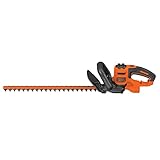

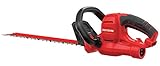
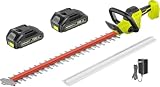


Top 3 picks at a glance
Quick Picks
| Product | Best for | Price |
|---|---|---|
| BLACK+DECKER BEHT150 | Small hedges and topiary | $34 |
| BLACK+DECKER BEHT350FF | Medium hedges, budget reach | $59 |
| BLACK+DECKER BEHT100 | Tight spaces and light trimming | $34.59 |
| CRAFTSMAN CMEHTS8022 | Overgrown hedges with thick stems | $64 |
| 22-Inch 20V Cordless | Yards without convenient outlet access | $53.44 |
| BLACK+DECKER BEHTS300 | Hedges mixed with woody branches | $56.05 |
| BLACK+DECKER LHT2220 | Cordless power with full 22-inch reach | $79 |
| GARCARE 24-Inch | Long hedge runs and precision lines | $89.99 |
How We Picked
We evaluated every model on four criteria drawn from published specs and recurring themes in owner reviews. First: cutting performance, measured by motor output (amp or volt) and blade speed, because a trimmer that cannot clear one-inch growth without bogging down is a tool you will leave in the shed. Second: ergonomics, specifically weight distribution and vibration management, since even a powerful trimmer becomes unusable if your hands go numb after ten minutes. Third: blade length relative to typical hedge dimensions in residential settings. Fourth: durability signals from long-term owner reports, including blade retention, switch reliability, and how well the unit handles repeated seasonal use.
The 8 Best Hedge Trimmers Electric in 2026
BLACK+DECKER BEHT150
The BEHT150 is the trimmer for homeowners whose hedges are more sculptural than jungle-like. Its 17-inch dual-action blade produces 3800 cuts per minute, which is plenty for boxwood, small privet, and ornamental shrubs with stem thickness around half an inch. At a listed weight category well below larger corded models, it is easy to maneuver overhead without fatigue. The reduced-vibration housing is a genuine comfort advantage during longer sessions.
- Pro: 3800 CPM dual-action blade cuts cleanly through small-gauge growth
- Pro: Lighter than 22-inch alternatives, easier for overhead work
- Con: 17-inch blade requires frequent repositioning on long hedge runs
Skip this one if your hedges exceed chest height or include stems thicker than a pencil; the 3.2-amp motor will bog down.
BLACK+DECKER BEHT350FF
Step up to 22 inches of blade and a 4.0-amp dual-action motor, and you have a trimmer that covers most residential hedge lengths in a single pass without constant repositioning. The full wraparound handle lets you approach the hedge from multiple angles, which is especially useful on rounded or corner sections. Owners consistently praise the balance between power and weight for this size class.
- Pro: Full wraparound handle supports angled and top-side trimming
- Pro: High output with low vibration for a 4.0-amp corded unit
- Con: Cord dependency limits range without an extension reel
This is a strong value pick for anyone trimming hedges that run six to twelve feet long and need more than light shaping.
BLACK+DECKER BEHT100
At 16 inches and 3.0 amps, the BEHT100 is the most compact corded option on this list. It is built for spot-trimming, shaping topiary, maintaining low foundation shrubs, or tackling a short border that does not justify pulling out a full-size trimmer. The small blade means less weight and less arm fatigue, and the price is among the lowest in the group.
- Pro: Lowest weight and footprint, ideal for precision shaping
- Pro: Compact enough to store on a shelf without mounting brackets
- Con: 16-inch blade leaves visible scallop marks if you rush past the rated capacity
Buy it as a secondary trimmer for detail work, not as your primary hedge tool on anything taller than waist height.
CRAFTSMAN CMEHTS8022
The CMEHTS8022 earns its place because of one specific feature: the POWERSAW branch cutter mounted to the blade housing. For hedges that have gone out of control and developed woody stems, this built-in saw lets you cut through problem branches without switching tools. The 3.8-amp motor and 22-inch dual-action blade handle normal hedge work capably.
- Pro: Integrated branch cutter eliminates the need for a separate pruning saw
- Pro: 22-inch blade and 3.8 amps cover standard residential hedges efficiently
- Con: Added front-end weight from the saw attachment makes overhead precision more awkward
If your hedges need a hard reset rather than a seasonal tidy-up, this is the most practical recovery tool on this list.
22-Inch 20V Cordless Hedge Trimmer
This cordless model solves the most annoying problem with electric hedge trimmers: dragging a heavy extension cord through wet grass, around fence posts, and over mulch beds. With two 20V batteries included plus a charger, you get continuous runtime without mid-session downtime, and the 22-inch blade covers most residential hedge lengths in a single pass. At this price, it is one of the more affordable cordless options that ships with a full battery kit.
- Pro: Two batteries and charger included at no extra cost
- Pro: Full 22-inch reach without cord management
- Con: 20V platform delivers less sustained torque than a 4-amp corded motor
If your yard layout makes cord routing a genuine headache, the convenience alone justifies the switch to cordless.
BLACK+DECKER BEHTS300
The BEHTS300 combines a 20-inch dual-action hedge blade with an integrated saw for cutting thicker branches, much like the CRAFTSMAN above but at a lower price point. The full wraparound handle supports angled work, and the compact body makes it easier to control on curved or irregular hedges. At 56 dollars, it sits in a sweet spot for anyone who wants branch-cutting capability without paying a premium.
- Pro: Built-in saw handles woody growth without tool switching
- Pro: Lightweight and compact for its feature set
- Con: 20-inch blade is shorter than the 22-inch competitors, adding one or two extra passes per section
A practical all-rounder for mixed hedges with occasional thicker growth; skip it if your primary need is pure speed on long, uniform rows.
BLACK+DECKER LHT2220
The LHT2220 is the cordless option for people who want full 22-inch reach without a trailing cord. The 20V MAX platform means the battery and charger are compatible with other BLACK+DECKER tools you may already own, reducing the cost of entry. Soft-grip handles and reduced vibration make it comfortable for sessions beyond ten minutes, which matters on taller hedges where you work overhead for extended stretches.
- Pro: 22-inch blade in a cordless format with battery and charger included
- Pro: Soft grip and low vibration improve comfort during overhead trimming
- Con: Single-battery runtime may not cover an entire large property without a spare
For homeowners with moderate hedge coverage who value cord-free movement, this is the most polished option in its class.
GARCARE 24-Inch 4.8Amp
The GARCARE is the longest blade on this list at 24 inches, paired with the highest amperage at 4.8 amps. That combination translates to the fewest repositioning passes on long, continuous hedge runs and the most aggressive cutting capability of any corded model here. The dual-action laser-cut blade maintains sharpness longer than stamped alternatives, based on material descriptions and owner reports on edge retention over multiple seasons.
- Pro: Longest blade and highest amp rating minimize passes on extended hedge faces
- Pro: Laser-cut blade holds edge through multiple trimming seasons
- Con: Heaviest and most expensive here, overkill for short or ornamental hedges
If you have twenty or thirty feet of dense, tall privet and want to clear it in the fewest passes, this tool gets it done.
Buying Guide
Amperage and Cutting Speed
For corded hedge trimmers electric models, amp rating is the closest single number to sustained power delivery. Units in the 3.0 to 3.2 amp range handle stems up to about half an inch before the blade starts to stall. Stepping to 4.0 amps or above buys you the headroom to clear three-quarter-inch growth without bogging, which matters if your hedges have been left alone for a season or two. Cuts per minute, when published, tells you how aggressively the blade shears; 3800 cuts per minute is a strong figure for a mid-size trimmer and reduces the number of passes needed per section.
Blade Length Versus Hedge Geometry
Blade length determines how many passes you need on a given hedge face. A 16 or 17-inch blade suits topiary, foundation plantings, and hedges under four feet tall where overhead reach is manageable. At 20 to 22 inches you cover a typical six-foot hedge section in two or three horizontal passes. A 24-inch blade cuts that down further but adds front-end weight that accelerates shoulder fatigue. Match your blade to your tallest hedge, not your average one, to avoid under-buying.
Corded or Cordless
Corded trimmers deliver consistent power, cost less for equivalent amp output, and never stop mid-hedge due to battery depletion. Their main drawback is cord management: routing a 50-foot extension cord around obstacles, through wet conditions, and without running over it adds friction to the job. Cordless models eliminate that hassle but cap your power at what 20V can deliver, and runtime forces you to either pause for a recharge or buy a spare battery. If your hedges are within 25 feet of an outlet, a corded unit remains the higher-value choice for most residential users.
Our Verdict
The top pick for most homeowners is the BLACK+DECKER BEHT350FF: at 22 inches, 4.0 amps, and 59 dollars it delivers the best balance of reach, power, and price for typical residential hedges. Our budget pick is the BEHT150 at 34 dollars, which handles small and medium ornamental trimming better than any other model in that price bracket. The CRAFTSMAN CMEHTS8022 wins outright if your hedges have already gone woody and neglected; the built-in POWERSAW branch cutter removes the need for a separate pruning saw, saving time on recovery jobs that would otherwise stall the whole project.
FAQ
Can an electric hedge trimmer cut branches thicker than the rated blade capacity?
No. Attempting to cut stems beyond the rated thickness will stall the motor, dull or chip the blade, and in some cases damage the gear housing. If you regularly encounter thick branches, choose a model with an integrated saw or pair a standard trimmer with a separate pruning saw.
How long does a 20V cordless hedge trimmer run on a full charge?
Roughly 20 to 40 minutes of continuous cutting depending on hedge density and stem thickness. Two-battery kits, like the 22-inch cordless model on this list, effectively double your working window without a recharge break.
Do dual-action blades actually cut better than single-action?
Yes. A dual-action blade moves both tooth sections simultaneously, which reduces the effort needed to shear through a stem and produces a cleaner cut surface that heals faster. Single-action blades push all the shearing load onto one moving edge, requiring more downward pressure and increasing fatigue over long sessions.
Should I trim hedges in wet or dry conditions?
Dry conditions are safer and produce cleaner cuts. Wet foliage clumps together, clogs the blade, and increases the risk of electrical hazards on corded models. If you must trim damp hedges, a cordless unit is the safer choice.


